Best of Big Sky Event Best of Big Sky Event Best of Big Sky Event
Print Subscriptions
Newsletter Sign Up
  • News
    • Wildfire News
    • Local
    • Bozeman
    • Regional
    • Business
    • Real Estate
    • Outlaw Partners News
  • Arts & Entertainment
  • Opinion
  • Sports
  • Yellowstone
  • Events
Menu
  • News
    • Wildfire News
    • Local
    • Bozeman
    • Regional
    • Business
    • Real Estate
    • Outlaw Partners News
  • Arts & Entertainment
  • Opinion
  • Sports
  • Yellowstone
  • Events

GNFAC: A Snowpack rife with weakness

in Regional
GNFAC: A Snowpack rife with weakness
Gallatin National Forest Avalanche Center Forecaster Doug Chabot investigates the weak snowpack. PHOTO COURTESY OF THE GALLATIN NATIONAL FOREST AVALANCHE CENTER
EBS Staffby EBS Staff
January 19, 2024

The slow start to winter creates a dangerous foundation

By Dave Zinn EBS CONTRIBUTOR

The 2023-2024 winter season began with well below average snowfall in Montana. The lack of snow has snowsports enthusiasts frothing at the mouth for the taste of deep powder skiing and riding. This enthusiasm will get us into trouble when it snows if we fail to remember that avalanche conditions become more dangerous during and immediately after storms. This year, the thin layer of snow on the ground is greatly weakened from weeks of mostly sunny weather in November and December. Our best tool for staying safe during dangerous avalanche conditions is accurately identifying slopes steep enough to slide. 

Weak, faceted snow has the consistency of granular sugar. PHOTO COURTESY OF GNFAC
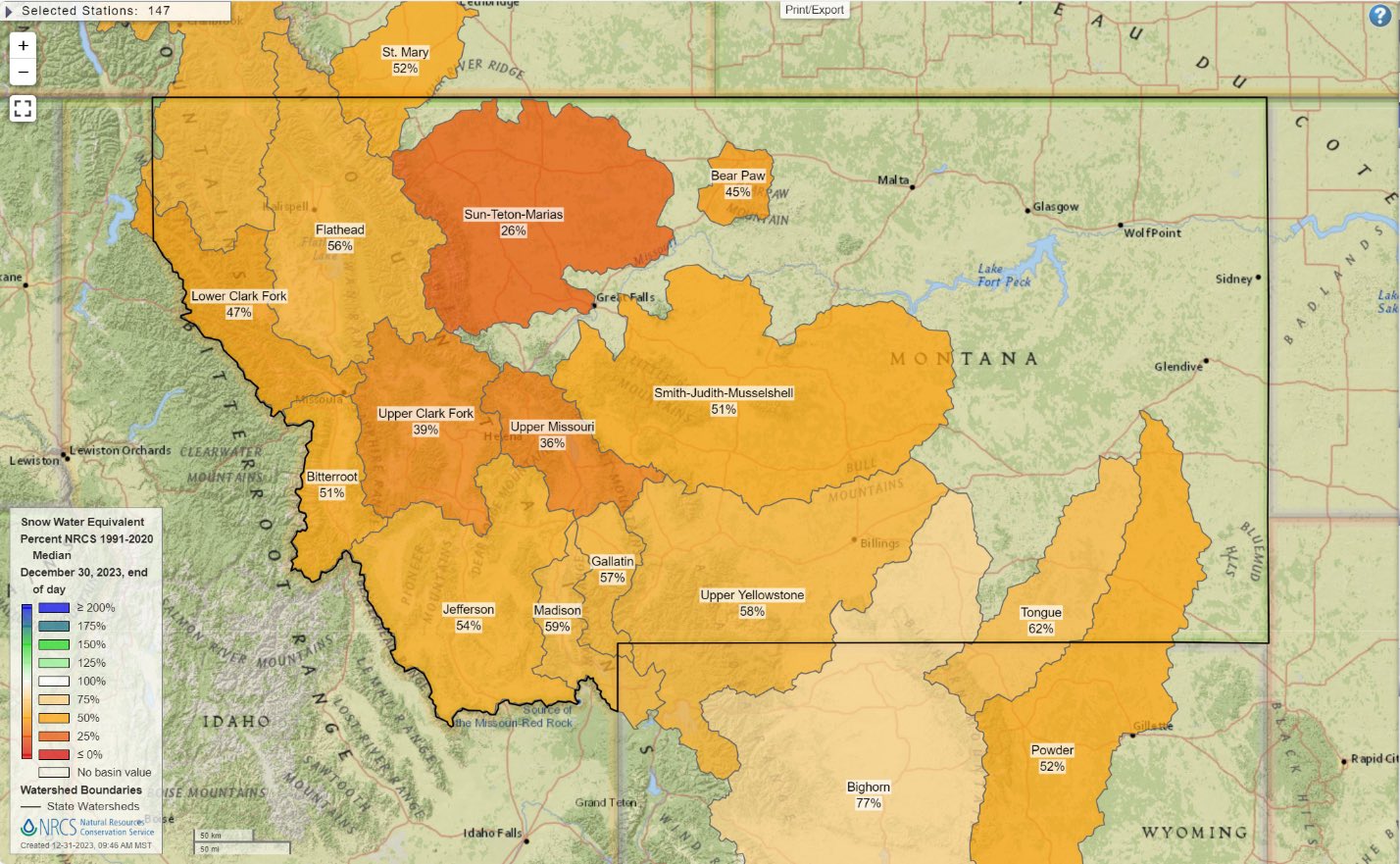
The recent snow survey map across Southwest Montana. MAP COURTESY OF THE NATURAL RESOURCES CONSERVATION SERVICE

The Natural Resources Conservation Service Montana Snow Survey reports that as of Dec. 30, 2023, the annual snowpack ranges from a meager 26% to 62% of average. A safe generalization in avalanche forecasting is that thin, early-season snowpacks in the Rocky Mountains transform into piles of weak facets with the consistency of granular sugar. This occurs because warmer temperatures at the ground drive water vapor up through the snowpack, creating large angular ice crystals that bond poorly to one another. 

Blanchford Landscaping Holiday Deal Blanchford Landscaping Holiday Deal Blanchford Landscaping Holiday Deal
ADVERTISEMENT

This pattern of weakening has been prevalent across the region of Southwest Montana covered by the Gallatin National Forest Avalanche Center. From Island Park, Idaho, to the Bridger Range and Cooke City in Montana, our field days reveal a snowpack rife with weakness. If you ride elsewhere in Montana, refer to your local avalanche forecast or assume things are similar.
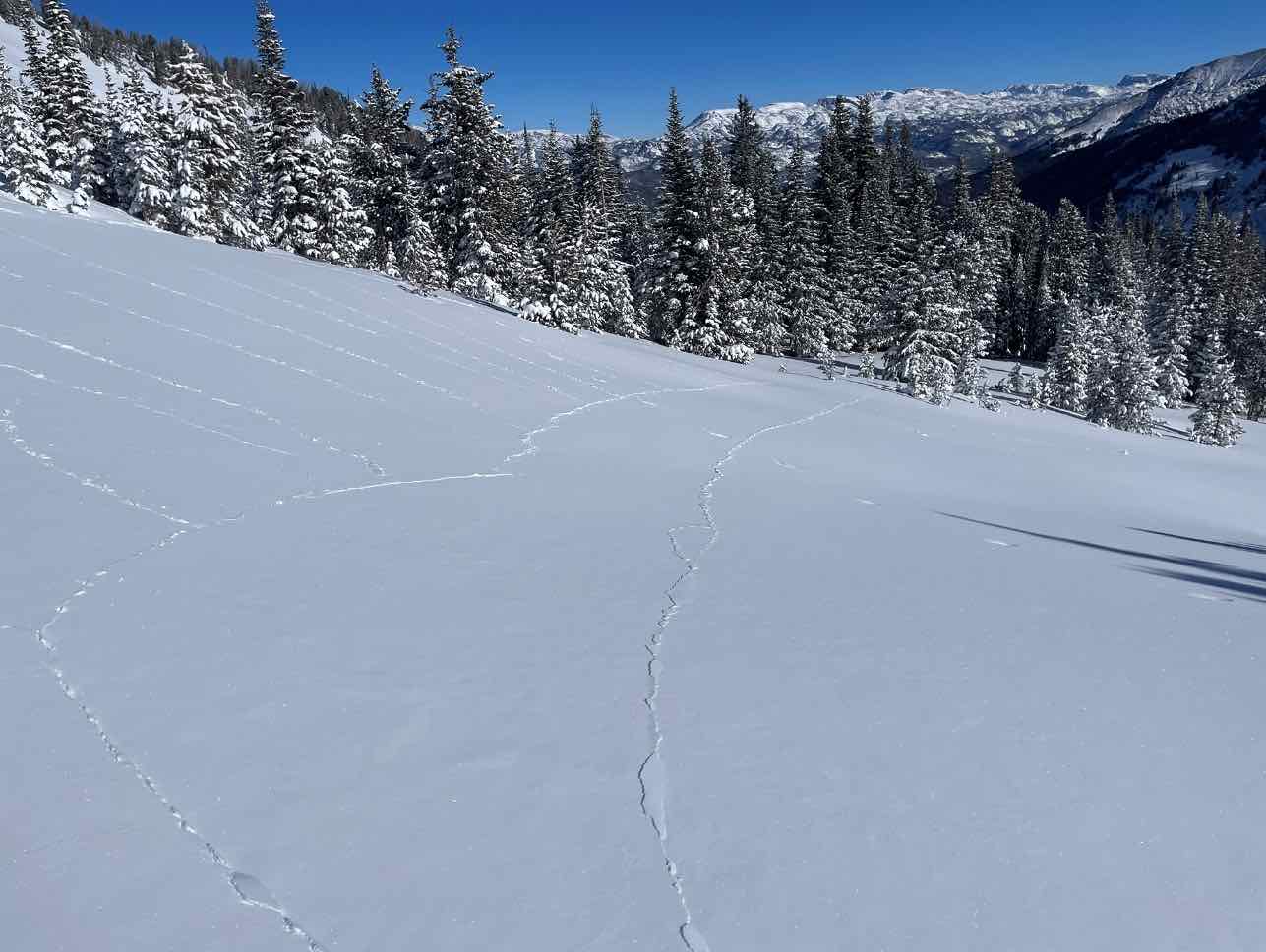
Cracks shot out 100 feet before circling back to a skier in Cooke City. This collapse would have resulted in an avalanche if the slope had been steeper. PHOTO BY BEAU FREDLUND
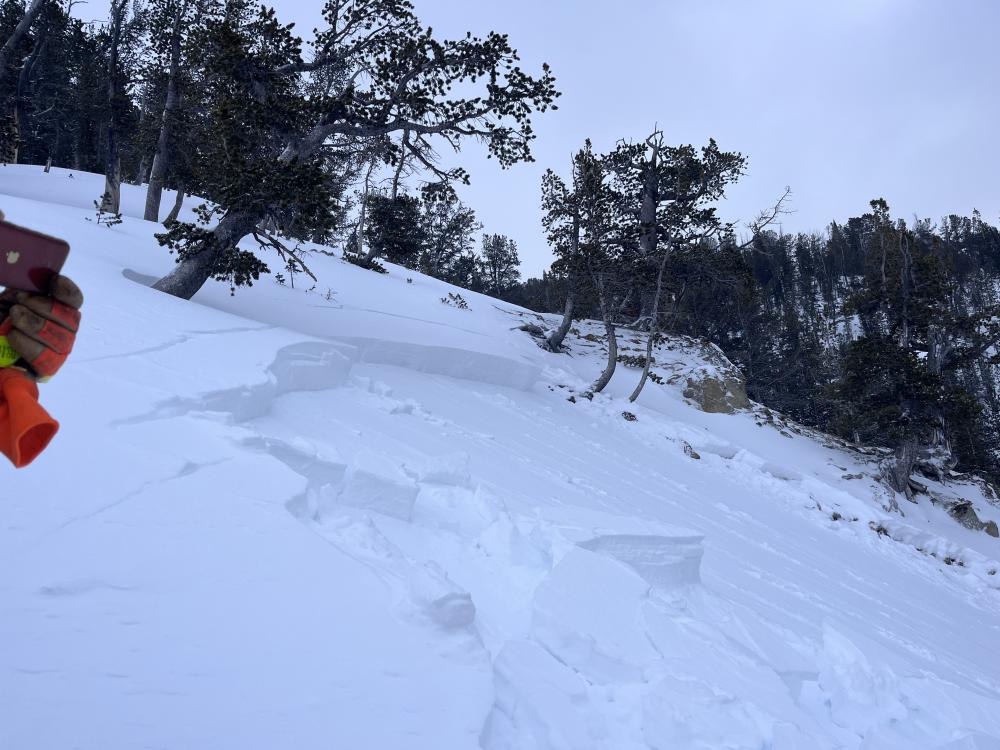
Gallatin National Forest Avalanche Center forecasters triggered this avalanche in Cooke City from hundreds of feet away in flatter terrain. Remotely triggering avalanches like this is an indicator of a highly unstable snowpack. PHOTO COURTESY OF GNFAC

Snow returned to the forecast area one week into January. With the new snow, granular facets and feathery surface hoar become persistent weak layers upon which avalanches occur. Instability due to persistent weak layers is slow to improve. It can result in slides that break deeply and widely across slopes and be triggered remotely from long distances away or flat meadows below steep terrain. We are watching with fascination as slabs of snow collapse, crack and tumble down the mountain when even small loads of new snow add stress to our weak snowpack, triggering avalanche warnings. Thus, the celebration of improved riding conditions should come with added caution and conservative decision-making. 

Having the fundamental skill of identifying avalanche terrain can help keep us safe. Avalanche terrain is commonly defined as any slope steeper than 30 degrees. Add a slope angle measuring tool, called an inclinometer, and a digital map with slope angle overlays to your standard avalanche kit, including a transceiver, probe and shovel. Backcountry travelers can also look for physical clues such as steep slopes cleared of large trees and trees with broken branches on the uphill side. These physical clues can help us determine how far avalanches run downhill. 

As snow falls this winter, we must all be on top of our avalanche game. The season will be characterized by weakness within the snowpack and dangerous avalanche conditions during and after snowstorms. Continue to hope for snow, and when it comes, keep the excitement high by making safe decisions relative to the increases in avalanche danger. 

Follow the Gallatin National Forest Avalanche Center at mtavalanche.com or your local avalanche center at avalanche.org to track the avalanche conditions as the season progresses. 

Dave Zinn is an avalanche forecaster for the Gallatin National Forecast Avalanche Center.
Yellowstone National Park Lodge Yellowstone National Park Lodge
xanterra your backyard your adventure
ADVERTISEMENT

Listen

Outlaw Beat Podcast

Joe Borden & Michele Veale Borden

Lastest Episode
See More Episodes
outlaw realty montana outlaw realty montana
ADVERTISEMENT
Outlaw Realty Big Sky Bozeman
ADVERTISEMENT

Upcoming Events

Nov 18
5:30 pm - 8:00 pm Event Series

American Legion Bingo

Nov 19
12:15 pm - 1:30 pm Event Series

Community Yoga

Nov 19
6:00 pm - 8:00 pm Event Series

Pickup Ultimate Frisbee

Nov 21
7:00 pm - 9:30 pm Event Series

Trivia at the Waypoint

Nov 24
9:00 am - 12:00 pm Event Series

Community Hike Big Sky

View Calendar
Event Calendar

Related Posts

What happens when wolves leave Yellowstone
Environment

What happens when wolves leave Yellowstone

November 18, 2025
Montana State University wins Can the Griz food drive in support of Gallatin Valley Food Bank, Bounty of the Bridgers food pantry
Bozeman News

Annual Can the Griz competition helps the hungry in Gallatin Valley

November 17, 2025
Bobcats to wear American Indian Council logo on helmets 
Regional

Bobcats to wear American Indian Council logo on helmets 

November 15, 2025
What’s there to do in Yellowstone during the winter? A lot, it turns out.
Regional

What’s there to do in Yellowstone during the winter? A lot, it turns out.

November 14, 2025

An Outlaw Partners Publication

Facebook-f Instagram X-twitter Youtube

Explore Big Sky

  • About/Contact
  • Advertise
  • Publications
  • Print Subscriptions
  • Podcast
  • Submissions

Outlaw Brands

  • Mountain Outlaw
  • Plan Yellowstone
  • Big Sky PBR
  • Wildlands Music
  • Outlaw Partners
  • Outlaw Realty
  • Hey Bear

Copyright © 2025 Explore Big Sky | Terms of Use | Privacy Policy | Your Privacy Choices

No Result
View All Result
  • News
    • Bozeman News
    • Regional
    • Business
    • Outlaw Partners News
  • Yellowstone
  • Arts & Entertainment
  • Sports
  • Opinion
  • Real Estate
  • Events

©2024 Outlaw Partners, LLC. All Rights Reserved.

Explore Big Sky Logo
  • News
    • Wildfire News
    • Local
    • Bozeman
    • Regional
    • Business
    • Real Estate
    • Outlaw Partners News
  • Arts & Entertainment
  • Opinion
  • Sports
  • Yellowstone
  • Events
Subscribe
Newsletter Sign Up
Facebook X-twitter Instagram Youtube