


By Leslie Kilgore EBS STAFF
At Lone Peak High School, theater students are learning that putting on a production involves more than memorizing lines and stepping onto a stage. Through the International Baccalaureate (IB) theater program, students explore the creative process from multiple perspectives, taking on the roles of performers, directors, designers and creators while learning to analyze how every element of a production shapes an audience’s experience.
For Vanessa Wilson, who is teaching IB theater for the first time this year, the program offers students an opportunity to develop both their creativity and their critical thinking skills. With a background in communication arts and theater, as well as years of involvement in Big Sky’s community theater productions, Wilson brings a longtime appreciation for the performing arts to the classroom.
The two-year course begins in students’ junior year. This year’s class has eight students, many of whom are also involved in Big Sky Broadway’s production of “Frozen.” Through the IB curriculum, they study theater spaces, set and costume design, acting techniques and performance styles, while exploring what goes into bringing a written work to life.
“I really like the IB theater curriculum,” Wilson said. “It’s a course where students can be creative while also taking part in every aspect of a production. They are the directors, the creators, the set designers and performers.”
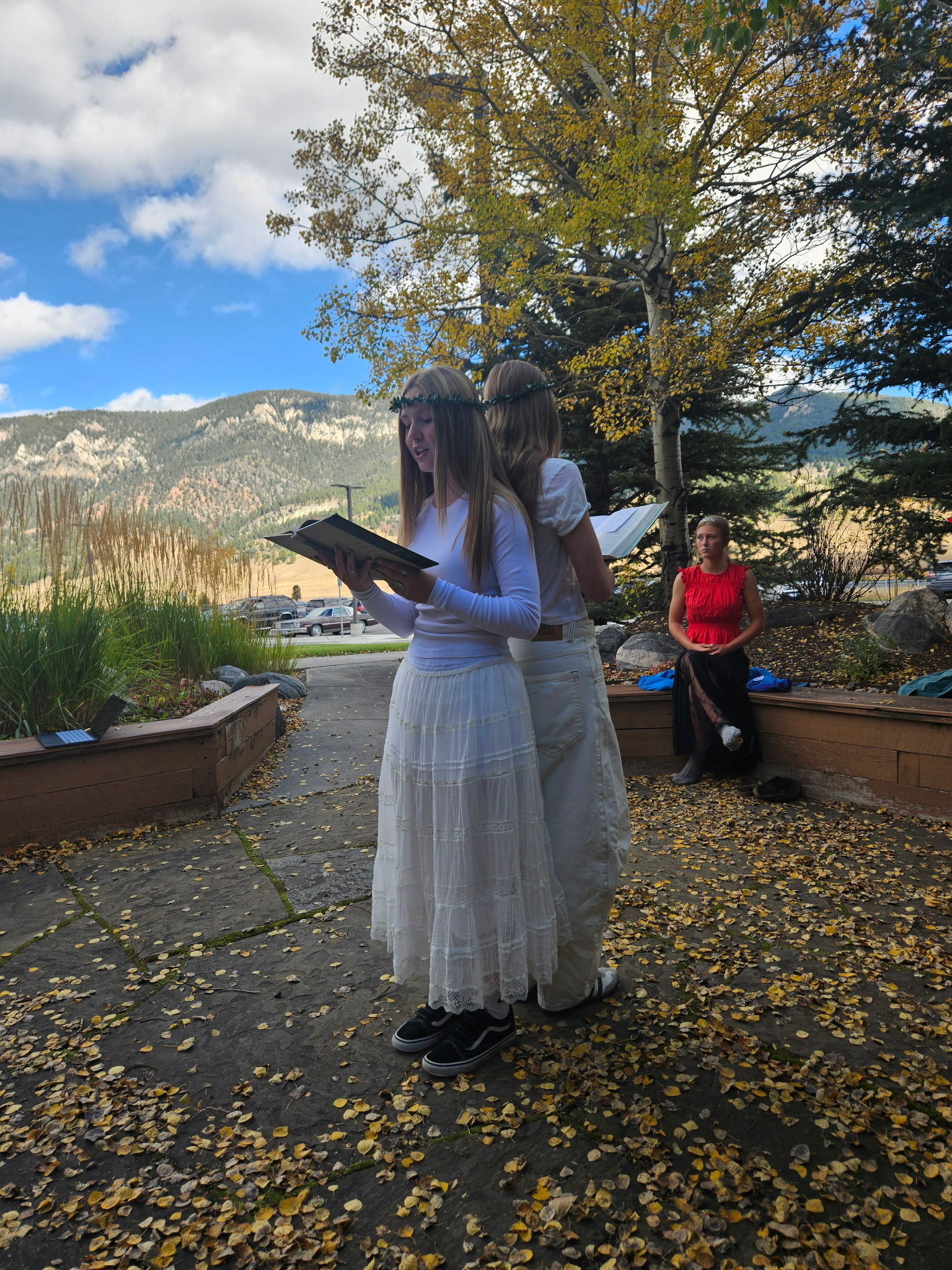
During their junior year students are introduced to the foundations of theater and the many elements that contribute to a successful production. Wilson recently had students read “A Midsummer Night’s Dream” and design miniature sets in shoeboxes based on scenes from the play. They also explored different performance spaces, including theater in the round, and performed a scene from “Oedipus Rex” in the circular outdoor space adjacent to the Big Sky Public Library.
“They chose theater in the round, and it really worked well,” Wilson said. “They loved it.”
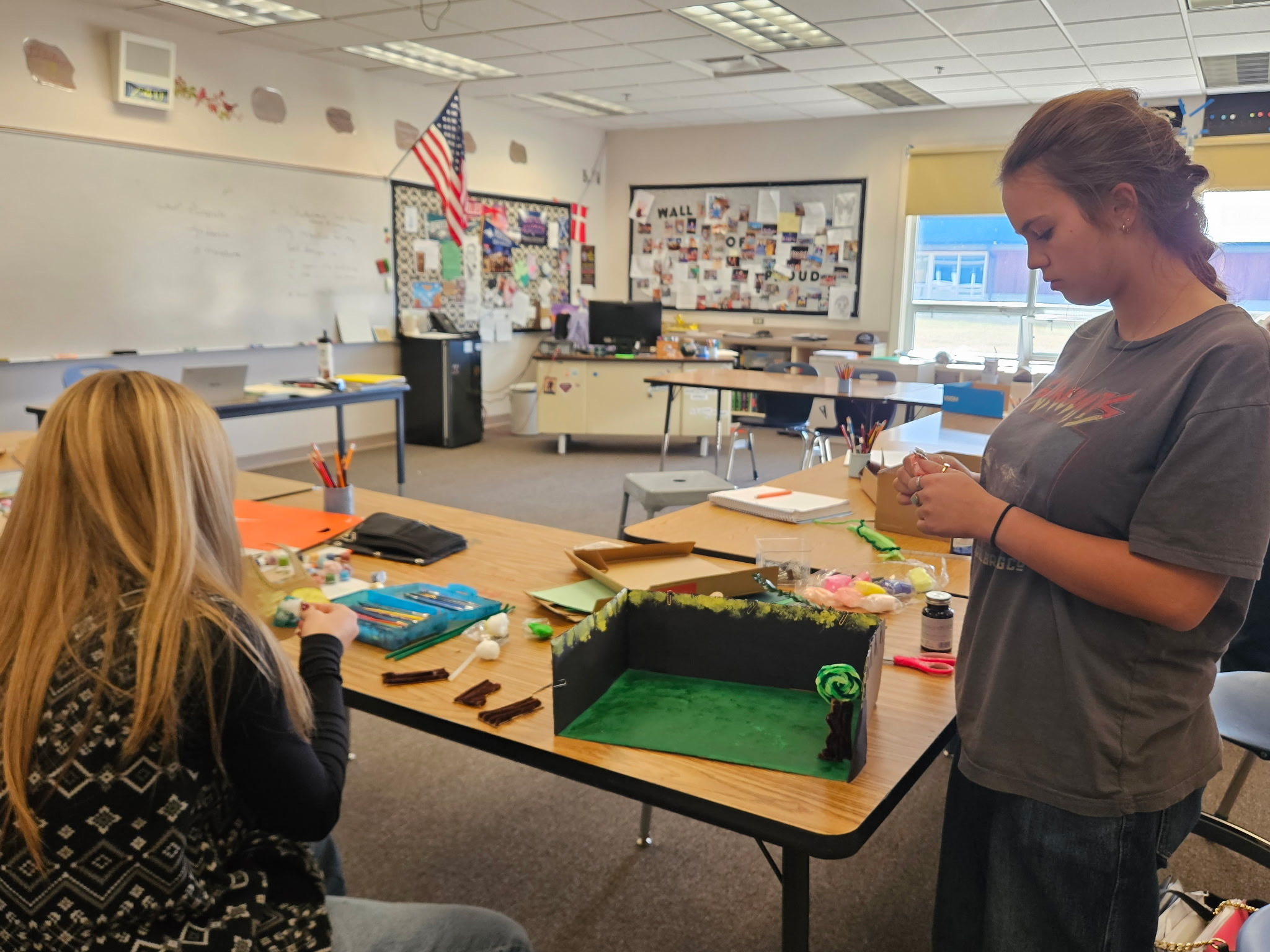
As students progress through the two-year program, the emphasis shifts toward developing their own creative work and understanding the intention behind artistic choices. Wilson said one of the biggest differences between IB theater and a more traditional high school drama class is the amount of analysis and reflection expected of students.
“I think the analysis and reflection piece in the IB program is what provides a higher thought process,” Wilson said. “They are asked to create scenes with intention. They are challenged to explain why they developed a scene and what is the outcome that they hope for their audience to experience.”
Students are also challenged to examine how theater can make an audience feel through various elements.
“In class, we watched portions of the Broadway musical ‘Hadestown,’ analyzing how acting, facial expressions, lighting, sound and other production details create tension, emotion, atmosphere and meaning on stage,” Wilson said.
“We discussed how they may feel emotion at a particular moment, but why?” Wilson added. “What is it about that scene or that moment that’s creating emotion for the audience?”
That deeper examination of the creative process is central to the IB curriculum. Students learn to consider what they want to communicate through a performance, whether they accomplish that goal within their own scripts, and what they might change to make it stronger.
“It’s thinking with a deeper meaning about a stage production, and then it’s also about reflecting on it. Did things go the way I wanted them to go on stage? What would I have done differently?” Wilson said.
The program culminates in four major assessment projects that students complete by the end of their senior year. One explores world theater traditions, requiring students to research a particular style or cultural tradition, from Japanese theater to historical European performance practices. Students prepare a presentation and demonstrate how they have developed their understanding of a particular acting style or character, documenting and reflecting on their progress.
Another project is a production portfolio, essentially a director’s notebook. Students independently select a play and develop a vision for how they would bring it to the stage, addressing set design, costumes, directing choices and even the blocking of individual scenes.
A third project gives students an opportunity to collaborate and create an original short play. Working together, they develop an eight- to 10-minute production based on a theme meaningful to them. Last year’s students chose to explore school shootings and their effects on teenagers.
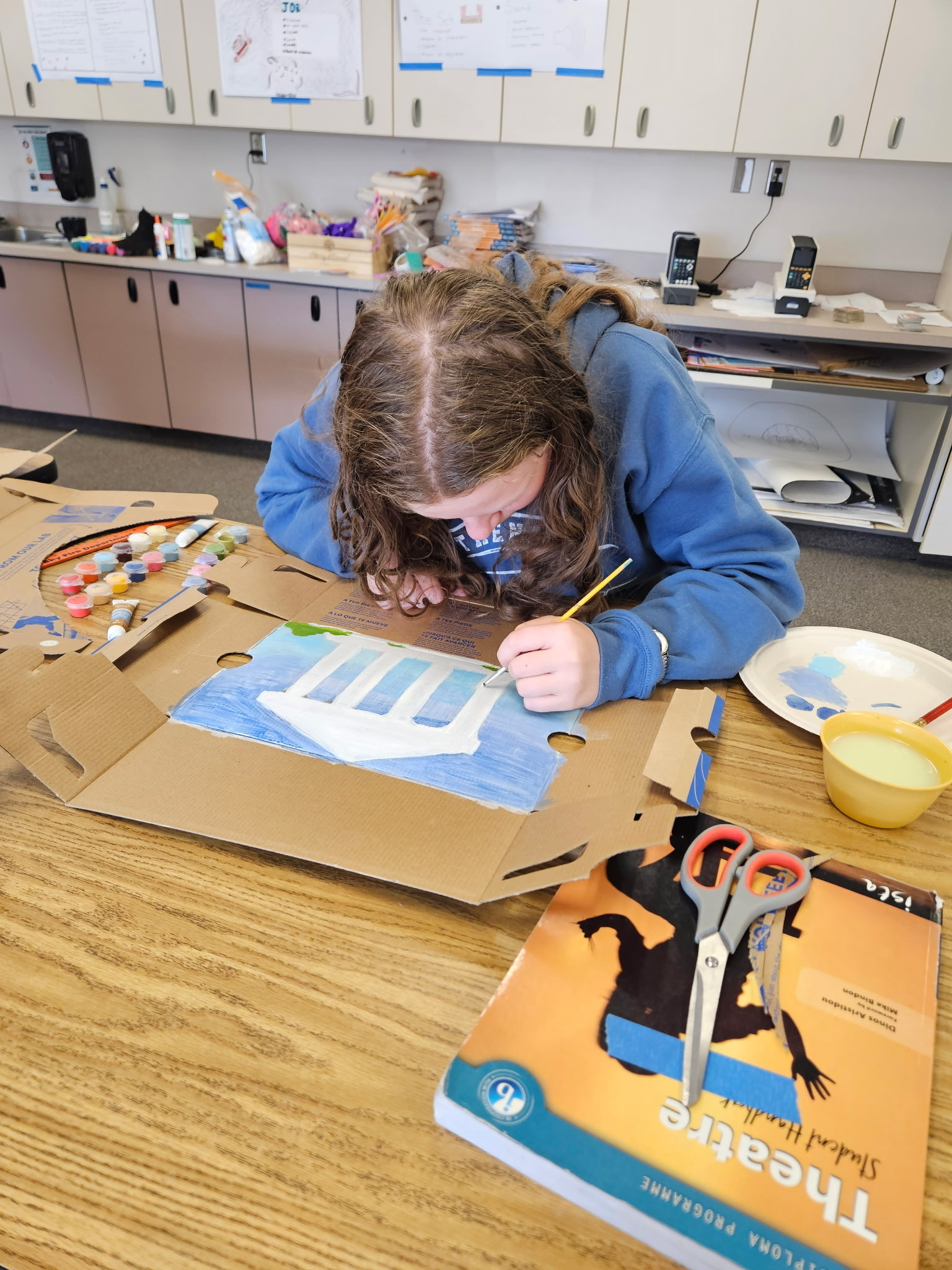
This year’s students are expected to write, produce and perform their collaborative piece as part of the school’s visual art and music showcase in the spring.
Students pursuing the higher-level IB theater course also complete an individual solo performance project. They research a theater theorist and develop a performance influenced by that person’s theories, incorporating their own creative and design choices.
Wilson said the Warren Miller Performing Arts Center (WMPAC) provides an important resource for students as they work through the different elements of production.
“Because of the WMPAC, students have opportunities to learn about lighting and sound, which also includes operating the technical equipment used in performances,” he said.
Wilson recently traveled to New York City for an IB theater training, where she joined teachers from around the country to work through the four major IB drama projects, the assessment criteria and setting expectations for students in their creative work. The training also gave her an opportunity to explore the professional theater environment, with sessions held at Ripley-Grier Studios, a facility often used for Broadway auditions.
While the program provides students with an opportunity to pursue their interest in the performing arts, Wilson said her hope is that they leave with an appreciation for theater that extends well beyond high school or a potential career in the arts.
“I think they do gain a stronger love for theater in various aspects,” she said. “As well as an understanding that theater is more than just being entertained. Through this class, students learn to develop strong ideas about the experience of theater and deeper meanings as to what they got out of it.”
Students in the class are already finding ways to apply what they learn outside the classroom through Big Sky Broadway’s “Frozen” production and with technical responsibilities for Big Sky’s community theater, including running sound and lighting boards. Wilson also noted that Big Sky’s community theater group offers opportunities for students to become involved in productions and volunteer as docents.
Although she is still getting to know her students’ long-term ambitions, Wilson said the program has previously helped students pursue further studies in musical theater and other performing arts.
For now, she hopes more students continue choosing theater and the other IB arts offerings at Lone Peak High School so the programs continue to flourish as part of the school’s curriculum.
“I just hope kids keep choosing these classes,” Wilson said. “So that we can keep these programs growing, and Big Sky students continue to develop a lifelong love and appreciation for the performing arts.”