


Montana State University has received a $3 million NASA grant to lead a nationwide project that will use high-altitude balloons and drones to study wildfire smoke and other air pollutants.
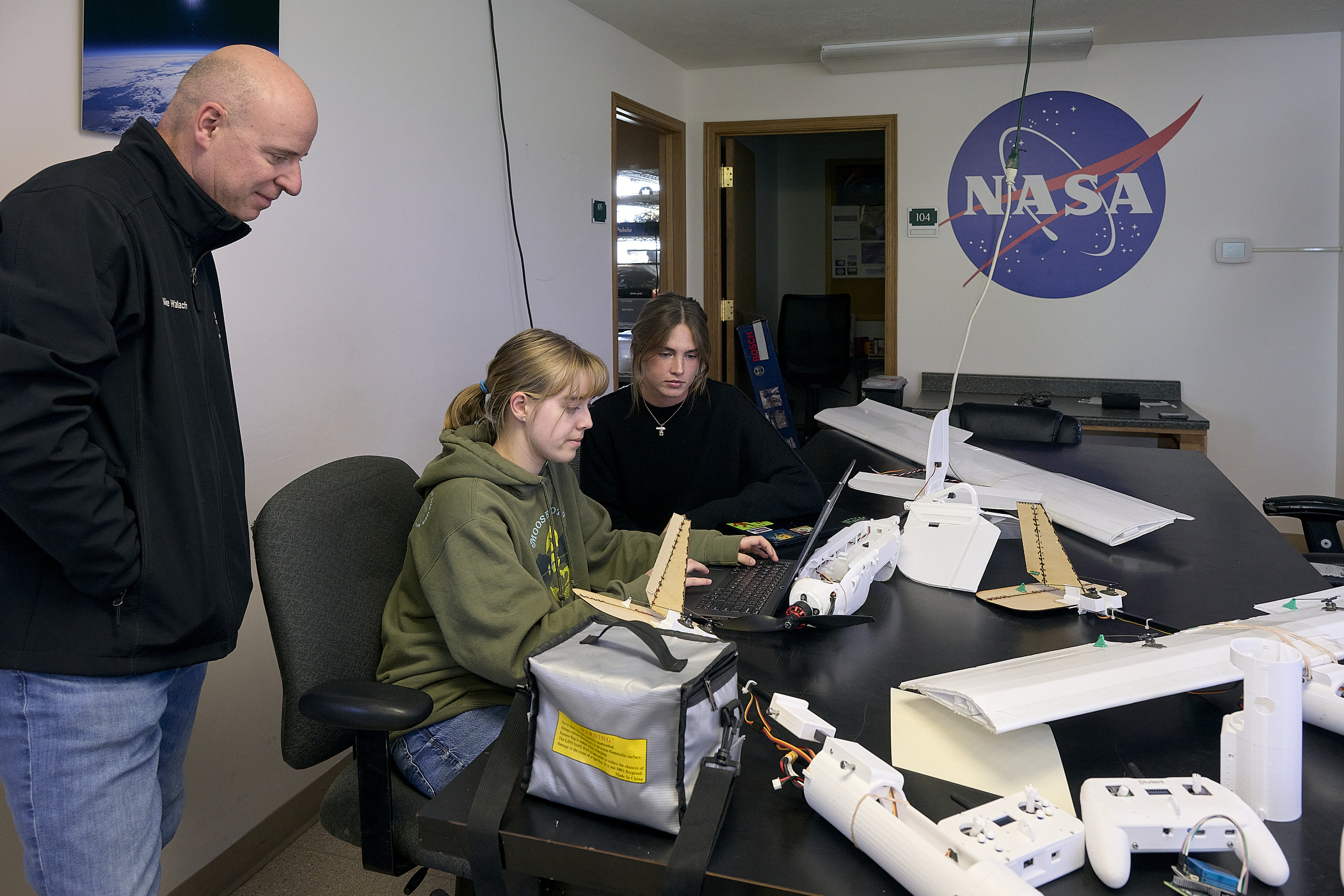
The project, called the Aerial Science, Collaboration, and Education Network for Discovery, or ASCEND, will bring together 40 undergraduate teams from community colleges and universities across the country, according to an MSU news service release. Teams will use equipment designed by students in MSU’s Balloon Outreach, Research, Exploration and Landscape Imaging System, or BOREALIS lab, to measure how pollutants are distributed at different heights above the ground.
Balloons will gather data from the surface to about 100,000 feet, while drones will take measurements up to 400 feet. The data will support NASA’s Tropospheric Emissions: Monitoring of Pollution—TEMPO mission—which monitors air pollution over North America from a satellite-based instrument.

“This research is particularly relevant to Montana, where wildfire smoke is an increasingly important air quality issue,” said Michael Walach, an MSU associate professor, BOREALIS flight director and the project’s principal investigator, in the news release.
Eight institutions, including the University of Montana, will serve as regional “pod leads,” training and mentoring about five teams each. Proposals from interested schools will open in January 2027, and no prior experience with balloons, drones or air quality research is required. Selected teams will train in 2027 and collect data during four coordinated seasonal campaigns in 2028.