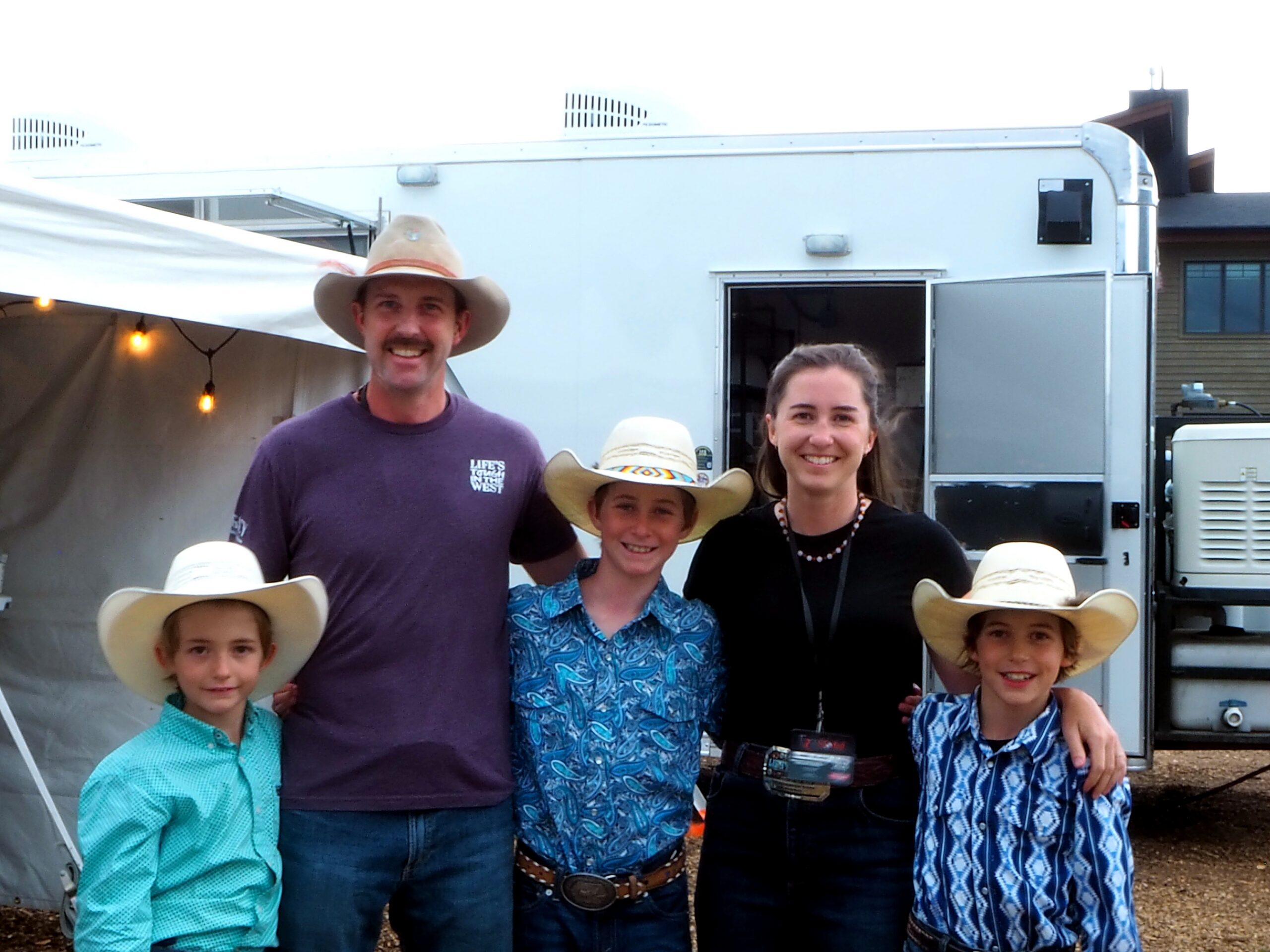

A fifth-generation Whitefish native, Morris is closing out his career alongside his wife and three sons
By Annie O’Neill EDITORIAL INTERN
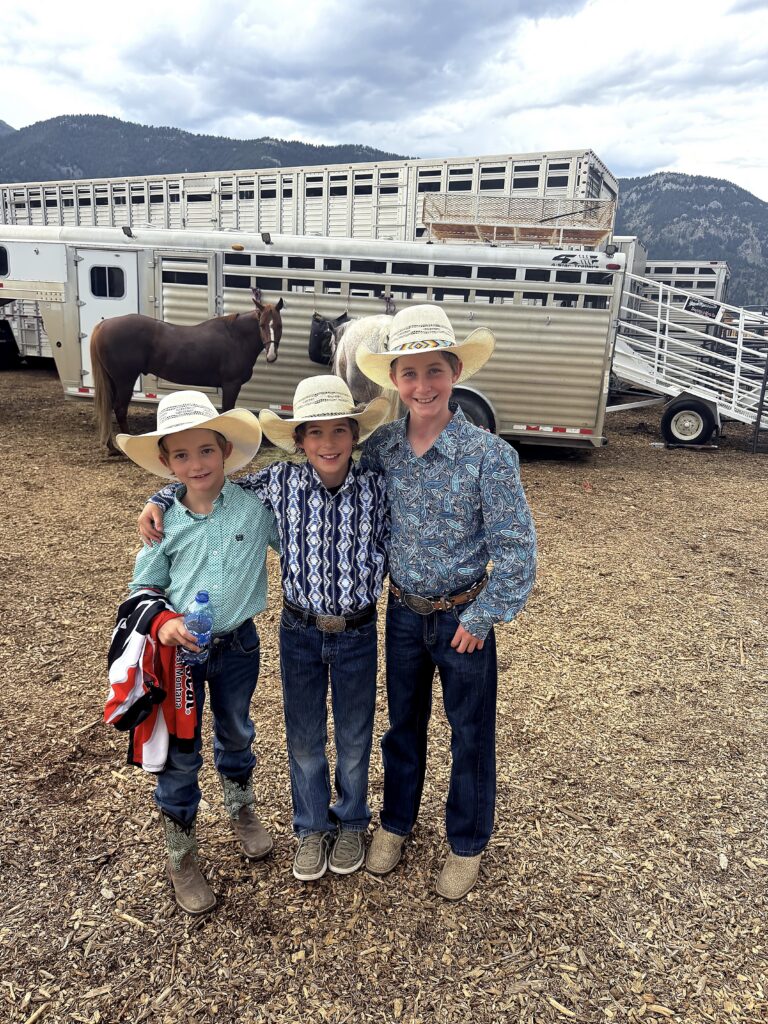
Behind the chutes at Big Sky PBR, three young boys scanned the arena for their dad, eyes bright beneath cowboy hats. Stetson, 12, Payton, 9, and Teddy, 8, stood waiting, all three there to support their father, bullfighter Cody Morris. Their mother, Elizabeth Morris, stood nearby.
Cody and his wife Elizabeth are both fifth-generation Whitefish natives, raised in the same corner of Northwest Montana that now watches them raise three boys of their own.

“We are fifth generation Whitefish, born and raised,” Elizabeth said.
That Montana lineage runs deep, but the bullfighting line follows its own thread through the family. Cody is a second-generation bullfighter. His father fought bulls before him and taught him the craft. Now, in his final season, Cody is closing out an 18-year career that took him further than he ever expected, alongside wife Elizabeth and their three sons.
“This is Cody’s last year too, so … it’s bittersweet, but a little bit exciting too,” Elizabeth said.
The couple, high school sweethearts, have built their family life around the rodeo circuit ever since, a path that never felt like a question.
“Oh, I knew we would get married. We started dating when I was 16, and even then I was like, oh yeah,” Elizabeth Morris said. “And with that came knowing we would do rodeo, too.”
The job
A bullfighter’s role differs from that of a rodeo clown or barrel man. The role of a bullfighter is to protect the riders once they hit the dirt, drawing the bull’s attention away and putting himself between the animal and a downed rider. It requires split-second timing and, according to those who know Cody best, a level head under pressure.
“Don’t let Cody’s easygoing demeanor fool you. When the chute gate cracks, he’s all business,” according to the Park County Community Journal. “He’s proof that Montana breeds warriors with both brains and brawn.”
It’s a work ethic Elizabeth says isn’t unique to her husband. It’s regional.
“Montana work ethic is just different,” she said.
Cody has spent 18 years in that role, fighting in both the Northern Rodeo Association and PBR. The toll shows in his medical history: broken ribs, a broken leg, numerous concussions and two back surgeries for damaged discs. His worst injury struck last year at Big Sky, when a bull kicked him in the head. Yet Cody returned again this year.
That calm under pressure, Cody said, comes down to a mental toughness the job demands.
“To do this, you have to be mentally tough. ‘Cause it’s tough, you’re gonna get hurt,” Cody said. “I see it all the time in young riders. They get run over, whatever hurts, and their shell just gets broken. Either it’s broken, they’re done, and you go, okay, you tried it, you did your best, it’s not for you. And then the ones that got it, they’re in there again next week just taking the beating. And that’s just how it goes.”
That toughness doesn’t come easier with experience, he said. If anything, it’s the opposite.
“I noticed later in my career it’s getting harder to defeat that mental struggle,” Cody said. “Like all these guys, we got stuff to do on the weekends, and I can’t do it, because I’m hurtin’. It is harder to defeat that.”
Whatever the toll, his purpose in the arena hasn’t changed.
“My job is to protect those guys at whatever cost it is,” Cody said.
His protection extends beyond the riders to the animals themselves. When asked whether the bulls can sense fear, he didn’t hesitate.
“Yeah, they can sense if I have a bad day. Then they’re gonna have a bad day,” Cody said.
Life on the road
Cody grew up playing football before trading shoulder pads for the arena. His sons, for their part, seem more impressed by the football stat than the bulls. When asked about their dad, the first thing they mentioned was that he used to play football.
Cody’s commitment to the sport has carried the family through a full-time life on the rodeo circuit, one deliberately built around family.
“It’s been the lifestyle that we’ve got to live with. This has been incredible,” Elizabeth said. “The places that we’ve gone and seen that we wouldn’t have otherwise … but also it’s time. The idea of scheduling our own summer, and not having our schedule handed to us, is a little liberating.”
Bringing families along wasn’t always the norm on the circuit, she said, and she credits families like hers with helping shift that.
“Rodeo kind of had a bad rap that it wasn’t family friendly,” Elizabeth said. “We’ve just been very intentional that this is going to be a family thing. And we’ve had so many people jump on board with that … it just gets to be, basically, a summer full of family reunions.”
For the Morris boys, that community shows up in specific names. Asked if he had a favorite rider or cowboy besides his dad, Stetson, 12, didn’t hesitate.
“Kaleb or Toby,” Stetson said. “The ultimate teammates.”
Kaleb, he added, has three boys of his own, boys Stetson considers “like brothers.”
That kind of bond, Elizabeth said, has grown alongside a broader shift toward bringing families onto the circuit full time.
“People are seeing that you really can do this as a family,” she said. “When more people jump on board doing it as a family, it builds an even bigger community. It’s just been really beautiful to see.”
The Morrises also credit event producers for making that lifestyle sustainable.
“From the moment we roll into town to when we leave, they just take such good care of us,” Elizabeth said. “We’ve built a truly beautiful rodeo family who we hold near and dear to our hearts.”
Still, Cody said, the choice to keep the family together on the road sets them apart from most.
“There’s not a lot of people that do it with their family all year long,” he said. “We kind of set it up that way. We chose that.”
For him, the pull to rodeo life, and to a career built around it, was never really a choice at all.
“It is so much in your blood. How could you stay away?” Cody said.
Big Sky as the pinnacle
For most bullfighters, the career-defining moment is a trip to the National Finals Rodeo. For Cody, born and raised in Montana, that moment was Big Sky PBR.
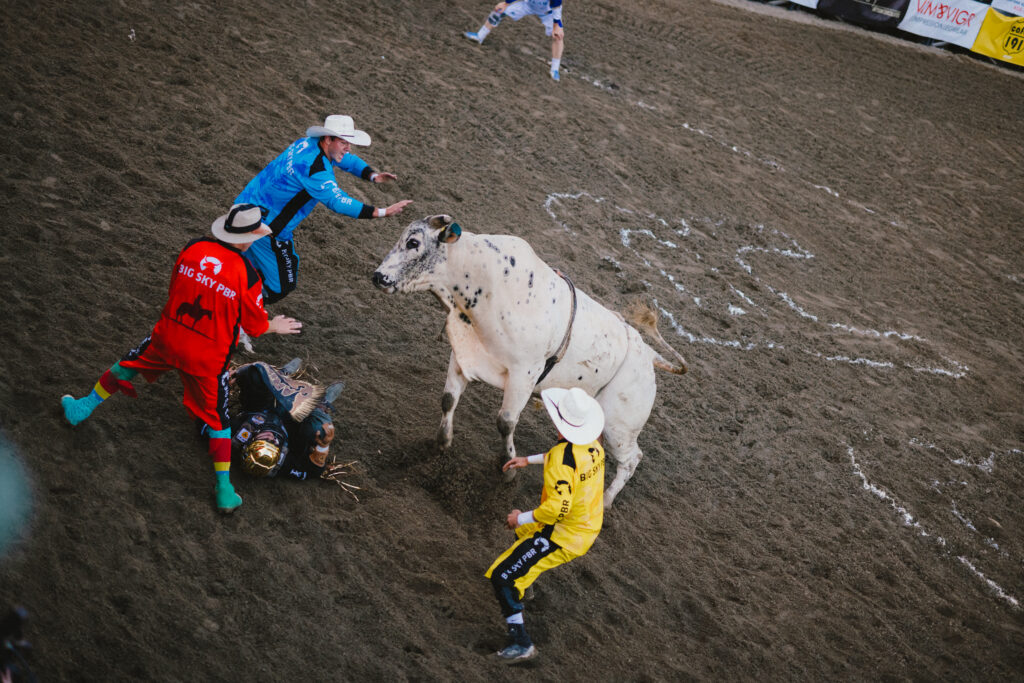
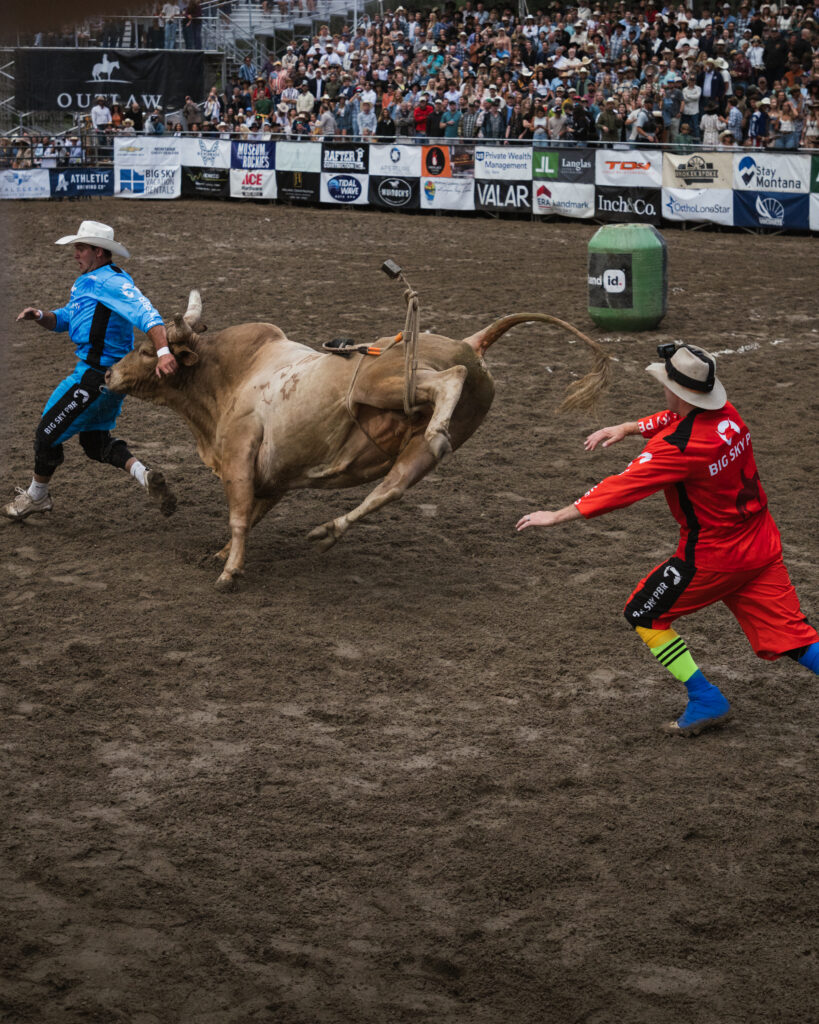

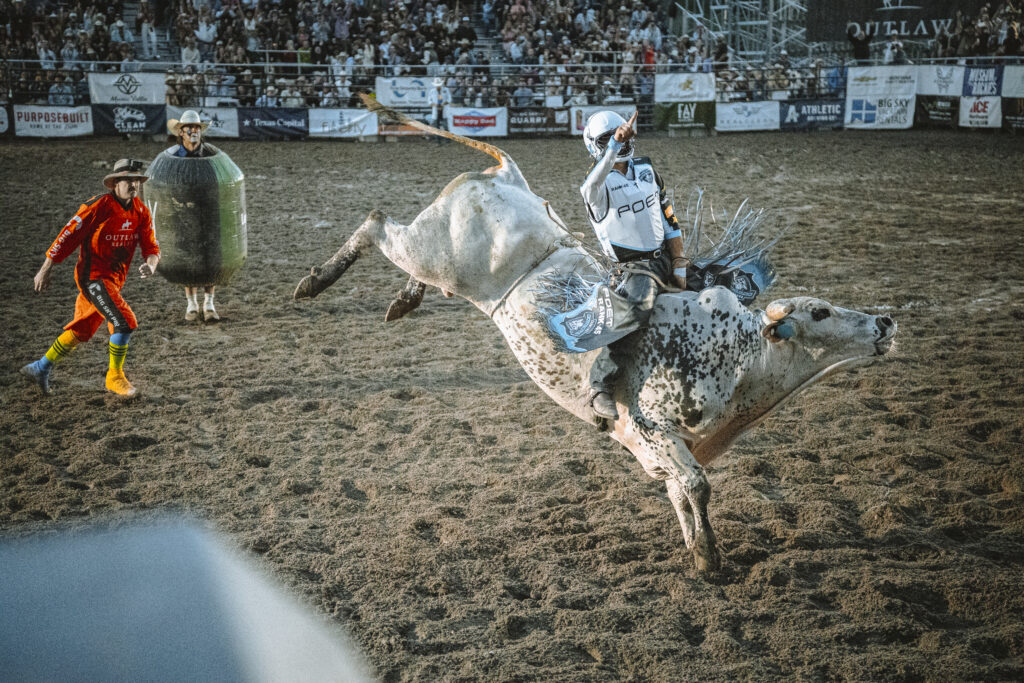
“This event in particular, like a lot of bullfighters, they have a dream of the World Finals, and this is ours,” Elizabeth said. “So last year when we got to fight here, like, this is it for Cody. Being born and raised in Montana, when he got to do Big Sky, it was just like, this is it.”
That moment, she said, changed how the family thought about the rest of Cody’s career, and about walking away from it.
“After that, it was like, I know whenever I decide to retire. He achieved it, he got to do it all, and got to do it in a really respected way,” Elizabeth said.
After years dictated by the circuit calendar, what Cody says he’s most looking forward to in retirement isn’t rest, exactly. It’s the ordinary.
“Being home and doing chores in the spring and early summer,” Cody said. “And then just camping, sports, fishing, you know.”
Whitefish raised them both, five generations deep. Bullfighting joined that family history more recently, but when asked if her sons might join in on the trade, Elizabeth didn’t hesitate: “yeah.” For now, Cody isn’t looking ahead. He’s looking back, at a hometown that raised him, a wife who’s been there since he was 16, and a career that carried him further than he ever set out to go.
“I am at peace. I am ready,” Cody said.