


Film investigates the wolf’s reputation globally, expert panel reckons with the West’s wolf eradication
By Jen Clancey STAFF WRITER
Like a shadow, the North American wolf’s mythic reputation looms larger and darker than the actual being. How wolves have been perceived globally—and their impact on prosperous industries—has led to a wide eradication of the species over hundreds of years, a 2026 documentary film outlines.
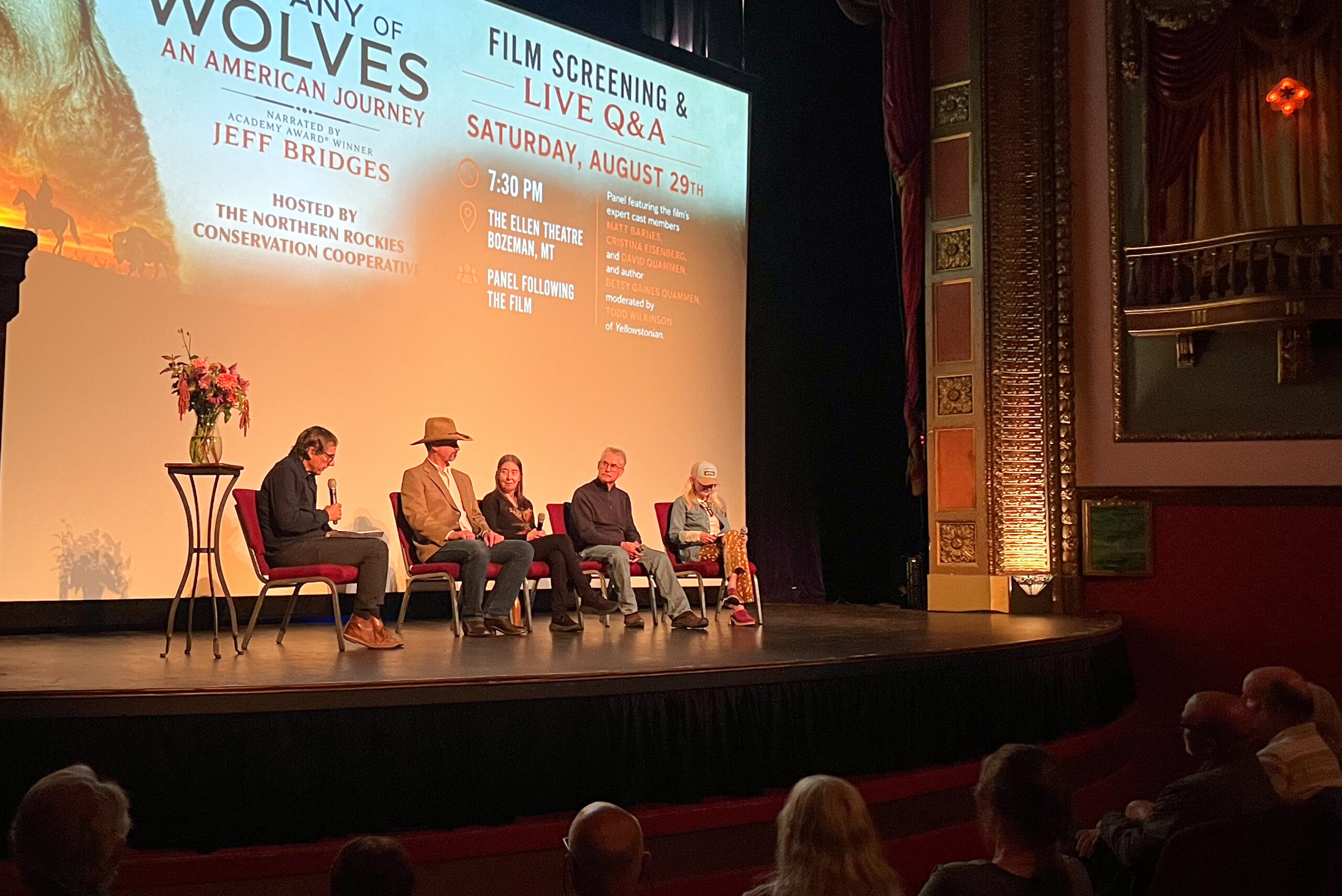
At the Ellen Theatre in Bozeman, the local premiere of “In the Company of Wolves: An American Journey” followed by a panel of experts explained what it means when wolves disappear and how perspectives are changing.

ITCW is directed by Susan Kucera and narrated by Jeff Bridges. The film walks through the legacy of wolf myths, colonialism and the migration to the West in chapters, drawing input from experts in the field. In three words, Bridges summarizes the goals of settlers during that time, and themes that still exist today.
“Civilize the wilderness,” Bridges’ voice echoed throughout the sold out Ellen Theatre.
After the film, panelists Betsy Gaines Quammen, David Quammen, Cristina Eisenberg, Matt Barnes and moderator Todd Wilkinson spoke about lessons from the film and their work in research, writing and conservation.
Barnes, a range-rider, conservationist and author noted that there needs to be compromise and support for ranchers alongside wolf recovery.
“We need to figure out how to meet people halfway,” Barnes said. He later pondered what is owed to the future, and to people, a theme he pulled from the night’s opening remark by Katie Christiansen, executive director of Northern Rockies Conservation Cooperative.
“The question is, how much does society owe to our ranching friends?” Barnes posed, acknowledging the costs of the industry, and its meaningful contribution to food systems.
A compromise will take some time and a mindset shift, he noted.
“The biggest thing I would say … that we’re still learning up here is this is not just about ecology,” Barnes said. “This is much more about culture, philosophy and competing perspectives on what the future of this landscape should be.”
As a historian and writer, Betsy Gaines Quammen critiqued perceptions of wilderness.
“One of the things that I’ve thought a lot about is this myth that this land is just for people, and we live in ecosystems,” Gaines Quammen said. This way of thinking contrasts Indigenous knowledge built from centuries of living with the land.
“The pivot from that, is to recognize the way that Indigenous people did, that we are very much a part of the land—that we’re not there to subdue it, we’re there to live within it,” she said.
Conversation centers on responsibility and reciprocity
The discussion took a turn when journalist and author Todd Wilkinson asked David Quammen to speak on hope, and what he learned from the late Jane Goodall.
“She was very insistent on the fact that hope is not a mood … it is a responsibility,” Quammen said. He noted a second responsibility—to understand our place in the world.
“T he responsibility of humans is to recognize that we’re interconnected,” Quammen said.
Purpose remained a common theme through the conclusion of the panel. Cristina Eisenberg, a Native American ecologist and wolf expert, said her father had seen wolves regularly while growing up on her family’s ancestral land next to Sierra Madre Occidental. The wolves would trot through ranchland, and sometimes pause to look at him. That experience among wolves, Eisenberg recalled, motivated her father to encourage her to understand them better.
For the last question of the night, Wilkinson asked each of the panelists to discuss what reciprocity means. Eisenberg explained that humans owe their existence to wolves, echoing a theme in the film describing how humans and other animals follow wolves to pick up the scraps of their hunt.
“ Reciprocity means we owe them. We owe them our existence as a species—to all of the life on the planet—and that is what we need to give the future generations,” Eisenberg said.