


By Jennifer Mohler EBS COLUMNIST
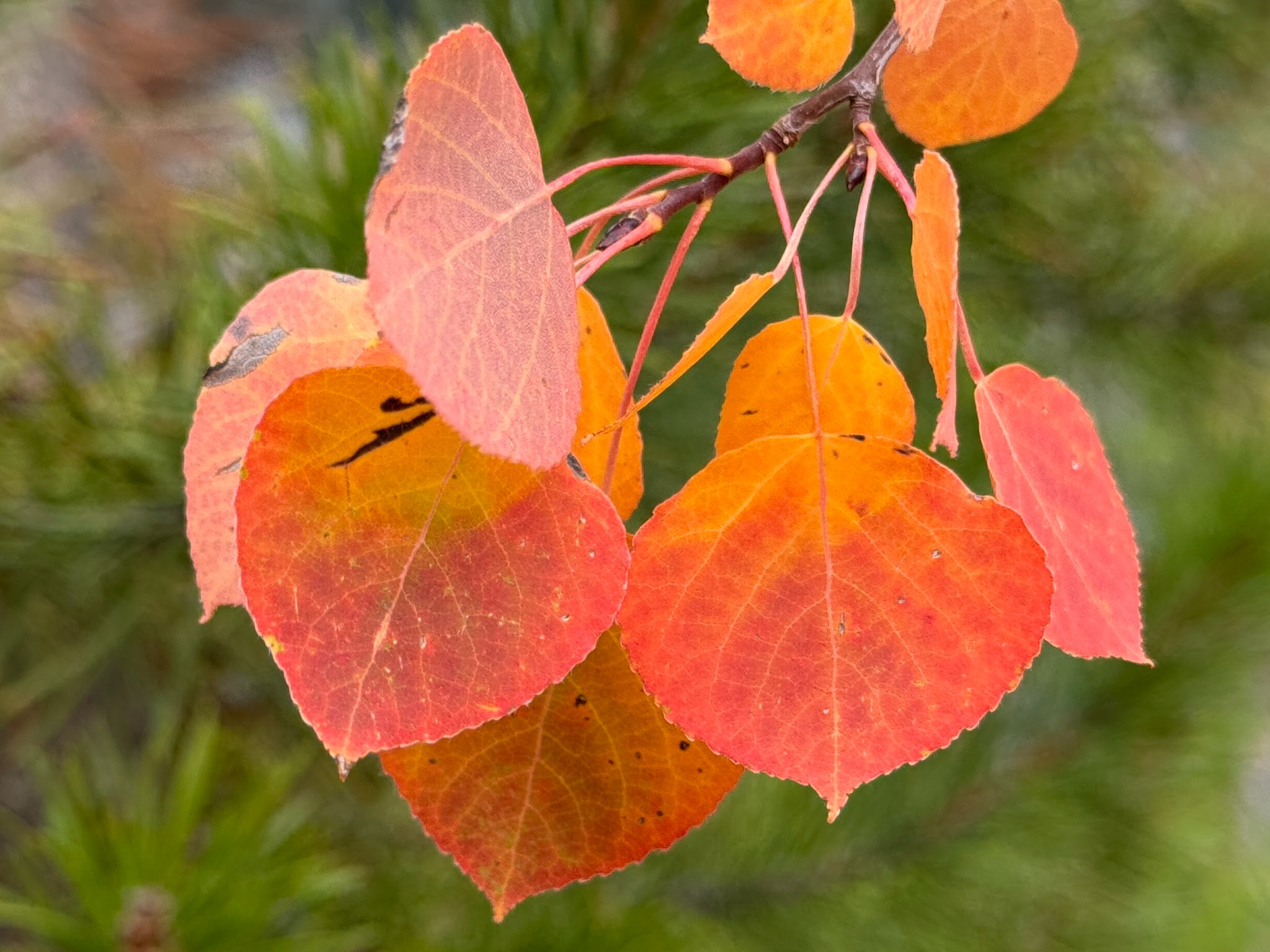
There is a moment each fall when the mountains around Big Sky seem to catch fire — not with flames, but with gold. Aspen leaves begin to turn, and suddenly the hillsides glow against the dark green of spruce and fir.

It is easy to think of aspens as simply beautiful trees. But beneath that shimmering canopy is a remarkable story of survival, cooperation and ecological importance.
Quaking aspen (Populus tremuloides) is Montana’s native aspen and the most widely distributed native tree species in North America, according to Montana Natural Heritage Program. In Montana, it grows from valleys and plains to the subalpine zone, wherever conditions provide enough moisture.
And here is the first wonder: What looks like a grove of individual trees may actually be one organism.
Aspens reproduce primarily by sending shoots up from an extensive underground root system, forming groups of trees known as aspen stands. The trunks we see are called stems, and multiple stems may share the same root system and genetic identity — a “clone.” A clone can produce new stems for decades, or even centuries, while individual trunks come and go.
This underground network helps explain why an aspen grove can be so resilient. It also makes aspens particularly important after disturbance. Fire, for example, can stimulate thousands of new shoots from an established root system. Where conifers may be killed by fire, aspens respond by filling the opening with a flush of new growth.
Aspens are also a gift to wildlife. Elk, deer and moose browse their stems and branches, while beavers consume bark, twigs and branches. Porcupines feed on the bark in winter and spring. Birds use aspen stands for nesting and feeding, and the vegetation growing beneath an aspen canopy provides additional food and cover.
Even in winter, the tree is not entirely “off.”
Aspen bark contains chlorophyll, allowing it to photosynthesize even after the leaves have fallen. Research by plant physiologists Knowlton C. Foote and Michail Schaedle found that bark photosynthesis can continue during milder winter conditions, helping trees recapture carbon dioxide released through stem respiration. It’s a small but fascinating reminder that a tree’s life extends beyond the leaves we notice.
Then comes fall.
As days shorten and temperatures cool, aspens stop producing chlorophyll—the green pigment that powers photosynthesis and masks other pigments in the leaf. Yellow and gold pigments called carotenoids become visible, creating the brilliant display we associate with Montana autumn.
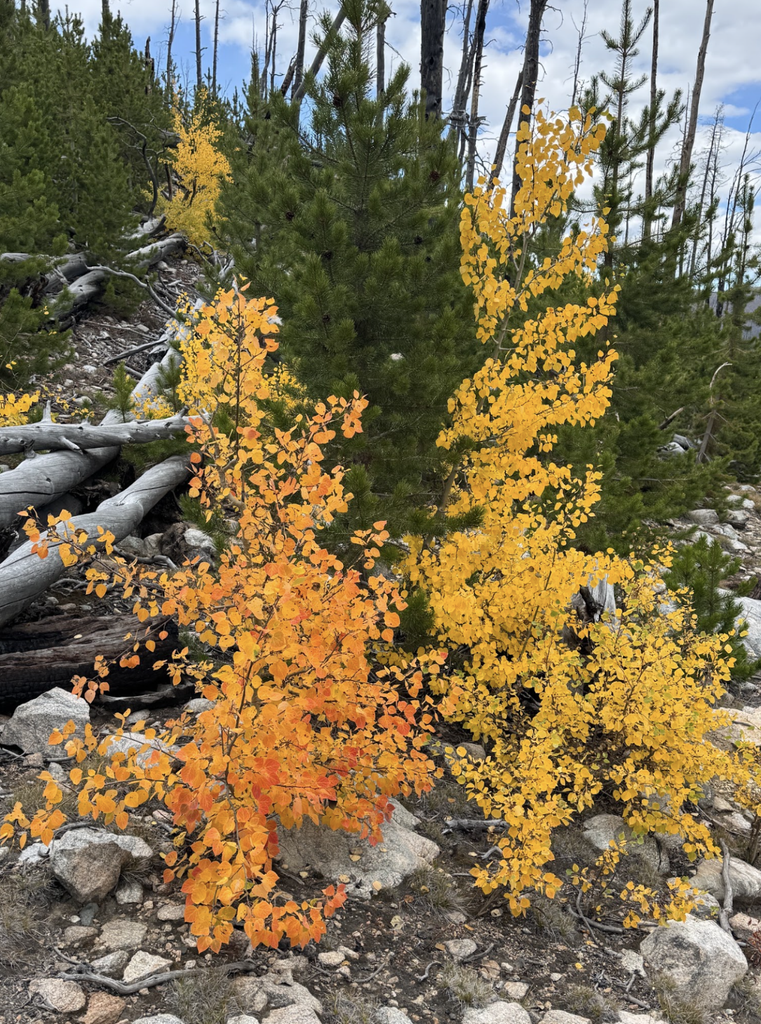
Those colors can even help us see the hidden structure of the forest. Because stems belonging to the same clone are genetically identical, they often change color at nearly the same time, creating distinct patches of gold across a mountainside.
For all their resilience, however, aspens are not invincible.
The Montana Natural Heritage Program reports that aspen stands have generally decreased in extent and condition in parts of the state. Drought, climate change, altered fire patterns, conifer encroachment and heavy browsing by elk and other animals can all make it difficult for young aspens to survive long enough to replace aging trees.
That makes planting an aspen more than a landscaping decision. It can be a small act of habitat restoration.
If you have a suitable property, give an aspen what it wants: sunlight, moisture and room to grow. Aspens are shade-intolerant, so avoid planting them beneath an existing dense canopy. They do best in moist soils and naturally occur in places such as cool slopes, depressions and areas near streams or wetlands.
And protect young trees. Deer and elk find young aspens particularly tasty. Montana State University recommends fencing or other forms of protection where browsing pressure is high; six-foot woven-wire exclosures can keep deer and elk from reaching young stems.
So this fall, when the aspens turn gold, pause for a moment beneath their trembling leaves. Look up at the canopy, but remember to look down, too.
There is a whole forest beneath your feet.
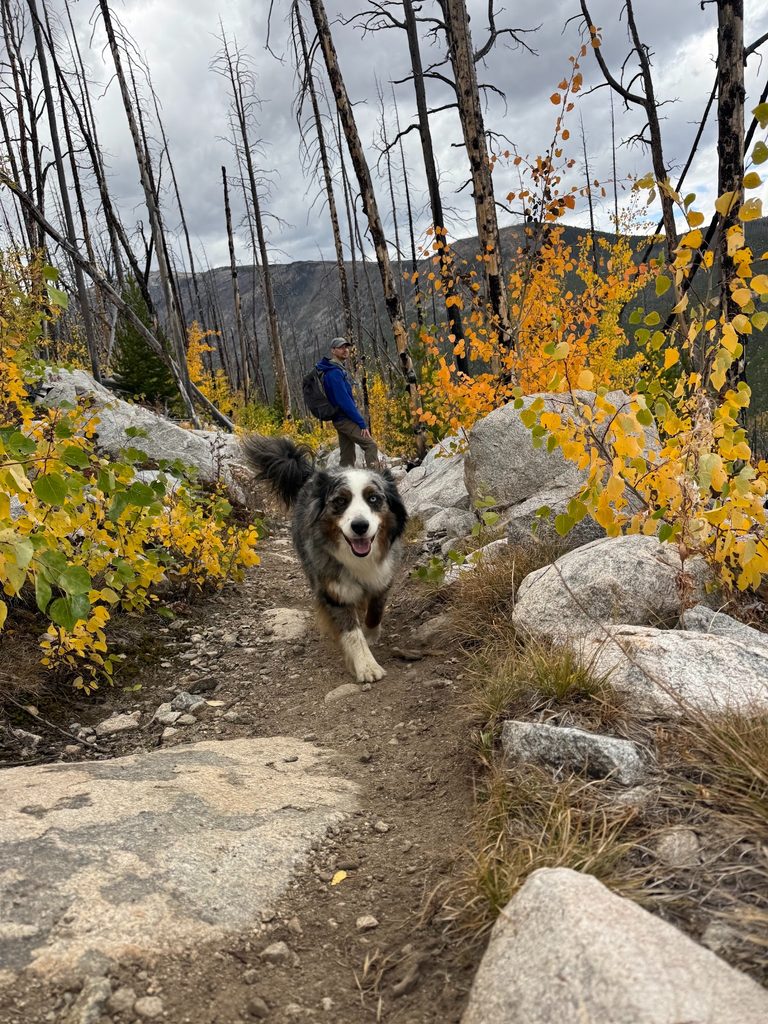

Jennifer Mohler is the Executive Director of Grow Wild, a 501c3 nonprofit organization that works to conserve native species in the Upper Gallatin Watershed through education, habitat restoration, and collaborative land stewardship.