


Big Sky Fire discusses path forward after receiving extra $8.3M from county’s four-year spreadsheet error
By Jack Reaney SENIOR EDITOR
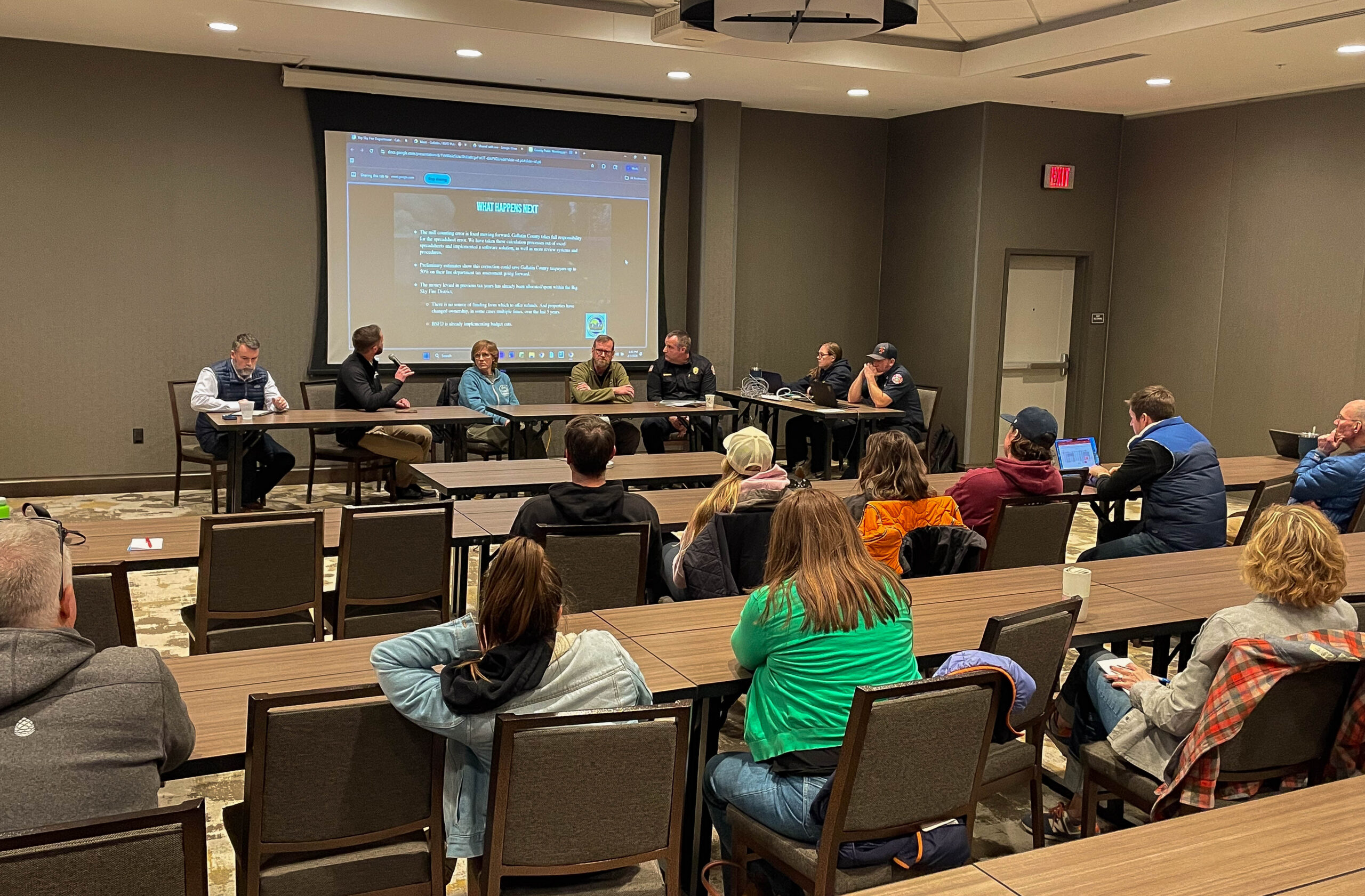
On Tuesday, Feb. 3, the Big Sky Fire Department and Gallatin County joined forces to provide clarity on a significant tax miscalculation discovered in the final months of 2025.
The Big Sky Fire District received over-collected taxes resulting from a formula error in a Gallatin County spreadsheet. Over the course of four years beginning in fiscal year 2022, erroneous assessments totaled $8.3 million, all of which has been allocated, distributed and spent by BSFD and cannot legally be refunded by Gallatin County to property owners.

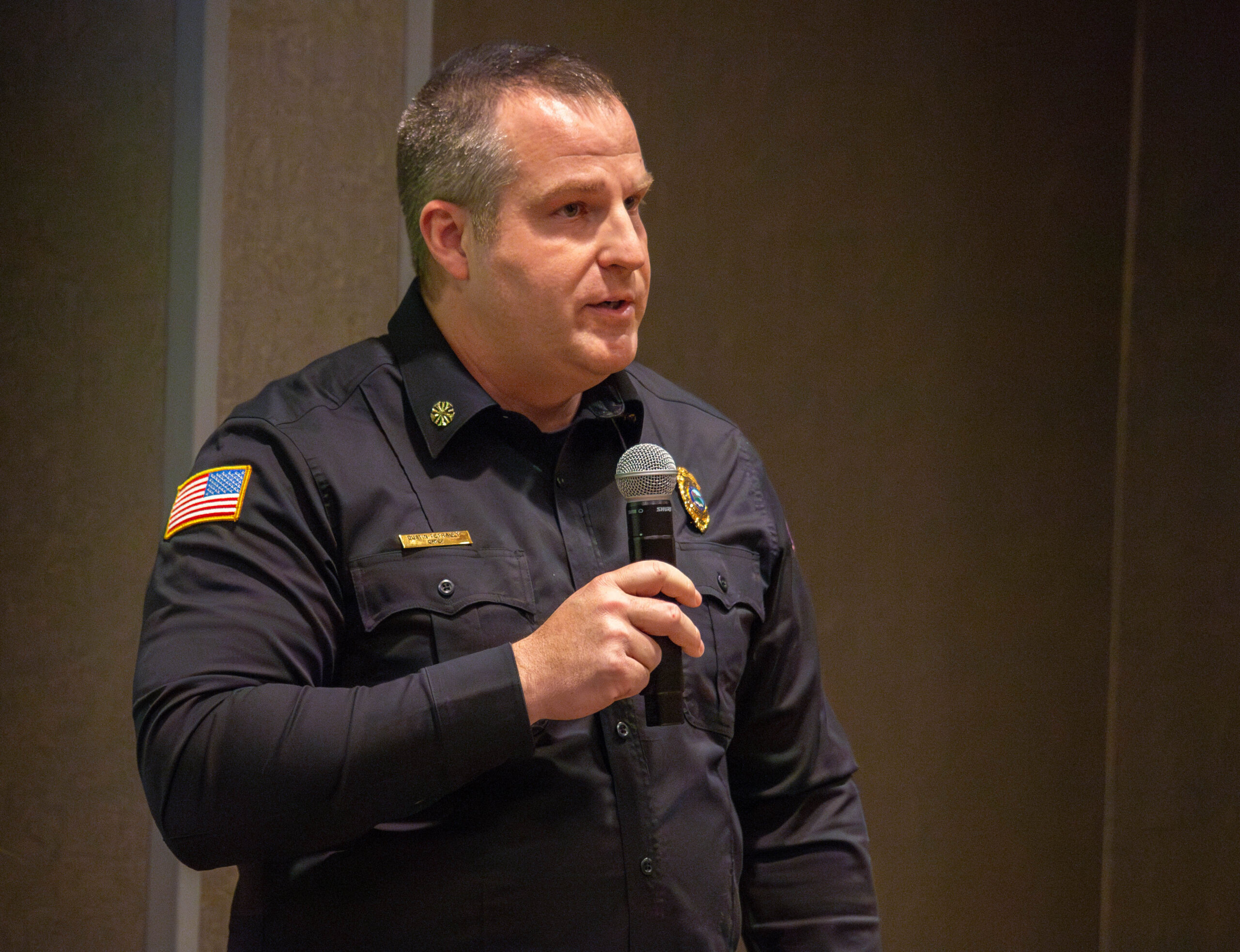
Big Sky Fire Chief Dustin Tetrault and Gallatin County Commissioner Zach Brown led with apologies at the public meeting held at The Wilson.
“Of course this is an unfortunate conversation to be having, and we certainly take responsibility for the mistakes that were made as an organization,” Brown said during an informational presentation. “And we are very sorry… it’s been a learning experience to say the least, for everyone involved.”
Brown explained the complicated tax calculation process that counties must wade through each year, but also reiterated, “At the end of the day… the spreadsheet had a formula error, and it was our fault. Full stop.”
Put simply, Gallatin County double-counted voter-approved mills for Big Sky’s fire tax.

The mistake was obscured by a well-known fact: property values across southwest Montana, and certainly Gallatin County, have skyrocketed during roughly the same period due to increased tourism and real estate demand in the wake of the COVID pandemic.
The county dismissed the jump in fire tax collections as a likely symptom of Big Sky’s rapid growth, Brown explained.
“It’s fair to, I think, everyone involved to remember what was happening in 2022,” Brown said, pointing to a volatile reappraisal cycle, staffing challenges, delayed data from Montana Department of Revenue, and county-wide “chaos and controversy” regarding property taxes.
Big Sky’s fire tax collections are usually roughly equal between Madison and Gallatin County properties, in total. But starting in 2022, fire tax collections from Big Sky’s Gallatin County residents began to surge.
Despite growth in property values, “Even that didn’t really quite add up,” Chief Tetrault said, pointing to a graph depicting collections from 2021 to 2024. “So that’s when we really started asking the questions.”
Initially, BSFD believed Madison County was under-collecting taxes. Instead, a review by the Montana Association of Counties discovered that Madison County’s calculations were accurate and Gallatin County was over-collecting.
There’s a nugget of relief for affected taxpayers: fire tax assessments will decrease by up to 50% this year.
But relief for many individuals adds up to a funding cliff for the fire department. Tetrault explained how BSFD will move forward, facing a $2.3 million budget shortfall year-over-year.
Where did the money go?
While it may seem that sudden increased tax revenue would leave the department flush with cash, Tetrault explained that service demands and resource needs have also spiked. Call volume has jumped 70% in the past six years—97.9% of ambulance transports serve non-residents, per Tetrault—and BSFD nearly doubled its staff from 21 to 41 since 2017, when a master plan identified the department was “significantly understaffed,” Tetrault said.
Spending rose with new programs focusing on risk reduction and wildfire prevention, as well as pay increases based on Big Sky’s cost of living, and capital projects including BSFD’s new training facility, fleet upgrades for ambulances and ladder trucks, and the design costs for a third fire station in the Spanish Peaks Mountain Club.
Tetrault pointed out that BSFD revenues and Resort Tax funding enabled the department to afford all of these projects without needing voter-approved bonding. However, the operating budget moving forward is “unsustainable,” he said.
“So what is the financial impact? Significant,” Tetrault said. “… We’ve been able to grow with this community, we’ve been able to meet the service demands of this community, and unfortunately we’re just going to have to take a little bit of a pause while we figure out what’s next here.”
The department is steadfast in four commitments: emergency response standards will not decline; firefighter safety will not decline; BSFD will not cut community programs such as inspections, emergency call boxes and AED stations; and BSFD will not stop its long-term planning, although it may slow.
“We’ve absorbed cuts internally first,” Tetrault said. “We’ve reduced costs before asking the public for any help, and I think the community deserves to understand these trade-offs that we’re making.”
The department has shaved $542,000 from its operating budget, plus $900,000 from capital projects, according to Tetrault.
BSFD leadership accepted a voluntary 5% wage decrease, the department will not expand to fill four planned firefighter positions to serve its Spanish Peaks station, and the department remains in active negotiations with its firefighter union with the aim of reducing salary, wages and benefits by $800,000 to $1 million in total.
“All of these things—not fun conversations, not fun things to do… it’s a tough time for all of us right now,” Tetrault said, adding that job preservation is the “number one priority” and layoffs would be a last resort.
During Q&A, Tetrault confirmed that BSFD’s organizational structure is comparable to peer communities in the region, and that current staffing levels are not excessive.
The department did choose to move forward with a $1 million acquisition of land beside its training facility. The opportunity for useful, available land beside a training facility was a worthwhile investment, Tetrault said, with plans to build a public safety center for BSFD administration and an improved outpost for the Gallatin County Sheriff’s Office.
BSFD will explore long-term revenue options and will pursue expanded funding from Resort Tax. Brown confirmed that Gallatin County does not have the authority to issue an emergency mill levy.
In the months since the community learned of the tax miscalculation, Tetrault said community members have been understanding of the challenges now faced by BSFD, and expressed a desire to learn what happened.
“I’ve been very grateful, I think, [for] the fact that the conversation is forward looking,” Brown said. “And focused on really trying to understand what we can learn from this, and how we improve moving forward.”