

By Benjamin Alva Polley EBS COLUMNIST
Texas Sen. John Cornyn and Wyoming Sen. Cynthia Lummis want to carve a new interstate, branded the “Trump Interstate,” through one of the most intact wild landscapes left in the Lower 48. Their “I-47 Future Interstate Act” would redesignate nearly 1,800 miles of U.S. Highway 287 as Interstate 47, from Texas’ Gulf Coast to the Canadian border. On paper, it’s presented as a harmless reclassification that will spur “economic growth” and “improve safety.” On the ground, in places like Montana’s Madison Valley and the Greater Yellowstone Ecosystem, it’s something else entirely: an assault on public lands, wildlife, and the very idea that some places are too sacred to sacrifice for yet another commercial corridor.
The Madison Valley is not just another scenic byway. It is part of the beating heart of the Greater Yellowstone Ecosystem, one of the planet’s last largely intact temperate ecosystems. Here, wild elk, pronghorn, grizzlies, wolves, trumpeter swans, and countless other species still move across a landscape where ranchlands, river bottoms, and public lands fit together in a fragile but functional mosaic. It is also a crucial link in the broader Yellowstone to Yukon conservation vision, which seeks to maintain north-to-south wildlife connectivity from Wyoming to the Yukon as climate change and development squeeze habitat across the West.
To look at this valley, to know its ecological importance, and then to propose transforming its primary two-lane highway into a high-speed interstate freight route is to misunderstand what makes this place valuable in the first place. We don’t need a monument to a false god; we need our current highways and interstates fixed and maintained.
Sen. Cornyn describes the bill as a way to “increase economic growth and improve safety, all while honoring the most consequential president of our lifetime.” Notice what is missing: any serious reckoning with the ecological costs, the cultural meaning of public lands, or the long-term consequences of inviting substantially more semi-truck traffic through one of the most wildlife-rich corridors in North America.
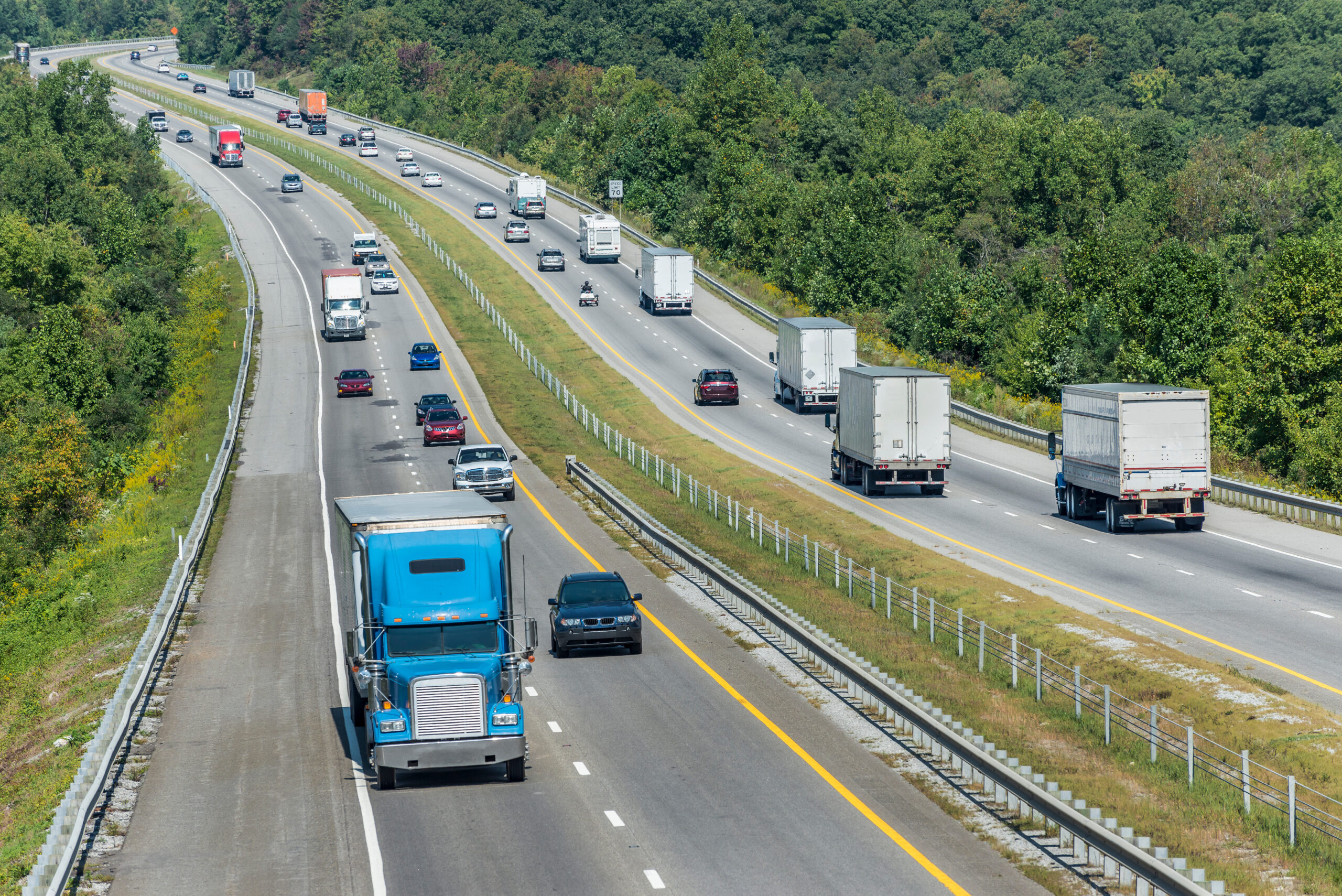
The logic is painfully familiar: designate a road as a future interstate, promise economic development, and let the details sort themselves out later. But we know what “upgrading” a highway to interstate standards usually entails. A two-lane road becomes four lanes. Curves are straightened; speeds increase; sometimes rivers are forced into straighter channels to protect the road instead of the river. Traffic volumes, especially heavy commercial truck traffic, climb dramatically. Sprawl follows interchanges. And all of this happens across a landscape already under pressure from climate change, recreation, and rural subdivision.
In the Madison, those changes would not be abstract. Higher speeds and heavier traffic would almost certainly mean more collisions with elk, deer, pronghorn and other wildlife—events that cost animals their lives and drivers their safety and property. These are not problems that can simply be solved by sprinkling a few wildlife crossings along the route and declaring victory. Effective wildlife mitigation requires thoughtful placement based on migration data, significant funding, and a willingness to slow down, not speed up, the pace of industrialization in sensitive corridors.
Proponents of I-47 insist that a new interstate designation would guarantee economic growth. That assertion is as lazy as it is dangerous. There is no guarantee that a faster, busier highway brings durable, locally rooted prosperity—especially during wartime and at record diesel prices. Too often, what arrives instead are chain gas stations, truck stops, and distribution centers whose profits flow elsewhere, while local communities absorb the noise, pollution, traffic, and loss of character. Once the landscape is carved up, the promise of growth becomes a one-way bargain.
What is guaranteed, however, is that once we punch an interstate through a place like the Madison Valley, we do not get it back. The very qualities that make this region special—the open views, a wild river, the dark skies, the intact migration routes, the sense that you are moving through a living, breathing ecosystem rather than a logistics corridor—are fragile. The Greater Yellowstone Ecosystem is not just a backdrop for commerce; it is a living legacy of restraint. For generations, Americans have chosen, imperfectly but meaningfully, to protect these lands and the wildlife that depend on them.
Public lands and the wild communities they support are more than economic inputs or branding opportunities for politicians. They are part of our shared inheritance, a trust we hold not only for ourselves but for future generations and for the nonhuman life that has as much claim to this place as we do. To rename U.S. 287 as the “Trump Interstate,” and to reshape it in service of more freight and faster traffic, is not a neutral act of honorific politics. It is a declaration that no landscape is so sacred, no ecosystem so important, that it cannot be subordinated to short-term political theater and the endless expansion of asphalt.
We are at a crossroads in more ways than one. As climate change accelerates and biodiversity declines, large and connected landscapes like Greater Yellowstone and the Yellowstone to Yukon corridor are our best hope for preserving functioning wild systems on this continent. The choice before us is stark: treat these places as irreplaceable or treat them as empty space between markets.
Congress should reject the I-47 Future Interstate Act. More importantly, citizens from Texas to Montana and elsewhere should insist that their leaders stop using public lands and wildlife habitat as backdrops for symbolic politics. The Madison Valley, Greater Yellowstone, and the broader Yellowstone to Yukon region offer something far more enduring than a campaign slogan on a highway sign. They offer a chance to prove that, in the 21st century, we still know how to say, “This is far enough.” Here, the wild comes first.
Benjamin Alva Polley is a place-based storyteller. His words have been published in Rolling Stone, Esquire, Field & Stream, The Guardian, Men’s Journal, Outside, Popular Science, Sierra, and WWF, among other notable outlets, and are available on his website.