

A runway show, a masquerade night of Bozeman’s spookiest history, and a curator’s own exhibit debut
By Taylor Owens CONTENT MARKETING DIRECTOR
Sponsored content
This fall, the Museum of the Rockies is proving that a history museum can be anything but dusty. In the span of just three weeks, MOR will open three brand-new exhibits, host a runway show celebrating Indigenous design, and throw open its doors after dark for a 21-and-over Halloween event steeped in local legend. At the center of it all is Dr. Siriana Lundgren, MOR’s Curator of Cultural History—a Billings native and accomplished historian who came home to tell Montana’s stories in a way only she could.

With a background in historical musicology and a specialized interest in women in music in Western boomtowns, Lundgren has an interesting perspective that makes her uniquely suited to her position.
“I love history, but I’m a culture person first,” Lundgren said. That extends to how she sees the institution itself: “We’re not just a history museum. We’re also a science museum. And we’re always blending together the past and the present.”
“I think people sometimes have this misconception that history is dusty and old and not super relevant,” she said. “And what I think cultural history does for us as a field is it helps connect us to the past in a really intimate way.”
Lundgren grew up visiting MOR as a kid, and she’s carried a pride in Montana’s history ever since leaving for college. “As a Montanan, I had a bit of a chip on my shoulder to explain to people, ‘you don’t understand—this place and the people who live here have the most rich, complex and inspiring stories,’” she said. That conviction now shapes everything she brings to the museum floor.
Starting in October, visitors will have plenty of new reasons to walk through MOR’s doors.
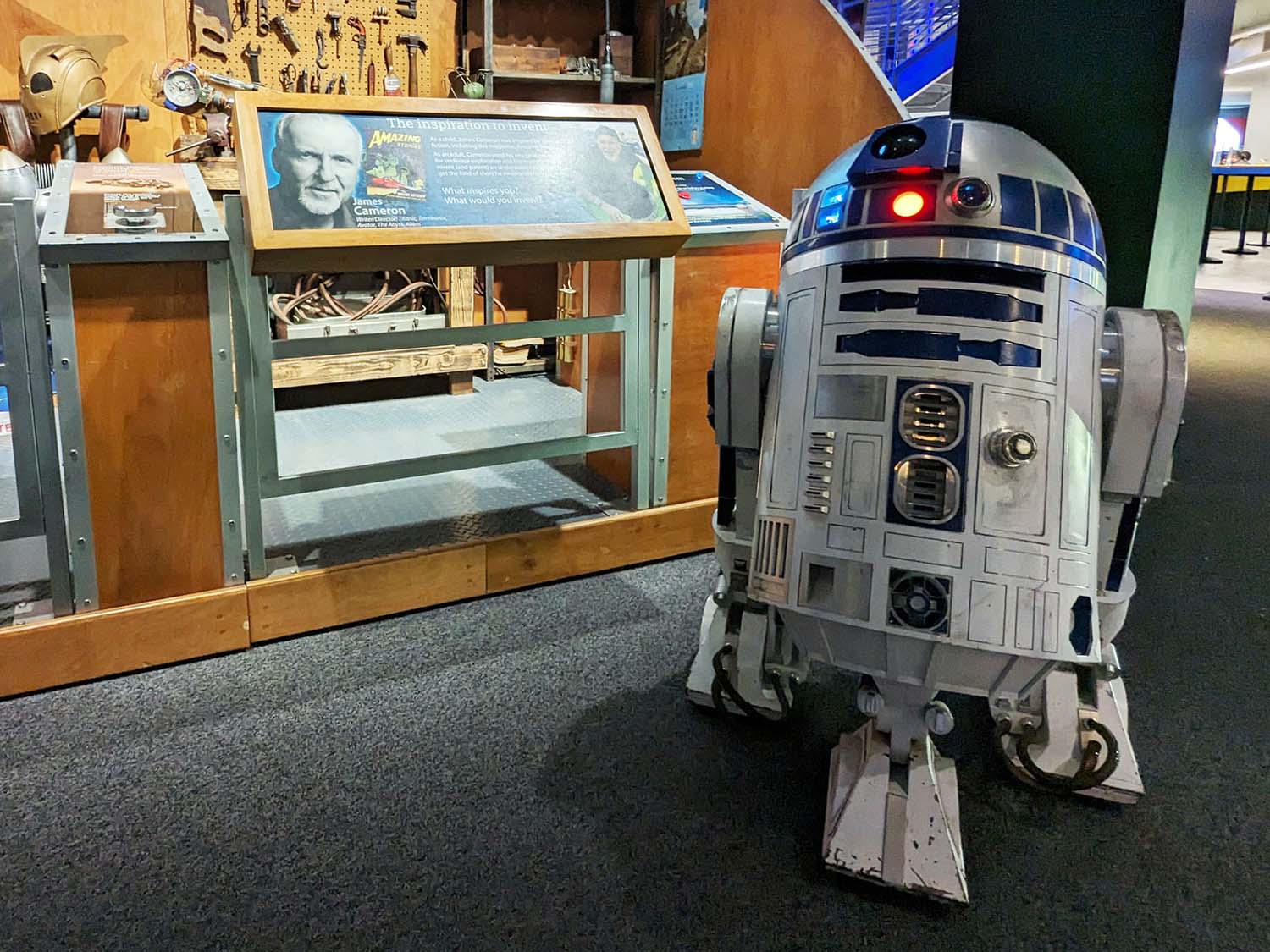
On Oct. 3, Popnology kicks things off. The traveling exhibit explores the surprising overlap between science fiction and science fact, including, Lundgren noted, actual pieces of a Mars rover on display. “Popnology is where science fiction meets science fact, and it’s all about how science fiction has influenced actual technological development,” she said. “There are going to be some show-stopping pieces in there. We highly recommend people come.”
On Oct. 10, Getting Dressed, Lundgren’s own curatorial debut at MOR, follows a week later. On Oct. 17, Chisel and Razor, developed in partnership with the Montana State University School of Art and Architecture and Tinworks, rounds out the trio, telling the shared story of siblings Edmonia and Sam Lewis and, more broadly, the history of Montana’s Black community around the turn of the century. Edmonia was a world-class Anishinaabe and Black sculptor who lived in Italy, while Sam was a Bozeman barber and amateur opera singer.
Ask Lundgren what she wants people to feel walking out of an exhibit, and she’ll tell you it starts with what she calls the “big idea.” For Getting Dressed, that idea is disarmingly simple. “Getting dressed is something we all do every day,” she said. “But doing it concretely impacts the way we move through life and has through history.”
The exhibit grew out of Lundgren’s own research into Chinese women in boomtowns, a research she’d written about in her dissertation but had never encountered through an actual object, until she found a silk suit believed to have belonged to a Chinese woman living in Butte’s Chinese community around 1910.
“What I love about clothing is that it’s so visceral,” she said. “When you see a garment, you picture the person that wore it. You’re very rarely just looking at a shirt and not also imagining the body that inhabited that shirt.”
That instinct runs through the whole show, which is organized into sections—Play, Rest, Work and Change—each built around garments never before displayed at MOR. The Play section centers on a 1930 women’s ski suit, one of the earliest examples of women wearing pants for athletics. Preparing it for display meant confronting the woman who once wore it, sweat stains and all. “You can see that she has armpit stains from where she sweat while she was skiing,” Lundgren said. “There was a woman in 1930 who went skiing and also got really hot and sweaty in her ski suit, just like the rest of us when we go skiing today.”
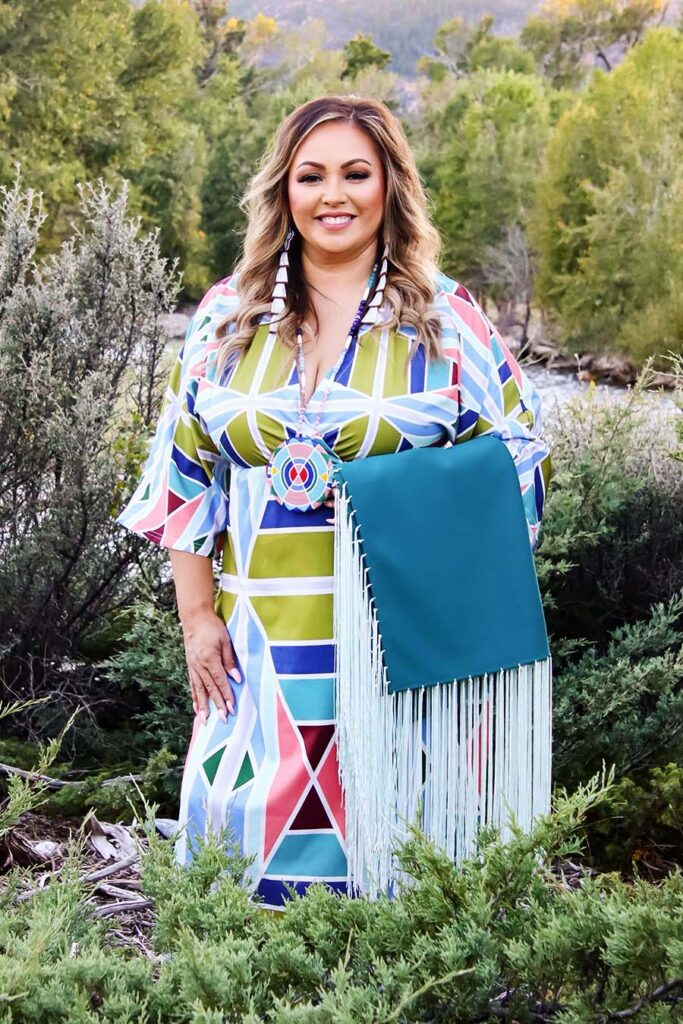
Rest features three elk tooth dresses, one newly commissioned from Apsáalooke artist Miranda Rowland, one from Chokecherry Creek Designs’ Angie Howe, and one from Bethany Yellowtail of B.Yellowtail Designs. Work showcases the very first female ranger uniform from Yellowstone National Park. And Change closes the show with a beaded COVID face mask by designer Rebecca Jarvie.
Getting Dressed’s grand opening doubles as one of the fall’s marquee events: a runway show on Indigenous Peoples Day, Oct. 12, featuring designers Angie Howe of Chokecherry Creek Designs and Rebecca Jarvie fresh, in Jarvie’s case, off a trip to New York Fashion Week.
”That whole night will be so fabulous,” Lundgren said.
Each designer will present eight to twelve runway looks in MOR’s auditorium, followed by a reception with local vendors including Wampum Wear, Fierce Women Warriors and Still Smoking Designs, plus a chance to shop Howe’s and Jarvie’s own collections.
“It’s all to celebrate the beauty of Indigenous design,” Lundgren said. “Because holy cow, are these garments just so incredible.”
Fall at MOR isn’t only about fashion and history. Families can get hands-on with Grossology Discovery Day on Oct. 17, a science-forward event that leans into the museum’s identity as both a history and a science institution, the kind of curiosity-driven, sensory experience Lundgren said museums have leaned into.
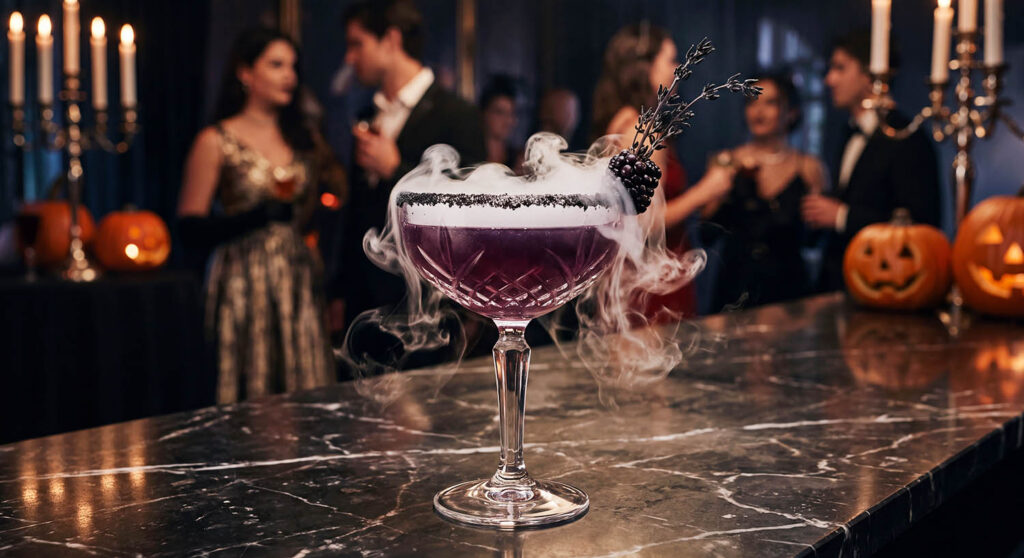
Adults looking for something different should mark their calendars for Pour & Gore, MOR’s masquerade-themed, 21-and-over Halloween event on Oct. 30.
“There’s a lot of weird and spooky history around Bozeman,” Lundgren said. “Pour & Gore is a 21-and-over event, and you’ll get to learn a little bit more about the mysterious past of Bozeman.”
Looking further out, Lundgren points to the Women Riders of Indian Relay event on Nov. 6, featuring championship riders discussing their experience in what she calls “the most electrifying sport in the world.”
For visitors who think they already know Museum of the Rockies, Lundgren asks them to look again.
“Keep your eye on the History Hall,” she said. “We’re going to be changing a lot in the History Hall in the coming year, and hopefully it’ll start to look really different and new and exciting.”
With three new exhibits, a runway show, and a full slate of programming landing in the span of a few short weeks, these upcoming colder seasons are as good a time as any to find out what’s changed.