
Tinworks Art brings together the stories of groundbreaking siblings, Edmonia Lewis and Samuel Lewis
By Annie O’Neill EDITORIAL INTERN
Samuel Lewis arrived in Bozeman in 1868 and built a fortune as a barber, real estate investor, community leader, and traveling showman. His sister, Edmonia Lewis, became one of the first Black and Anishinaabe sculptors to gain international recognition. More than a century later, Tinworks Art is bringing the siblings back together by tracing how one brother’s success in Bozeman helped shape one of the most groundbreaking careers in American art history.
“Chisel and Razor: The Artistic Legacies of Edmonia and Samuel Lewis” opened June 19 at Tinworks’ North Ida location in Bozeman. The two-part exhibition, which continues through 2027, pairs contemporary artwork with the lives of the siblings, whose stories stretch from Rome to Bozeman. Curator and Montana State University art history professor Dr. Melissa Ragain said the show’s criteria is centered on “19th-century materials and theatrics.”

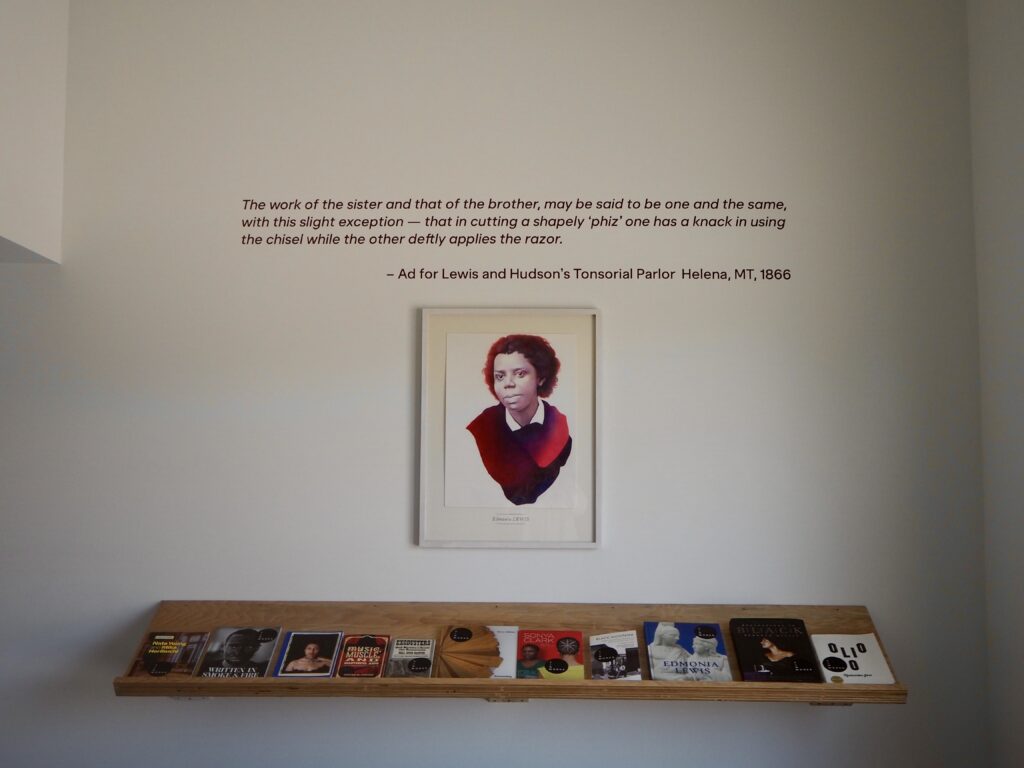
Edmonia Lewis occupies an important place in American art history. As a Black and Anishinaabe woman, she overcame significant barriers to build an international career. While studying at Oberlin College from 1860-1863, she was “prevented from graduating after a false accusation,” and later settled in Rome. Known for sculptures like “Forever Free” and “The Death of Cleopatra,” her success was not achieved alone.
Her brother, Samuel Lewis, born in the West Indies in 1835, arrived in Bozeman in 1868 and became one of the city’s earliest Black settlers. A barber, real estate investor, community leader and entertainer, he built the financial success that helped fund much of Edmonia’s education and early career.
“There is no Edmonia without Samuel, no Samuel without Edmonia,” Ragain said. Their financial standing was unusual for the era, barely a generation removed from slavery, when society had few examples of affluent Black families, Ragain said. Visitors enter the exhibition through a recreation of Samuel Lewis’ formal parlor, modeled after his Queen Anne-style Bozeman home, complete with its ornate ceiling and stained-glass window. MSU student Naji Haska painted the ceiling based on the original design.
The exhibition unfolds in two acts, beginning with Samuel Lewis’ years in Bozeman from 1868 to 1896 and continuing this fall in Tinworks’ restored Mill Building highlighting Edmonia Lewis’ international career. Act I uses contemporary artwork to examine the world Samuel Lewis entered as one of Bozeman’s earliest Black settlers and the life he built in the post-emancipation era. Artist Sonya Clark addresses this history through unexpected materials, including playable violins made from human hair, a textile reproducing a handwritten draft of the Emancipation Proclamation, and handmade jewelry that references the sugar trade’s role in slavery and abolition.
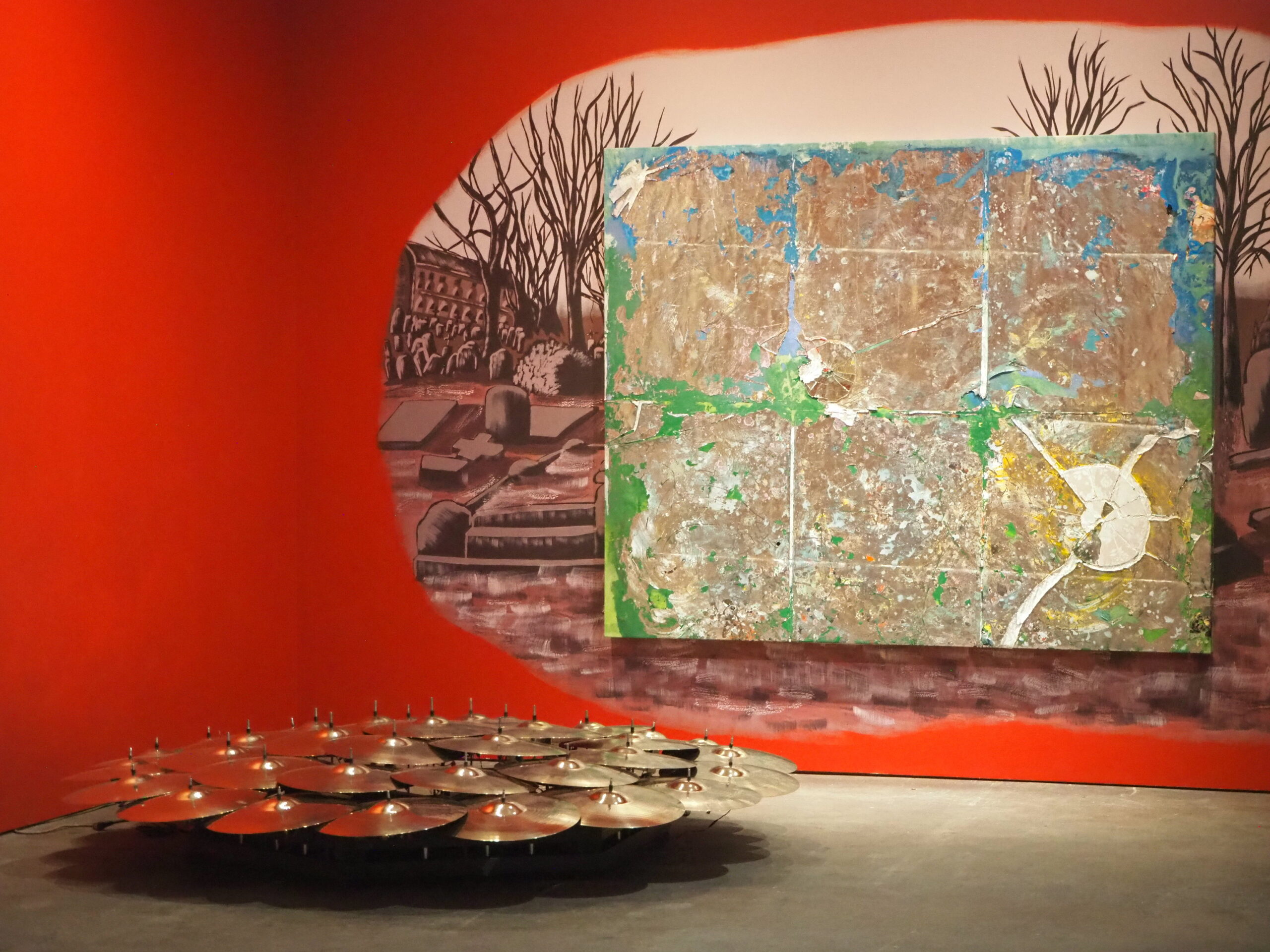
In the next room, Edgar Arceneaux’s large-scale works line the walls, featuring altered silver-backed antique mirrors that he paints with other materials before transferring their images onto canvas. Ragain said Arceneaux’s work explores how objects can hold traces of the past, drawing on the practice of “scrying,” which uses reflective surfaces to communicate with the dead.
During the exhibition’s opening weekend on June 20, Arceneaux expanded that exploration into performance, leading an improvised theater piece with a fleet of actors at Tinworks. Video footage of the “audition” performance remains in the gallery alongside his painted works. Artist Nate Young’s installation incorporates concealed horse remains, woodwork, a serigraph and graphite drawings to tell the story of his own ancestor, who fled a threat on horseback in the early 1900s before settling in Philadelphia.
Act II turns to Edmonia Lewis and the global influences that shaped her work. Rome-based artist Auriea Harvey explores that legacy in “Edmonia Triumphalis,” a large-scale installation that envisions Edmonia going to Bozeman, a trip she never made. Constructed from local rammed earth and featuring a fountain, the piece connects Edmonia’s artistic influences in Rome with the history and landscape of Montana. Act II will also feature work by Sanford Biggers, Andrea Carlson, Kelly Church and Athena LaTocha.
The exhibition marks a milestone for Tinworks. Act II inaugurates the organization’s newly restored Mill Building, expanding what began as a space limited to the warmer months into a year-round contemporary art space.
The story extends beyond the arts organization. Beginning Oct. 12, a 3D-printed replica of Edmonia Lewis’ “The Death of Cleopatra,” produced by MSU researchers and Montana Tech engineering students based on Smithsonian Institution scans, will be displayed at the Museum of the Rockies alongside Lewis family artifacts that have never before been exhibited in Montana.
Together, the exhibitions connect Montana’s history with the wider art world, bringing renewed attention to one of America’s most significant sculptors and the brother who helped make her career possible, right here in Bozeman.