
Grit, adrenaline and rodeo culture keep the popularity of skijoring rapidly growing in Montana
By Leslie Kilgore EBS STAFF
Skijoring is fast, exciting and unmistakably Montana, blending Western heritage with mountain culture in a way few winter sports do.
Across the state, the sport is growing rapidly. Long-established events are evolving to meet unprecedented demand, new competitions are emerging to create access and organizers are working to preserve skijoring’s grit while building a sustainable future. From Red Lodge to Three Forks to Big Sky, each skijoring event reflects the community hosting it—resilient, collaborative and deeply rooted in place.

In Red Lodge, skijoring is a decades-old tradition. The town has hosted races since the mid-20th century, with the competition formally recognized as the National Finals in the 1980s.
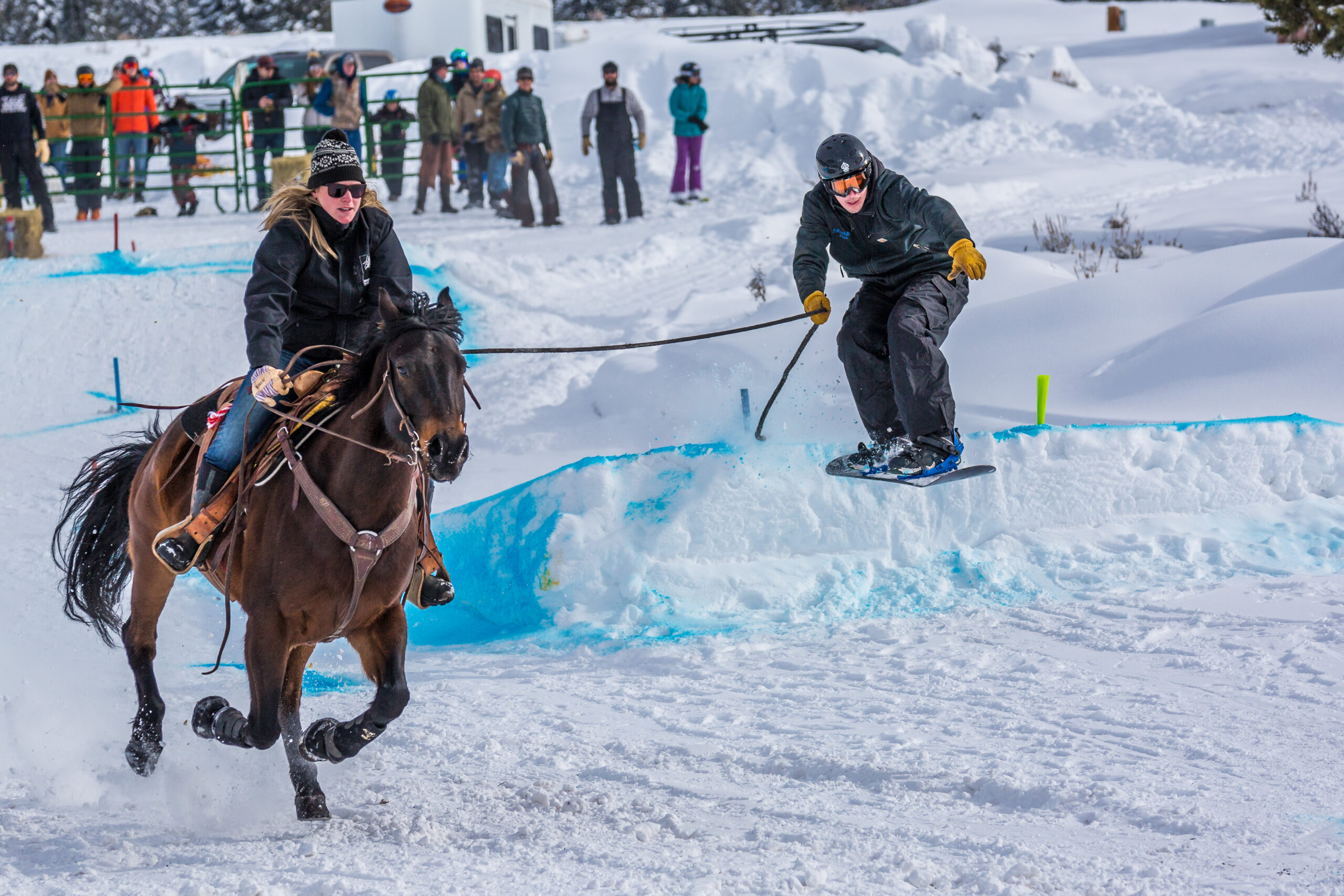
Best in the West Skijoring competition in Big Sky from year’s past. Event organizers hope to bring the sport back to Big Sky in winter 2027. PHOTOS COURTESY OF JUSTA ADAMS 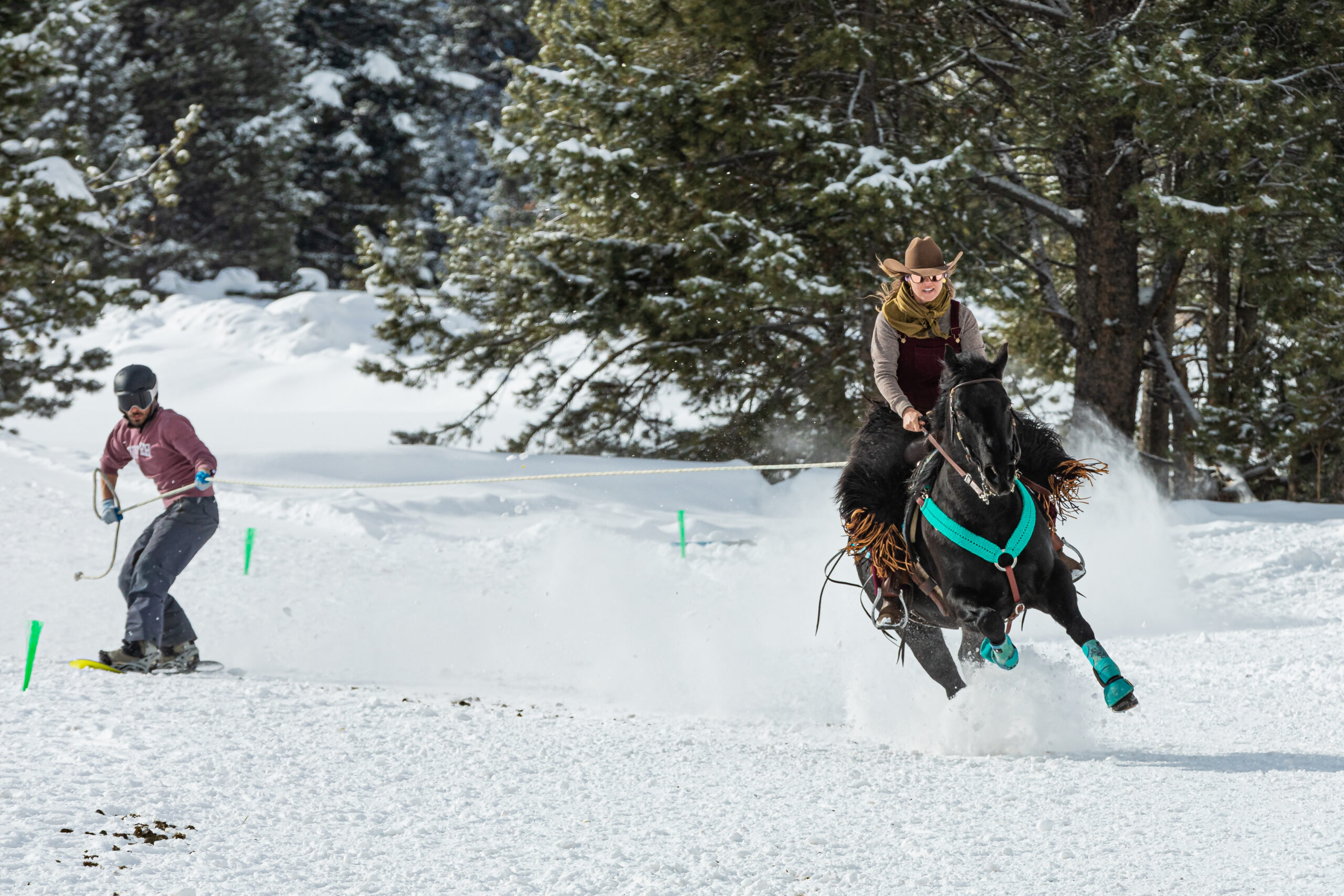
Best in the West Skijoring competition in Big Sky from year’s past. Event organizers hope to bring the sport back to Big Sky in winter 2027. PHOTOS COURTESY OF JUSTA ADAMS 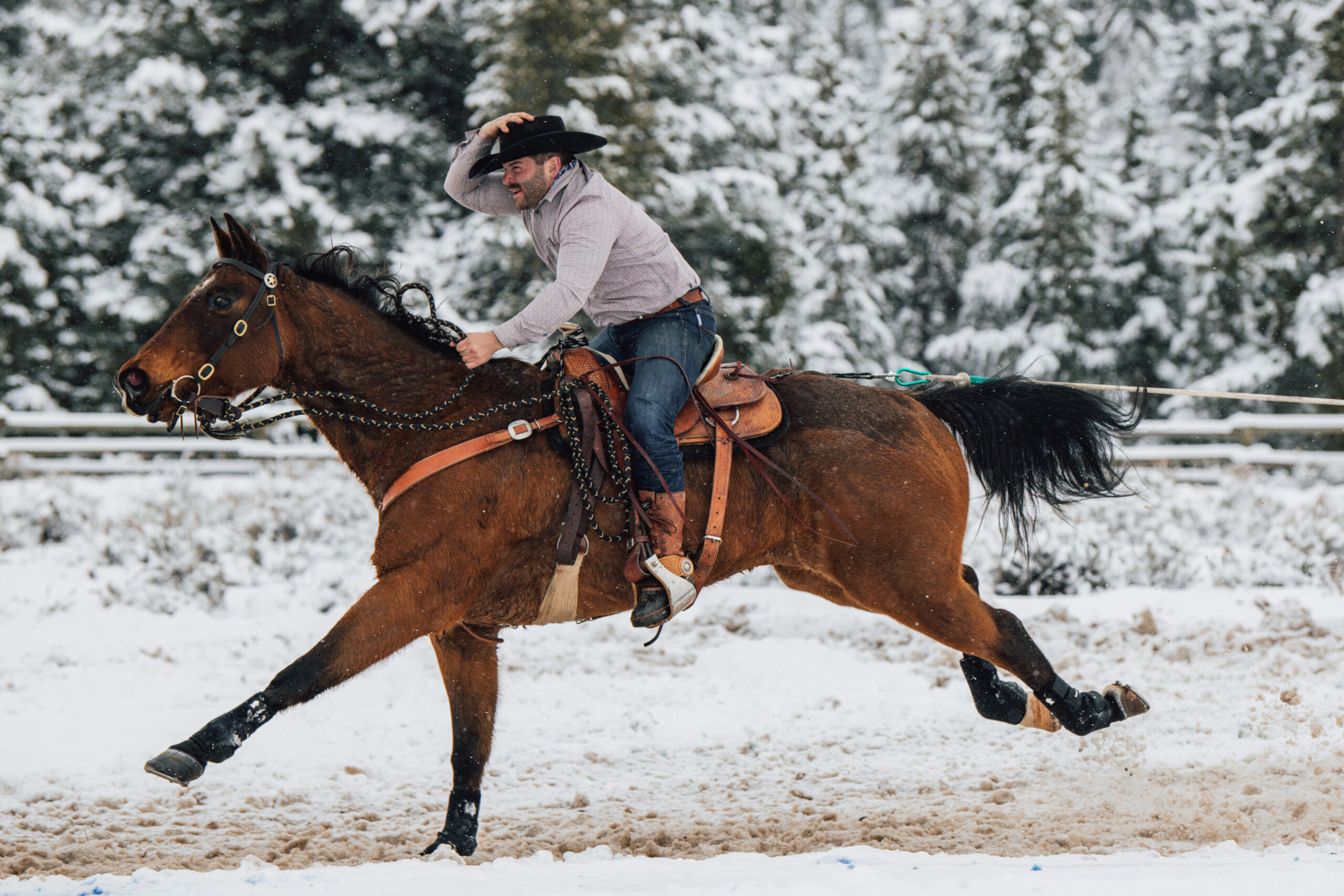
Best in the West Skijoring competition in Big Sky from year’s past. Event organizers hope to bring the sport back to Big Sky in winter 2027. PHOTOS COURTESY OF JUSTA ADAMS 
Best in the West Skijoring competition in Big Sky from year’s past. Event organizers hope to bring the sport back to Big Sky in winter 2027. PHOTOS COURTESY OF JUSTA ADAMS 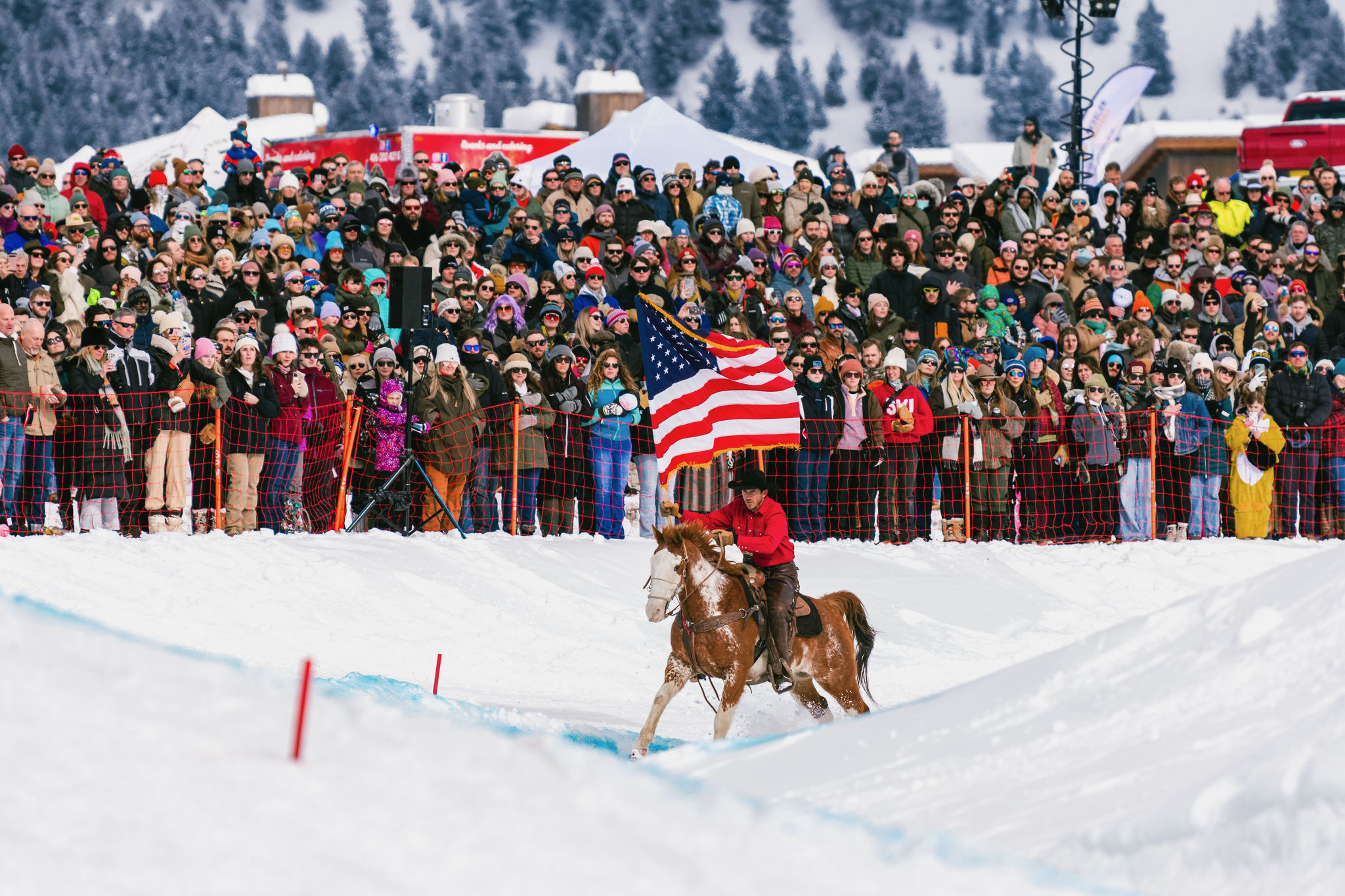
Best in the West Skijoring competition in Big Sky from year’s past. Event organizers hope to bring the sport back to Big Sky in winter 2027. PHOTOS COURTESY OF JUSTA ADAMS 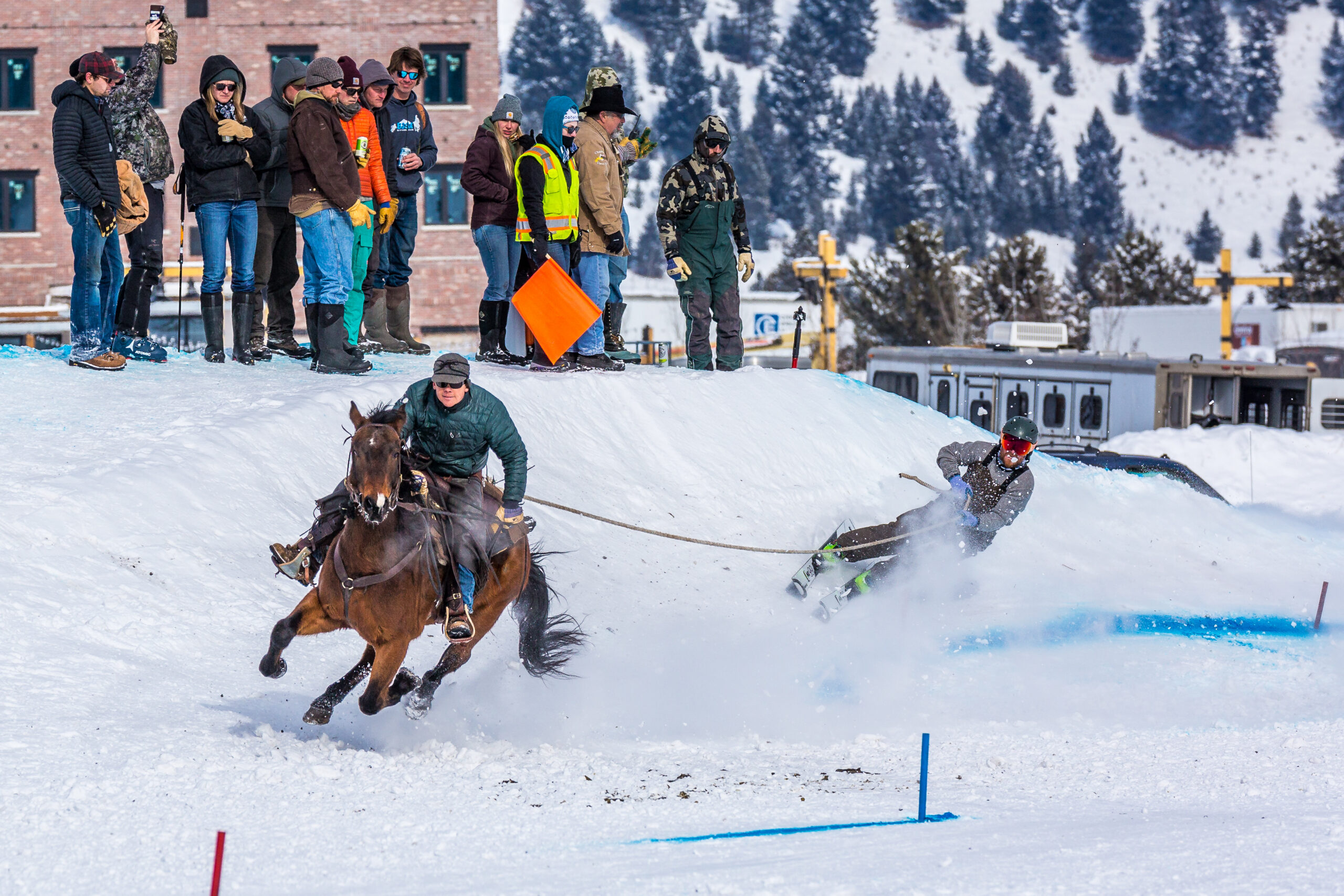
Best in the West Skijoring competition in Big Sky from year’s past. Event organizers hope to bring the sport back to Big Sky in winter 2027. PHOTOS COURTESY OF JUSTA ADAMS
“They’ve been running skijoring races in Red Lodge since the ’60s,” said Kristen Beck, who currently runs the event with a fleet of community members and dedicated volunteers. “In the ’80s, it became formally recognized as the National Finals.”
The name reflects the event’s place on the circuit. “Historically, this has always been the last race of the circuit,” Beck said.
Beck became involved in 2016, stepping into leadership during a pivotal moment for the event. “I just wanted to be a volunteer,” she said. “But with many original organizers ready to step down, I was basically told that if I wanted the races to continue to happen, I was going to have to take the reins.”
That sense of responsibility, passed from one generation of volunteers to the next, remains central to Red Lodge skijoring. But growth has brought new challenges, particularly as events fill up faster and weather becomes less predictable.
“Most races are making their own snow this year,” Beck said. “It’s an entirely different production with more challenges to endure. And these events are incredibly important to our communities.”
Despite the logistical hurdles, Beck sees opportunity in the sport’s momentum. “It’s been rapidly growing for years,” she said. “But social media has had a huge influence. People see it and think, ‘I want to do that.’”
At its heart, skijoring succeeds because it connects people from different worlds.
“It’s two completely different cultures coming together, and your team needs three different heartbeats to compete,” Beck said. “That’s a really special platform.”
That rapid growth inspired a new event this winter, Bridger Brewskis and Spurs, hosted in Three Forks in partnership with Bridger Brewing at the end of February.
For organizer Kelly Meeker, the motivation was straightforward. “It’s gotten harder and harder to even register for skijoring events in Montana because they sell out so quickly,” she said. “When many of us who were new to the sport didn’t get into events last year, we decided to put on our own to support new and experienced competitors.”
Meeker works with a women-owned and operated barn in Belgrade that emphasizes inclusion and accessibility for riders, values that are shaping the event’s vision in its inaugural year.
“It’s a great way to cross over communities, Western riding sports and skiing, while bringing people together for a fun weekend,” Meeker said. “People will be able to hang out at Bridger Brewing, get a beer and warm up, while also watching some exciting competition. When we approached Bridger Brewing about hosting, they were all about it.”
That crossover has helped introduce new participants to horses and horsemanship. “It allows us to bring more people into our crew,” Meeker said. “Some of the skiers fall in love with horses, and that’s been really cool to see.”
Inclusivity was a priority from the outset, including inviting the Compton Cowboys to compete. “Expanding what Western life looks like and being an inclusive Western riding community is really important to me,” Meeker said.
Like many Montana events this winter, the inaugural competition faced difficult snow conditions. “The snow has been the biggest challenge,” Meeker said. “There have been a lot of sleepless nights to prepare.”
Still, the demand underscored the sport’s momentum. “People are eager for opportunities to try the sport, even in a low snow year,” Meeker added.
For Meeker, skijoring’s appeal is undeniable. “It brings people together in a competitive, exciting setting,” she said. “It’s exhilarating whether you’re skiing or riding, or even watching. It feels like a rodeo in some ways, while continuing a Western lifestyle into the winter.”
In Big Sky, skijoring has evolved alongside the community itself. Since launching in 2018, the Best in the West Showdown has drawn thousands of spectators and competitors and become a hallmark of winter in Big Sky, bringing more than just skiers to the community for the high-energy event each February. While the event was cancelled this year, organizers look toward the future, and their vision remains clear—much like in Red Lodge, skijoring has become a staple for the Big Sky community each winter.
“I’m beyond proud to have been part of Big Sky Skijoring since day one,” said founder Justa Adams. “What started as a simple idea in 2018 has grown into something bigger than we ever imagined.”
As the town continues to change, so has the event. “Our team has grown alongside this town, adapting as Big Sky continues to evolve and develop,” Adams said. “We’re actively working on a new location for 2027 now, and can’t wait to bring the Best in the West Showdown back to Big Sky next year.”
From Red Lodge’s longstanding legacy to Three Forks’ first-year energy to Big Sky’s growing footprint, skijoring in Montana is being shaped by the same forces—community commitment, weather, infrastructure and a growing appetite for authentic Western winter experiences.
What remains constant is the connection between horse, skier and rider—three heartbeats moving together across the snow—and the people determined to keep this uniquely Montana tradition charging forward.
Looking ahead, Beck sees skijoring continuing to grow and mature. Not by losing its grassroots spirit, but by strengthening the framework that supports it.
“I think we’re getting much closer to a governing body and just more consistency in safety, rules and transparency on a fair race,” Beck said. “Not every track is the same, so you can’t have complete standardization, but we’re getting pretty close to agreeing on what is the crux of a safe, fair and equitable race.”
She likens the sport’s trajectory to rodeo, where local events retain their character while operating within shared expectations.
“That’s where I see it going,” Beck said. “Standards, a point system, and recognition, like rodeo associations, while still allowing each community’s event to be unique and special.”
As Montana skijoring continues to grow, that balance between structure and soul may be what ensures the sport’s longevity for generations to come. Who knows, possibly even in the Winter Olympics someday.