

By Benjamin Alva Polley EBS COLUMNIST
The proposal to rescind protections for America’s roadless areas is being framed as a practical move: more flexibility for forest managers, more tools for wildfire response, more access for timber work, and more local decision-making. Those arguments deserve to be heard. Rural communities live closest to these forests. Fire seasons are longer and hotter. Forest managers do need the ability to thin, restore and respond where the landscape genuinely calls for it.
But rescinding roadless protections is the wrong answer to a real problem.

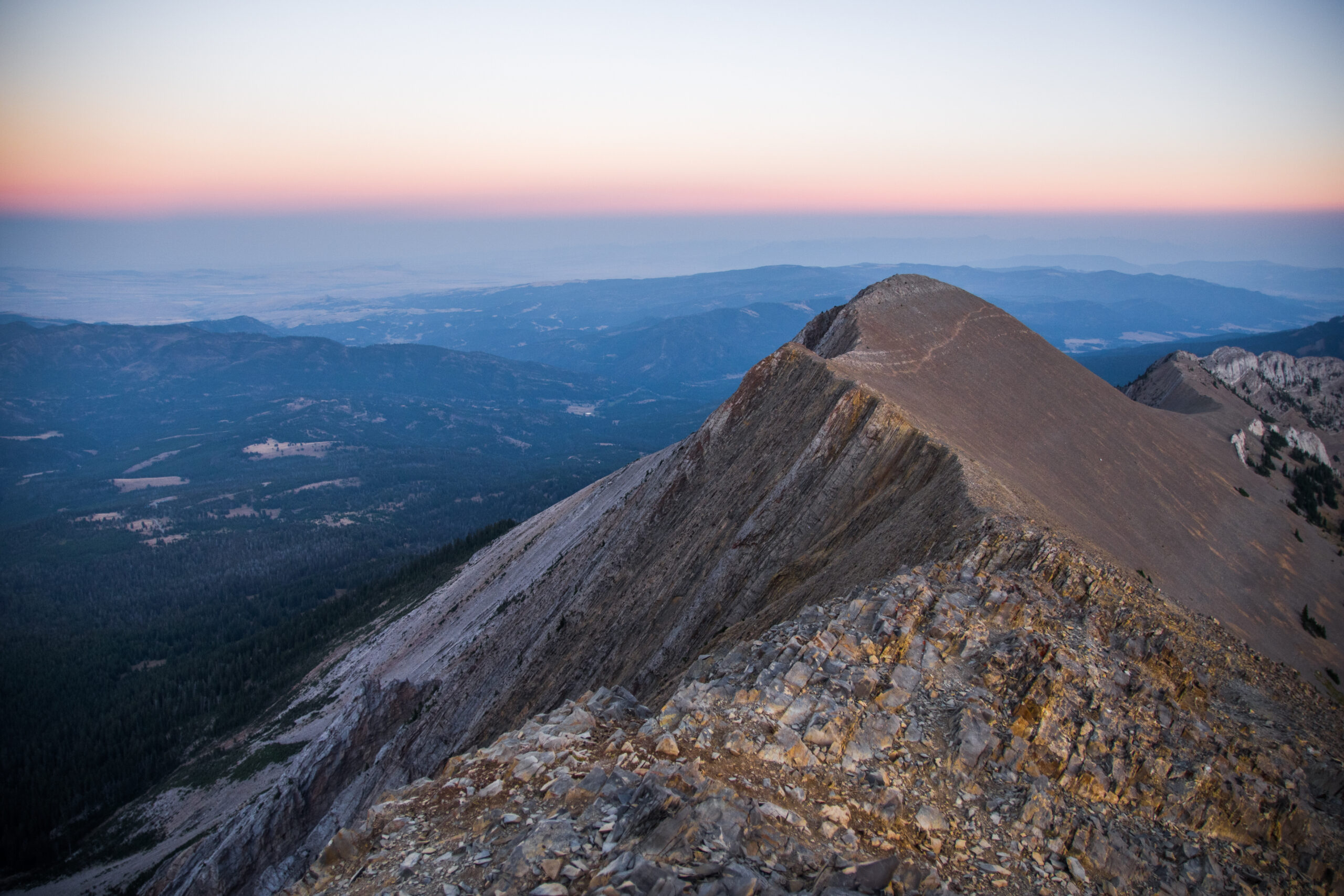
The U.S. Forest Service has proposed repealing the 2001 Roadless Area Conservation Rule, with public comments due Oct. 6, 2026. If finalized, this change would alter the future of some of the most intact public lands left in the country. These places are not empty nor wasted. They are reservoirs of clean water, wildlife habitat, silence, carbon storage and spiritual repair.
Roads are often described as access into places that didn’t have it before, but they are also scars that take a while to heal. A road into wild places does not end when the gravel is laid and dumped. Roads bring culverts, erosion, sediment, invasive weeds, illegal dumping, poaching pressure, noise, vehicle sparks and fragmentation. Forest Service research has found that roads can reduce habitat quality and wildlife movement, increase collisions and fragment streams. For elk, grizzly bears, lynx, wolves, wolverines, trout, migratory birds and many less-charismatic species, roadless country is not a luxury. It is shelter. It is their homes.
Clean water is a primary reason to keep these lands intact and without roads punched through forests. Many roadless areas lie high in mountainous watersheds, where snowmelt gathers and cold streams begin. Once roads are cut into steep slopes, erosion follows. Sediment clouds spawning beds, warms streams, damages fisheries, and increases costs for downstream communities. Road construction and road use can increase erosion and sediment in streams, and the Roadless Rule has long been justified in part as a way to safeguard our water sources for now and into the future. In an age of drought, wildfire, and shrinking snowpack, protecting headwaters should be an easy decision we can all make, beyond red or blue political identities.
Rescission supporters argue that the current rule limits wildfire management and active forest restoration. The United State Department of Agriculture has said removing restrictions would reduce wildfire risk by allowing more road work, more thinning and management access wherever they want. In some places, that concern makes sense. But treating every roadless acre as a missed management opportunity ignores what these places already do. Intact forests store moisture and shade streams. They give wildlife room to move as climate conditions become increasingly chaotic. They provide ecological resilience precisely because they have not been carved into smaller pieces.
There are better ways to manage fire than opening the door to permanent road building in the last best backcountry. We can prioritize defensible space around communities, prescribed fire where appropriate, restoration in already-roaded forests and maintenance of the enormous existing road system that federal agencies already struggle to afford. We do not need to punch new roads into wild watersheds to prove we are taking fire seriously.
Roadless lands also protect something harder to quantify but no less essential: quiet. Silence has become one of America’s rarest public resources. Silence is an endangered species. I learned that long before I had the language for it. In 2001, I spent six months camping out and working in the Trinity Alps Wilderness of northern California with the California Conservation Corps/AmeriCorps Backcountry Trails program, cutting trail, living simply and learning what wild country can ask of a person. Later, I carried those lessons through 13 years of work in Glacier National Park, through time in Big Bend National Park, and into the long solitude of a fire lookout in the Bob Marshall Wilderness. Those places built my confidence, sharpened my inner voice, fed my intellect and curiosity, and taught me to pay attention internally and externally. In roadless country, a person can still hear wind in the pines, water moving under ice, the wingbeat of a raven, and the absence of engines. That quiet matters to hunters, anglers, hikers, tribal members, writers, painters, photographers, scientists and children who deserve to know the world is larger than noise. Being beyond roads and Wi-Fi gives people a chance to hear themselves clearly, away from the hum of civilization and the constant bombardment of advertisements vying for our attention.
Feeling a sense of awe is easier to find in roadless areas. In these places, I feel grace.
Public lands give ordinary people access to beauty that can’t be priced. Roadless areas remind us that not every acre must justify itself in board feet, mineral leases, or short-term economic output. Some places justify themselves by remaining intact and whole. Roadless areas and large tracts of intact nature teach us dignity, respect and compassion not only for our ideas but for other beings caught in the web of life.
The choice before us is not between people and wilderness. It is between humility and appetite. We can acknowledge the need for smart forest management while also recognizing that some places should remain beyond the reach of new roads. Roadless areas are good for wildlife, clean air, clean water, endangered species and the human spirit.
Keeping them roadless is not anti-progress. It is an act of restraint. And restraint, in a country that has already built roads nearly everywhere, may be one of the most patriotic conservation values we have left.
Benjamin Alva Polley is a place-based storyteller. His words have been published in Rolling Stone, Esquire, Field & Stream, The Guardian, Men’s Journal, Outside, Popular Science, Sierra, and WWF, among other notable outlets, and are available on his website.