
By Benjamin Alva Polley EBS COLUMNIST
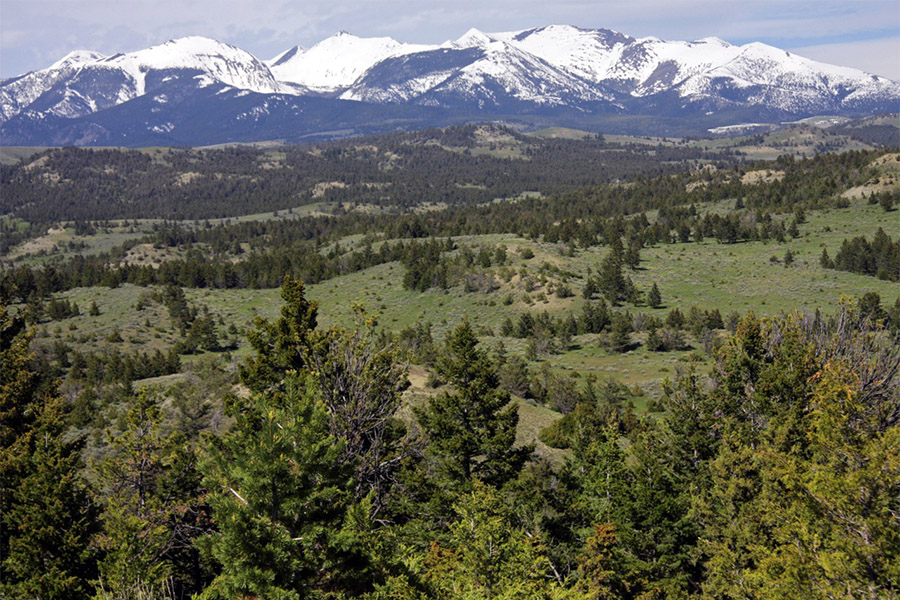
Public lands should not become bargaining chips for private luxury. Yet the Forest Service’s Crazy Mountains land exchange raises a troubling question: When wealthy interests want something from our national forests or public lands, does the government defend the public’s inheritance — or bow down and negotiate how much of it they can have?
On January 17, 2025, the United States Forest Service approved the East Crazy–Inspiration Divide Land Exchange; private landowners will acquire 3,435 acres of public land, while 5,505 acres of private land will be transferred to public ownership. The agreement also includes 420 acres of federal land exchanged for 605 acres of private land near Big Sky. This backdoor deal was an exchange, not an outright sale, but that distinction doesn’t settle whether the public got a fair deal and opens the door to more exchanges like this in the future.


Supporters point to the net gain of 2,255 public acres, consolidated ownership, protected backcountry and more secure trail access. Those benefits deserve acknowledgment. Park County Environmental Council supported the final agreement, arguing that it reduced development risks on private inholdings and protected important habitat.
But acreage is not an adequate measure of ecological value or public interest. Location matters. So do enforceable protections, usable access and what happens after the paperwork is signed. A larger public estate does not automatically justify surrendering particular places — or the public’s authority over their future.
The Forest Service’s decision explains that the Yellowstone Club approached the agency seeking additional private ski terrain near Big Sky. The final agreement authorizes club entities, like this one, to receive 420 federal acres there, subject to restrictions. The club receives no Crazy Mountains acreage. However, its private recreation ambitions helped drive this broader transaction in the Crazies and could lead to more land deals like this.
That is a disturbing starting point for decisions about land belonging to everyone.
Meanwhile, the separate Crazy Mountain Ranch development shows that luxury development pressure is not an abstraction. Montana Free Press reported construction of a 112-acre members’ golf course on the privately owned ranch. That project should not be misrepresented as development authorized by the federal exchange. It does, however, show the regional appetite for turning Montana landscapes into exclusive amenities.
Wildlife cannot distinguish a well-marketed land deal from a poorly protected landscape. Roads, buildings and intensified human activity can fragment habitat and displace animals. The relevant question is not merely whether an exchange adds acreage, but whether it protects the places animals need throughout their lives, especially during climate chaos.
The Forest Service argues that this consolidation benefits wildlife connectivity. Yet, Wild Montana warned that the final agreement still leaves room for residential and commercial development along the eastern part of the mountain range. Its concern is specific: restrictions on golf courses, strip malls and subdivisions smaller than 160 acres do not necessarily prevent luxury homes, lodges or resorts from mushrooming across the landscape, undermining the wildlife connectivity it claims to benefit.
Protecting habitat requires more than accepting today’s landowners’ intentions as ownership and markets change. Promises should not substitute for permanent, enforceable limits and regulations.
Nor should public opposition be minimized. Reporting on 1,060 online comments submitted during the 2022 review found apparent majority opposition to the proposal then under consideration. The agreement subsequently changed, and public opinion was never unanimous. Still, those objections expressed substantive concerns about access, habitat and whether wealthy landowners stood to gain disproportionately.
As we can see, privatization will not arrive through one sweeping auction. The deals will be slow and steady so the public barely notices and doesn’t become alarmed. It’s similar to the now-cliché analogy of placing a frog in water. If you boil the water quickly, the frog will jump out. If you boil it slowly, the frog won’t even notice until it is too late. It advances parcel by parcel, as public ownership becomes a negotiable instrument to accommodate private ambitions.
The USDA and Forest Service owe us permanent habitat safeguards, transparent valuations, access that serves ordinary people and a comment period long enough for the public to be informed and respond. Any future Crazy Mountains exchange should prohibit incompatible development before public land leaves public hands.
These mountains are more than scenery for an exclusive destination. They are a shared inheritance for us now and for future generations. Our government should protect that inheritance, not bargain away its future.
Benjamin Alva Polley is an award-winning, Montana-based journalist. In 2026, he received a silver medal for the Lowell Thomas Award in Adventure Writing for his survival story in The Guardian. His words have appeared in Rolling Stone, Esquire, Adventure Journal, Field & Stream, Men’s Journal, Outside, Popular Science, Sierra, and WWF, among other outlets, and are also available on his website.