


By Annie O’Neill EDITORIAL INTERN
The smell reached guests before the food did. At this year’s Big Sky PBR, Braza chef Joel Gil worked a wood-fired grill, supplying the sky boxes and drawing a crowd on scent alone. “It is a smoke signal; people gravitate to wood-burning food,” Gil said.
When asked about the beef, Gil pointed to a man standing nearby in a cowboy hat: rancher Greg Putnam of Little Belt Cattle Co.

“How often is it that you meet the person that raises the beef you’re eating?” Gil said. Behind that question is an operation that raises its cattle entirely in-state, from birth to plate.
Before the ranch, though, came 10 years as a U.S. Navy SEAL, where Putnam met who would be Little Belt Cattle Co. co-founder, Tim Sheehy. During deployment, they dreamt of someday going into business together. Putnam left the service still searching for what he called “the next right thing,” and a friend eventually brought him out to a ranch. He found that he liked the work.
Together, Putnam and Sheehy’s dream became a reality when they acquired the Martinsdale, Montana, ranch in 2020–what began as a leased-land operation with a handful of cattle has grown into a full-scale beef program, even though neither founder came from a farming background. Putnam said, “we had absolutely no idea what it would take.”
Putnam sees the same sense of purpose in ranching that he found in the Navy, and he views food security as a form of national defense; one more reason he built a beef program that starts and ends in Montana, keeping cattle raised, finished and processed entirely within the state. The goal, he said, is “to bring Montana beef into Montana communities.”
A start-to-finish operation
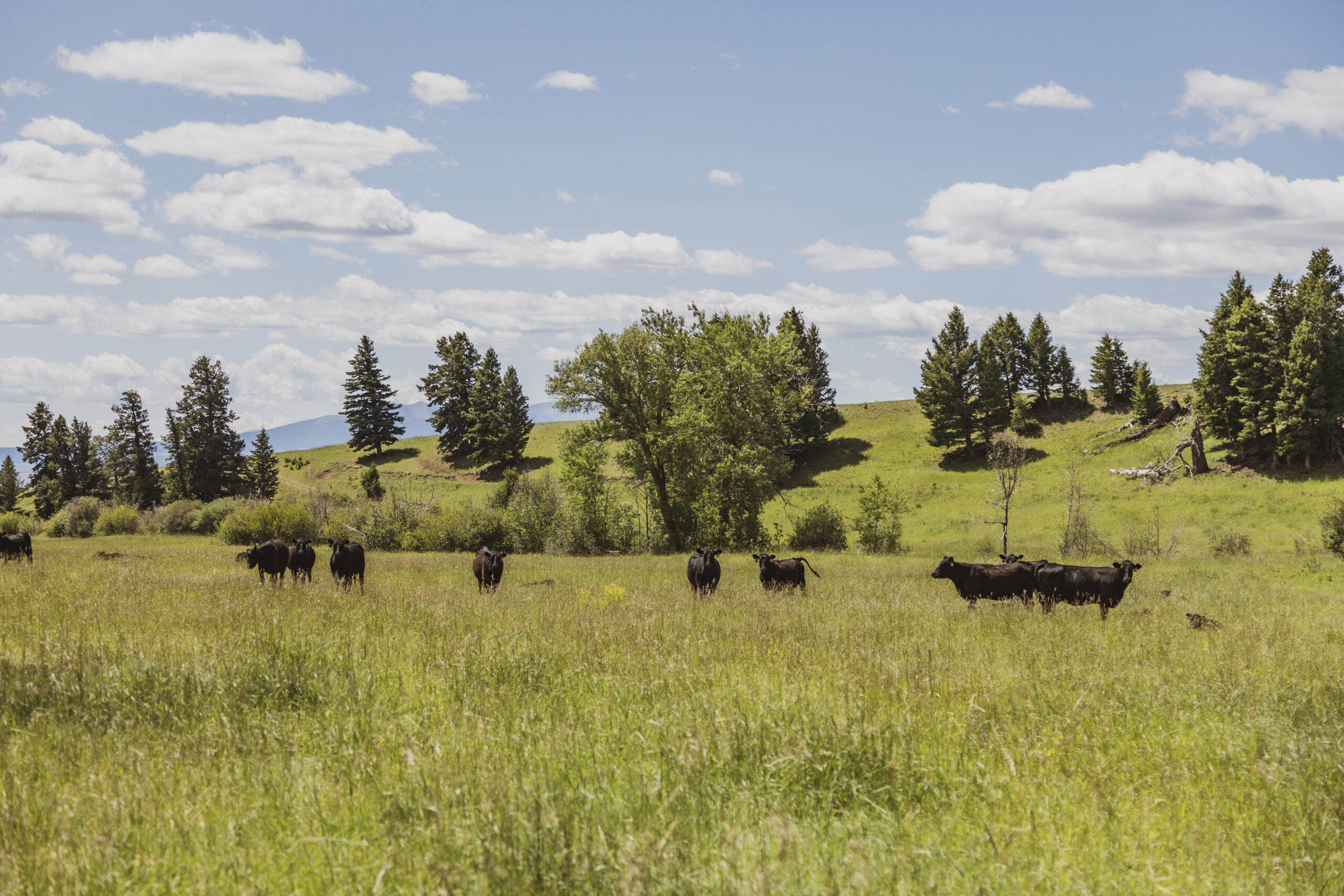
“We maintain ownership of our cattle throughout every stage of production—from our cow-calf operation through yearling development, finishing, processing and distribution,” Putnam said. He describes it simply as, “getting into the beef space that is 100% start to finish.” Every animal is single-source Black Angus, raised and processed entirely within Montana.
And while cattle is a staple industry in Montana, that start-to-finish model is rarer than it sounds. Most beef in the country travels a different path: Calves are born on one ranch, finished on a feedlot in another state, then processed at a plant, far from where they were raised. By the time it reaches a plate, the link between the animal and its origin is nearly lost. On his ranch, Putnam says he can track each animal to its pasture.
The ranch currently runs 2,000 to 3,000 cattle, primarily supplying restaurants in Bozeman and Big Sky. Each restaurant orders differently in cuts, volumes, and timing, a process Putnam calls “consistency in meeting requirements,” that comes without “a drop in quality or supply.”
That network of buyers now includes menus at Tanglewood, Primal Meat & Fish, Rocking R Bar, Lone Mountain Ranch, Yellowstone Club, Moonlight Basin and Tips Up, among others, where “great local chefs are putting our products on people’s plates,” Putnam said.
Sustaining that network means keeping up with demand. Putnam describes the local beef market as competitive and shows a positive demand for local products. As demand grows, Little Belt is weighing how to scale. The near-term goal is as much product production as possible to build a larger statewide presence, but without jeopardizing quality.
For now, that growth stays close to home. Whether it’s a chef tending the wood-fired grill at PBR or a local restaurant, the mission is the same: serving Montana beef that’s raised and processed entirely within the state.