

How to identify, report and respond to suspected HABs
EBS STAFF
Montana’s Department of Health and Human Services advised outdoors enthusiasts to be on the lookout for harmful algal blooms this summer in a June 19 press release.
Cyanobacteria, the microbes that make up HABs, when increased nutrients are present in water, and when factors like sunlight, temperature and slow speeds on rivers contribute to their growth. Exposure to HABs can result in skin irritation, illness in people and fatalities for pets and livestock due to the toxins the bacteria release into the water.

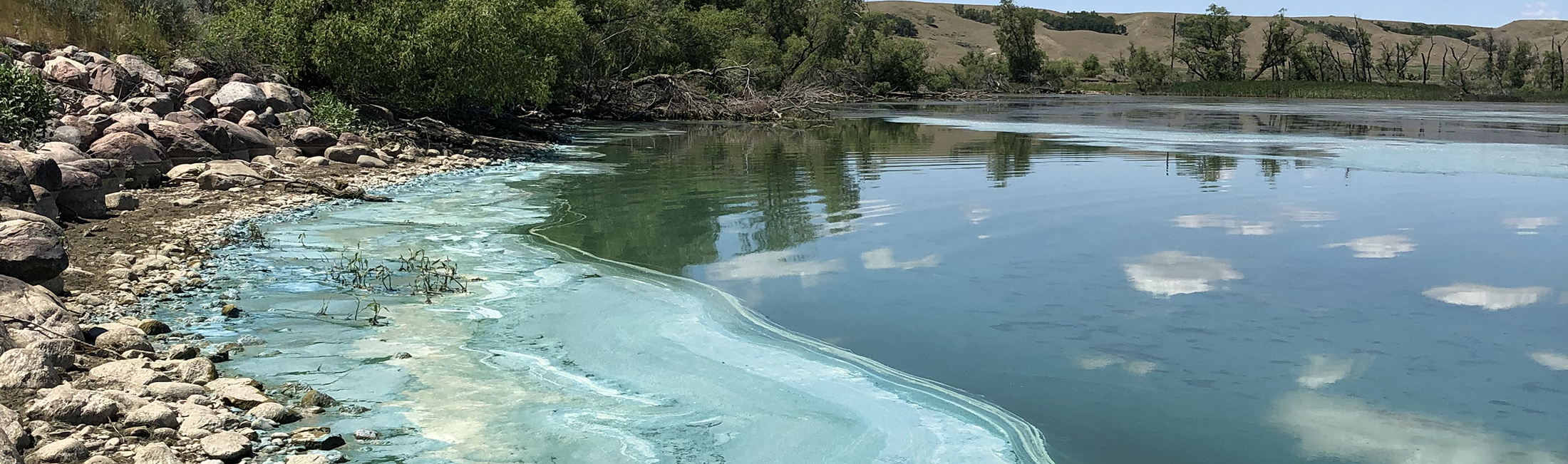
HABs look like coloration or scum in the water and often look like blue or green spilled paint, pea soup or grass clippings. Features like this in Montana waterways, like reservoirs, lakes and streams may produce toxins.
“State officials encourage remembering the phrase, ‘When in doubt, stay out,’” the release stated. The release advises people not to drink, swallow or swim in water with signs of HAB—that includes keeping kids, pets and livestock away from the water.
“Direct contact, ingestion, or inhalation of the toxins may irritate the skin, eyes, nose, throat, and respiratory system, and may cause nausea, vomiting, diarrhea, headache, dizziness, muscle weakness, or liver and kidney damage,” the release stated. People and animals who’ve made contact with a HAB should rinse off with tap water.
If you suspect a HAB-related illness in a person or animal, call your health care provider or veterinarian. In an emergency, call Poison Control at 1-800-222-1222.
Residents should report suspected HABs at Report suspected HABs online. Reporting the HAB allows officials to track potential harm to visitors, especially because algae, which is not a concern for human health, can be mistaken for a HAB.
“Green algae can affect aquatic insect communities and annoy recreators during a bloom, but do not produce toxins,” the release stated. “Green algae can resemble string, horsehair, or underwater moss. Aquatic plants can also occasionally be mistaken for a HAB.”
Montana Department of Environmental Quality and DPHHS will maintain and view reports throughout the state, updating a map for recreationists to view. If a caution advisory is issued, state agencies work with local authorities to monitor water and communicate with the public.
To reduce nutrient pollution in Montana’s waters DPHHS suggests reducing the use of lawn or crop fertilizers, landscape with native plants that don’t need fertilizers, and restoring native vegetation if you live alongside a stream or lake.