

By Taylor Owens CONTENT MARKETING DIRECTOR
Sponsored content
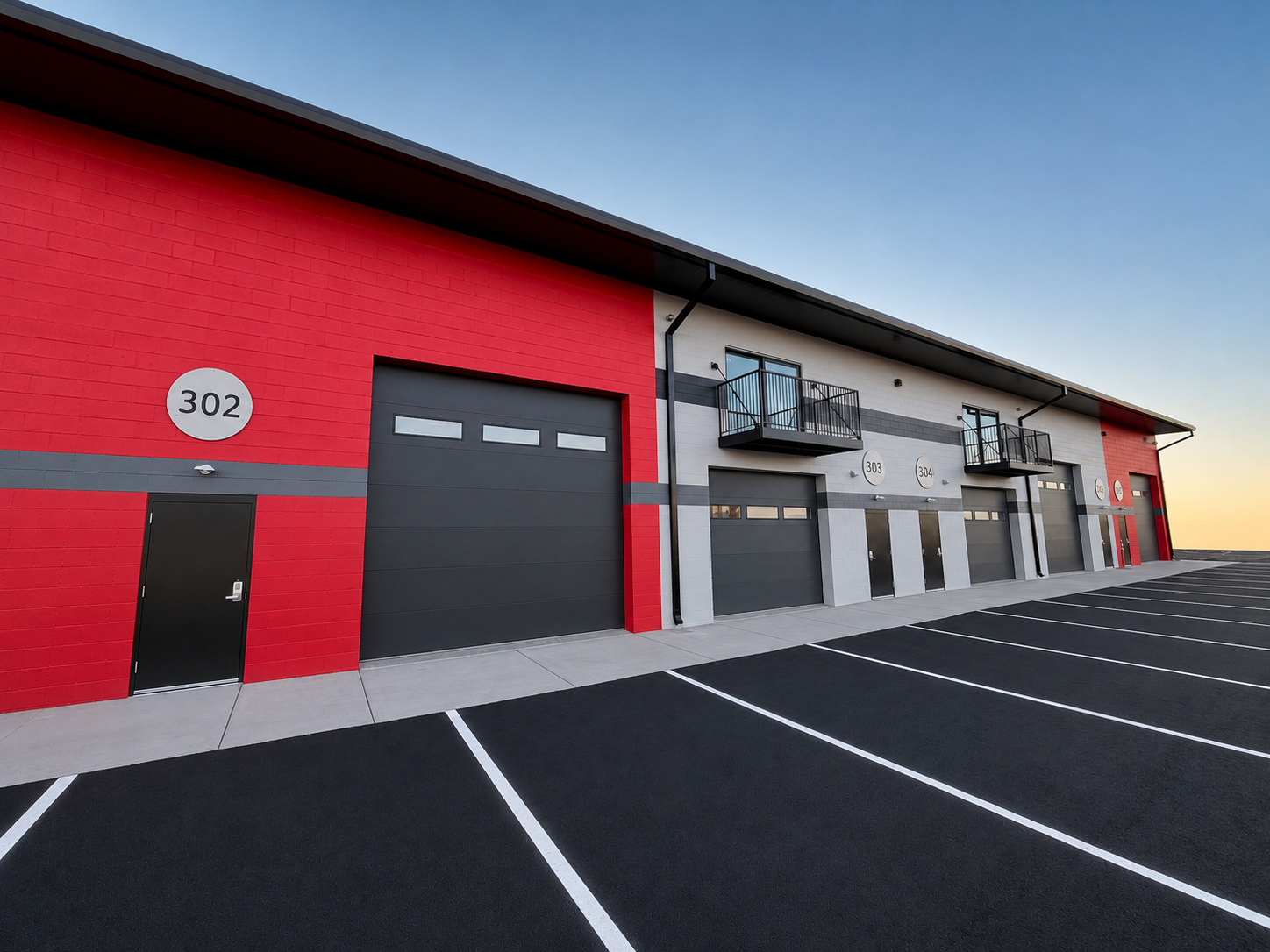
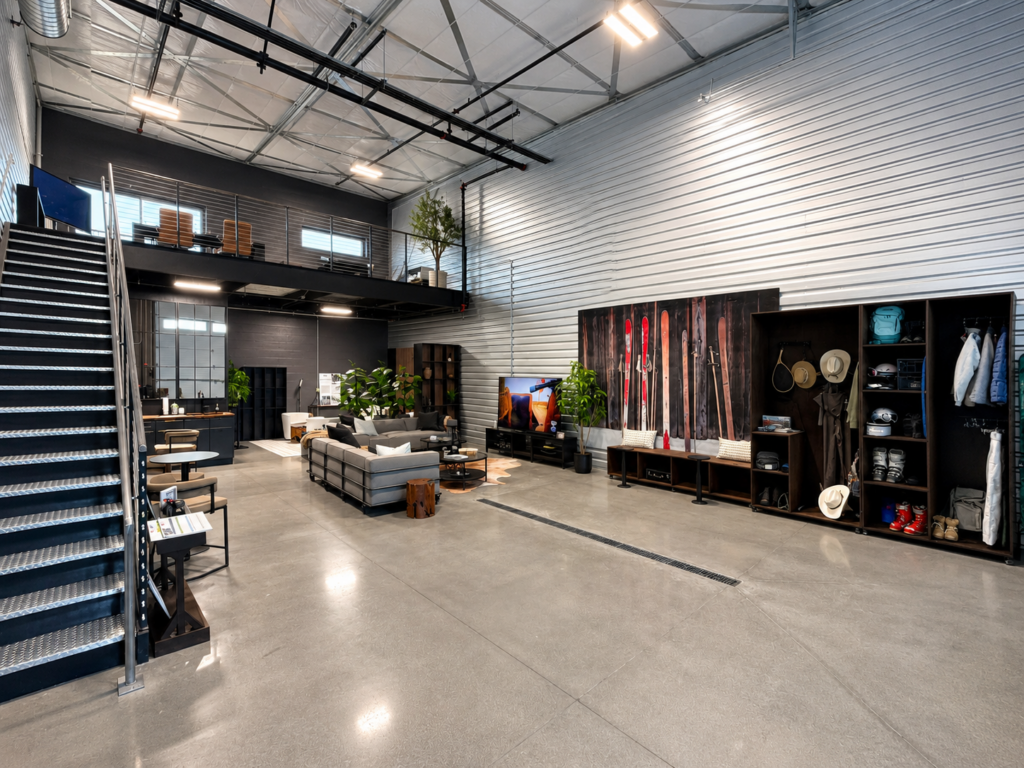
Drive out toward Yellowstone Airport Park in Belgrade, and you might expect to find rows of steel and concrete boxes—practical and purely functional. Step inside Personal Warehouse’s model unit though, and that expectation falls apart fast.

“Wow, this is not what I expected at all,” is the number one comment CEO Steve Garrison hears from first-time visitors. “When you hear the word warehouse it gives a certain connotation, and really it’s kind of unfair. Everybody walks in and they’re like; these are amazing creative spaces.”
That gap between expectation and reality is, in many ways, the whole story of Personal Warehouse, a company now 26 years and 40 projects into building what the industry calls “flex space”: hybrid units that combine office, warehouse and personal-passion space into one flexible footprint, available to buy rather than just rent.
Garrison’s path to flex space wasn’t a straight line. After earning a degree at Colorado State University, he landed at a private mortgage banking firm in Fort Collins in the early ’90s, financing a wave of apartment-to-condominium conversions sweeping Denver. The technical, often-botched process suited him. “It was really technical and it was complicated and a lot of people messed it up, and for some reason it made sense to me,” he says.
He noticed a real void in the market: self-storage units topped out at 10-by-10 feet, while traditional warehouses started around 10,000 square feet. Nothing existed in between, and nothing let a small business or individual own their space.
Industry veterans told him it couldn’t work: rents on smaller, flexible spaces would be too high for anyone to pay. Garrison ran the numbers differently. By converting a rental product into an ownership product, he found it could be 30 to 40 percent cheaper to own than to rent. He built his first project on that math.
That first project delivered right after Sept. 11, 2001, and the timing nearly sank it. Garrison had marketed the concept to buyers as space for cars, boats and toys. Then the towers fell, and in the days after, he lost 60% of his customer base.
“I’m thinking that the world’s going to end,” he says. Then the market pivoted. “The Monday after 9/11, I went into my office, and I had 42 voicemails… 90 days after 9/11, I was 100 percent sold and closed out.” Buyers weren’t looking for toy storage anymore—they wanted smaller, affordable, flexible space to run a business out of, and the ability to own it rather than rent it.
That shift became the company’s throughline. Today, roughly 20% of Personal Warehouse clients are car and motorsport enthusiasts, but the core client base is small business—typically leasing or buying units between 1,000 and 4,000 square feet. “In good times, people are starting new businesses. In times of contraction, people are looking to be more cost-effective,” Garrison says. “We catch people as they’re growing, and we catch people as they’re shrinking.”
Garrison points to a persistent imbalance in commercial real estate: the vast majority of product is built for large corporate tenants, even though small businesses make up the overwhelming share of the business community. “Ninety-five percent of the market is built around large corporate users—10, 20, 50, 100,000 square feet,” he says. “Eighty-five percent of all small business in America is five people or less, yet only a nominal amount of the entire real estate market is designed to accommodate them.”
Ownership, historically, wasn’t realistic either. Ordinary commercial assets ran into the millions of dollars. Personal Warehouse’s model breaks that barrier down to a scale small businesses can actually afford, while also offering the option to lease (about 20% of units are leased rather than owned) for owners who’d rather deploy capital elsewhere.
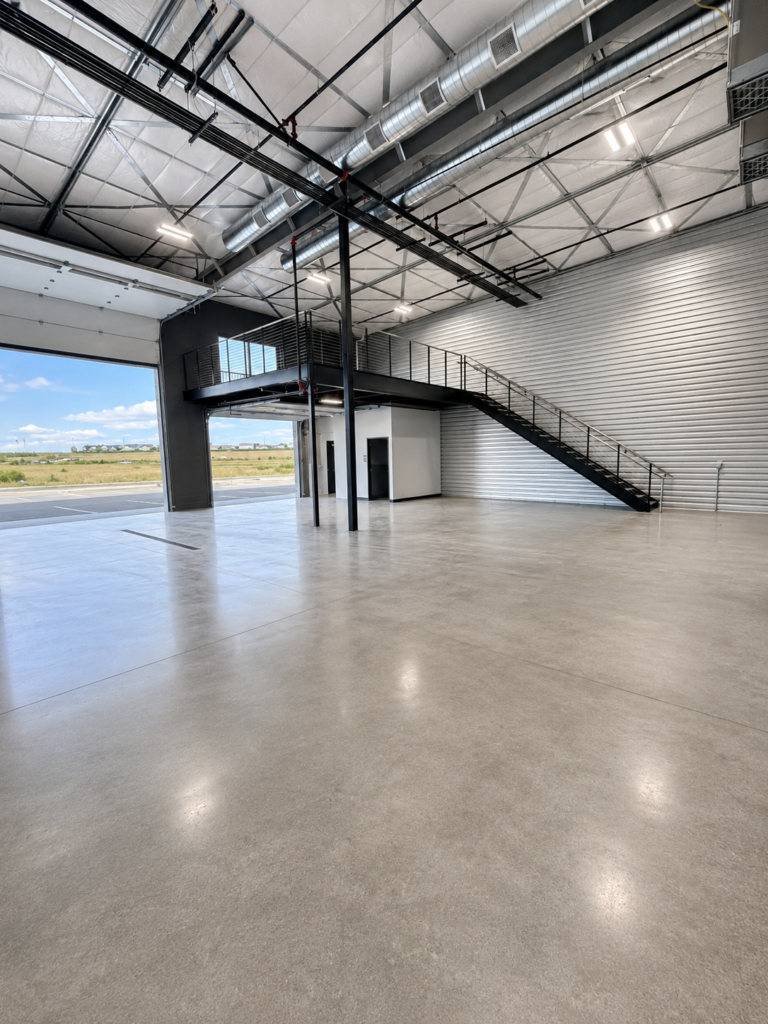
Every Personal Warehouse project has been shaped by the one before it. Early feedback about dim, purely industrial interiors led to more windows and natural light. Requests for a workspace-life separation led to integrated mezzanines. A desire for the units to feel less like a warehouse and more like an office pushed finishes upmarket.
The result: masonry construction rather than metal, full climate control, wet bars and high-end finish levels rare in industrial product. “I don’t think this is going to feel like any warehouse that you’d step into around Bozeman and Belgrade,” Garrison says.
Examples of businesses working out of Personal Warehouse units include a 12-year-old’s social-media slime business in Round Rock, Texas and a Colorado owner’s fully scaled model of the Rocky Mountains, complete with a running train line, built over four years. Other units house high-end recording studios and podcasting setups, a photography studio with a rotating turntable set built to shoot product photos, and full home-gym buildouts.
“I set out to build projects, and I ended up building communities,” Garrison says. Owners become friends, travel together, and do business with each other.
Unlike Bozeman-area live-work condos, which Garrison describes as functioning more like “a house with an oversized garage,” Personal Warehouse units are strictly commercial.
The company is now active in seven states, with plans to expand to around ten, and recently launched a consulting arm, FLX Blueprint, to help landowners and developers unfamiliar with the flex-space asset class get projects off the ground.
I feel like we are where the self-storage industry was 20 years ago,” he says, pointing to remote work, evolving lifestyle preferences post-COVID, and a broad appetite for adaptable space as tailwinds. “I think this is probably going to be one of the hottest asset classes in real estate for the next 10 to 15 years.”
For Garrison, the pitch ultimately comes down to experience over explanation. “You have to come see it for yourself… it’s not a warehouse, it’s so much more than that.”
The model unit—Unit 302—is open for tours, with self-tour access available by text for visitors outside regular hours.