

By Mira Brody VP MEDIA
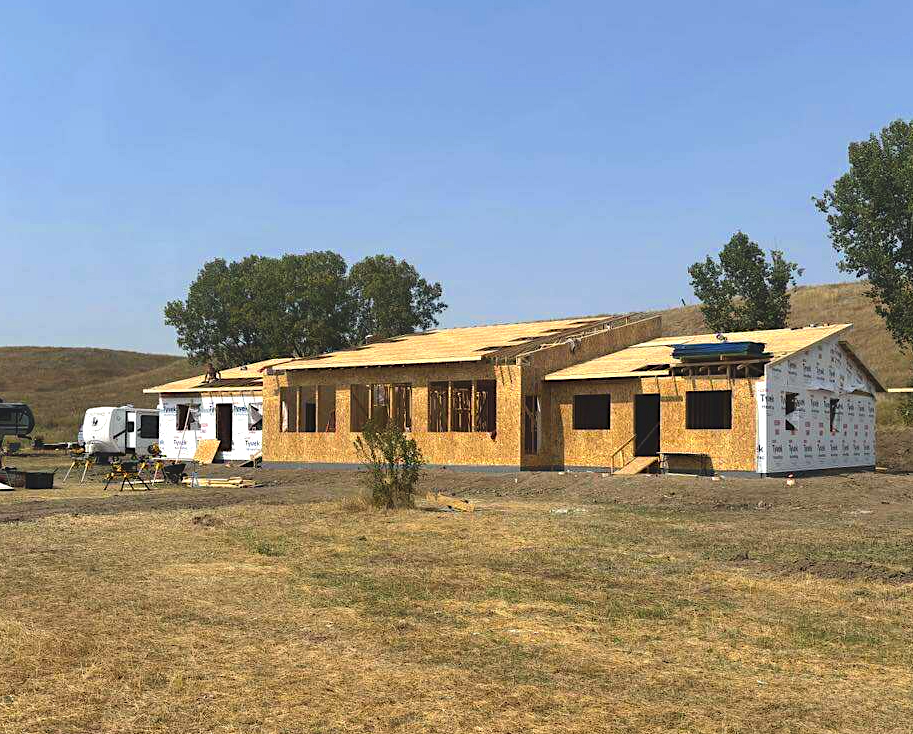
A Crow grandmother drove out to gaze at the unfinished plywood walls of a building on the edge of Lodge Grass, Montana. She parked and sat there for an hour and a half, she later told Dr. Megkian Doyle, looking at the frame of what will soon be Kaala’s Village.
“I just looked at it because I tried to do it, my daughter tried to do it, and I’ve just never been able to do it,” she told Doyle, executive director of Mountain Shadow Association.
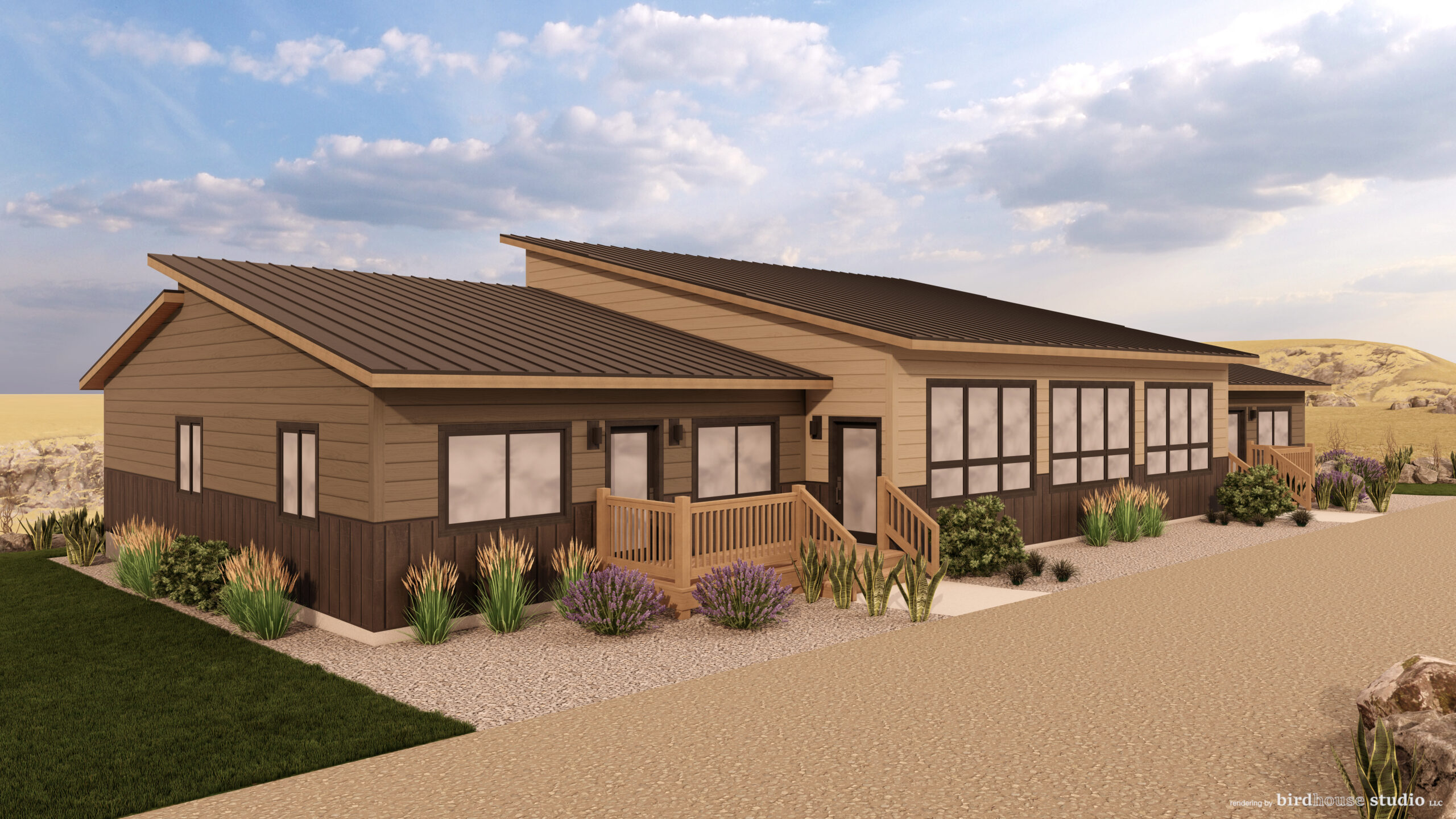
For generations, families like hers have tried to break the cycle of addiction, foster care and separation on the Crow Reservation. The Kaala’s Village Family Healing Center is a campus designed to keep children connected to their families and community while their parents recover. When the organization asked residents where they felt safest, nearly everyone gave the same answer: at their grandmother’s house—“Kaala” means grandma in Apsáalooke. Soon, with ongoing fundraising, Kaala’s Village will open its doors to families.
“It’s been prayed for by these women for so long,” said Doyle, a former Lodge Grass High School teacher who has kept a strong and impactful connection to the community through her work with MSA. “So many people have said, ‘I’m here because my grandma prayed for me.She just didn’t stop praying.’”
Kaala’s Village grew out of an 18-month community design process that began in 2017, funded by the Robert Wood Johnson Foundation. Residents, including children, mapped out the community’s strengths and obstacles and one of the central problems they identified was the breakup of young families.
Native children make up about 10% of Montana’s children but 40% of the children in foster care, Doyle said. Once children enter that system, it’s hard for them to stay rooted in their community. Doyle has personal experience with this; her grandfather grew up in a boys’ home on the reservation, and her mother was in foster care in Bozeman. Because removal has become generational, many parents fall “into this state of despair,” she explained, and struggle to find the resilience to reunite their families once they are fractured.
Doyle said there’s also a practical problem. Currently, MSA pays to send residents to treatment, only for them to return home to the same conditions they left. She described one couple with a 2-year-old and a 4-year-old who had been living in a camper without water or heat. They both went to treatment, but once completed and reunited with their children, there was no ongoing support network to fall back on.
“That’s really hard on kids because they have this experience of hope,” Doyle said. “And then we come back into this system and it all goes back to the way that it was, and then we do it again and we do it again.”
Under the Kaala’s Village model, parents facing the removal of their children would have the choice to enter a year of long-term treatment while their children live on campus with stable guardians, often aunties and uncles the children already know. The children would keep attending a familiar school and talk with their parents weekly. When parents return, the family would move into a home on campus for one to two years to reunify and stabilize.
“When you are in that situation where you’re forced to give up your kids, your mindset is very different,” Doyle said. “If you have this choice—it’s a tough choice, I’ll say that—it changes the mindset for how you pursue [treatment].”
Doyle said no treatment center in Montana accepts both parents. Residents told the organization that sending mothers and fathers to separate programs made it hard to rebuild their marriages afterward. Kaala’s Village will be a first, and hopefully serve as a success model for other communities facing similar strife.
A need for connection
Doyle describes addiction as a problem of disconnection, comparing receptors in the brain to an empty stomach: they’re meant to be filled by connection to people, nature, God and animals. Without that connection, she said, “we got these hungry receptor feelings, which are basically depression, anxiety, isolation, shame.” Substances can fill those receptors, she said, “but to the brain, it’s not real food.”
Mainstream methods of addressing addiction, such as jail, suspension and expulsion, isolate people and deepen that void, Doyle explained. Kaala’s Village is designed around connection, connecting residents through familiar, community-focused elements like a grandparent in residence, berry bushes where elders and children can pick together, a traditional setting for passing down stories, a children’s house laid out like a traditional tipi and restorative justice practices that focus on repairing harm instead of punishment.
MSA already applies that approach. Doyle described an instance of a boy who threw a rock through the truck window of the nonprofit’s board president. Instead of calling the police, the board president went to the boy’s home and asked him what had happened. The boy said he had come home to find his parents high after they had promised to stop using. The two repaired the window together and through that connection, the boy eventually moved in with a neighbor’s family, a safer place for him to stay. Later, he made his high school honor roll.
“If [the police] had come, then he would’ve gotten a vandalism charge,” Doyle said. “It would’ve been a fine. His parents never would’ve paid it. He would’ve been a bad kid. Now … he’s connected to other people in the communities to support him.”
Kaala’s Village has larger economic impacts beyond its doors. Residents are training in construction trades, regenerative agriculture, hospitality and Indigenous culinary arts. The campus would include a produce processing facility to supply local schools and senior centers with fruits and vegetables, a commercial kitchen and expanded child care.
Construction skills are especially needed, Doyle said, noting that a 2014 community growth plan found that 72% of structures in Lodge Grass were substandard, and few of the recent FEMA repairs on the reservation are being done by Crow workers. During the FEMA projects, MSA is training construction leads to offer support on the job site, an idea that came from women in the community, who told the organization their men were unlikely to sit down for face-to-face counseling. Here, they can earn job skills and problem solve with a newfound community.
The nonprofit’s presently operating recovery community center serves 20 to 40 people a day as well as a kinship child care center with three teachers, which Doyle said relieves grandparents who are often both the household earners and the caregivers in many families.
MSA has raised close to $3 million, which has made significant progress on the project’s water, sewer, electricity, a new road, other construction progress as well as active services. It is about $200,000 short of finishing Our Children’s House. Completing the full campus, including five family homes, will take about $5.6 million. The campaign to complete the center receives no tribal funding and is supported by grants and private donors.
MSA will hold a fundraiser at The Elm in Bozeman on Oct. 26 emceed by Supaman, an Apsáalooke rapper and fancy war dancer who grew up on the Crow Reservation.
When Kaala’s Village officially opens its doors, it will first serve five families at a time. Doyle said the goal is to grow carefully, and eventually be in a position to help other districts on the reservation build their own versions.
“What we want is for 100% of our kids to grow up in homes where there’s peace and wellbeing,” she said.