

By Carli Johnson STAFF WRITER
Long before Bozeman was bustling with tourists, anglers and skiers balancing a recreational lifestyle with work and family life, it was a muddy supply town on the edge of the American frontier.
In the early 1860s, thousands of men surged west into what was then Montana Territory, chasing the promise of gold in the towns of Bannack, Virginia City and Helena. Bozeman, founded in 1864, wasn’t a mining town but a resupply point, a place to rest horses, purchase grain and provisions, and prepare for the rugged journey toward gold.

As farmers and ranchers settled the fertile Gallatin Valley, many found more reliable fortune feeding miners than searching for gold themselves. Wooden storefronts rose along Main Street. Saloons and boarding houses followed. And, as in nearly every boomtown across the American West, prostitution became part of the town’s early economy.
By the 1880s, Bozeman had a defined red-light district. At its height, up to nine houses of prostitution operated in a small pocket along modern day Mendenhall Street. The district lasted until about 1916, when reform efforts shut it down. Many of the homes were eventually demolished in the 1960s, replaced by parking lots and new construction as the city modernized.
For decades, the history of that district lived mostly in arrest records, city ordinances and newspaper clippings.
Last fall, evidence of life in the 19th century resurfaced—literally.
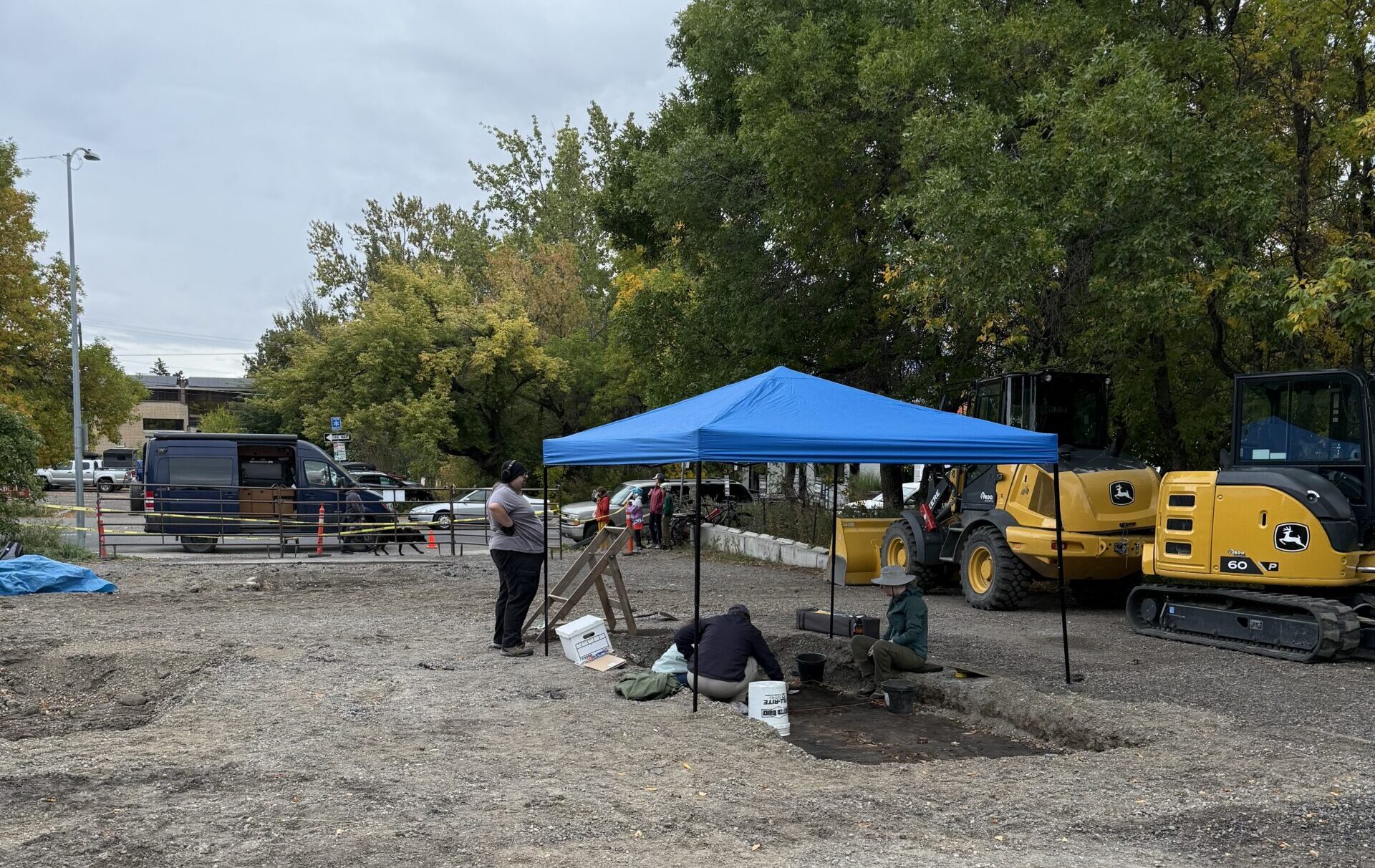
In early October, anthropology students from Montana State University spent two brisk days excavating an empty lot at 234 E. Mendenhall St., next to the headquarters of the Extreme History Project, a Bozeman-based nonprofit that brings local and statewide history to the public through walking tours, podcasts and exhibits.
The lot, long used for parking, is slated for hotel development. Before construction begins, developer Matt Paine of The Paine Group agreed to allow MSU students and the Extreme History Project to conduct a small archaeological dig on the site.
“It’s arguably the most historic and certainly most interesting district in Bozeman,” Paine said. “When we first chatted about it, I was ecstatic to do it, and we did everything we could to help them get those artifacts out of the ground.”
Crystal Alegria, executive director of the Extreme History Project, said the collaboration came naturally.
“This is a great way for the history community and developers to work together, we want to maintain our history in Bozeman, even as we grow.”
Crystal Alegria
Because the lot sits directly beside the organization’s downtown headquarters, Paine reached out to introduce himself before breaking ground, Alegria told EBS.
“I asked if he’d be open to an archaeological dig, and he said yes,” she said.
Alegria partnered with MSU anthropology professor Craig Lee, who incorporated the excavation into his ANT-215 class. Lee works to incorporate some version of field work and excavation in the undergraduate anthropology program to provide field opportunities for undergraduates.
“Each year we try to do something that’s meaningful and impactful,” Lee said. “Both Crystal and myself really care about these field practicums for the students.”
The dig offered students a rare chance to explore a piece of Bozeman’s past before development moved forward. Within two days, students uncovered dozens of artifacts tied to the neighborhood’s past life.
Among the most striking finds: a bottle of Lydia Pinkham’s Vegetable Compound, a widely marketed 19th-century herbal remedy often used by women seeking to prevent pregnancy; a small medicine bottle from the Gallatin Drug Company, which operated at the corner of Main and Black streets from 1904 to 1950; and a glass syringe, likely associated with drug use.
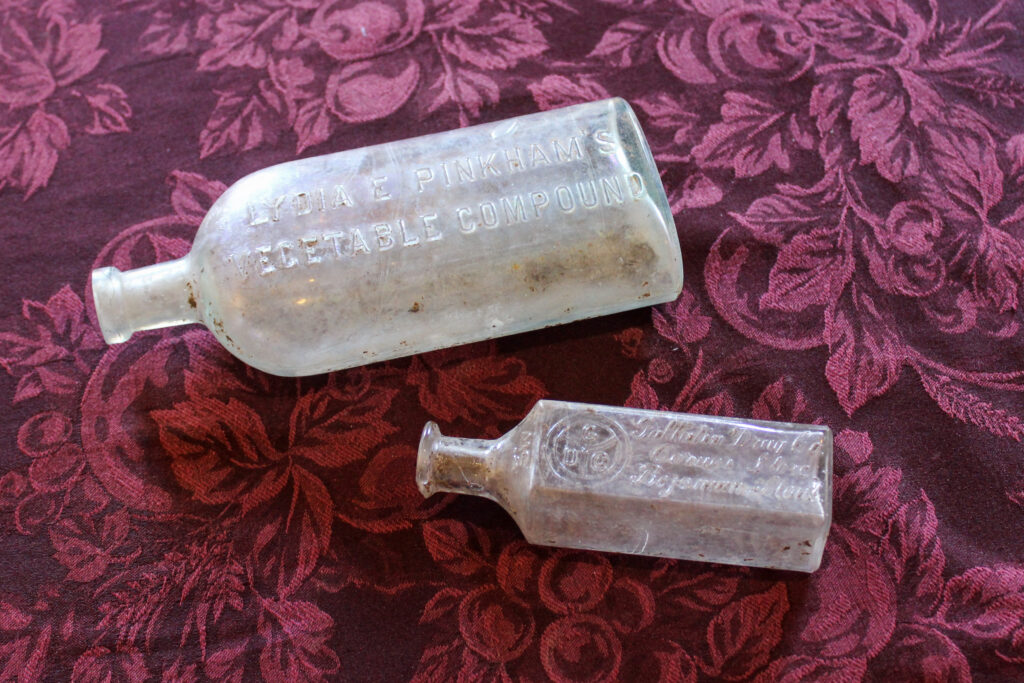
The artifacts are now being cleaned, analyzed and dated. They are temporarily housed at the Extreme History Project and may eventually be displayed in the future hotel.
“Our goal isn’t just to dig up artifacts,” Lee said. “We want to preserve a piece of Bozeman’s story for the future.”
Prostitution was never legal in Montana, but enforcement in Bozeman often amounted to what Alegria describes as a “tax.” In the 1890s, city ordinances imposed misdemeanor fines—typically $10 for a madam and $5 for the women who worked in the houses—often collected monthly.
“It was illegal, but they would just pay their fine and go back to work,” Alegria said.
Many of the women entered the trade because few other options paid a living wage. Teaching, domestic work and cooking were available, but rarely enough to support a single woman. Some built profitable businesses. Others were trafficked, struggled with addiction or died young from disease.
Alegria notes that while Bozeman’s red-light district officially closed more than a century ago, the broader issues surrounding sex work and trafficking have not disappeared.
“Just because it stopped happening there,” she said of the Mendenhall Street lot, “doesn’t mean it’s gone.”
Still, both Alegria and Lee see the excavation as a hopeful example of how a fast-growing city can honor its past while building its future.
“This is a great way for the history community and developers to work together,” Alegria said. “We want to maintain our history in Bozeman, even as we grow.”
Paine said his team hopes to carry that collaboration forward as construction begins. If feasible, some of the recovered artifacts could be on display in the hotel. The goal, he said, is to create something the community can be proud of while honoring Bozeman’s past.
As the lot prepares to transform from parking area to hotel, the ground beneath it has already told part of its story. Thanks to a handful of students with trowels and a willing developer, a chapter long buried is back in public view.