

‘We’re still here’: 50 years after its official start, the student-organized powwow celebrates milestone
By Jen Clancey STAFF WRITER
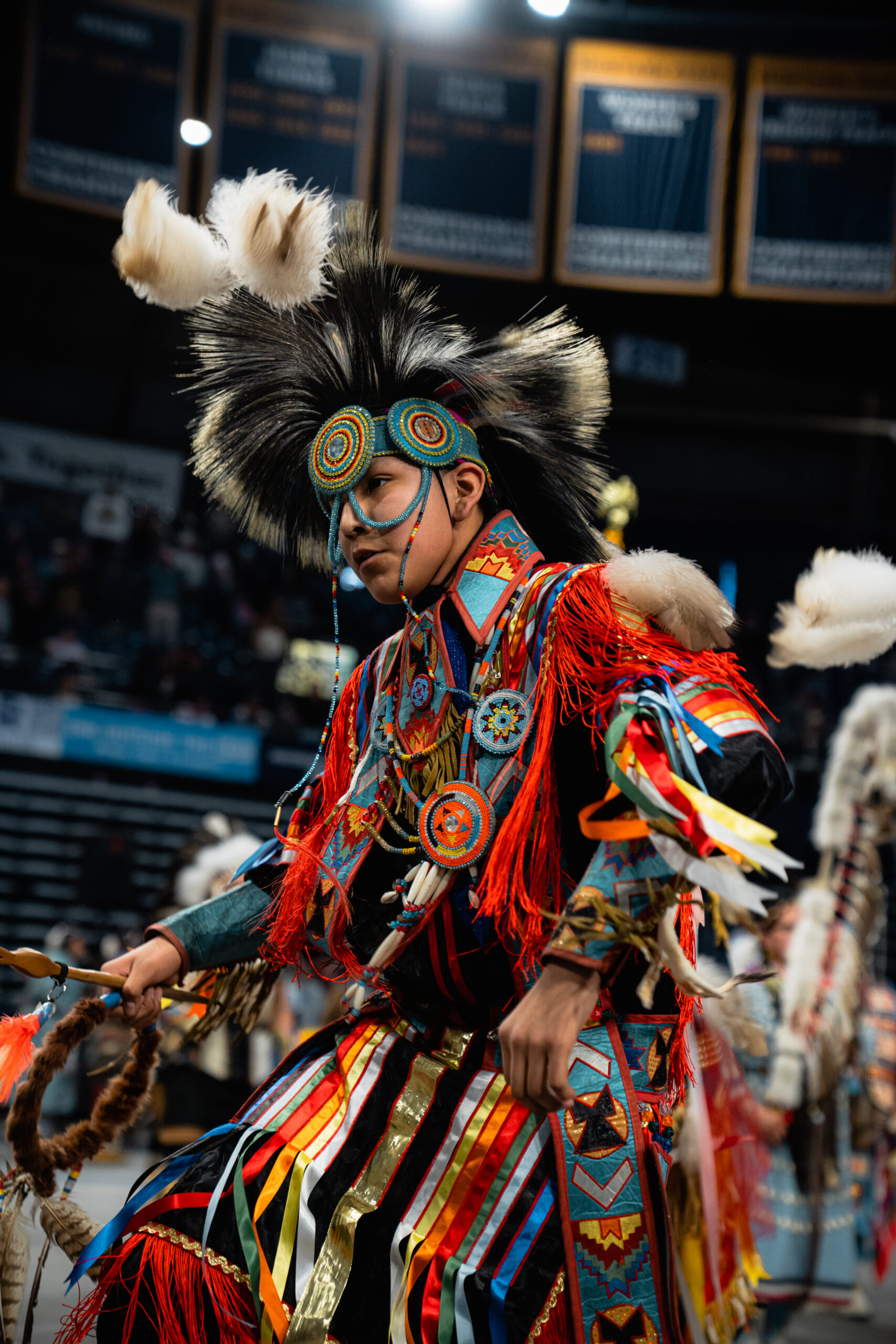
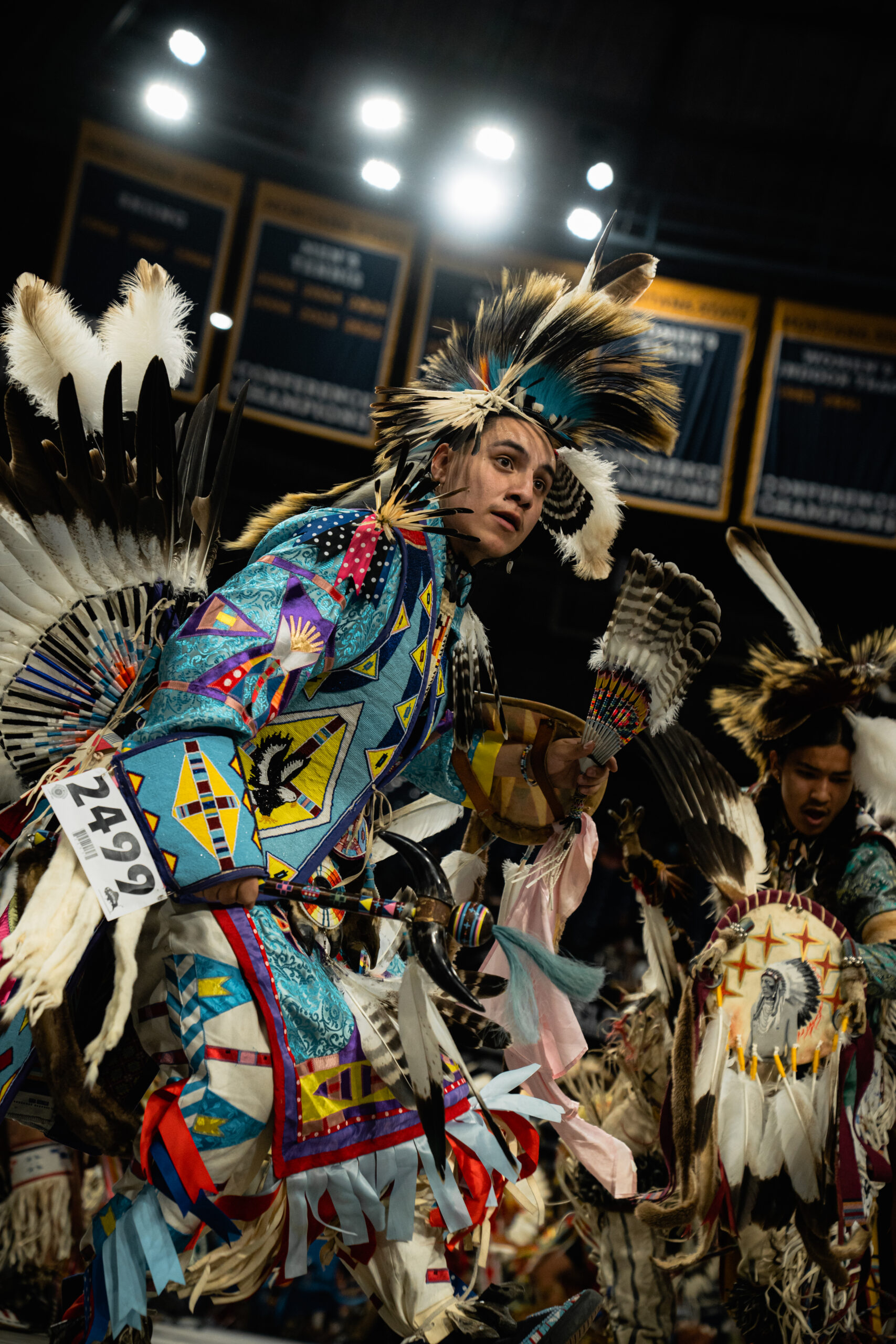
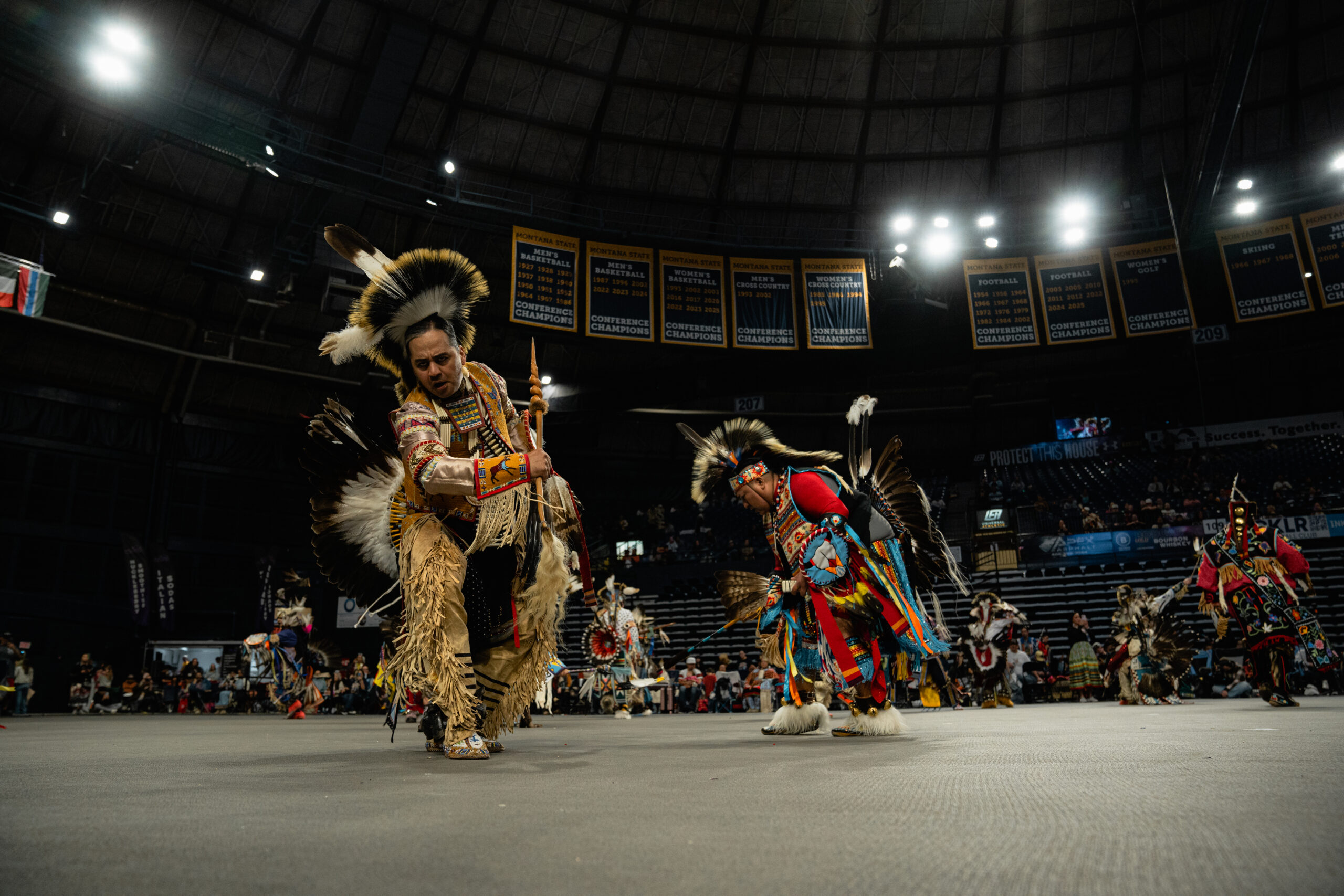
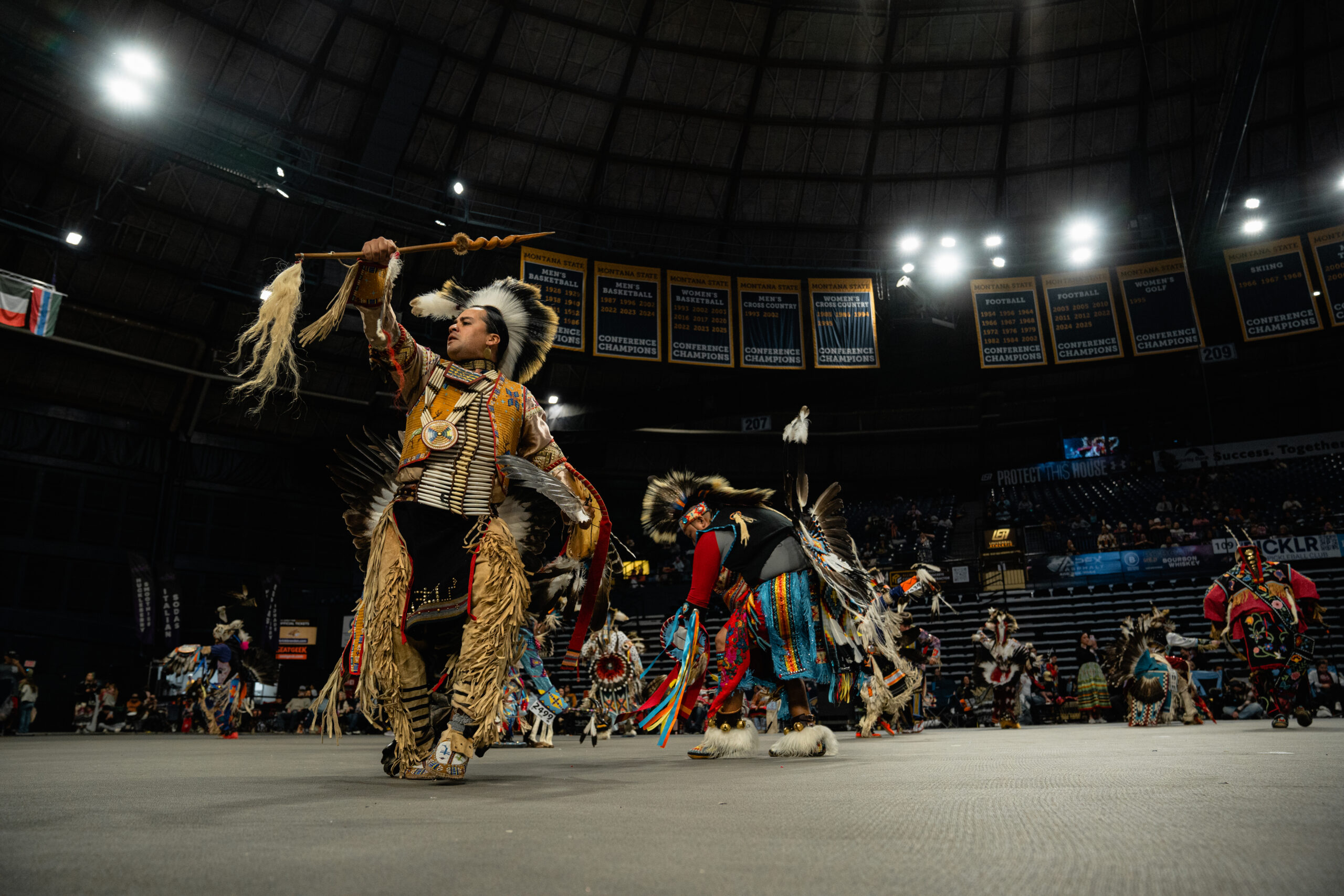
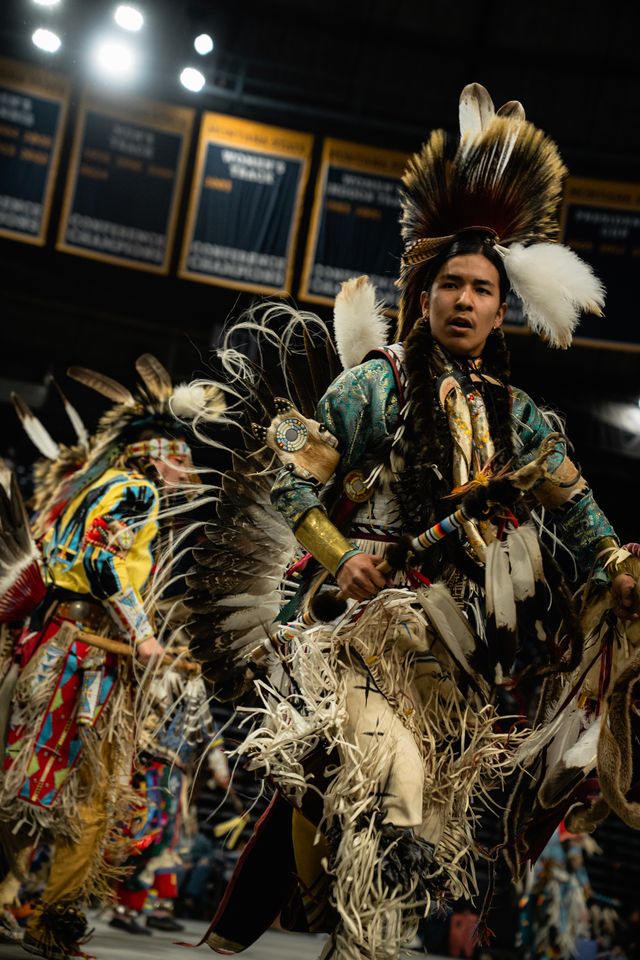
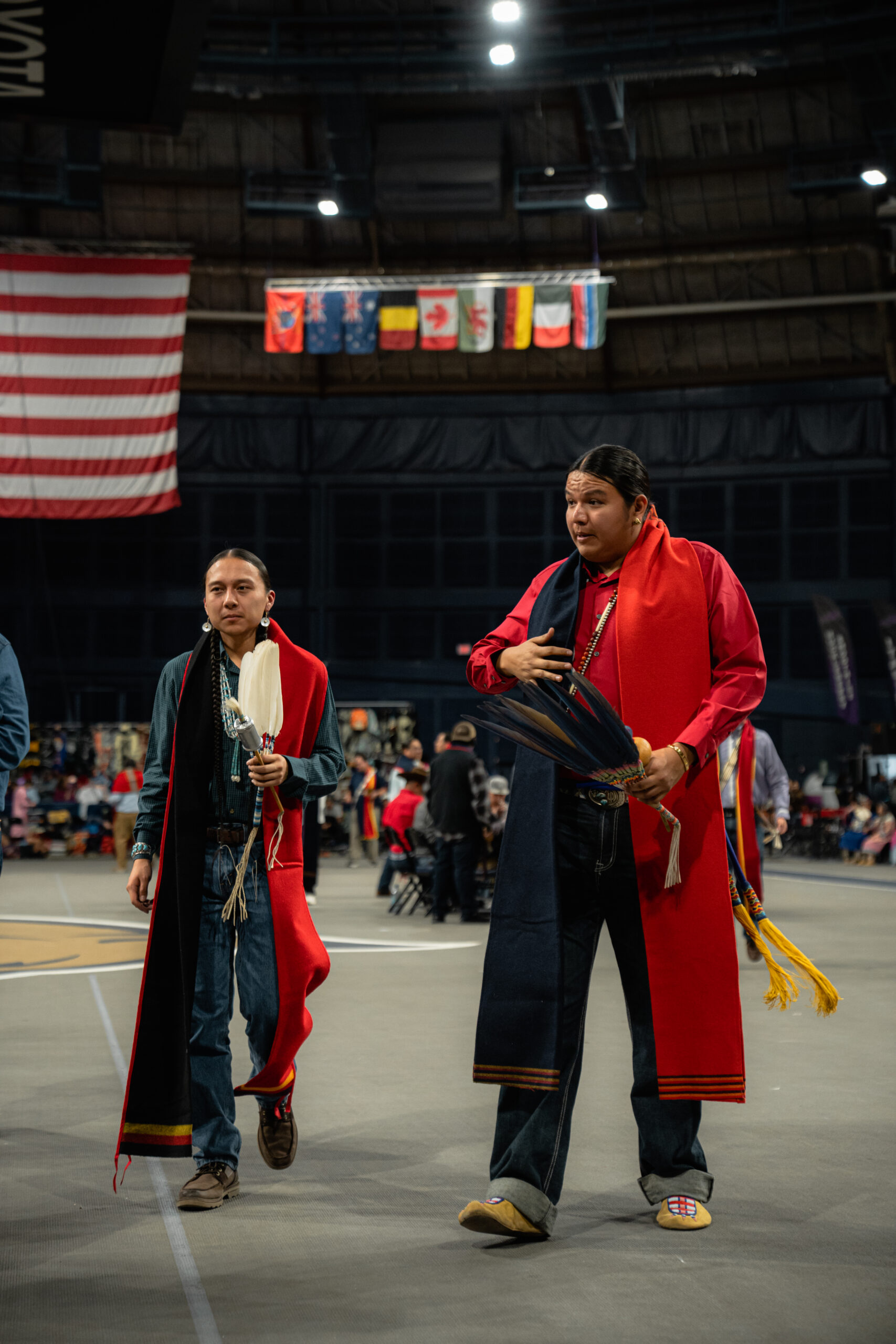
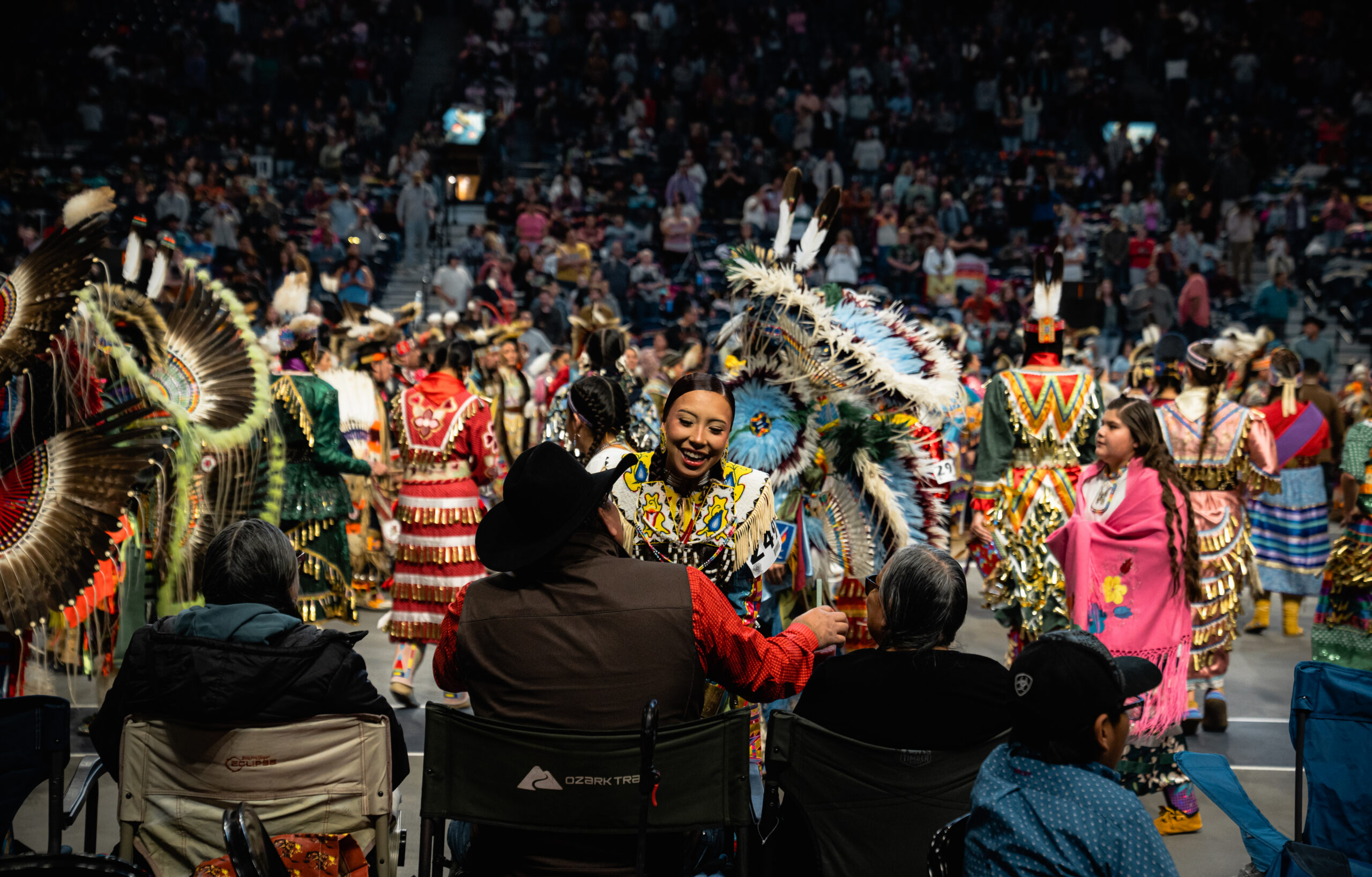
Titan Brockie felt emotional as he watched more than 100 dancers circle the floor of Montana State University’s Brick Breeden Fieldhouse on Friday, March 27.
“Just in that moment, you know, seeing all those dancers in the grand entry fill up the dance floor made me really, really emotional. Made me feel really good in my heart,” he said.

Brockie is an Aaniiih and Diné MSU engineering student from Montana, the co-president of the MSU American Indian Council, and a member of the powwow’s co-host drum, the Bobcat Singers. For the past year, Brockie and the AIC have planned for the 50th MSU AIC Powwow to be the biggest yet, reaching out to sponsors, coordinating with drum groups and sharing communications about the event.
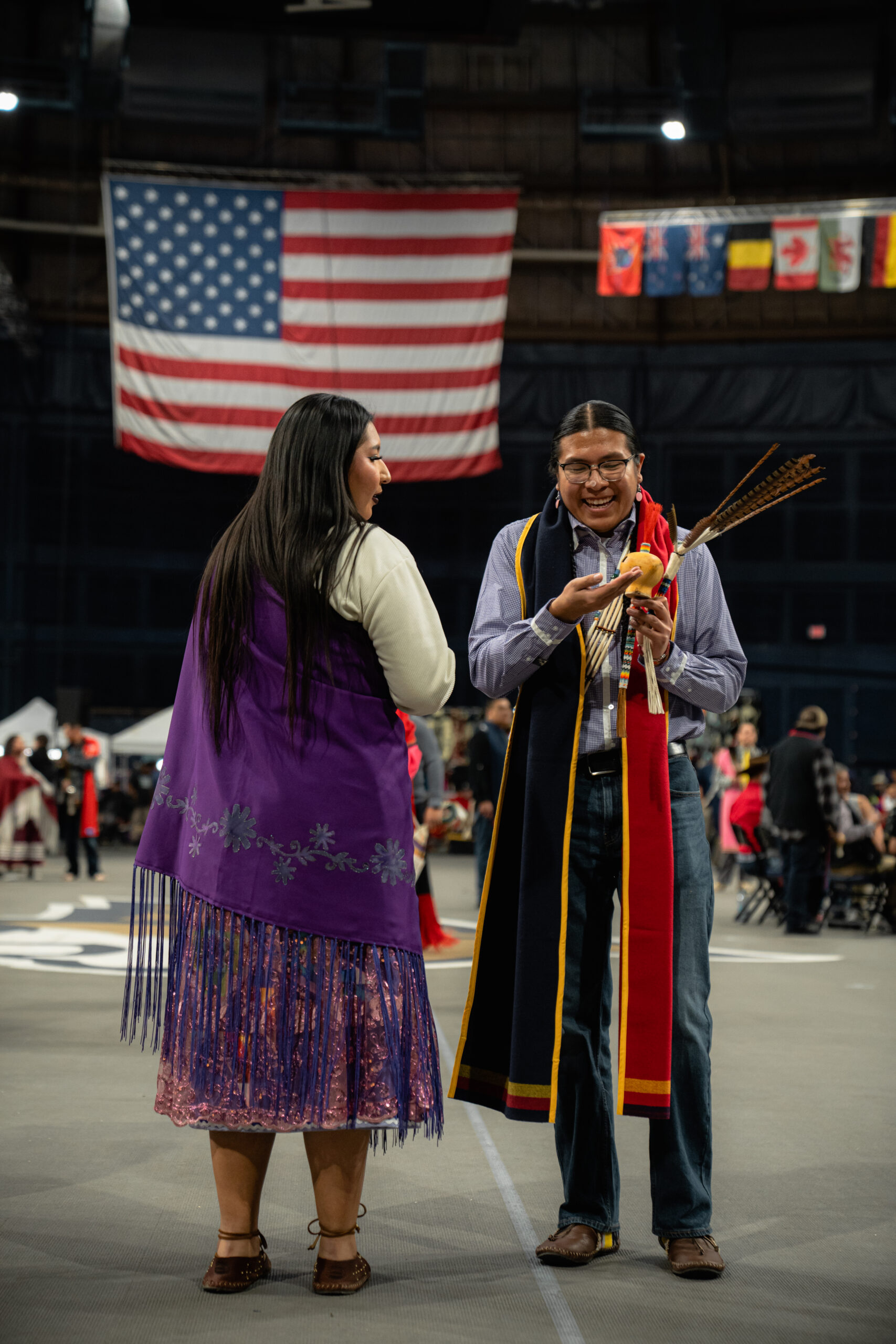
Powwows are important gatherings for Indigenous peoples to visit with relatives and friends, exchange culture, craft, and share and compete in dance and singing. AIC Co-President Michaiah Pease described the significance of the half-century anniversary of the MSU AIC Powwow.
“So the 50th anniversary here in Bozeman is a huge milestone for us, just because our community has been through a lot. We’ve been through a lot of assimilation, genocide and then we’re still here,” Pease told EBS.
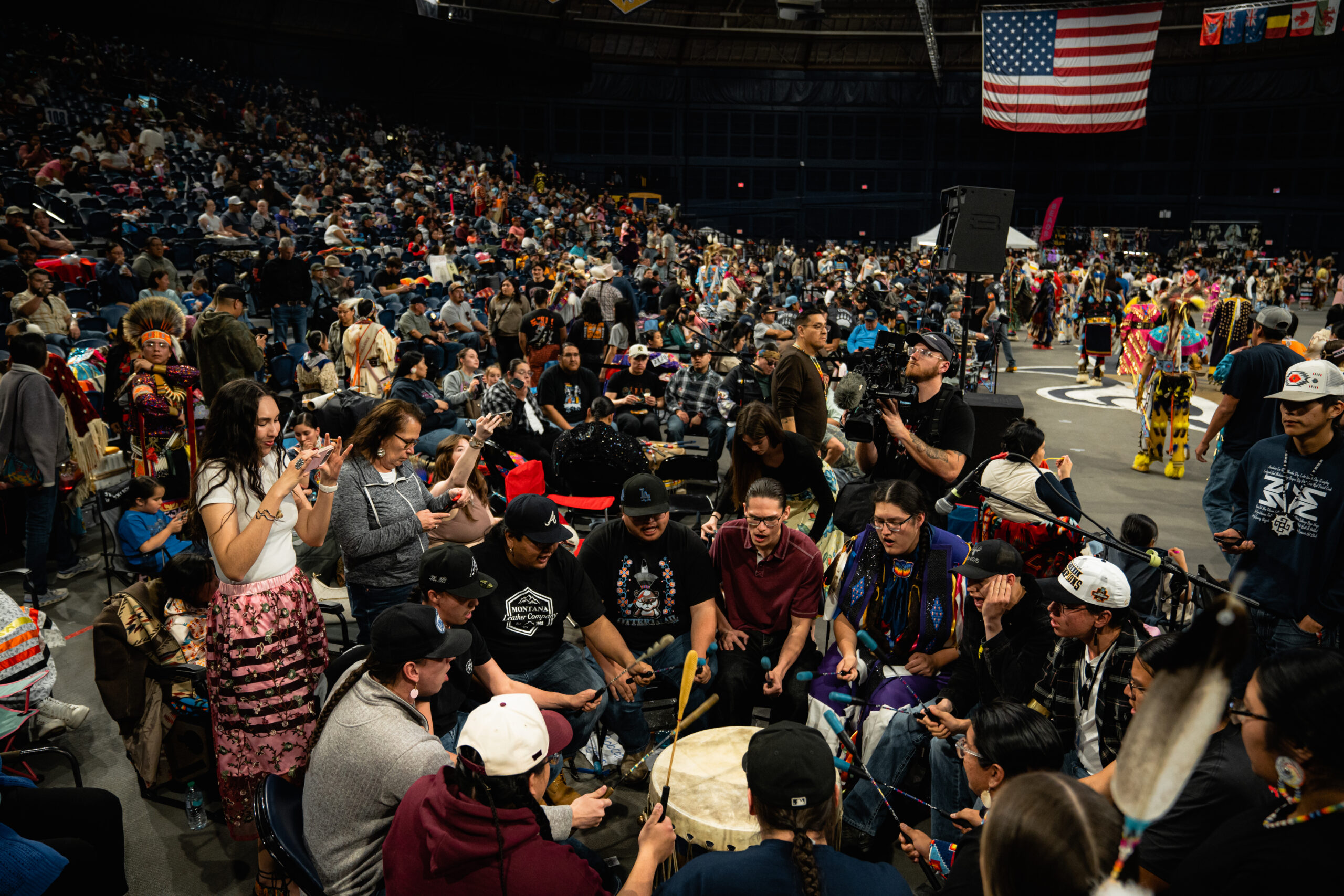
Pease is from Billings and is Aaniiih and Apsáalooke. She began going to MSU AIC Powwow in high school and now studies environmental engineering at MSU. Powwows are a place where she can be her authentic self, she said, and reconnect with family and friends.
“It’s a lot of people that I don’t just get to see on the regular,” Pease said. “Especially being away from home here in Bozeman, being able to host them here … It’s something I’m really grateful to be a part of.”
While leadership responsibilities may have kept Pease from competing in the Crow Style dance competition, other dancers on the fieldhouse floor pinned numbers to their attire and talked with friends and family.

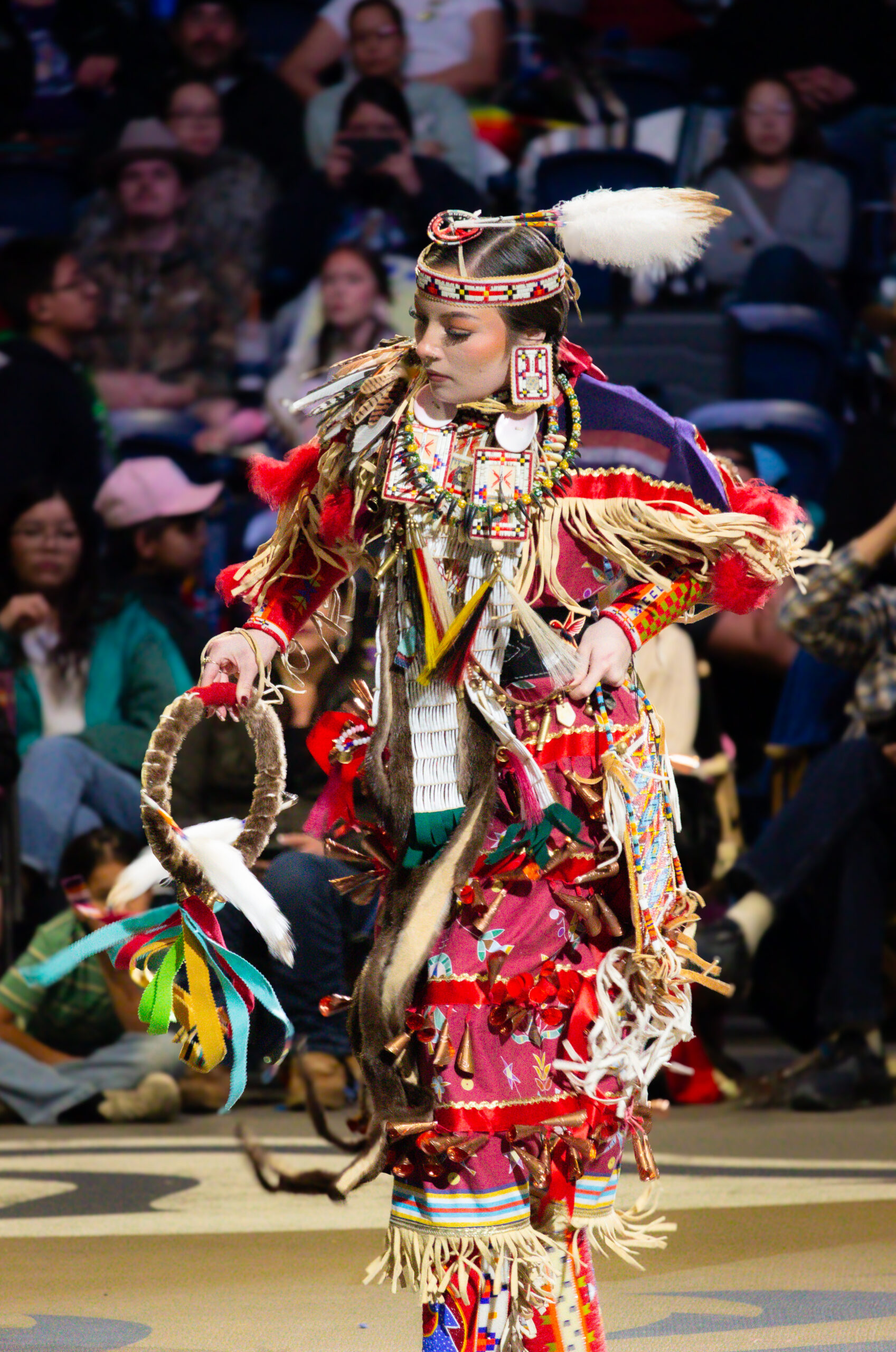
One dancer, Caroline Spotted Eagle of Arizona noted that she learned Women’s Traditional dance from her grandpa, who dances Men’s Traditional. She said that dance for her is a way to remember and honor loved ones.
“For me when I dance, I just dance for ones that passed … I just think of my loved ones and my friends and family and I dance for them,” Spotted Eagle said. She grew up watching dancers and would practice in Intertribals, like the one happening on the floor while she spoke with EBS. Spotted Eagle, who is Blackfeet and Zuni, recently started dancing again with her sister, and she looked forward to an energetic night for the competition.
“I’m pretty excited for that and we have a big crowd tonight. It does feel really lively,” Spotted Eagle said.

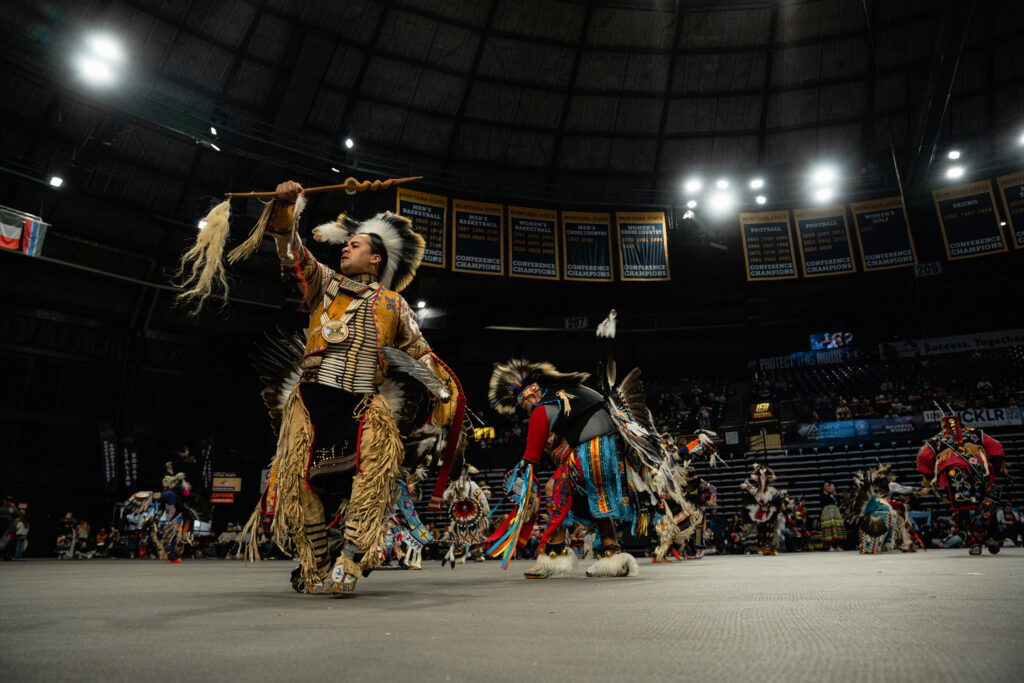
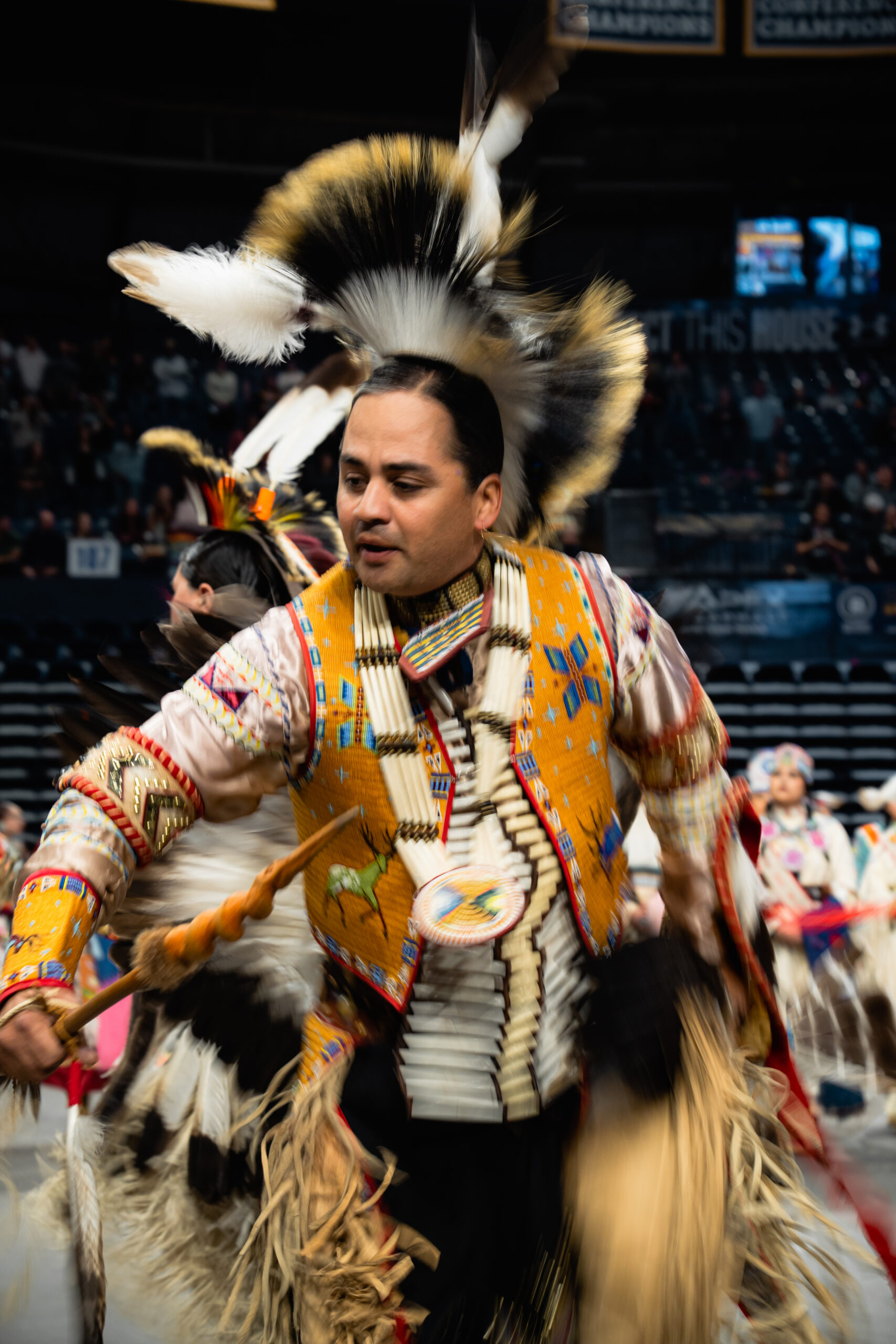
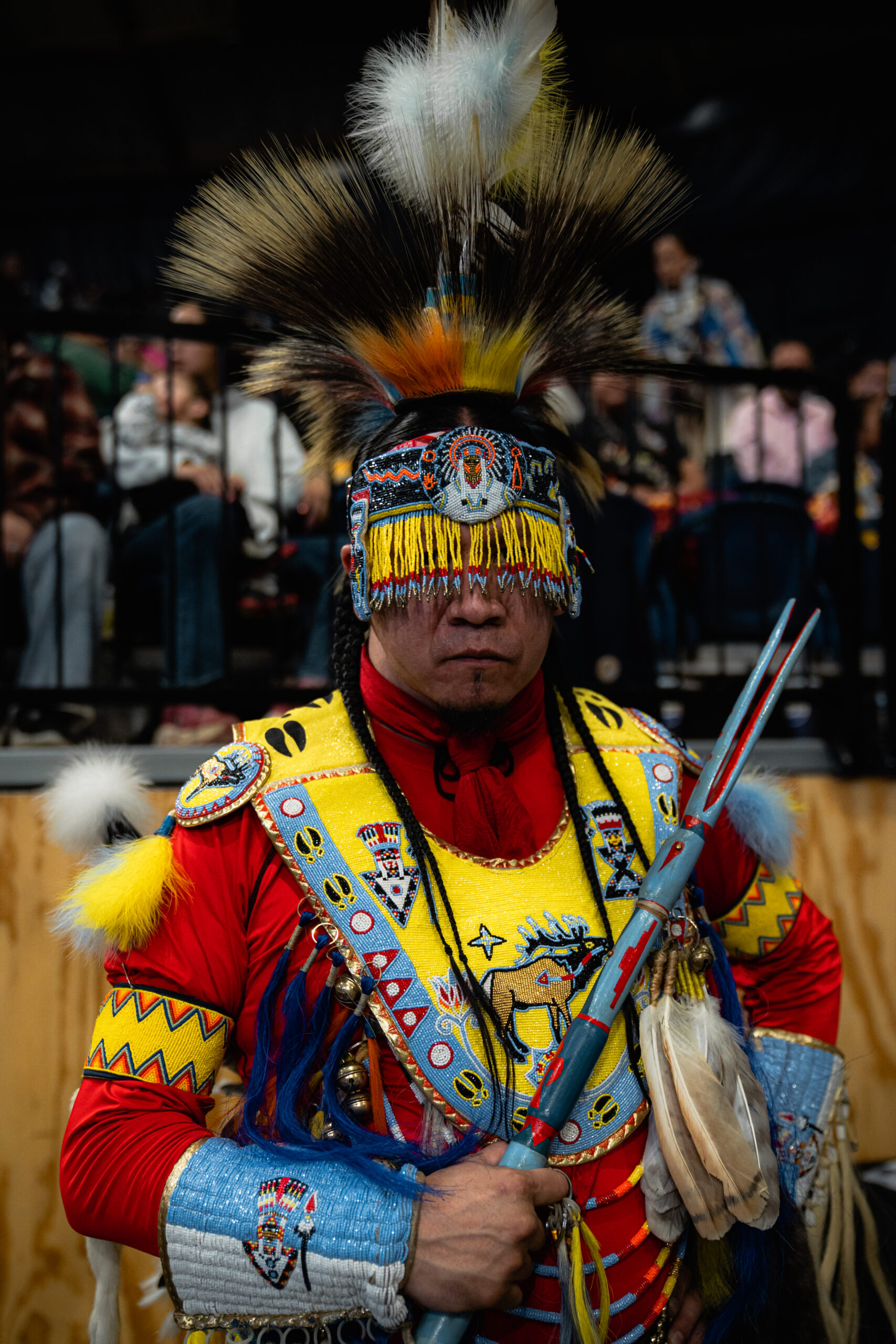
Henry Pretty On Top, of Lodge Grass, danced Crow Style at the MSU AIC Powwow. A recent addition to the MSU powwow lineup, AIC added Crow Style to honor relatives from the reservation located in south-central Montana. Pretty On Top, who is Crow and Navajo, has danced since he was very young, and described what Crow Style means to him.
“This style of dancing is pretty much ancient and to us. It’s sacred, a sacred way of dancing and it holds a lot of power,” he said. The 50th powwow is Pretty On Top’s first in Bozeman, but he’s traveled and danced at powwows across Montana. He was happy to see many generations take the floor during the grand entry.
“It also brings me joy that the little ones love to dance as well,” Pretty On Top added. “All the elders come out and dance and that’s what motivates me to dance as much as I can.”
How students pull together a powwow
On April 30, 1976, MSU held its first official powwow in the fieldhouse, but its roots date back to the 1960s, when a small group of Native students organized a powwow at the Darigold building on Bozeman’s North Seventh Avenue.
Decades later, students still organize the event.
This year, council members raised around $70,000, planned for the arrival of 13 contest drum groups, and welcomed 565 registered dancers across new and old styles. They also invited Blackstone as the co-host drum, a group from Saskatchewan, Canada that has played since the ‘80s. The event schedule included time to honor veterans, faculty, staff, student leaders, Head Woman Riley Werk and Head Man Cleveland Leider. The MSU powwow also honors outgoing and incoming Miss Indian MSU Royalty. The list continues.
Watson Whitford, AIC social chair and an environmental horticulture student, explained that sources for funding came from all over, including local businesses, nearby donors, tribal organizations and from MSU academic departments and leaders. A powwow class led by Lisa Perry, director of American Indian and Alaska Native Student Success at MSU, also contributes to planning the regional event.
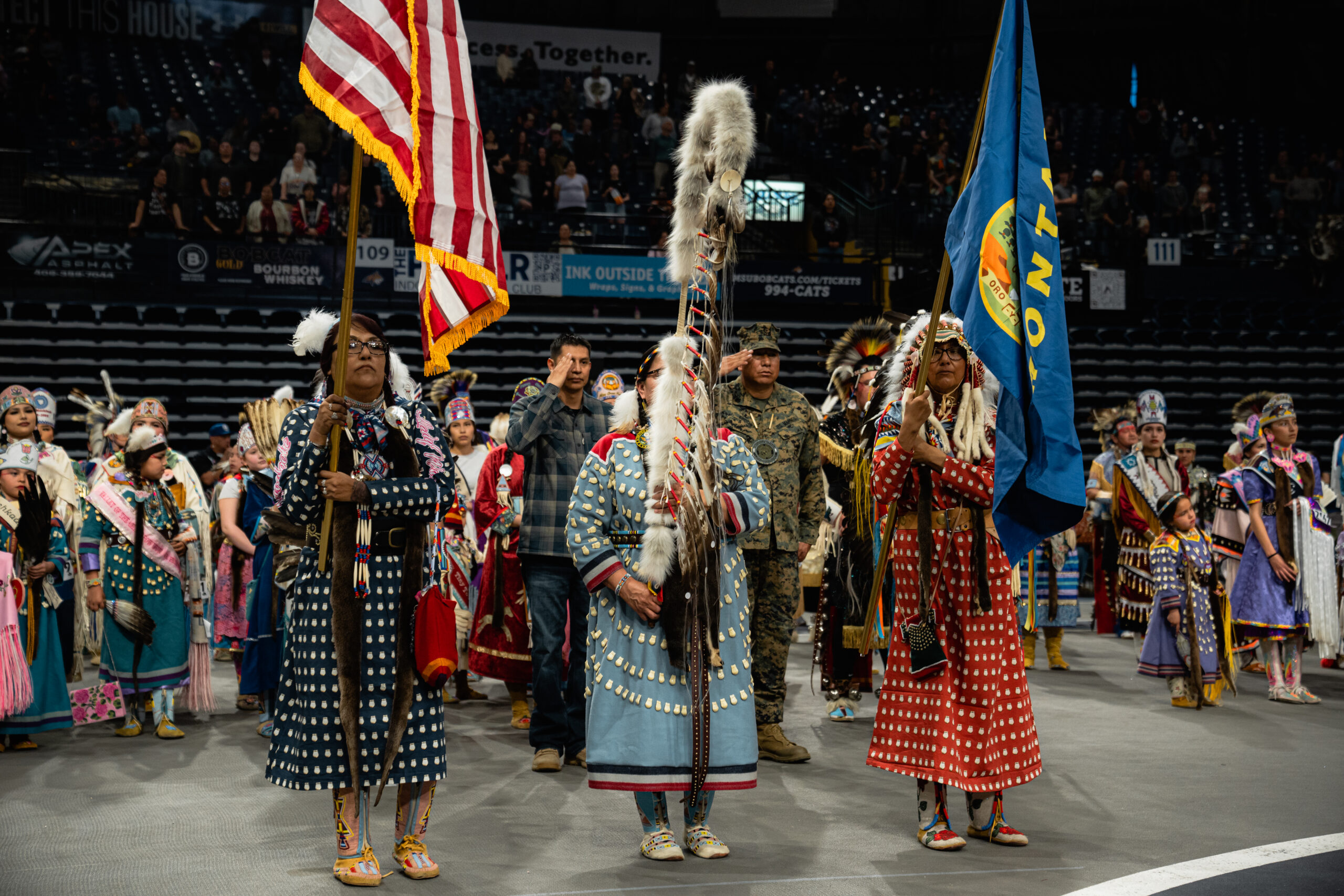
Brockie noted that financial support helps make these events happen.
“All this is impossible without sponsorships,” he said, reflecting on the powwow’s turnout on Saturday evening. “…This is what that money can do, it can bring all the community of Bozeman together. It can bring all Nations together, different tribes all around America. And I say thank you to those sponsors.”
The council was able to provide sizable compensation and prizes for drum groups and singers, a goal since the early days of planning the 50th. The top singing group earned $10,000, followed by $8,000 and $6,000 prizes for second and third, respectively. Dancers earned a range of $300 to $500 if they landed in the top three.
Whitford, who is Chippewa Cree and Navajo, practices the Prairie Chicken Dance, following in the footsteps of his grandfather and his father, Dustin Whitford. Reasons for dancing and the stories behind each style differ from person to person. Whitford said he learned from his father to dance for the people who can’t.
”For myself personally, when there’s a good drum group and they’re on beat and they’re loud and they have a good song, it helps you dance well too, and it makes you feel good when you’re dancing,” Whitford said. He recalled a time when a woman in a wheelchair told him it made her feel good to see him dance.
“And so that’s a big part of this too. It’s that healing. You know, maybe somebody’s in mourning, they lost somebody, they could go to a powwow and they might see somebody that might make ’em feel good.”
After the powwow ended on Saturday night, Pease said that she would be able to hang out with her family, perhaps getting some time to relax after planning the 50th. It’s the first powwow in the region for 2026, kicking off a string of Montana college powwows at Rocky Mountain College, MSU Billings and University of Montana, leading into larger powwows as the weather warms.
In a Monday Facebook post, AIC shared photos and a note of gratitude, summing up a weekend of Indigenous culture, family, healing and fun:
“Thank you to all who attended and shared their dance, song, prayer, and good medicine.”
Fischer Genau contributed reporting to this story.