

By Brendan Moynahan GUEST COLUMNNIST

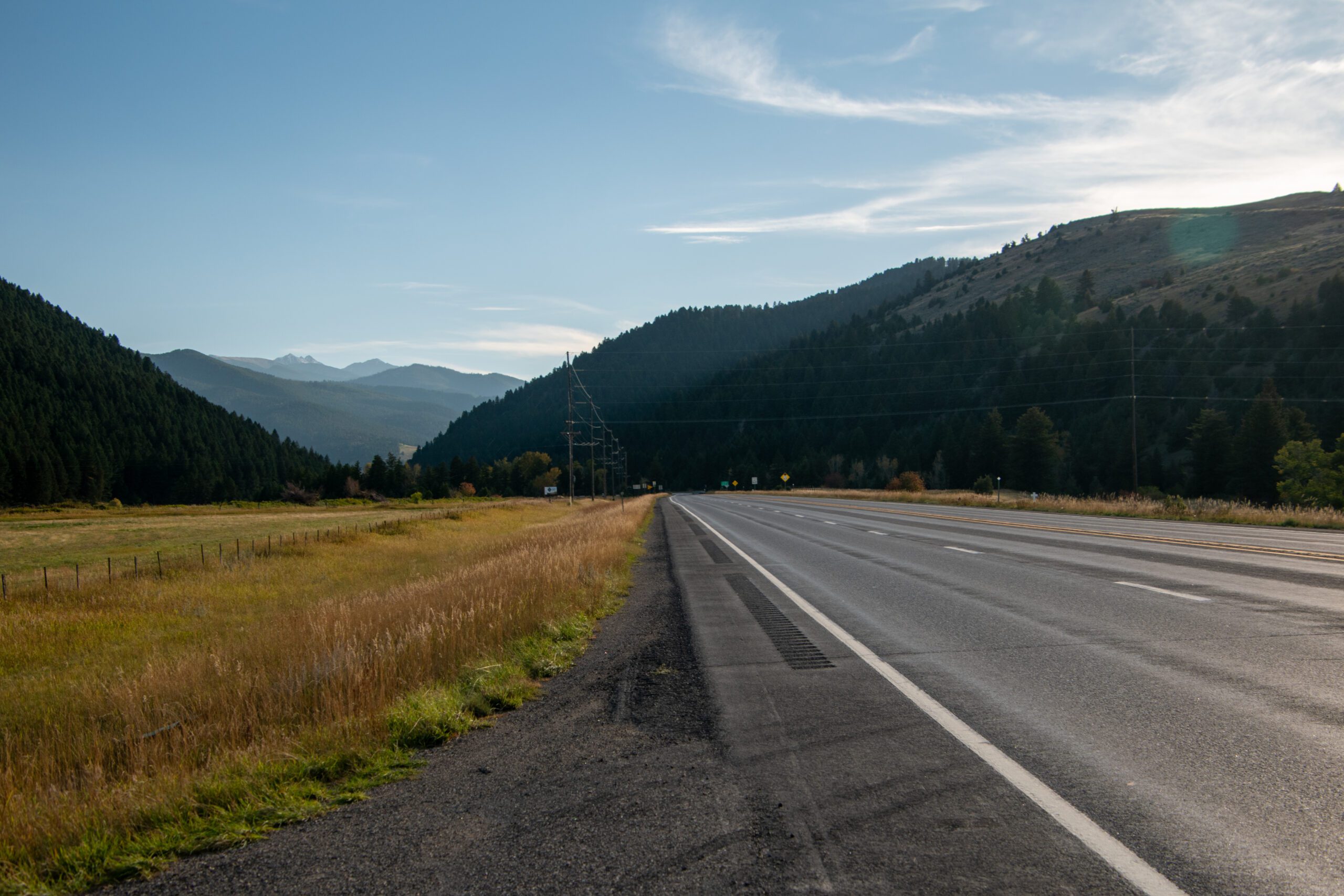
As I stood alongside U.S. Highway 191 south of Gallatin Gateway last month, the volume of traffic was staggering. Our group, on a site visit to the proposed location of a wildlife crossing overpass, raised our voices loudly to be heard over the constant roar of vehicles. From this vantage point, it wasn’t hard to imagine the confusion and panic of an elk or deer attempting to cross the road between vehicles approaching from both directions.
Herds have moved back and forth between habitat areas—now on opposites sides of U.S. 191—for millennia, but the traffic volume here has increased by 60% over the last decade. Today, 24% of reported collisions between Four Corners and Big Sky are with wildlife.
Earlier this year, I was honored to step into my role as the Center for Large Landscape Conservation’s new Chief Executive Officer. I succeeded CLLC’s visionary founder Gary Tabor, who retired from his role as CEO at the end of 2025. Gary was ahead of his time in understanding that roads, fences, subdivisions and other human activity have created the most pressing conservation issue of our time: habitat fragmentation. He established CLLC to restore fragmented habitat, open pathways of wildlife movement and reconnect large landscapes.
As I considered taking on this new role, CLLC’s mission resonated with me profoundly. Previously, I served as chief of the National Park Service’s Wildlife Conservation Branch, where I was frequently confronted with the challenge that animals need more than isolated “islands” of habitat—they need pathways to move and flourish. We are very fortunate that parks like Yellowstone and Glacier preserve large, biodiverse areas of land—but what about the places in between?
That’s where my team at CLLC and our many partners and supporters come in. We are focusing on the “messy middle” between protected areas, the patchwork of public and private lands, roads and railways, where wildlife face many barriers. Gallatin County is a perfect example of this, as a growing population and increasing tourism have strained the ability for people and wildlife to coexist.
While our organization works worldwide, the Greater Yellowstone Ecosystem in our back yard is critically important to the survival of iconic species such as bison and grizzly bears. As we enter our next chapter of impact, our commitment to local landscapes remains stronger than ever, including our effort to establish wildlife crossings on some of the busiest roadways in Gallatin County and eventually, across Montana.
Local businesses, foundations, and individuals have boldly rallied to help advance this work and provide the required non-federal match for the federal Wildlife Crossings Pilot Program funding we’re seeking for a Gallatin Gateway wildlife overpass and underpass along U.S. 191. We are beyond grateful for the support from this community, the State of Montana, and Montana’s Congressional delegation.
In the meantime, while pursuing funding with partners for permanent solutions, CLLC partnered with local residents to warn motorists about elk in the road south of Gallatin Gateway through donated billboard space. In April, after a months-long collaboration with the Montana Department of Transportation and community members, new light-up warning signs were installed. While not long-term solutions on their own, they help alert drivers to a high-risk area and encourage slower, safer driving.
As proud as I am of our work to restore safe passage for people and wildlife, I acknowledge these are not overnight solutions. Rather, they are long-term efforts to stitch back together landscapes and wildlife movement corridors that have been severed, and we can’t do this work alone. Whereas at one time, wildlife moved freely throughout Montana, a deliberate and sustained investment in time and resources is now required to undo damage already done, and to be wise in designing new infrastructure. There is much work to be done to restore the landscape connections, and public support is needed to succeed.
I see this work as emblematic of the spirit of Montana that is alive and well: Montanans proudly shoulder the responsibility of caring for what is important to us, we craft solutions that fit locally, and we come together to share in the good, creative, hard work to make Montana better. I look forward to getting to know our incredible community of supporters and advocates and seeing what we can accomplish—together.
Dr. Brendan Moynahan is the CEO of the Bozeman-based nonprofit Center for Large Landscape Conservation. He holds a Ph.D. in Wildlife Biology from the University of Montana, and his background includes multiple lead science roles with the National Park Service.