

Author Kevin Fedarko on adventure, responsibility and the contradictions of the Grand Canyon
By Mira Brody VP MEDIA
When asked if he’d hike the entirety of the Grand Canyon again, author Kevin Fedarko answered in one syllable.
“No.”
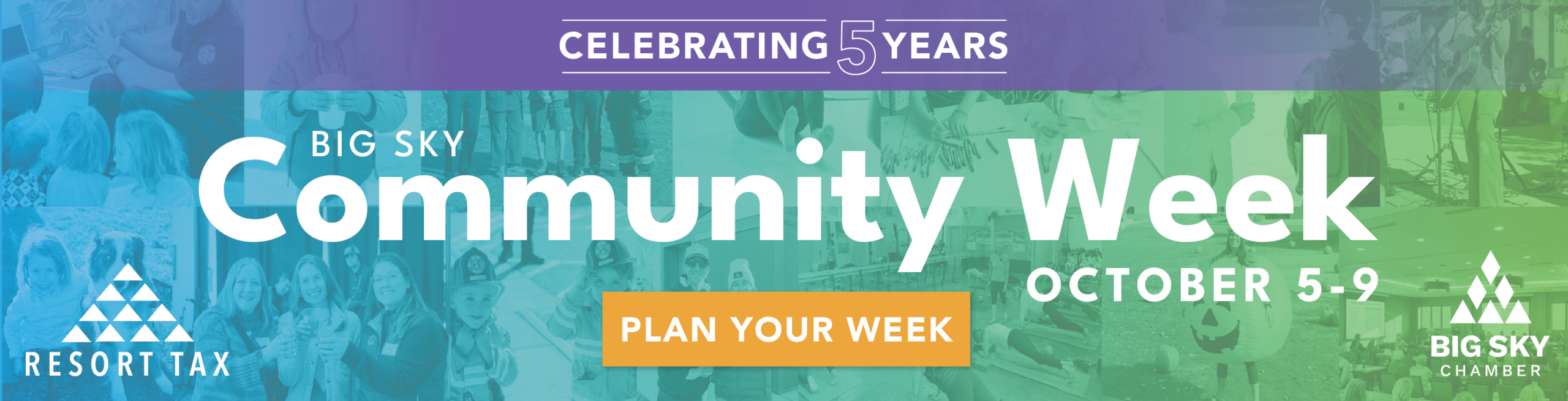
Do not mistake the simplicity of that syllable however, as a diminishment of the importance of his 750-mile odyssey outlined in his latest book, “A Walk in the Park, The True Story of a Spectacular Misadventure in the Grand Canyon.” It’s the book he’s on tour for at the Country Bookshelf in Bozeman on June 22 when he responded to the audience question.
Much of the 512 page memoir, featuring he and friend Pete McBride’s trek across the fabled Arizona chasm, outlines just why misadventures in a familiar landscape are vital. And while he stresses that adventure doesn’t have to be over 700 miles, or take more than a year to accomplish, or be the Grand Canyon, or even a national park for that matter, the location must at the very least, instill in you a deep sense of responsibility.
“I have picked one place and I’ve gone to it over and over again and I have returned over time accumulating layers of memory, and those layers stack upon one another just like the walls of the canyon,” Fedarko said at Country Bookshelf, one of a handful of Montana stops on his tour. “And I would urge each and every one of you to continue doing the same, to find a special place … go there over and over again and take your kids with you when you do.”
Fedarko’s first book is the award-winning “The Emerald Mile: The Epic Story of the Fastest Ride in History Through the Heart of the Grand Canyon,” which is 448 pages long, meaning the man has published just under 1,000 pages about the same landscape. He’s spent his life guiding the canyon, living near the canyon, writing about the canyon and—we can assume—thinking about the canyon, an archive that is resonant when he’s on the topic.
“The Emerald Mile” is a chronicle of the canyon’s history. From when it was formed by the Colorado River, to when mankind first set eyes on it, to building the robust dam system that makes civilization possible in the Southwest, finally culminating into Kenton Grua achieving the fastest boat ride in history through the canyon in a small, wooden dory.
“A Walk in the Park” is more personal. Wrapped in a tale of adventure, wherein our two real-life protagonists take on a National Geographic assignment to traverse the Grand Canyon from Lee’s Ferry to the Grand Wash Cliffs by foot, it’s a commentary on the responsibility we have toward wild places.
As Fedarko put it, “I tend to write books that have an adventure story at the heart of them and … I use that adventure story to tell a larger story that I feel is much more important.”
That June night in Bozeman, Fedarko was joined by Carrie Besnette Hauser, the president and chief executive officer of the Trust for Public Land. Hauser too has a deep connection with the canyon, having worked as a swamper, cooking, cleaning and assisting the crew with boating operations for many seasons. In the role, she developed a deep love for the outdoors.
“It absolutely never leaves you,” Hauser said. “When surrounded by two billion years of history carved into stone, you begin to grasp almost physically how extraordinarily fragile and precious these places are.”
Their conversation naturally closed in on that larger story Fedarko mentioned, of landscape and our role in it.
“The moment that you stop thinking of these places as repositories that you can take things from … the moment you begin thinking of these places less as consumers and more as stewards, is the moment that these places begin to change you,” Fedarko said.
Even that isn’t as simple as it sounds, though. As outlined near the second half of “A Walk in the Park,” Fedarko and McBride enter Grand Canyon West, where each day hundreds of helicopters take visitors 4,000 feet below the canyon rims to the bottom in tour groups that create a deafening roar so unlike much of the rest of the canyon. The brute force of the helicopters served as the antithesis to the two mens’ journey; theirs is taken by foot over months, delicately.
The helicopters are operated by the Hualapai Tribe, one of 11 tribes who historically and presently inhabit the region. While he said he is “viscerally offended” by the industrial roar that mares Grand Canyon West, Fedarko acknowledges that the revenue from tourism operations on their ancestral land is vital to the Hualapai’s economic future, funding hospitals, education and lifting them out of over 150 years of injustice and displacement by the U.S. government.
“This space, like all of our public spaces, challenges, enriches us when we move into it,” Fedarko said. “It pushes us to think beyond the borders of our comfort zone, to wrestle with questions that do not have clean and simple answers. And this may be the best example of that, perhaps.”
It’s a contradiction that Fedarko contends with in parts of his book. Looking up from the canyon floor at mile-high walls of layered rock, Fedarko, McBride and other visitors and river guides who have spent time amid the cathedral of the Grand Canyon have felt the weight of what geologists call deep time, where the arc of human civilization registers as a footnote among the rusty layers of limestone, schist, shale and sandstone. In its presence, you feel insignificant. The rock feels beyond the reach of human consequence.
Yet, in the roar of helicopters, amid proposals of tramways and other commercial installments, and 5 million annual visitors per year, we are reminded that we do in fact, matter.
“We do have a tremendous impact in a very short space of time which may be rendered irrelevant in the larger context of the time that the canyon bodies,” Fedarko said. “We create consequence. We are responsible for things that happen. And what the canyon does is it forces you to contemplate and hold those two contradictory ideas inside your head at the same time.”
The point isn’t to resolve the paradox, but to find a landscape that presents you with these challenges, and forces you sit with them.
Doubly important, Fedarko asserted, is sharing that experience. Because he and McBride would have not succeeded in their trek—there would be no 750 miles, no book and no book tour—had it not been for the community that has devoted their lives to worshipping in those canyon walls.
To illustrate his point, Fedarko describes when he and McBride had to quit their initial descent from Lee’s Ferry, and a group of friends far more experienced than them offered support so the pair could try again, and ultimately complete their traverse.
“These are people who are part of this subculture, who are held in the canyon’s thrall by virtue of the fact that they went into the place at some point in their lives, mostly as young people, and it set its hooks into them and it has never let go,” said Fedarko to a room full of listeners who too arrived that evening with a love for, or at the very least, a curiosity for the Grand Canyon.
“It taught me that as satisfying and important and revelatory as it can be to go into a space like the Grand Canyon as an individual, a far more fulfilling and satisfying way to experience it is through community,” he continued. “Because it was only through community that we could complete that journey.”
And while his dissent to repeating the journey was blunt, it’s clear Fedarko carries a piece of the odyssey with him and intends to spread the gospel to as many as he can. “No,” becomes not a syllable of dismissal, but of reverence.