

Stakeholders, conservationists and experts weigh in on impact
By Jen Clancey STAFF WRITER
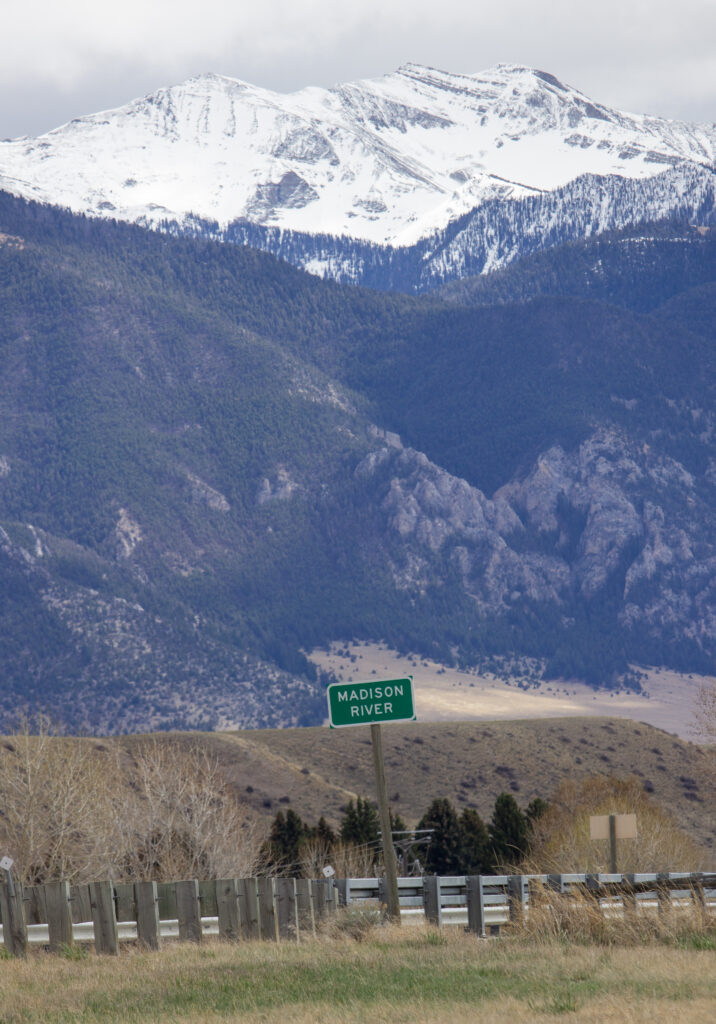
Ranchers and noxious weed fighters gathered around a table in Ennis on April 14 for a monthly Madison Valley Ranchlands Group meeting. Outside, a wind carried clouds across the sky, and sunshine speckled nearby fields, catching patches of snow and bare rock on the Gallatin and Madison range above the valley. The temperature sat at around 55F.
After the meeting ended, Linda Owens, project director for MVRG, who’s ranched and lived on Madison Valley land for around 40 years, dug into a separate, but highly relevant topic for the area’s residents: drought.

While the mild winter weather allowed for an easier calving season, Owens is concerned about just how easy it was. This winter, snowpack levels across Montana struggled—in some places snowpack dipped to record level lows, like in the Gallatin Basin. Elsewhere, the Madison Basin is at just 61% of its average, according to an April 2026 update from the USDA Natural Resources Conservation Service. Owens is concerned about what that low snowpack means for drought, and she’s not alone. Across southwest Montana, recreationists, agriculturalists, conservationists and experts are bracing for a potentially dry, drought-ridden summer.
Owens herself is navigating land that already has a history of drought in Madison Valley, making her pivot to resting grass that typically could be used for grazing, and using more fertile land south of Ennis through a lease. The area is great for grazing, she said, but there are some struggles, like the constant phone calls from the police department when her cattle roam toward the highway, something that could be avoided if closer land wasn’t overburdened by drought in years prior.
She’s talked with Montana State University Extension, which studies and supports the area’s agriculture, to learn more about grazing strategies. MSU Extension soil fertility specialist and professor Dr. Clain Jones, spoke to EBS about the winter season and its potential impacts on the growing season.
“I’ve complained about past winters before, but nothing was close to this one, both on warmth and on lack of snow,” Jones said. “So it just, it really stood out.”
In drought, farmers and ranchers pulling from streams and ditches may see water dry up later in the summer.
“And we know that snowpack is what drives stream and river and aquifer volumes. And so it is something to be concerned with and it’s a little hard to catch up at this point,” Jones said. Low soil moisture levels could also lead to reduced profit amidst ongoing increases in fertilizer and diesel costs.
It’s not only agriculturalists who are warily eyeing higher elevations. A forecaster for the Gallatin National Avalanche Center, Dave Zinn, studied and tracked snow in southwest Montana this winter. The lack of snowfall this winter wasn’t very unusual for Zinn, but the warmth was, and it triggered unique slides.

“One of the things that we saw this year was wet snow avalanches during periods of the winter when we wouldn’t normally see them,” he said. Usually, wet snow avalanches are triggered by water trickling between layers of snowpack and separating ice crystals, and slides start around late March or April. This year, wet snow cascaded down slopes as early as December.
The melt-freeze process that causes wet avalanches does have an upside—over time, areas of snowpack may freeze over and over, forming frozen, cohesive layers that can help sustain snowpacks. But the downside is that much of the region’s snow melted away long before normal runoff.
The USDA’s April snowpack update showed that new snow from March storms melted quickly due to a near-record-warm month, keeping basin levels from catching up to their averages in the southwest Montana region.
Beyond agriculture and snow science, much of Montana’s summer recreation depends on snowpack. Zinn is looking ahead to the spring and summer season, when he kayaks the Gallatin River and coaches as the executive director of the nonprofit Wave Train Kayak Team.
A low-flow summer means a more accessible spring due to less dangerous whitewater, Zinn said, which could help with instructing novice kayakers. But later on in the summer, programming is less exciting.
“We will sort of make do and really work to make the programs really fun, no matter what the water levels are,” Zinn said. “[High-water season is] a lot of what the whitewater enthusiasts really live for.”
Anglers also populate rivers like the Gallatin in the spring and summer.
J.D. Bingham owns Wild Trout Outfitters in Big Sky and has fished the Gallatin River running behind the shop for 51 years, and guided flyfishing trips since 1984. The key to a good fishing season?
“Cold water and plenty of it,” Bingham said. Instructing new anglers on the ins and outs of flyfishing every year, Bingham said any season is a good one, especially from the eyes of visitors new to the activity. When the summer weather is hot and flows are low, Bingham explained that hoot-owl restrictions impact trips, but they only require a shift in schedule to start the day earlier and avoid fishing during the hottest parts of the day. Otherwise, worrying is not helpful, he said.
“I mean, you hope for the best and you prep for the worst,” Bingham said. “And it will be what it’ll be.”

Even after a bizarre winter, it’s hard to know what conditions will look like come summer, explained Kristin Gardner, CEO and chief science officer of the Gallatin River Task Force.
“If we have a really wet spring and summer, we might not see an impact,” Gardner said. “If we do not have a wet spring and summer, we’re gonna probably see some near-record low flows, I would think in August and in the fall. It really just depends on precipitation.”
GRTF works on multiple projects to manage drought locally, from outreach about conserving public water use in the summertime—when use is heaviest—to monitoring water quality with USGS to track river health, and restoring habitat that retains moisture throughout the season.
Riparian habitats and wetlands act like a sponge, Gardner said, soaking up water during wet periods and slowly releasing it when things dry up. Logging and development have straightened out streams that ideally would meander and weave through the landscape to reach floodplains, wetlands and riparian areas. Reinstating a more natural water distribution would help those ecosystems and reduce drought impacts.
West of the Madison and Gallatin ranges, the Madison River Foundation monitors water quality as well. Keith Brauneis, executive director of MRF, and his team work to conserve and restore the Madison watershed—the water that runs in tributaries, wetlands and the Madison River itself. He described his outlook on the season.
“We are definitely heading into a season where every drop of water is gonna matter,” Brauneis told EBS. He said the foundation is working with partners like trout outfitters to educate community members and visitors about safe fish handling in more stressful periods like drought. He noted that conservationists have prepared for a potentially difficult low water year, which can be stressful for environmentalists and nearby communities.
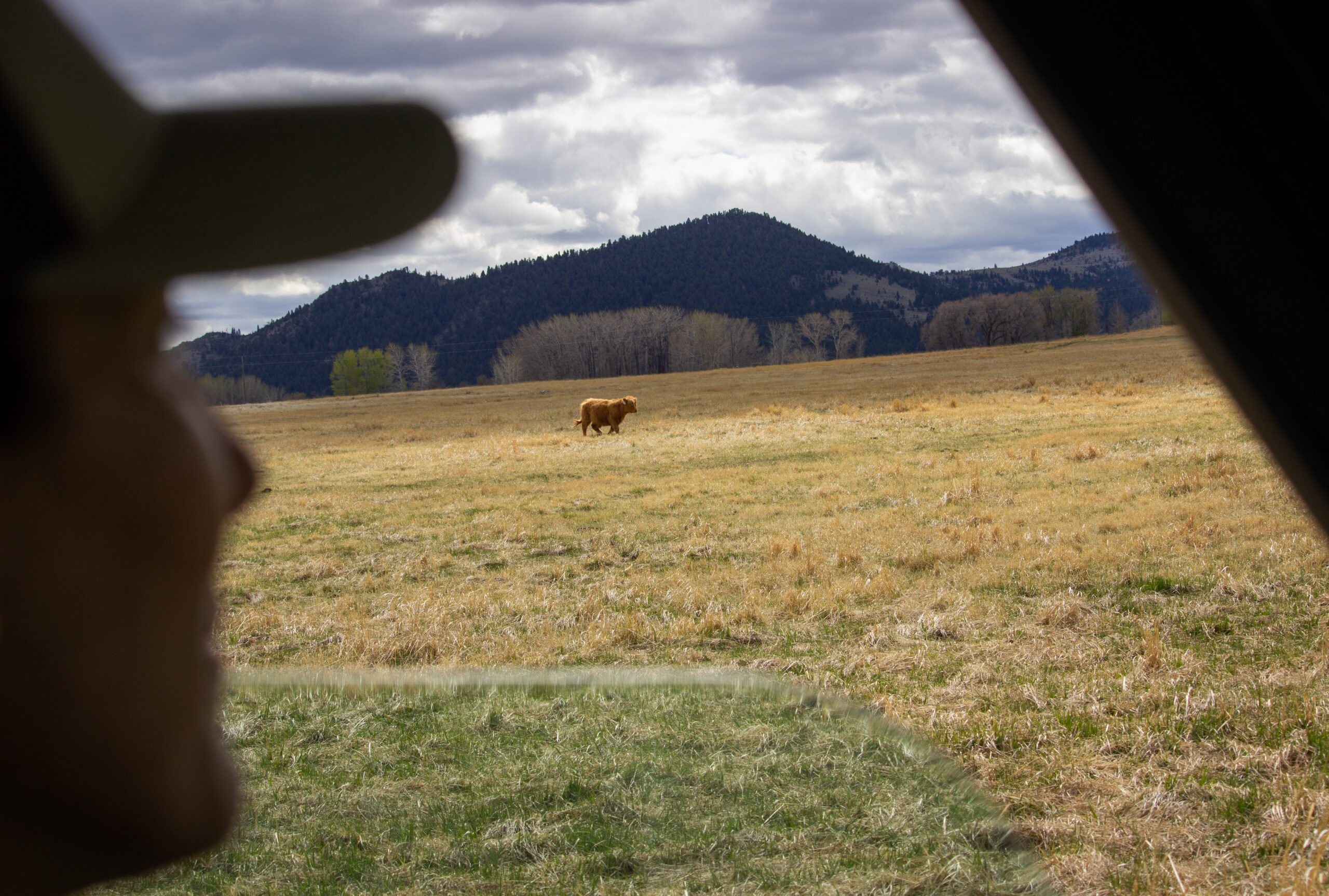
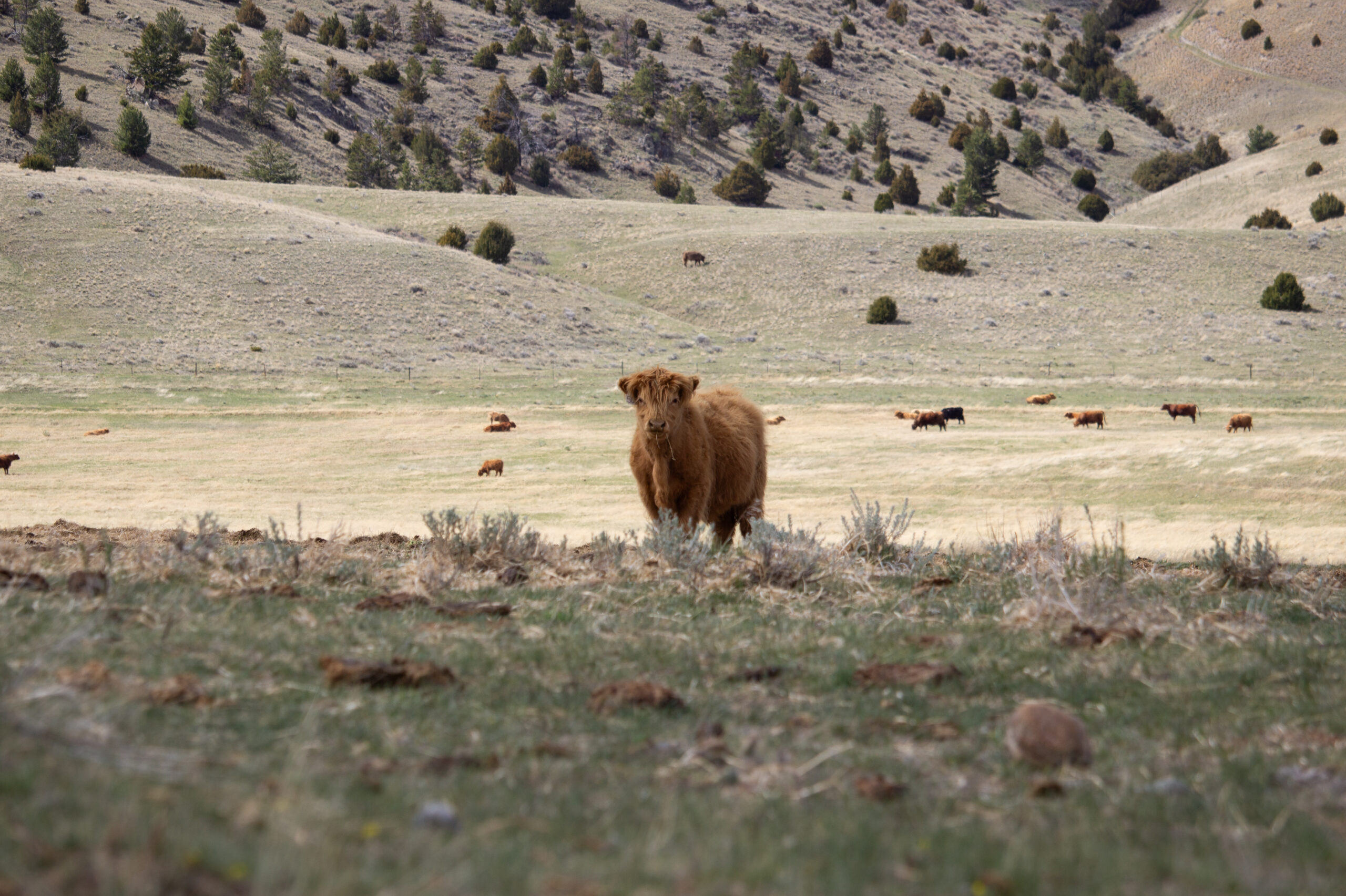
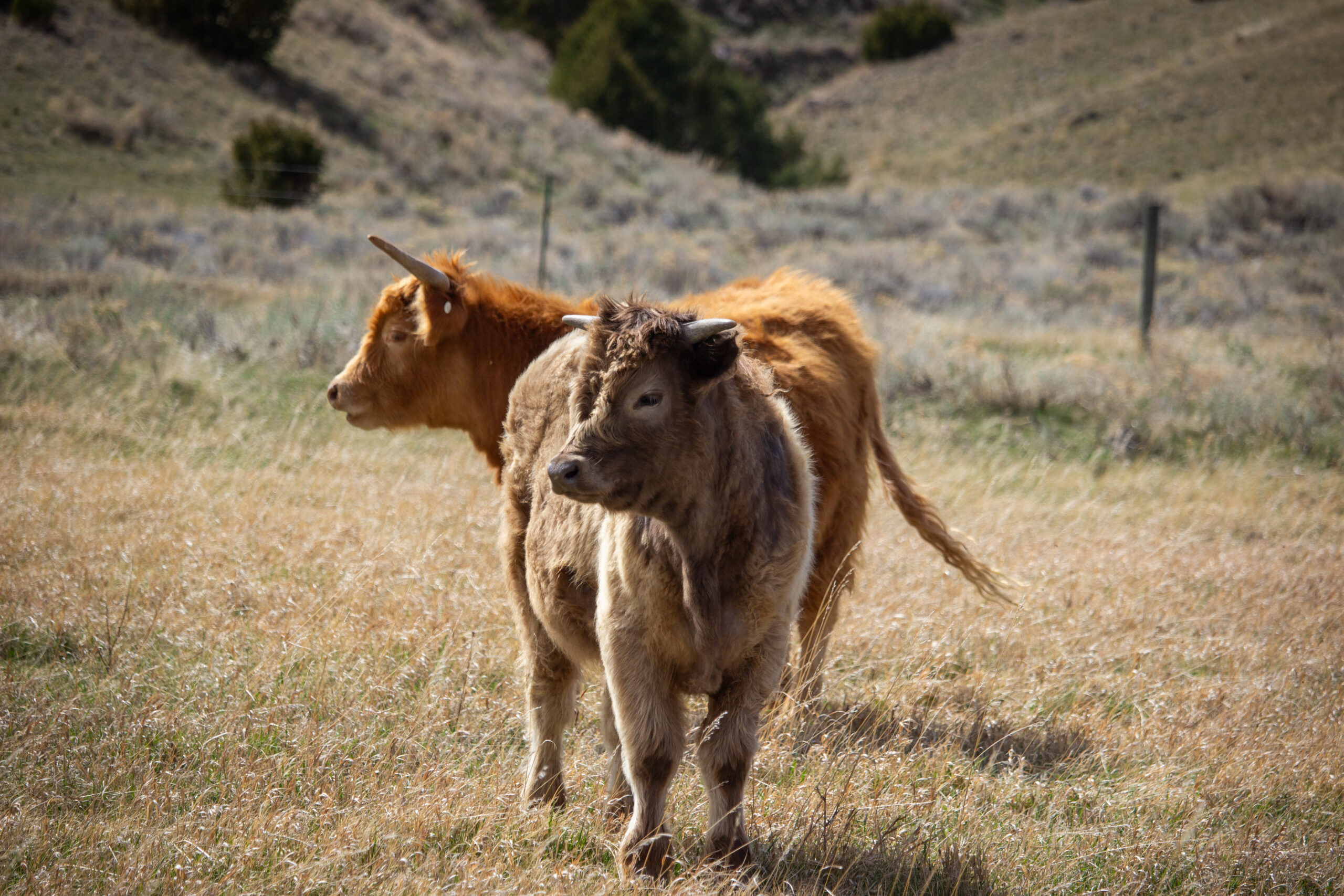
Liz Little checks in on her cattle on her ranch in McAllister. PHOTOS BY JEN CLANCEY
“This is what we’ve all been training for. It’s always what we’ve all been practicing for, is summers like this because every one of our watersheds in southwest Montana and all of Montana are gonna be stressed to the max come mid-summer,” Brauneis said. “I think we’re all gonna be feeling the strain.”
Back in Ennis, Liz Little, a member of the Madison Valley Ranchlands Group, shared that her ranch’s first calf of the season was born just that morning, officially starting calving season on her ranch consisting mostly of Highland cattle. She’s ranched in McAllister for six years with her family, and provides meat to Big Sky and Bozeman restaurants. She described the distribution of water on ranches in the valley, and how water rights can get more contentious and complicated as the summer goes on.
On a daily basis, a ditch rider monitors and recommends adjustments on intake of water from streams to assure neighbors get their promised amount of water. Other than investments in infrastructure and rotating available grazing land, ranchers and weed warriors convene to discuss new plans or funding at Madison Valley Ranchlands Group board meetings. There, producers can discuss new strategies and meet each other. Those connections can translate to looking out for each other and checking in on livestock if they hear something is up.
Drought is considered to have social, economic and environmental effects that impact local recreation, businesses, wildlife, livestock and rivers. Owens believes that solutions must start with collaboration, and getting on the same page to find support and solutions.
“As long as we love where we live, we have so much in common,” Owens said.