


By Andrew Hansen WRITERS ON THE RANGE
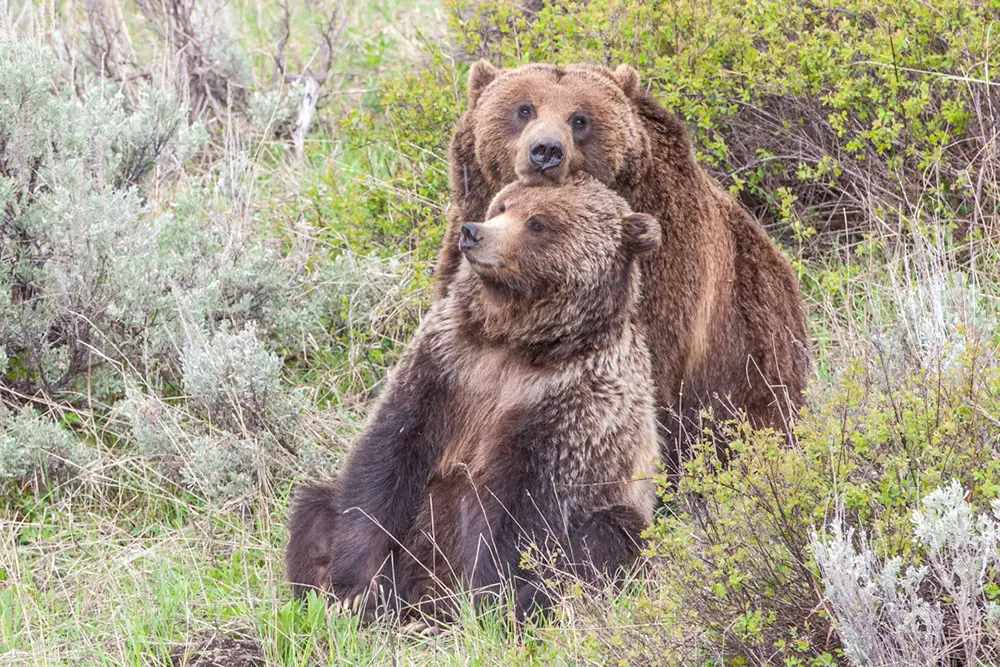
There’s a major reason that Yellowstone National Park attracts close to 5 million visitors every year. Yes, there are spectacular geysers and world-class trout rivers, but what’s unique about the national park is that it’s home to all the wild animals native to its area, from grizzly bears and wolves to elk, deer and bison.
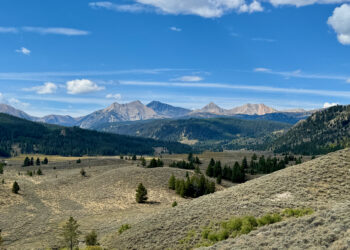
That they flourish is due to Yellowstone’s huge expanse of wildlands — you’d have to drive 1,000 miles to circle what’s called the Greater Yellowstone Ecosystem.
But new policies from Washington, D.C., would dramatically reduce the size of these wildlands and threaten wildlife’s ability to survive.
Bigger is better for wildland ecosystems, a lesson learned soon after Yellowstone was established as the nation’s first national park in 1872. When General Philip Sheridan explored the region, he realized even then that the park was far too small to contain its migrating wildlife; he urged expanding the park. I’m an ecologist who has studied the region, and we know even better today that climate, soils and food sources vary enormously from place to place, causing wildlife to sometimes seek new ground.
Through the years Congress has understood this pattern and acted. Federally protected lands around Yellowstone have been steadily enlarged, with national forests created in the late 1800s, designated wilderness areas created in the 1960s, along with wilderness study areas from the 1970s to 1980s, and inventoried roadless areas in the 1990s.
The Yellowstone ecosystem now has as much—or more—lands protected for wildlife than anywhere else in the lower 48 states. These lands are needed to keep intact what makes Yellowstone unique.
Protected federal lands have been the most important buffer against fragmented and developed private lands. In an Ecosphere paper, I reported that on privately owned land, vital signs of ecological health across greater Yellowstone had mostly deteriorated since 1970. But it was the opposite on protected federal lands, with most remaining stable or improving.
As this disparity became widely known, conservation collaboratives have formed to maintain or restore wildlife habitat on large private ranches, while also helping rural homeowners and recreationists learn how to reduce their impacts on wildlife.
For example, the Greater Yellowstone Coalition is using wildlife-friendly fencing to contain cattle while still allowing wildlife to migrate. The coalition also supports range rider programs to reduce predator impacts on cattle. And the Teton Conservation District provides The Mountain Neighbor Handbook: A Local’s Guide to Stewardship in the Tetons to new residents around Jackson, Wyoming.
Now, this administration is promoting policies that harm rather than help the Yellowstone area. If enacted, these policies would:
- Accelerate logging in national forests and expand access for motorized vehicles.
- Open inventoried roadless areas to roadbuilding, logging and mining.
- Roll back protections for wilderness study areas.
- Open the habitats of endangered species to development.
The Trump administration is telling us that these policy changes are needed to reduce fuels and protect communities from severe wildfires. The science shows otherwise. An analysis published in the International Journal of Wildland Fire in 2014 found that people’s lives and property are best protected by reducing fuels immediately around homes — not in remote wildlands that are critical for wildlife.
Stripping federal land protections would deliver a knife to the heart of what makes Yellowstone special. Unfortunately, the other great natural ecosystems across the country face the same loss of protections.
What can we do? Comment on the Roadless Rule before Oct. 6 online. We can also speak loudly and tell our elected representatives to halt the administration’s destructive policies. We can vote wisely in November to stop proposed rollbacks of federal land protections.
If we can block these threats, we can return to working collaboratively across ranchland associations, land trusts, conservation groups, local and tribal governments, recreationists, residents, and visitors. We all know how precious wild country and wild animals are to this nation, and we’ve learned what it takes to keep wildlife thriving.
We have to fight harder than ever now to keep intact the wild places we have left.
Andrew Hansen is a contributor to Writers on the Range, an independent nonprofit dedicated to spurring lively conversation about the West. He is professor emeritus of ecology at Montana State University and lives in Bozeman, Montana.