
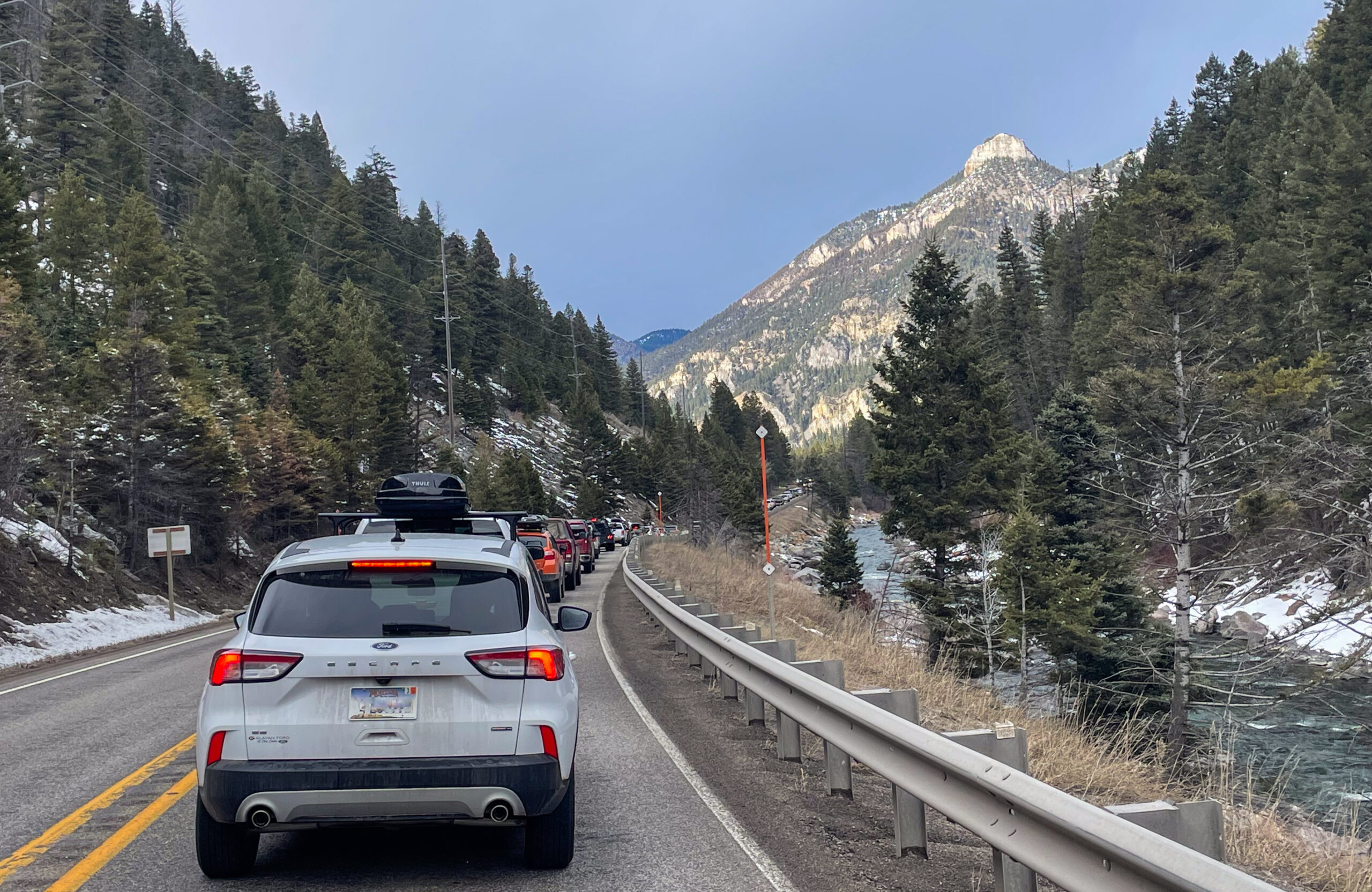

Often used by commuters, tourists, Gallatin Canyon section of U.S. 191 between Four Corners and Big Sky needs $350 million in improvements
By Jen Clancey STAFF WRITER
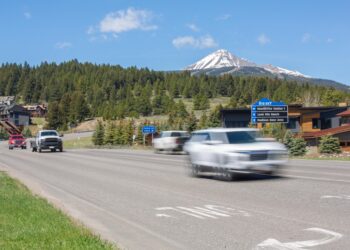
The heavily-used corridor of U.S. Highway 191 between Four Corners and Montana Highway 64 (Lone Mountain Trail) is No. 2 for top transportation challenges in the state, according to a new report that placed Montana’s aging bridges at the top of the list.
The National Transportation Research Group, or “TRIP,” reported in a study that the 35-mile section of U.S. 191 needs $350 million in improvements, but options are limited by the Gallatin Canyon’s narrow and steep landscape. The group used data from the Montana Department of Transportation, Federal Highway Administration and U.S. Department of Transportation National Highway Traffic Safety Administration to provide an overview of Montana’s traffic increase and the safety, maintenance and efficiency of roadways.

In the past year, MDT officials acknowledged a state of “disrepair” on U.S. 191 and the urgent need for improvements, while community leaders continue to express concerns about the road’s danger and grassroots efforts focus on reducing speed limits along the primary route between Big Sky and Bozeman.
In a May 19 press conference, Rocky Moretti, director of policy and research at TRIP, noted that vehicle travel between 2000 to 2024 increased by 40% in Montana, but 31% of Montana’s roads are in poor or mediocre condition. Projects that would align road conditions with growth are getting more expensive, he said.

“But the Montana Department of Transportation, like most states, are being constrained partly because of inadequate resources, but also the significant rate of inflation has really impeded their ability to move forward with these projects,” Moretti said.
Brandon Jones, district project development engineer at MDT overseeing the region including the Gallatin Canyon, agreed that inflation creates challenges, as does a long line of projects that have already been granted federal funding. Along U.S. 191, an optimization plan outlines improvements to highway features including the 191/ 64 intersection, Lava Lake structures, improved turnouts, passing lanes and replacement of the Spanish Creek bridge.
A multi-lane roundabout at the 191/64 intersection is still in the preliminary engineering stage, and MDT is waiting to hear if the project is awarded a BUILD grant in July of this year.
The most expensive project on the optimization list is slated for 2030. MDT will replace the Lava Lake bridge and update access points to the Lava Lake trailhead in a project that will likely cost upwards of $70 million, according to Jones. Between now and the bridge replacement, MDT will continually monitor the structure’s condition.
The TRIP report highlighted old bridges, especially timber bridges, as the top challenge the state needs to invest in moving forward. The Lava Lake bridge was originally built in 1950 and is in “fair” condition according to the National Bridge Inventory. The bridge is just one of the 39% of Montana bridges built in 1969 or earlier. Allison Corbyn, operations director with the Montana Infrastructure Coalition, emphasized these issues in the meeting.
“We’ve got a lot of miles of roads. We’ve got a lot of bridges,” Corbyn said. “And that aging infrastructure really comes to light in this report when we’re looking at nearly 40%of our bridges being built in 1969 or earlier. So we’ve really got some aging infrastructure.”
There are 212 bridges in Gallatin County—157 of those bridges are in “fair” condition and 12 are in “poor” condition, including one by Lower Wapiti Trailhead and the popular Axtell Bridge in Gallatin Gateway.
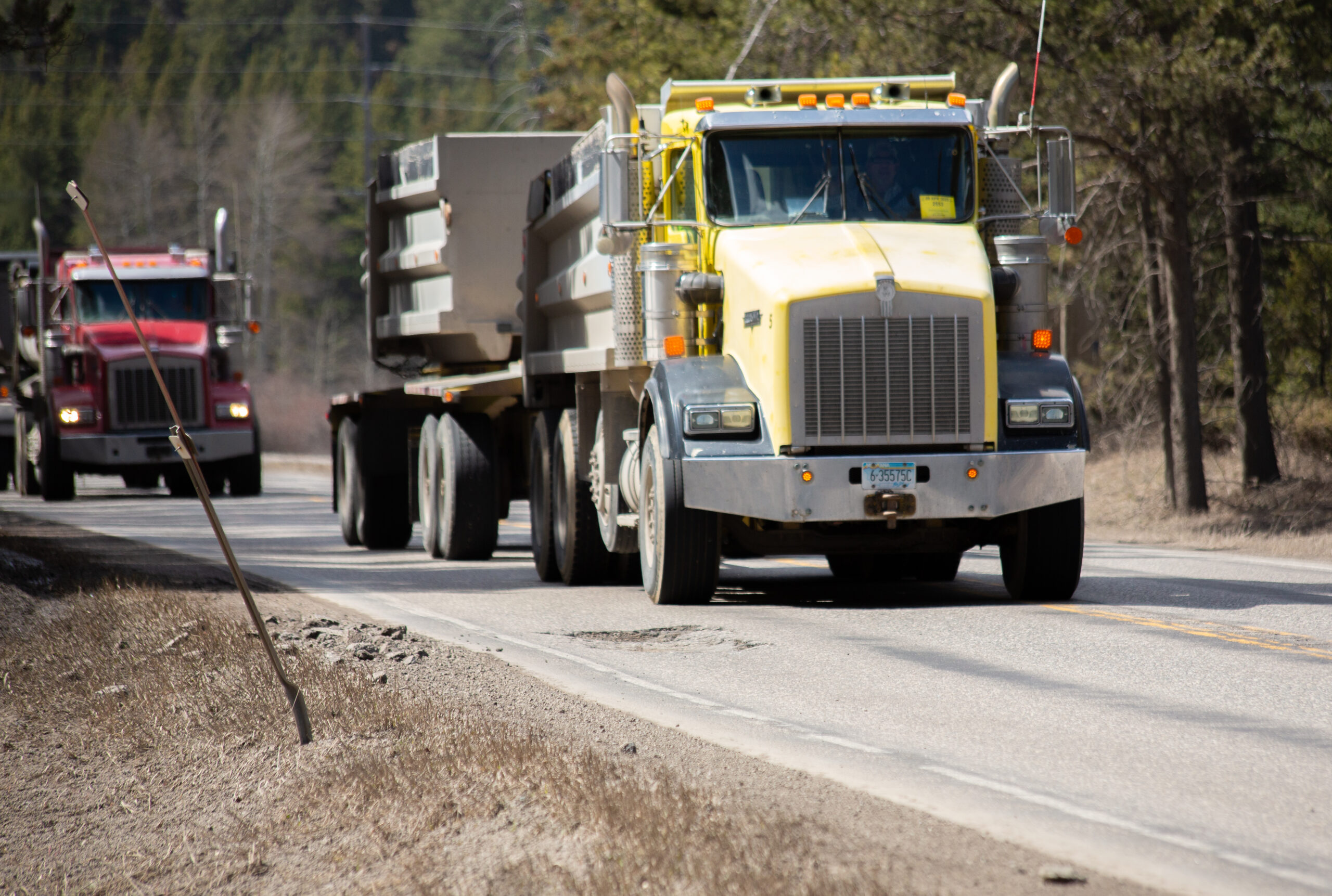
The report also highlighted road safety. With an average of 210 people killed on Montana roads every year between 2019 to 2024, Moretti explained that a combination of driver behavior and road updates can improve safety, especially along rural non-interstate roads where fatality rates are more than double other Montana roads.
“So clearly, Montana needs to make significant improvements in roadway safety,” Moretti said. He described the U.S. Department of Transportation’s Safe Systems Approach, which aims to holistically address safety on roads.
“It includes, certainly, starting with the motorist driving at safe speeds, not being impaired, but it’s also absolutely vital that our infrastructure system be as safe as possible,” Moretti said.
While not the primary cause of fatalities, the report estimated that roadway features—such as number of lanes, lane widths, markings, guardrails and intersection design—were “likely a contributing factor in approximately one-third of all fatal traffic crashes, resulting in $500 million in economic costs in Montana in 2024.” Safety improvements like rumble strips, paved shoulders and clear lane markings can improve traffic safety.
Following bridges and the Gallatin Canyon, TRIP highlighted other transportation issues in the top 10. The age and poor condition of Montana’s culverts is third; Interstate 90 in the Billings area is fourth; and U.S. 212, which includes Beartooth Highway, is fifth. I-90 between Idaho and St. Regis is sixth, followed by I-90 between Hardin and Wyoming, I-15 between Great Falls and Sweetgrass and I-94 between Forsyth and North Dakota. Finally, I-90 in the Bozeman area between Three Forks and Rocky Canyon is at tenth for its capacity and performance issues. Work along that corridor is ongoing with 2026 funds allowing resurfacing and bridge maintenance.
Aptly nicknamed “Keeping Montana Moving Forward,” the research stated that all will benefit from needs being met on the state’s roads.
“A safe and reliable transportation system that is maintained in good condition and offers improved mobility and accessibility to meet the needs of Montana residents, businesses, and tourists alike, is critical to moving Montana forward,” the report concluded.