

Research group explores potential costs in May 13 presentation
By Fischer Genau DIGITAL MEDIA LEAD
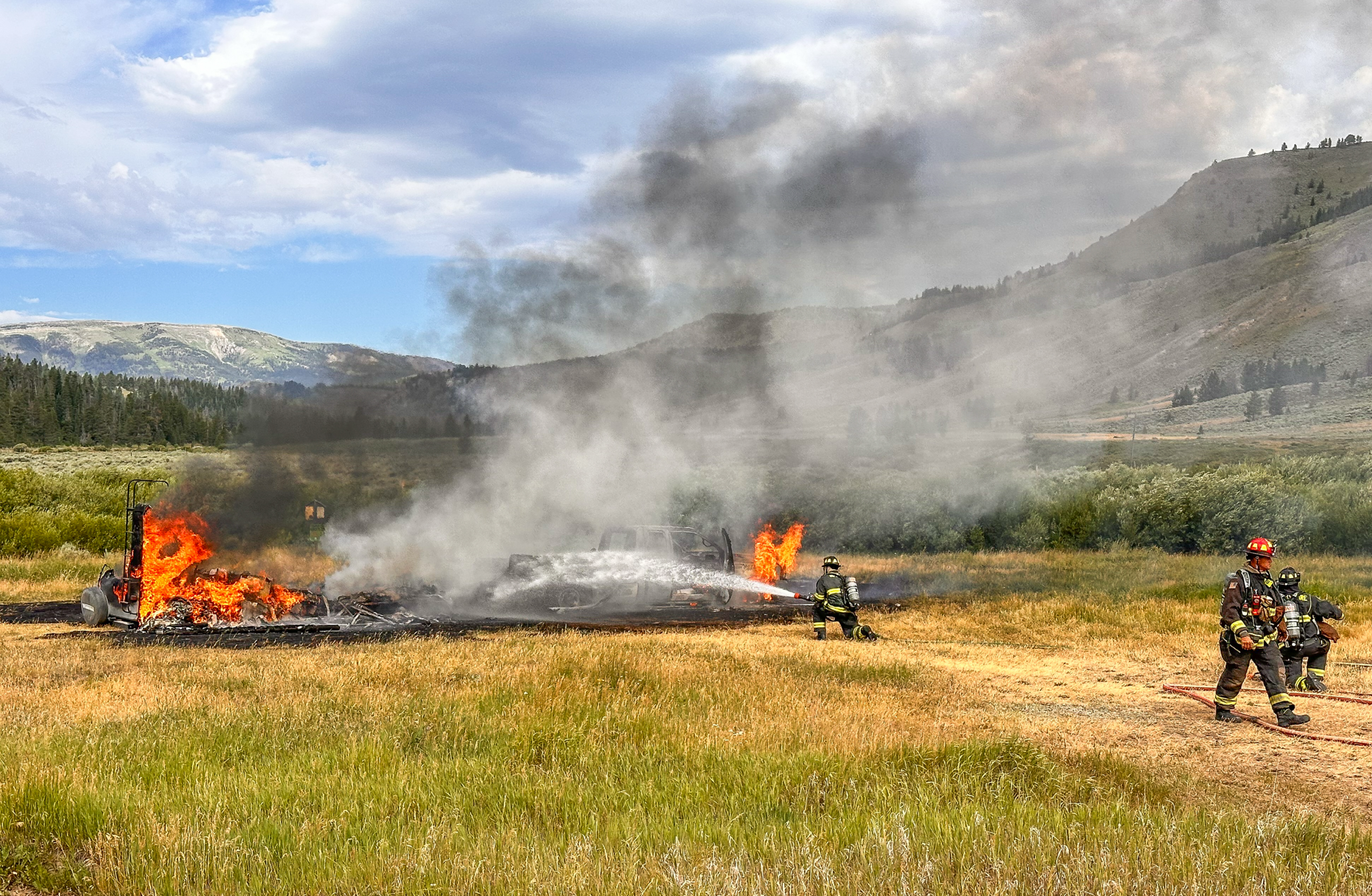
It’s no secret that Big Sky is at high risk for wildfires due to its proximity to dry, forested regions where fires are a natural part of the ecosystem. But the consequences of one here may be especially severe.
On May 13, Headwaters Economics presented findings at the Madison-Gallatin Joint County Commission meeting in Big Sky, discussing the long-term impacts of a wildfire in Big Sky, highlighting the potential negative consequences to its recreation-based economy and stressing the necessity of fire-resistant homes, clear evacuation routes, and other preventative measures.

“After high-severity fires, visitation to communities like Big Sky drops 15 to 20%, and that drop in visitation can last decades,” Kelly Pohl, associate director of Headwaters Economics, said in the presentation. “The visual of Big Sky burning would have an indelible mark on people’s memories. They would choose to visit other places, and this would have a ripple-on effect with Big Sky’s economy.”
The wildfire risk in Big Sky is greater than 96% of communities in the United States according to a tool created by the USDA Forest Service and Headwaters Economics, an independent research group that’s been studying wildfire for 20 years. Headwaters’ data shows that Big Sky is one of nine Montana communities with risk profiles similar to recent sites of urban conflagrations, and 64% of the costs of a wildfire in Big Sky would be paid at the state and local levels. Big Sky also has a mostly recreation-based economy, and Pohl described how natural disasters like wildfires specifically affect tourism industries.
A study published by researchers at the University of Colorado shows how high-severity wildfires in places like Big Sky tend to disrupt tourism for years, in addition to the short-term costs of burned buildings and damaged infrastructure. Pohl said that even if infrastructure supporting a tourism economy, like hotels and resort buildings, are not damaged, visitation tends to drop for long periods of time.
However, she said that there are steps Big Sky can take to safeguard against wildfires.
“We know a lot about how to construct homes so that they are wildfire resistant, and the materials and technology used to construct wildfire-resistant homes is widely available and affordable,” Pohl said.
Most homes that burn down during wildfires are ignited by the thousands of tiny embers that can blow up to four miles from the site of a burn. These fall on flammable vulnerabilities like leaves in a home’s gutter or a firewood pile stacked next to a house, but according to Headwaters’ research, the cost of building a wildfire-resistant home is roughly the same as building one that’s vulnerable to wildfire.
“In a place like Big Sky, where you have a lot of new development happening, it’s a no-brainer,” Pohl said. “We also have a lot of homes already on the landscape, and those homes could be retrofitted and need to have special attention paid to the vegetation around them to reduce their risk.”
The Big Sky Fire Department offers free site visits, forestry advice, fire-adapted building guidelines, and prevention tips through its Wildfire Risk Reduction program. In addition, the online Fire Adapted Big Sky Wildfire Hub is designed to arm residents and businesses with accessible and potentially life- or property-saving resources. The FABS Neighborhood Ambassador program focuses on distributing information through volunteer residents.
Headwaters Economics urged community-scale action rather than building or redesigning homes on a house-by-house basis. Pohl said that building codes and land use planning standards can be leveraged to build new housing with wildfires in mind.
The importance of safe evacuation routes was also stressed in Headwaters Economics’ presentation. Pohl urged the joint county commission—which includes the Big Sky Resort Area District as a local authority—to pursue fuel treatment in key evacuation areas, like U.S. Highway 191 just north of Big Sky and roads in the Moonlight Basin area northwest of Big Sky Resort, so people can evacuate and emergency vehicles can enter safely in the event of a wildfire.

A map from Headwaters’ presentation showing Big Sky evacuation routes. Red sections indicate areas where fuel treatment is needed along roadways, and pins mark designated areas of refuge. COURTESY OF HEADWATERS ECONOMICS
Fuel treatment involves thinning trees, removing tree limbs, and removing vegetation that can burn to give firefighters a better chance at protecting those corridors, and Pohl acknowledged that Gallatin County and Big Sky Fire Departments have done “a lot of really good work” on fuel treatment already.
“We love our landscapes here in southwest Montana…and these landscapes are fire-adapted,” Pohl said. “I think it’s important for us as a community to also adapt to wildfire, just like the trees that we love. We need to be ready, and we need to understand that fire’s a part of this landscape, and if we want to live here, we need to be ready for it.”