


By Rachel Hergett EBS COLUMNIST
The best cookbooks are those that seem to become part of your kitchen. They live on the counter, splayed open to a favorite dish, dog-eared pages spotted with remnants of those recipes in progress.
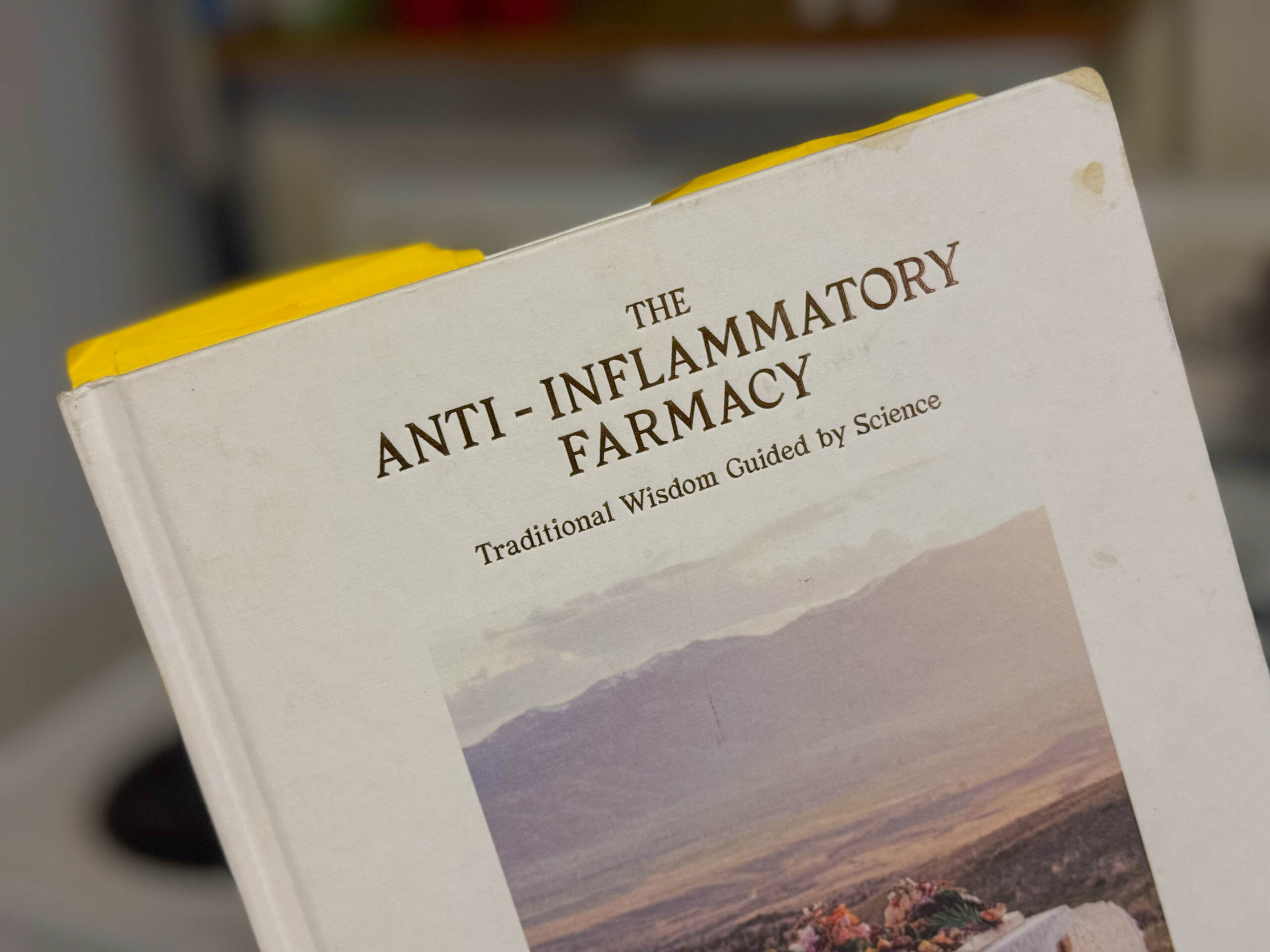
Because of this, I’ve been sitting with Mackenzie Fink’s cookbook, “The Anti-Inflammatory Farmacy: Traditional Wisdom Guided by Science,” for more than a month now. To write about a cookbook, sometimes it is best to live with it a while, to see if it becomes a natural part of your kitchen.

“The Anti-Inflammatory Farmacy” was created for Heroes and Horses, a nonprofit organization serving military veterans that is now based out of the Double H Ranch near Virginia City. Heroes and Horses, according to its website, provides a “transformative experience that addresses the physical, mental, emotional, and spiritual aspects of healing the whole human.” Fink and her husband, Micah, founded the nonprofit in 2014. Three years later, according to a timeline in the book, the Finks realized food played an important role in that healing journey.
“We stopped at a gas station, and he walked out with an energy drink and a Snickers, and it wasn’t even 7 a.m.,” Fink describes in the cookbook’s “Humble Beginnings” section. “My heart sank the way a mother’s would when she sees her child making a choice that doesn’t serve them.”
Prior to that moment, much of the food served to participants was donated, and often consisted of comfort meals volunteers cooked over the campfire. Delicious, sure, but not necessarily nutritious.
Humans lean into comfort. We lean into what we know, which for food in the United States is so often carbs and processed foods. And we keep turning back to these things until we are able to tune in and feel how specific foods fuel us—or don’t.
You may hear warnings when you’re young, whisperings that some sort of end is coming for these foods, especially from those who have the clarity of age. “I try to stay away from…” the elders whisper. I can’t eat…” I wasn’t listening. I dismissed it as toxic diet culture.
Then, a decade ago, I was diagnosed with an autoimmune disease. I was exhausted and in pain, dragging myself through a blur of doctors and tests. A string of medications were tested, with me as the guinea pig. Most failed to keep my body from attacking itself, or brought side effects that rivaled the pain of the disease itself.
Yet, amid the seemingly unending process to control inflammation in my body, I learned how to listen to it. I now choose what I eat based on how foods make me feel. I, like Fink, have used food to help heal.
“The Anti-Inflammatory Farmacy” is the manual I could have used back then. It details the history of the Heroes and Horses food program, from adopting a Whole30 approach, to developing its own anti-inflammatory approach to food and prepping freeze-dried meals in house for backcountry adventures.
Within its pages, you learn what was once intuitive. You learn how to lean into nutrient-dense whole foods—those with no ingredient list, or minimal ingredients, how to connect food to the earth and those who grow it, and to change your ideas of what makes food “good.” Shockingly, it is not always cheese.

“The Anti-Inflammatory Farmacy” teaches about common inflammatory foods like sugar, dairy and refined grains, then offers 55 recipes that prove food can be just as delicious without those things. It also allows for ample experimentation and substitution.
“Everyone’s inflammatory triggers are different; there’s no one-size-fits-all approach, which is why incorporating intuitive eating into this way of living is critical,” Fink writes.
I’ve been inspired by “The Anti-Inflammatory Farmacy” to explore my own eating habits further, to make even more small choices that contribute to my overall health and wellness. I’ve replaced my butter and cream filled corn chowder recipe with the book’s equally delicious Chicken Corn Chowder. I’ve replaced pre-packaged chocolate pudding with the book’s Coconut Chia Chocolate Pudding.
This week I’m exploring the soup section, making the Green Velvet Asparagus Bisque and the Toscana Soup, a play on an Olive Garden soup I too loved, but knew was not kind to my guts.
What I most like about the book is Fink’s attitude. It’s real. She doesn’t expect you to forgo cake and ice cream at a birthday party and she doesn’t want following an anti-inflammatory diet to take over your entire life.
“I no longer strive for perfection but instead embrace progress and mindful eating, celebrating small victories, and remembering what a gift it is to be able to taste and experience food as proper nourishment,” Fink writes.
“The Anti-Inflammatory Farmacy” is starting to find its home in my kitchen. It has been marked up and dripped on, and is currently open to the recipe for Nutty Honey Cardamom Granola. This will be my third batch.
“The Anti-Inflammatory Farmacy” is available on the Heroes and Horses website, www.heroesandhorses.org.
Rachel Hergett is a foodie and cook from Montana. She is arts editor emeritus at the Bozeman Daily Chronicle and has written for publications such as Food Network Magazine and Montana Quarterly. Rachel is also the host of the Magic Monday Show on KGLT-FM and teaches at Montana State University.