

By Leslie Kilgore EBS STAFF
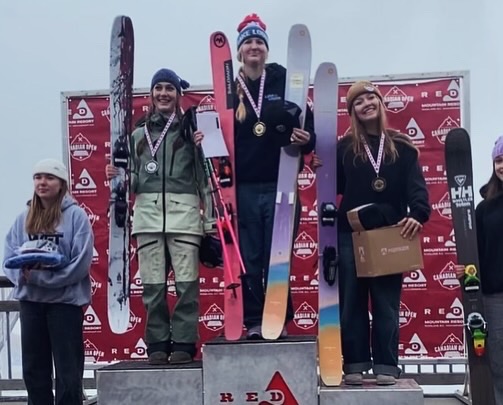
Freeride skiing and snowboarding was once known as an “extreme sport,” rooted in rowdy cliff drops, challenging terrain, freeform competitions and privately sanctioned events. Now, as we look to the next winter Olympics in 2030, this rapidly growing sport could soon find itself on the world’s biggest stage.
For Big Sky’s Wallace Casper, that possibility is no longer a far-off dream. It’s a real, working goal.
“Yep, 2030,” Casper said. “They will want to do an initial event in the French Alps, and then the ‘34 Winter Olympics is planned to be back in Salt Lake City, where there’s numerous freeride venues. Freeride is a big part of the ski culture in Utah, and it seems like a pretty obvious place to be able to host an Olympic event, so hopefully it really gains major direction there.”
Casper, 29, serves as the freeride program director for the Big Sky Ski Education Foundation, and the northern region series director for the International Freeskiers and Snowboarders Association. In that dual role, he coaches athletes locally while helping oversee competitions and standards across the northern region.
“So, I’m definitely really involved with the sport while putting on events, and managing competition for teams and athletes in the region,” Casper said.
While he is not directly working for the Olympic Committee, Casper says momentum is building at the international level.
“They’ve basically given the IFSA the exact requirements we have to meet,” he said. “And so we’ve been working the last couple years to check all those boxes, and it’s seeming like we are going to get in for 2030, but it’s not set in stone yet.”
Freeride’s roots trace back to 1996, when the IFSA was officially founded by legendary skier Shane McConkey. Casper noted that the first event was likely held in Crested Butte, Colorado.
“They called it the Crested Butte Extremes,” Casper said. “Even the name of the sport has changed. From freeskiing, to big mountain, to freeride. It seemed like they didn’t know what to call it for a while, and now we’ve finally landed on freeride.”
Unlike traditional alpine racing, freeride isn’t about time. Athletes start at the top of a venue and choose their own line to the finish.
“I think the biggest thing is that you are free to pick your own line down the mountain,” Casper said. “There’s a start at the top of the chosen venue and a finish at the bottom. That’s the beauty of the sport, competitors get to decide the way that they interpret the slope.”
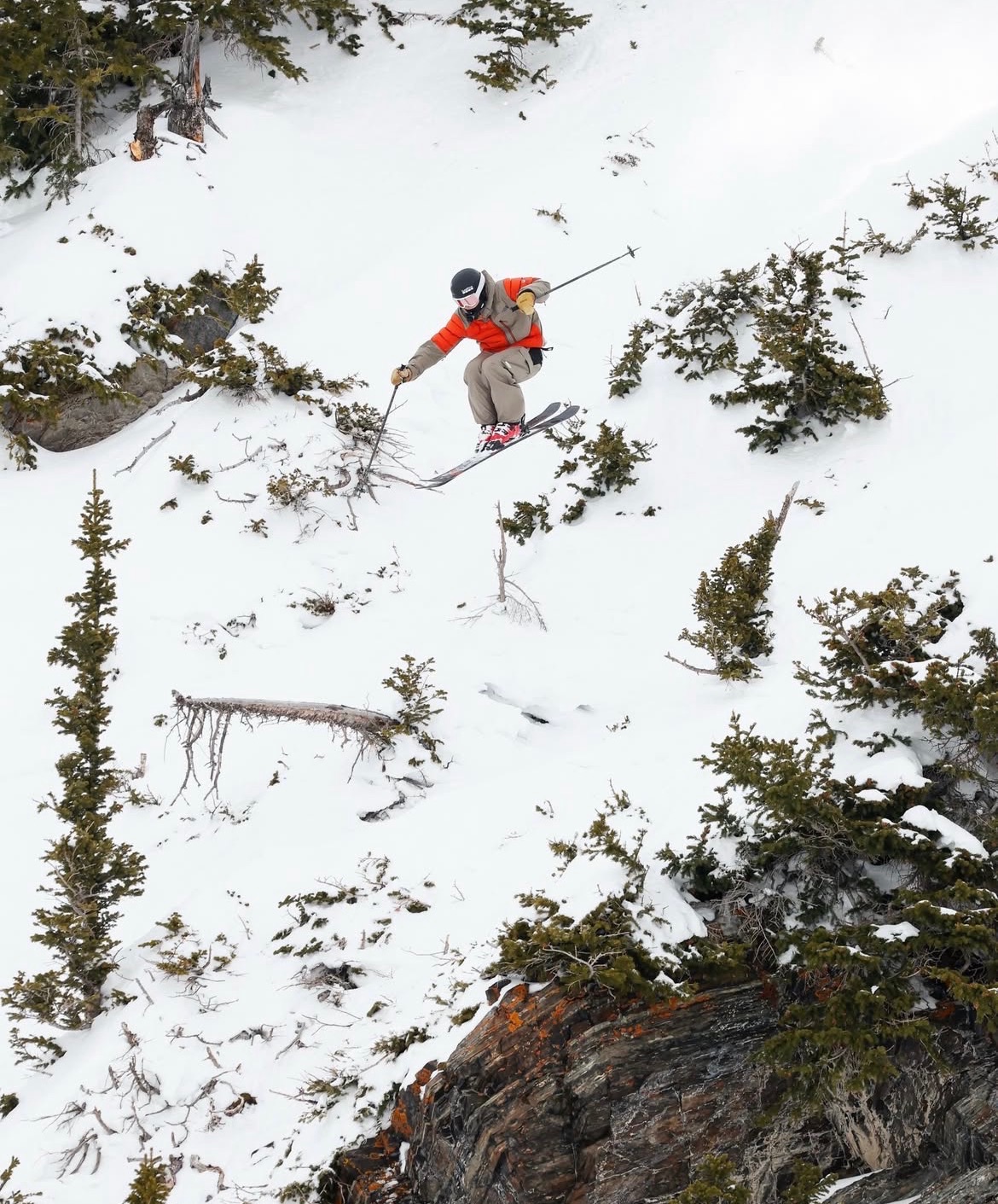
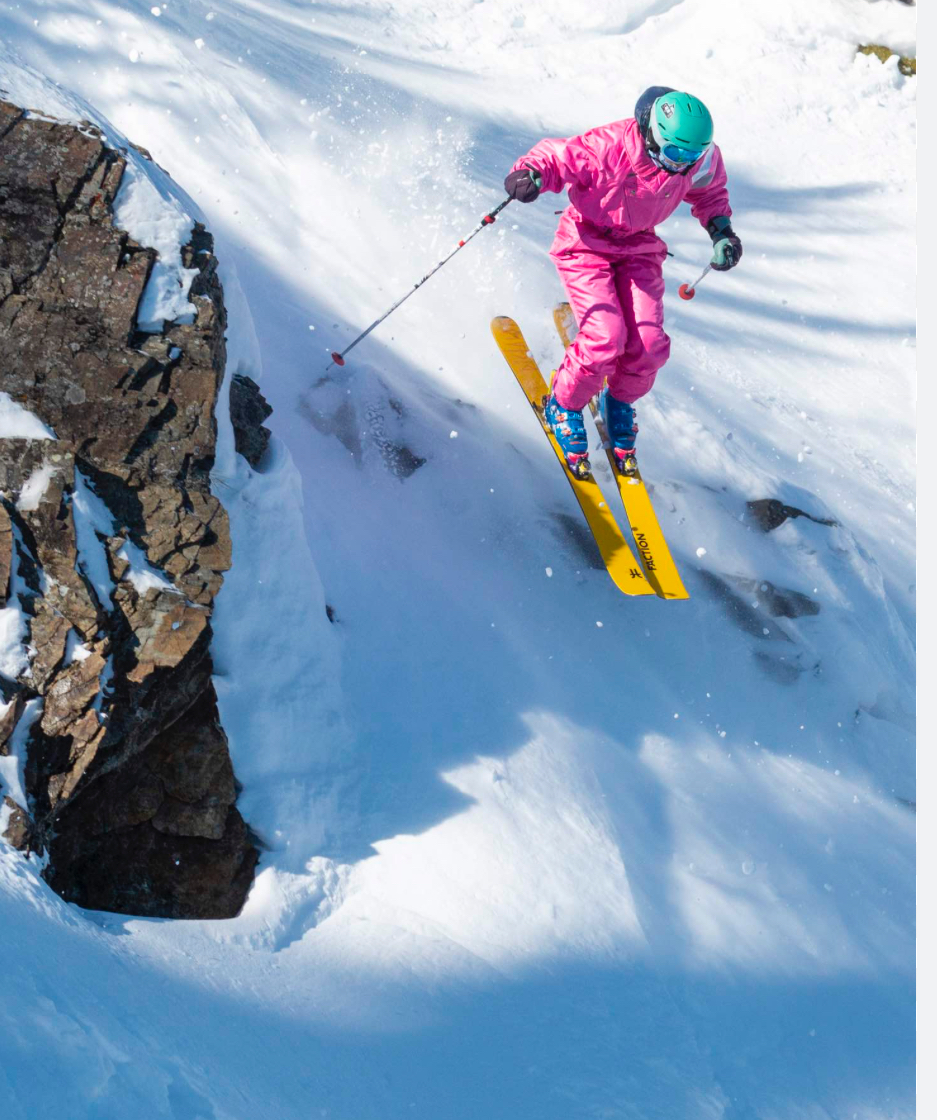
Judging is based on five criteria: line, control, technique, fluidity and style.
“The simple way to think of it is your line is the path that you choose,” Casper explained. “The baseline’s kind of the easiest way down, and then anything you do that makes it harder, you’re building your line score. And then the execution is the other four categories. How in control were you? How good was your technique? How smooth are you? And then there’s style—that’s where skiers and riders amplitude off drops and features, as well as whatever tricks and grabs they throw in.”
Casper often simplifies it for his athletes.
“I’ve told the kids who I’ve coached for a long time that it’s basically big mountain figure skating,” he said. “There’s an element of both creativity and skill that the judges base a run off of during competitions.”
A major step toward Olympic inclusion came when freeride fell under the umbrella of the International Ski and Snowboard Federation roughly three years ago.
“It made our sport more legit in a lot of ways,” Casper said. “Because it’s an international governing entity and that’s one of the Olympic requirements. Since it used to be a private entity, it didn’t qualify for the international governance rules.”
Under FIS oversight, freeride has worked to standardize global judging and qualification systems.
“The biggest thing is that we just have to have a global consistent judging platform,” Casper explained. “You can’t have the South American comps doing their own thing, while North America is doing our own thing. It has to be a global point system.”
At the professional level, judging already involves replay and comparative analysis, something Casper expects would translate seamlessly to Olympic coverage. He said the Freeride World Tour is already using detailed video analysis.
For Casper, Olympic inclusion would elevate athletes who are already performing at elite levels.
“For some of the people who have been on the World Tour and athletes like Big Sky’s Holden Samuels, it’d be so sweet,” Casper said. “I think they’d be stoked if they were Olympic athletes. They should be respected at that level.”
Freeride’s growth is visible not only on the pro circuit, but also in youth and collegiate programs. Casper himself competed with the freeride team at Montana State University while in college.
Locally, Big Sky’s team has stabilized at around 35 athletes this season, supported by Casper and seven additional coaches.
“We’ve been at a consistent number of about 35 kids for the last three or four years,” he said. “We’ve always had really good athletes, especially for our size.”
He credits Big Sky’s terrain for giving athletes a competitive edge.
“When we’re used to our cliffs, and the variety of challenging terrain at Big Sky Resort, then we go to other places, and it feels easy for us,” Casper said. “There’s a reason I’ve been here for 10 years coaching. It’s an ideal spot for the sport.”
Freeride remains relatively niche outside mountain towns, but Casper believes Olympic inclusion could change that.
“I think that it’d be really cool to get the recognition to the sport that it deserves,” he said. “It’s been growing rapidly ever since it started, basically, but it’s still relatively unknown and niche to mountain towns. So if we were to get global attention, I think it would be huge.”
He also believes the stakes, and the talent, will rise with it.
“First of all, a lot of people are going to see freeride for the first time when it goes into the Olympics and probably be inspired and want to join the sport from that,” Casper said. “Also, the stakes are going to be higher. There’s going to be more recognition, and probably a lot more sponsorships for athletes.”
If 2030 becomes a reality, freeride skiing and snowboarding, born on steep faces, wild terrain and built by mountain-town communities like Big Sky, will finally have the global stage its athletes have been working towards for nearly three decades.
“At the end of the day, it’s really cool where the sport is at right now,” Casper said. “But the Olympics is pretty much it. Almost everyone knows what the Olympics means.”
For a sport that began as a grassroots, cliff-hucking spectacle and has evolved into a globally governed discipline, the Olympic rings would represent more than medals. They would signal recognition for athletes who have spent years navigating steep cliffs and unpredictable lines, mastering both courage and technique.
Casper is optimistic about the future. “For some of the people who have been on the World Tour, it’d be sweet if they were Olympic athletes,” he said. “They’re at that level in their athleticism, and they should be recognized.”