


By Benjamin Alva Polley EBS COLUMNIST
Yellowstone National Park’s bison recovery is one of America’s great conservation victories. But conservation cannot end with counting animals. In the Lamar Valley, where bison numbers have reached historic highs, evidence suggests their abundance is now undermining the ecosystem the park is meant to protect. Yellowstone officials should respond before that damage becomes irreversible.
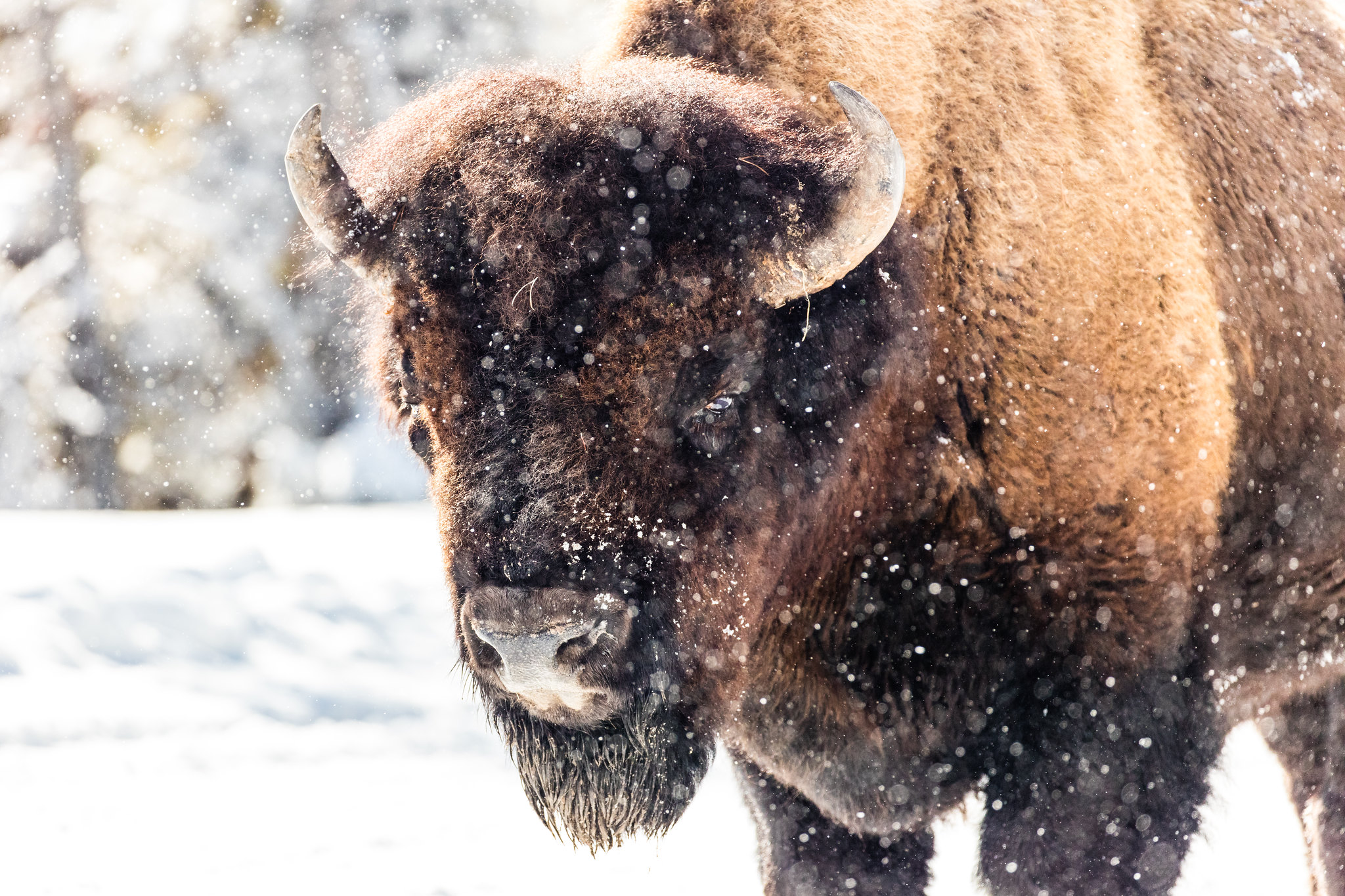
A study by Oregon State University scientists, published in the journal Food Webs, found that bison foraging exerts 10 times the environmental pressure of elk, historically the northern range’s dominant herbivore. Bison do more than graze. They trample vegetation, create wallows, rub against trees and reshape streambanks. In ecological terms, they are powerful engineers when their numbers are regulated.

At or below carrying capacity, bison help engineer functioning landscapes. However, when their numbers get too high, they cause damage. The study links abundant bison to declining woody vegetation, damaged riparian communities, altered river channels and reduced habitat complexity for terrestrial and aquatic wildlife. Those changes should concern anyone who values Yellowstone as an intact ecosystem, not merely as a drive-through zoo.
The irony is that Yellowstone has already demonstrated how restoring ecological relationships can help heal damaged landscapes. After cougars returned in the 1980s and wolves were reintroduced in the mid-1990s, elk numbers and browsing pressure declined. Beavers even returned after being introduced to the Gallatin National Forest and spilled into the park. Aspen, cottonwood, willow and berry-producing shrubs began recovering in many parts of the northern range. In the Lamar Valley however, that recovery has stalled.
Bison numbers appear to be the reason. The northern range’s elk population has fallen from historical highs to about 5,000, with most wintering outside the park. Meanwhile, bison inside Yellowstone have increased to about 4,000. Researchers found a near-complete loss of willow-dominated riparian communities along portions of the Lamar River and West Fork of Rose Creek.
The collapse of aspen is even more striking. Roughly 7.5 hectares of aspen stands covered the valley floor in 1954. By 2015, only one-tenth of a hectare remained, a 99% loss of overstory cover. Large carnivores may influence elk, but the study suggests they are unlikely to control bison at current levels.
None of this diminishes what bison recovery represents. An estimated 30 million once roamed much of North America before commercial killing and westward expansion drove them close to extinction. Only 22 bison remained in Yellowstone in 1901. Rebuilding the herd, especially one that has not hybridized with cattle, is an extraordinary achievement. As the researchers note, Yellowstone bison “are an invaluable conservation resource.”
But success creates new responsibilities and obligations. Treating every increase in bison numbers as inherently good replaces ecological management with symbolism. Yellowstone was not established to maximize a single species. Its obligation is to protect the relationships among predators, herbivores, plants, rivers and the many species that depend on them.
That means park managers must be willing to manage bison density and distribution. The precise combination of measures deserves public scrutiny and careful science, but inaction is also a management choice. If bison continue suppressing willow, cottonwood and aspen while trampling wetlands and streambanks, the Lamar Valley will become less diverse, less complex and less resilient.
This study’s recent findings are not a call to return to an era when wildlife was viewed merely as a problem to be culled. It is an argument for applying the same ecosystem thinking that guided predator restoration. Wolves mattered because their presence affected far more than wolf numbers. The same standard should judge bison management: its consequences for the entire landscape.
Researchers find that overbrowsed landscapes resemble those with too many domestic livestock. That warning should not be dismissed because the animal causing the pressure is culturally beloved and ecologically native. Native species can still overwhelm constrained habitats when predators, migration routes and other ecological forces no longer function as they once did.
Bison overpopulation in one area does not mean the population has fully recovered; it means managers could capture more bison and ship them to herds on native reservations with ample room to thrive and grow, rather than killing them like at the Fort Peck reservation.
Yellowstone’s leaders must act now, while recovery remains possible. Protecting bison and restoring the Lamar Valley are not at odds. Both require moving beyond population growth as the gold standard of success. Bison conservation, like any conservation, should ensure these animals remain part of a biologically rich landscape, not a force that steadily degrades it.
Benjamin Alva Polley is an award-winning, Montana-based journalist. In 2026, he received a silver medal for the Lowell Thomas Award in Adventure Writing for his survival story in The Guardian. His words have appeared in Rolling Stone, Esquire, Adventure Journal, Field & Stream, Men’s Journal, Outside, Popular Science, Sierra, and WWF, among other outlets, and are also available on his website.