

By Benjamin Alva Polley EBS COLUMNIST
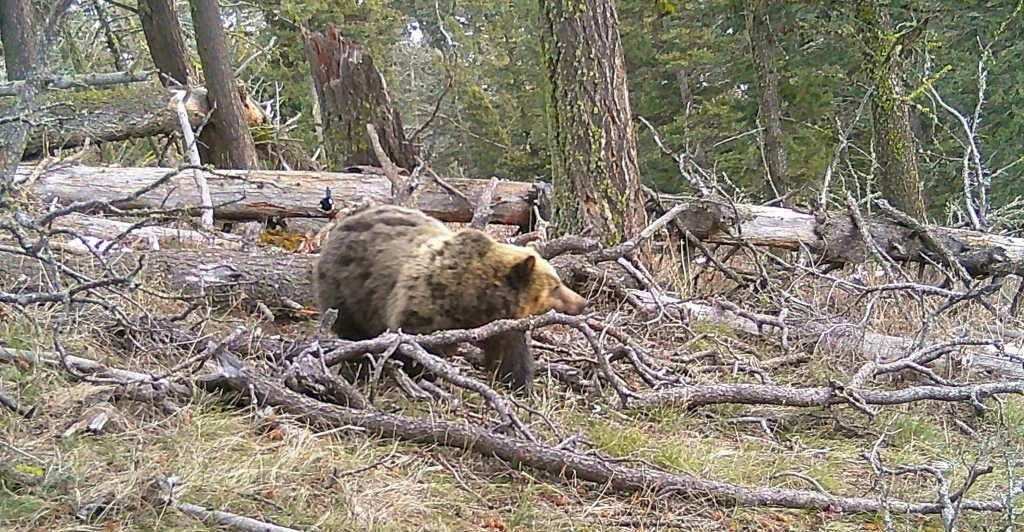
This December, Montana Fish, Wildlife and Parks confirmed a grizzly bear in the Bangtail Mountains east of Bozeman—the first documented grizzly there in decades. To reach this isolated range, the bear likely had to cross over or underneath I‑90, a busy four-lane interstate where the few grizzlies that attempt to cross are often struck and killed by vehicles traveling near 80 mph.
FWP specialists verified the sighting after a remote trail camera captured images of a single subadult bear on national forest land. It is the first formal documentation of a grizzly in the Bangtails since modern recovery efforts began in 1975, when the species was listed as threatened under the Endangered Species Act. A comprehensive Grizzly Bear Recovery Plan was implemented on Jan.29, 1982, and the Interagency Grizzly Bear Committee was formed in 1983 to coordinate conservation efforts. The Bangtail observation fits a broader pattern: similarly sized grizzlies were reported along the Yellowstone River in Livingston in fall 2025 and in the Shields Valley in 2023, suggesting a quiet but steady expansion.

Across the Northern Continental Divide Ecosystem and the Greater Yellowstone Ecosystem, grizzly populations are growing and pushing beyond their traditional strongholds. From these two main meta-populations, bears are moving in all directions, testing the edges of their range and venturing into landscapes that haven’t seen grizzlies in generations. Although the NCDE and GYE populations have not yet fully connected, biologists believe it is only a matter of time. In the coming years, more exploratory bears are expected to cross significant barriers such as I‑90, bringing the two populations closer together and increasing the chance of genetic exchange.
Wildlife bridges, underpasses and culverts could help make these crossings safer and more frequent. While costly to build, they save human lives and allow grizzlies and other species to reconnect fragmented habitats—a true win-win.
A grizzly’s life history helps explain this expansion. Female bears invest heavily in their young, often staying with cubs for up to three years. When offspring—especially young males—disperse, they strike out to find unclaimed territory, following food, scent trails of potential mates, and the promise of secure habitat. As core habitats fill with resident adults, these younger bears are pushed into the margins, probing new valleys, foothills and mountain ranges.
Meanwhile, traditional high-elevation foods are changing. Whitebark pine, whose fat-rich nuts once anchored many grizzlies’ fall diets, is declining due to disease, insect outbreaks, climate change, and development in the wildland urban interface. As these trees disappear, bears must adapt, roaming farther in search of roots, berries, carcasses, agricultural crops, and even attractants like livestock, garbage and bird feeders around human communities. This search often brings them into conflict with people, livestock, and fast-moving traffic on highways like I‑90.
The Bangtail bear is more than a single dot on a map. It symbolizes a larger story of recovery, resilience, and risk. Grizzlies are reclaiming parts of their historic range, but they are doing so in a modern landscape fragmented by roads, subdivisions, ranches, and recreation.
Whether these pioneering bears can safely navigate that maze—with our help—will help determine the future of grizzlies in the Northern Rockies.
Benjamin Alva Polley is a place-based storyteller. His words have been published in Rolling Stone, Esquire, Field & Stream, The Guardian, Men’s Journal, Outside, Popular Science, Sierra, and WWF, among other notable publications, which can be viewed on his website.