
By Benjamin Alva Polley, EBS COLUMNIST
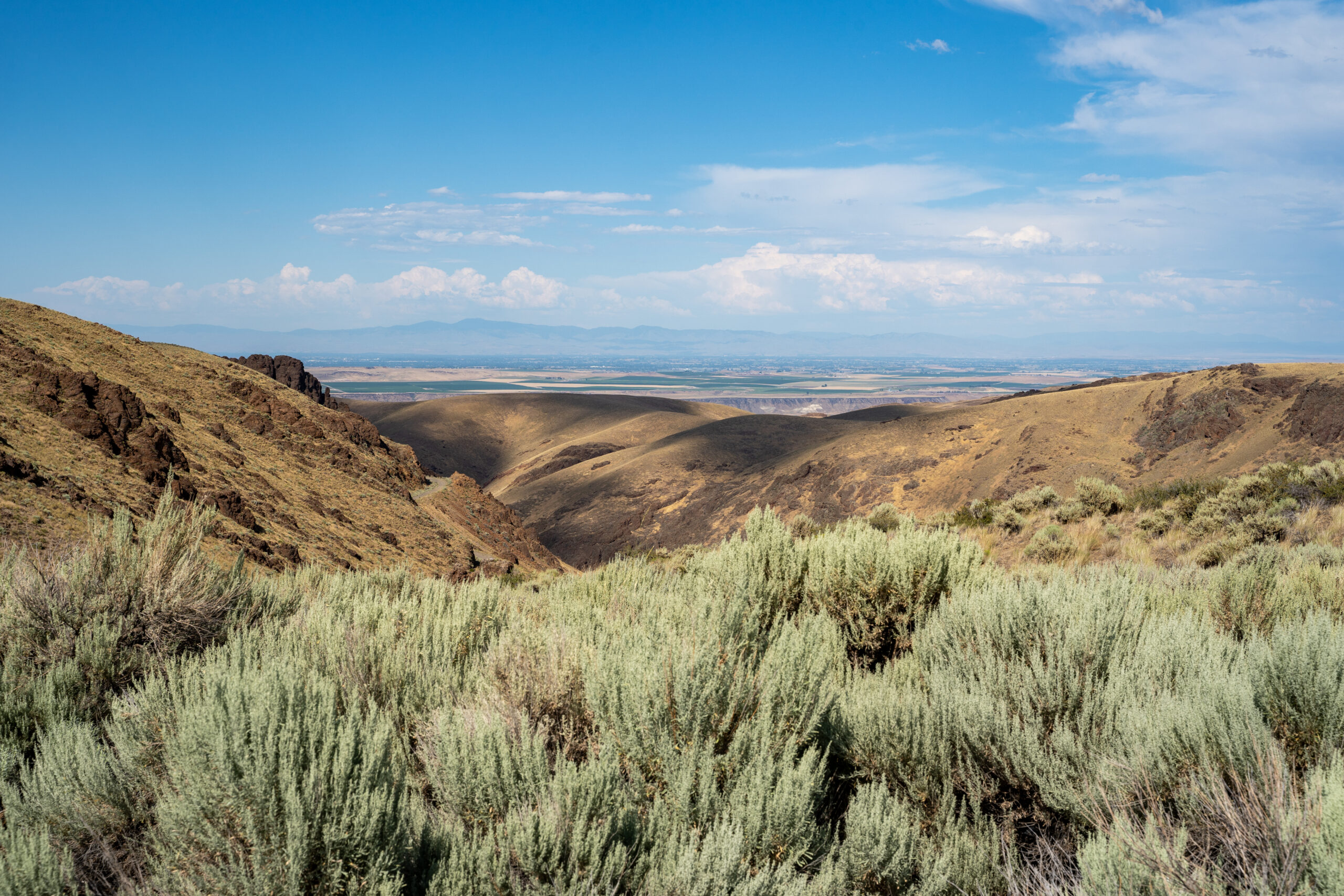
The Trump administration wants to accelerate the construction of artificial and superintelligence data centers, along with the power infrastructure needed to support them, on our federal public lands. A July 2025 executive order directs the departments of Energy and the Interior to identify suitable sites while streamlining environmental reviews and permitting. The Department of Energy has already selected four federal locations for possible development, including one in Idaho.
This expansion is being promoted as the infrastructure necessary to win an international technological race like the space race. The desire to remain competitive is understandable, and artificial intelligence “may” offer genuine benefits for humanity. But before surrendering public land, water and electricity to some of the world’s wealthiest individuals and corporations, Americans should ask a basic question: How much AI infrastructure do we actually need, and what are we willing to sacrifice for it?


Data centers are not ethereal clouds but require infrastructure and buildings. They are enormous industrial complexes filled with servers, cooling equipment and backup generators. They require roads, substations, transmission lines, water systems and even power plants.
That footprint on public land will fragment wildlife habitat. Construction traffic, fencing, artificial lighting and electrical corridors can interrupt migration routes and displace animals from feeding, nesting and wintering grounds. Studies of industrial infrastructure have found reduced bird and mammal abundance near developed areas, with effects sometimes extending well beyond the construction site.
Then comes the noise. Cooling towers, chillers, fans, pumps, transformers and backup generators operate around the clock. To humans, the constant mechanical hum may be an annoyance but to wildlife that depend on sound to communicate, detect predators, locate mates and protect young, it can mean survival or death. A parcel does not remain ecologically intact simply because some flora still surround an industrial building.
These facilities would also scar landscapes valued for their open space and beauty. Windowless buildings, transmission towers, security fences and glaring lights are incompatible with the character of wild country. Once an industrial complex arrives, it changes the horizon and the public’s experience of that place for generations.
Water may be the most pressing issue, as data centers consume water directly for cooling and indirectly through electricity production. That burden becomes especially serious in the arid West, where communities, farms, rivers and wildlife already compete for limited supplies. The Colorado River, the West’s main river system, doesn’t even reach the Gulf without the added strain of more data centers. Research has found that the water footprint varies considerably by cooling system, climate and power source, and that substantial data-center infrastructure is already located in water-stressed regions. Inviting more industrial demand without transparent, enforceable limits is reckless, especially as much of the West faces severe drought.
Supporters will argue that AI promises medical breakthroughs, scientific discoveries and greater economic efficiency. Some of those benefits may be real and actual. I understand the appeal. We want information at our fingertips, tools that save time and technology that makes difficult tasks easier. I use AI-supported applications myself, including Otter.ai to transcribe interviews, Merlin Bird ID to decipher birdsong and Shazam to identify music.
Tools are meant to help, but usefulness should not exempt an industry from scrutiny. We should always question. Convenience can make it easy to ignore what happens behind the screen: the land occupied, the water consumed, the energy demanded and the communities (usually poor and ethnic) asked to bear the consequences because it quite often ends up in their backyard. Faster searches, automated advertising and an endless supply of synthetic content should not take priority over functioning watersheds, wildlife habitat and the people who depend on those areas.
We lose a part of our humanity when we outsource writing, research, problem-solving and artistic decisions to something outside of ourselves. The struggle to reason is what makes us human. We risk surrendering the mental labor through which intelligence and creativity develop. Some experts believe thought, and the ability to think, separates us from the animal kingdom. AI can help us brainstorm, organize information or critique our work, but it can also replace the struggle required to form coherent, original ideas. Improved performance with AI assistance does not necessarily produce learning and may encourage cognitive offloading when people delegate reasoning instead of practicing it. The struggle is also what makes us human.
I am not saying we should reject everything AI offers or dismiss everyone who finds it helpful as beneath us. Unfortunately, I don’t believe AI is going away. It means recognizing that technological progress is not neutral and that convenience is not the same as wisdom. A society capable of creating powerful machines should also be capable of deciding where those machines belong, what limits should govern them and which places must remain beyond their reach.
That is why guardrails must precede the buildout rather than come later. Government should require full environmental impact studies, public disclosure of water and energy use, wildlife monitoring, dark-sky protections and meaningful tribal and community consultation. Development should be directed toward previously disturbed industrial sites instead of intact public lands. Technology companies should pay the full cost of their power, water and environmental damage rather than shifting those burdens onto rural communities and taxpayers. Each data center should have its own grid so it doesn’t affect the rest of us.
The public should also have a right to know when AI generates content. Creators deserve consent and compensation when their work is used to train commercial systems. Individuals need meaningful privacy protections, and students need spaces in schools where they can learn to reason, write and create independently. Accountable federal or state regulatory bodies should establish clear, enforceable standards rather than leaving them to the voluntary promises of the companies profiting from this technology.
Public lands are not empty space awaiting the next industrial development. Vacant lots and open space are habitat, watersheds, migration corridors and part of our shared inheritance. We should not trade that inheritance for warehouses of machines simply because big tech companies and politicians tell us the future demands it.
A meaningful future still requires wild places. It also requires human minds capable of imagining more than what an algorithm predicts.
Benjamin Alva Polley is an award-winning, Montana-based journalist. In 2026, he received a silver medal for the Lowell Thomas Award in Adventure Writing for his survival story in The Guardian. His words have appeared in Rolling Stone, Esquire, Adventure Journal, Field & Stream, Men’s Journal, Outside, Popular Science, Sierra, and WWF, among other outlets, and are also available on his website.