


How Yellowstone’s scavengers navigate a landscape of opportunity
By Benjamin Alva Polley EBS COLUMNIST
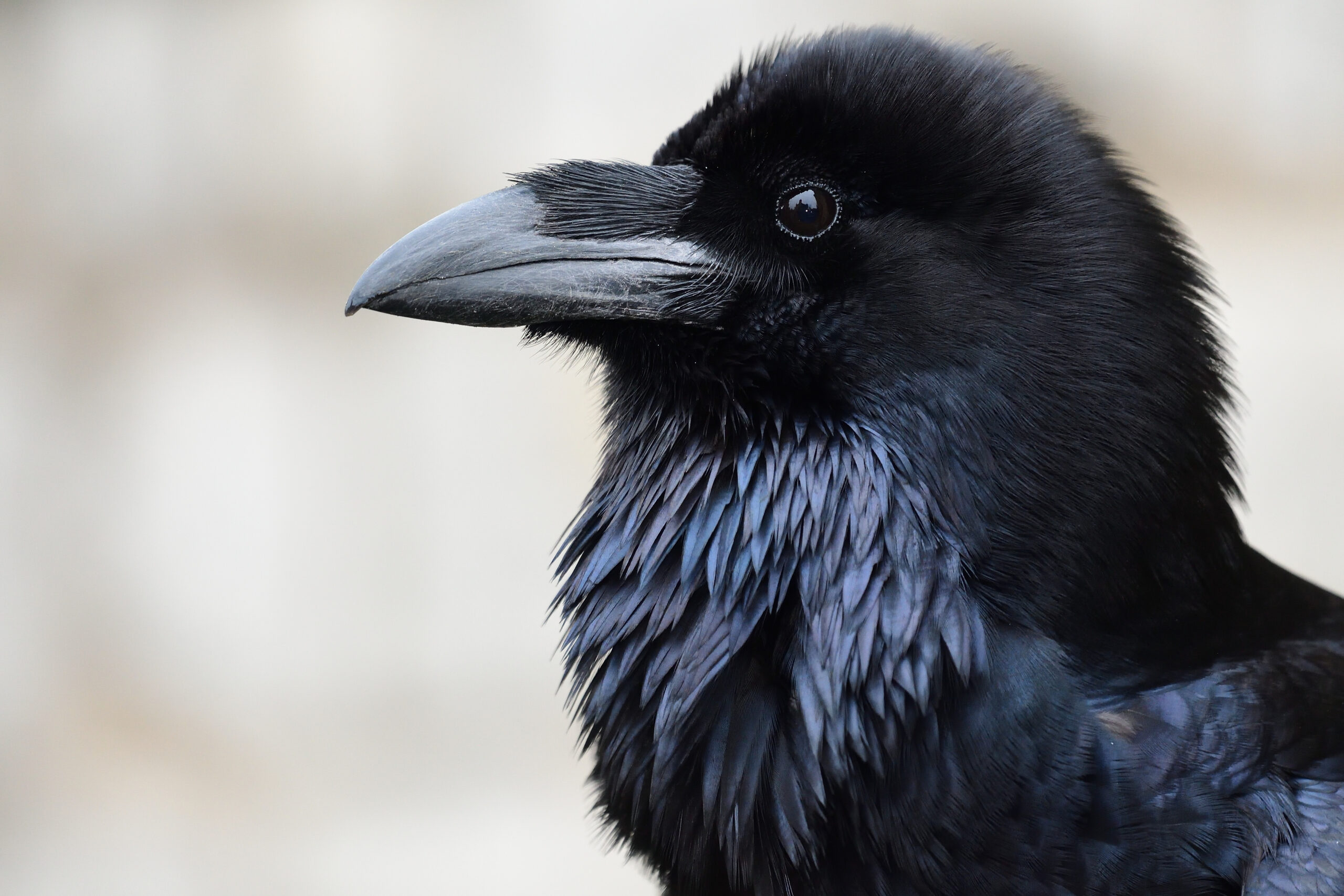
Have you ever wondered just how smart ravens really are? Do you know what connects them to wolves and even lions?
For a long time, we’ve told a simple story about scavengers: they drift around the landscape, lucky opportunists stumbling on carcasses or trailing big predators to a free meal. A new study from Yellowstone National Park, published in Science, flips that narrative on its head and challenges how we think about animal intelligence, wild food webs and even the value of intact predator communities.

Researchers tracked 69 ravens, 20 wolves, and 11 cougars over two-and-a-half years. Led by Matthias-Claudio Loretto, Kristina B. Beck, Douglas W. Smith and Daniel R. Stahler, the team found that ravens are not just freeloaders hanging out at wolf kills. They’re seasoned strategists using what amounts to a mental map of opportunity.
The old hypothesis was straightforward: Ravens follow wolves and other large carnivores across the landscape, using them as walking (or running) food-delivery systems. Field biologists have watched ravens flying with wolf packs, following tracks in snow, and converging quickly on fresh kills. That kind of behavior seems to scream, “Just follow the predator.”
But once scientists actually measured movements with GPS, the reality looked starkly different. In more than 600,000 raven locations and tens of thousands of wolf and cougar locations, there was only one clear case of a raven following a wolf over a long distance. One. If direct following were the main strategy, the data should have been full of such events.
Instead, a different pattern emerged. Ravens were repeatedly making long, purposeful journeys, sometimes over 100 kilometers in a day, back to areas where wolf kills are common. They weren’t shadowing individual wolves so much as revisiting productive places: landscapes that history had taught them were rich in carrion. These included predictable hunting grounds where wolves frequently bring down elk, as well as long-known human food sources like landfills and sewage ponds.
Crucially, ravens oriented toward wolf kill zones with about the same directional precision as they used when flying to stable, human-made food sources. In other words, these birds navigate to an unpredictable resource, a carcass that might or might not be there on any given day, as efficiently as they do to a permanent garbage dump. That strongly suggests something more sophisticated than random searching or casual trailing—they are relying on spatial memory, built over many encounters, to make educated guesses about where food is likely to be.
This is more than a fun twist in raven lore. It pushes us to reconsider what it means to be a scavenger in a changing world. When we strip landscapes of large predators, we don’t just remove wolves or cougars; we also dismantle the invisible architecture of opportunity that intelligent scavengers have learned to navigate. The “landscape of fear” for prey, those zones where elk or bison are most likely to die, doubles as a landscape of hope for scavengers like ravens. Eliminate wolves, and that map is blurred, if not erased.The study also highlights an underappreciated blend of brain cognition and ecology. Ravens are already renowned for their problem-solving, planning, and even hints of theory of mind. That’s why many older cultures refer to them as the trickster or the omnipotent god-like clown of the universe. Here we see those abilities deployed at the scale of entire ecosystems. Ravens appear to remember not just a single carcass, but patterns like certain valleys, stream corridors, or open grasslands are where wolves tend to be successful. They then stitch that information together with knowledge of human subsidies, effectively running a mental optimization problem across hundreds of kilometers: Where should I fly today to maximize my odds of a big meal?
There is a humbling lesson here. We often assume that unpredictability in nature forces animals into simple, reactive strategies: follow a cue, chase a smell, tag along with a bigger predator. But this work shows that even when individual events are unpredictable, no one, raven or human, can say exactly where tomorrow’s wolf kill will be—the distribution of those events can be stable enough for memory and learning to matter.
For conservation policy, this should ring alarm bells. We tend to focus on preserving species in isolation: protect the wolf, manage the elk, tolerate the raven. This study makes clear that intelligence in one species can depend on the behavior and intelligence of another. Ravens’ spatial memory strategies only make sense in a landscape where wolves routinely hunt, where elk and bison die more often in some places than others, and where those patterns persist long enough to be learned.
When we fragment habitat, extirpate predators or heavily manage ungulate populations, we are rewriting the mental maps that wide-ranging animals rely on to survive. A raven that has learned, over the years, that a certain valley is a good bet in late winter may suddenly find that bet no longer pays off once hunting quotas shift or development moves in.
Ultimately, this research is a quiet but powerful argument for thinking in terms of systems and relationships, not just species lists. Intelligent foragers like ravens are reading a complex, multi-species text written across the land: wolf tracks in snow, elk behavior, human garbage, the memory of last year’s lean season. We should be wary of editing that text without understanding the story.
The ravens of greater Yellowstone remind us that even in the harshest winters, survival is not just about sharp beaks or strong wings. It is about memory, navigation, and the ability to learn from the past to gamble on the future. As we continue to reshape the planet, we would do well to remember that we are not the only ones making long-range plans.
Benjamin Alva Polley is a place-based storyteller. His words have been published in Rolling Stone, Esquire, Field & Stream, The Guardian, Men’s Journal, Outside, Popular Science, Sierra, and WWF, among other notable outlets, and are available on his website.