

By Benjamin Alva Polley EBS COLUMNIST
Many people are unaware that tens of thousands of semi-trucks use the route from Idaho Falls to Belgrade each year as a shortcut, avoiding roughly 50 miles of Interstate 15. Exact numbers vary by segment, but Montana Department of Transportation traffic maps show that U.S. Highway 191 through Gallatin Canyon carries among the highest traffic volumes of any rural highway in the state, with a significant share of that traffic being commercial trucks. As a result, what was once primarily a route for visitors and local traffic has increasingly become a de facto commercial freight corridor.
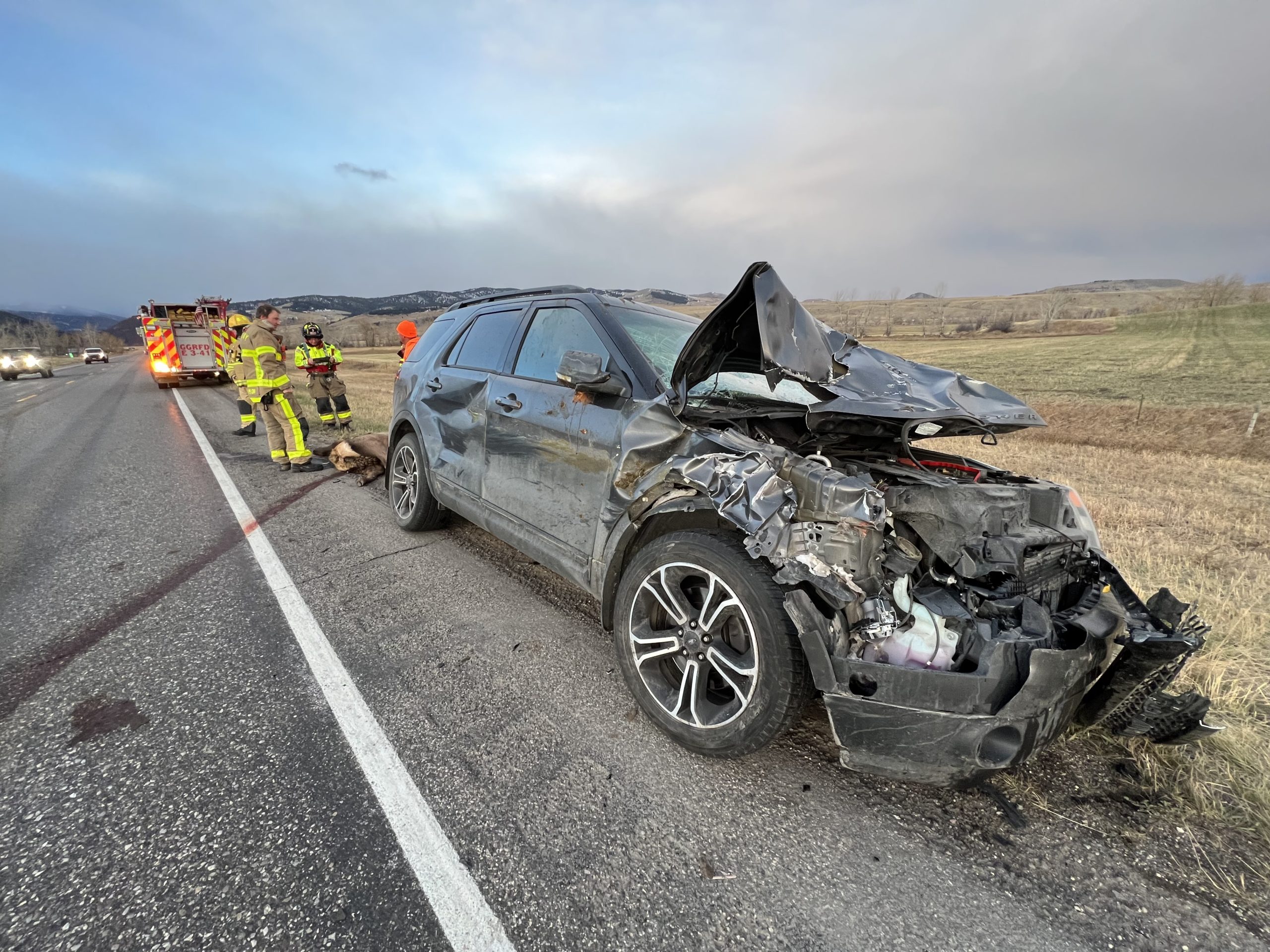
The consequences for people and wildlife are substantial. Along U.S. 191 and Montana Highway 64, state carcass data from 2008 to 2022 document at least 2,625 white-tailed deer, 625 mule deer, and 312 elk killed by vehicles in Gallatin County alone, with hotspots at the mouth of Gallatin Canyon near Gallatin Gateway and at the junction of U.S. 191 and MT 64 to Big Sky. A separate assessment of wildlife–vehicle conflicts on U.S. 191 and MT 64 found 1,322 documented animal carcasses between 2011 and 2020—and researchers note the true toll is likely far higher, potentially up to eight times the reported number once unobserved deaths are considered.

Bison, an icon of the Greater Yellowstone Ecosystem, are part of that toll. In late December 2022, a semi-truck struck a herd of bison on U.S. 191 just north of West Yellowstone, killing 13 animals in a single collision. This crash occurred on a short stretch of highway along the Madison River that federal transportation researchers have identified as one of the most significant bison-vehicle collision hotspots along Yellowstone’s western boundary. It was not an isolated fluke, but a symptom of a corridor where heavy trucks, wildlife and winter conditions often collide.
Other incidents have highlighted risks to people and rivers. Semi-truck crashes in Gallatin Canyon regularly make local headlines, and hazardous material spills—such as diesel fuel releases near the Gallatin River and inside the wider Yellowstone region—raise questions about what a single major accident could mean for drinking water, blue-ribbon fisheries and recreation. Transportation safety research across the West is detailed: large trucks are disproportionately involved in wildlife-vehicle collisions and high-severity crashes due to their weight, braking distances, and operating speeds, especially on narrow, winding mountain highways.
At the same time, freight volumes are growing. Nationally, ton-miles of freight are projected to increase steadily over the coming decades, driven by e-commerce and just-in-time delivery. In Montana, MDT’s own U.S. 191 Corridor Study from Four Corners to Beaver Creek documents rising traffic volumes and emphasizes the need to accommodate truck traffic in design concepts. Public comments on that study repeatedly highlight the perception that the canyon is being treated as an interstate shortcut for long-haul trucks rather than a constrained, mixed-use mountain corridor.
Meanwhile, the lack of a modern weigh and inspection facility at Four Corners has left many residents wondering who is actually monitoring weight limits, hours-of-service rules, and compliance with hazardous materials regulations for trucks using U.S. 191. MDT planning documents capture comments from citizens who want more tools to manage heavy trucks in the canyon—up to and including restrictions on interstate through-freight—and who worry that enforcement has not kept pace with growth.
All of this raises a larger question that deserves a public airing: Should Yellowstone National Park and the U.S. 191 corridor function as a cost-saving shortcut for commercial freight at all?
To answer that, we need more than anecdotes. We need a clear accounting of how many commercial trucks use this route compared to alternatives on I-15 and other state highways, and what share of those are truly “through” trucks versus local deliveries. We need crash and fatality rates along key segments of U.S. 191—including Gallatin Canyon, the Four Corners hub, and the West Yellowstone approach—broken down by vehicle type, time of year and road conditions, building on the crash analyses already compiled for MDT’s corridor study. We need wildlife impacts in concrete terms: carcasses per mile per year, species affected and the economic value of those losses from hunting, tourism and ecosystem services, drawing on existing wildlife and transportation assessments for U.S. 191 and MT 64. And we need the risk profile for the Gallatin River and other waterways from hazmat and fuel spills, and whether current emergency response capacity and regulations are adequate for the volume and type of truck traffic now using this corridor.
Other regions have chosen to act. Across the West, highway agencies are investing in wildlife overpasses and underpasses, fencing, lower speed limits, and targeted enforcement on known wildlife and crash hotspots. The U.S. 191 and MT 64 wildlife and transportation studies already identify priority segments where such measures could dramatically reduce collisions and improve safety for both drivers and animals.
The freight industry will argue that restrictions or tighter enforcement on U.S. 191 could increase costs and complicate routing. But that argument assumes the current system is cost-free—which it is not. Today, many of the costs are externalized: onto local communities who live with diesel spills and fatal crashes, onto visitors who share a narrow two-lane road with 80,000-pound rigs, and onto wildlife and rivers that have no voice in the debate.
This is why the question of whether U.S. 191 and Yellowstone should function as a trucking shortcut is not just a technical issue—it is a public choice. For a readership that cares deeply about this place, an in-depth, data-driven look at truck traffic, crash statistics, wildlife impacts and policy options along the Idaho Falls-West Yellowstone-Gallatin-Belgrade corridor would be timely and valuable.
As documented in past reporting, Explore Big Sky is well-positioned to help lead that conversation, grounding it not only in personal experience but in hard numbers and clear-eyed analysis of what we stand to gain—or lose—by continuing to treat a world-class landscape as a cut-through for heavy freight. Reporting that readers and stakeholders should take note of.
Benjamin Alva Polley is a place-based storyteller. His words have been published in Rolling Stone, Esquire, Field & Stream, The Guardian, Men’s Journal, Outside, Popular Science, Sierra, and WWF, among other notable outlets, and are available on his website.