


By Benjamin Alva Polley EBS COLUMNIST
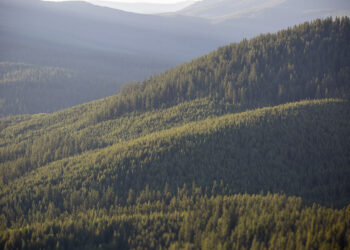
Out here in the West, have you ever looked at a green forested hillside and wondered why so many conifers are red, dead or dying? Many of these trees have been defoliated, primarily due to the spruce budworm.
In the western United States, spruce budworm infestations affect approximately five million acres annually, with about 247 million acres considered susceptible to infestation. This native moth species primarily targets Douglas fir and white fir trees, but it also affects Engelmann spruce, blue spruce and subalpine fir. The larvae of the spruce budworm consume the needles of these trees, resulting in reduced growth rates, decreased lumber quality and increased mortality, particularly when the trees are under stress.

Spruce budworms play a crucial role in the coniferous forest ecosystem by thinning forests and influencing the composition of tree species. While outbreaks can lead to significant defoliation and tree damage, they are part of a natural cycle that promotes the removal of weaker trees and creates opportunities for new growth.
These insects undergo periodic outbreaks, with populations fluctuating between endemic (low) and epidemic (high) phases, typically every 30 to 60 years. During epidemics, budworms feed on new growth, causing defoliation that can weaken or kill trees, thereby thinning dense stands and allowing more resilient species to thrive.
By favoring particular tree species, such as balsam fir, spruce budworms help shape the overall composition of the forest, promoting the growth of more resilient species, like spruce. The dead trees and snags created by budworm outbreaks provide valuable habitats for various wildlife, including cavity-nesting birds like chickadees, small mammals and insects. However, the presence of dead and dying trees can also increase wildfire risk by providing additional fuel, a complex issue influenced by multiple factors, including climate and forest management practices.
Natural predators, parasites and diseases help keep spruce budworm populations in check, preventing constant outbreaks. Historically, long and cold winters regulated larval populations, but climate change and warmer winters have diminished this natural control.
Despite the potential damage caused by spruce budworm outbreaks, they are essential for maintaining forest health and diversity. Management strategies often aim to minimize the impacts of these epidemics while recognizing the ecological importance of the budworm. The spruce budworm typically has a one-year life cycle, causing significant defoliation that weakens trees and makes them more vulnerable to other pests and diseases.
In areas like Montana, the emergence of adult spruce moths is significant for fly fishermen, as these moths become a food source for trout.
Spruce budworms, like many natural phenomena, experience good years and bad years. Although the bad years can be a nuisance, the good years highlight their role in sustaining western forests.
Benjamin Alva Polley is a place-based storyteller. His words have been published in Rolling Stone, Esquire, Field & Stream, The Guardian, Men’s Journal, Outside, Popular Science, Sierra, and other publications, and can be seen on his website.