

By Benjamin Alva Polley EBS COLUMNIST
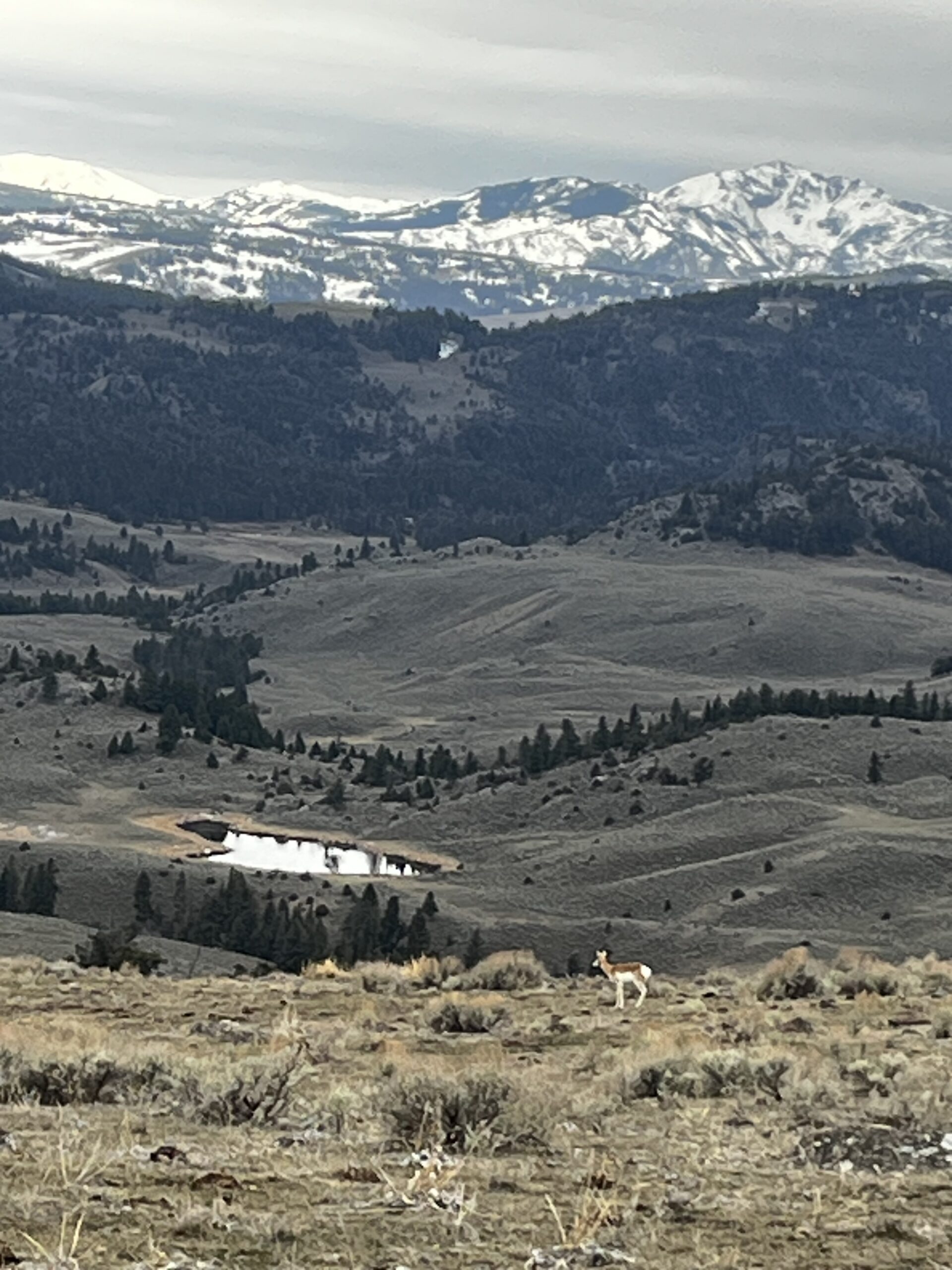
The questions that matter most do not stop at party lines. They do not bend to the easy grammar of red and blue, rural and urban, conservative and progressive. The land, the water, the air and the wildlife we depend on are not partisan property. They are shared inheritance. And the duty to protect them is shared as well.
That duty is not ceremonial. It is not a talking point, and it is not a luxury. It is practical, immediate and overdue. Defending public lands, confronting invasive species, protecting wildlife and conserving the living foundations of our world is not a slogan. It is to accept responsibility. And responsibility, if it is to mean anything at all, must be answered with cooperation.
Public lands remain among the nation’s greatest treasures not only because they are beautiful, but because they are useful in the deepest sense. They sustain local economies, invite recreation, support mental health, preserve habitat and keep us tethered to the story of this country. In “A Connecticut Yankee in King Arthur’s Court,” Mark Twain wrote: “My kind of loyalty was loyalty to one’s country, not to its institutions or its officeholders. The country is the real thing, the substantial thing, the eternal thing…”
That distinction still matters. Our first loyalty should be to the country itself: to the land, the water, the wildlife and the common spaces that belong to no faction and to every generation. Left unguarded, such places are not merely neglected; they are diminished, fragmented, privatized in spirit if not in deed, and too often lost by degrees. To preserve them requires more than sentiment. It requires stewardship, restraint and the courage to work across lines of disagreement.
The same is true of our rivers, forests, grasslands and open spaces. These are not commodities to be consumed and forgotten. They are inheritances—fragile, finite and entrusted to us only for a time.
Invasive species make the case for cooperation impossible to ignore. They cross every boundary without permission, threatening native plants, wildlife, agriculture and entire ecosystems. No single party, agency or interest group can solve that problem alone. It takes local communities, scientists, land managers, farmers, hunters, conservationists, outdoor recreationists and elected officials moving in the same direction. Facts must lead. Shared stakes must guide us. Only then can durable progress take root.
Wildlife conservation follows the same moral law. Wildlife belongs to no faction and no region. It belongs to the common life of the nation. Whether the aim is to protect pollinators, restore habitat or ensure that future generations can still encounter the natural world in all its abundance and complexity, the challenge is the same: think beyond the immediate. Resist the tyranny of the short term. Refuse to surrender the future to the present.
Too often, public debate reduces grave questions to slogans. But conservation is not a slogan. It is labor. It is patience. It is restraint. It is listening. It is compromise. It is the patient, often invisible, who works to build something that can endure in a culture addicted to profit, noise, outrage, and speed. That work may not win the day’s headlines, but it leaves something better than headlines. It leaves a legacy.
If we are serious about conserving land, water and air, we must be serious about cooperation. We must seek common ground where it exists and create it where it does not. We must resist the paralysis of permanent conflict. When we protect the commons, we are not taking sides. We are taking responsibility.
The road ahead will not be easy. It will demand trust, discipline and humility. It will demand the recognition that no one has a monopoly on wisdom and no one can solve these problems alone. But it can be done—if we have the courage and the discipline to do it together.
In the end, the question is not whether we can afford to work together. It is a question of whether we can afford not to. If we fail, the cost will be measured not in speeches or slogans, but in diminished landscapes, vanished species, and a poorer future for the country we leave behind. If we succeed, we will leave behind something better than division: a common good worth defending.
Benjamin Alva Polley is a place-based storyteller. His words have been published in Rolling Stone, Esquire, Field & Stream, The Guardian, Men’s Journal, Outside, Popular Science, Sierra, and WWF, among other notable outlets, and are available on his website.