
PERC to serve as primary conservation beneficiary for this summer’s Wildlands live music event
By Mira Brody VP MEDIA
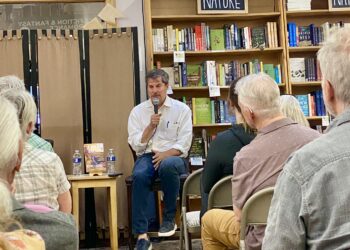
Brian Yablonski describes a typical map in shades of color. Oftentimes, he explains, national parks are brown, national forests are green, state land purple and tribal land yellow.
“But the private land’s colorless,” Yablonski said. “It’s either white or gray, often. … Part of the mission here is to give color to private land.”
As CEO of the Bozeman-based nonprofit Property and Environment Research Center, Yablonski and his team are focused on these colorless sections as a common ground on which to build lasting conservation efforts nationwide, but also here in the Greater Yellowstone Ecosystem.
Private land, he said, is some of the most ecologically beneficial land we have in an ecosystem—it’s often closest to the water, fertile soil and other life-giving resources where wildlife thrive. Instead of ignoring this land, PERC’s mission, through research, policy and law translation and programs, is to use market solutions and incentives as the lever to make conservation mutually beneficial to landowners. PERC approaches the concept of protecting land, water and wildlife as an asset rather than a liability. And while PERC partners with other nonprofits to make projects happen, Yablonski said a distinction is important.
“One of the things that distinguishes us is we are a ‘how’ conservation organization,” he said.
Picture conservation efforts in a matrix, he explained. One box might be ‘where,’ or place-based, another ‘who,’ person or activity-based, and another ‘what,’ or species-based. PERC focuses on the ‘how.’
“We think how you do conservation matters most,” Yablonski said. “The how for us is incentives and voluntary cooperative use of markets, economics and property rights to get better conservation outcomes, because that’s grounded in cooperation at its heart. And if conservation can be grounded in cooperation, and if conservation can make economic sense for those who want to do the conserving, it’ll be more durable in the end.”
Based in Bozeman, PERC’s efforts stretch from the everglades of Florida to the old growth forests of Maine. Some of the group’s most successful projects though, are here in southwest Montana.
PERC’s research has long served Yellowstone National Park’s fee policy, most recently in the new $100 foreign tourist tax, starting Jan. 1, 2026, projected to generate $55 million annually. In the early 2000s, PERC also supported a pilot program that became a change in law that ensured 80% of park fees stay in the park.

The Elk Rent program, also called “pay for presence,” compensates ranchers for images of elk captured by remote cameras. If you have 20 or more elk on your ranch on a given day, you’ll get an elk rent payment for that day. Two hundred elk warrant a bonus payment, capped at $12,000. The Fence Fund program pays between 30-50% of the cost to repair fencing damaged by migrating wildlife, with a double payout incentive for a wildlife-friendly fence replacement.
“There’s a higher payment if you go to wildlife-friendly fencing, which is a way not to force it, but to incentivize ranches,” Yablonski said. “If they’ve got an area where every year the elk are pounding that particular area, it would make all the sense in the world to take the higher payment and convert to wildlife-friendly fencing.”
PERC is working with ranchers in Cody, Wyoming, and the Centennial Valley on a Virtual Fence Conservation Fund, cooked up in PERC’s Conservation Innovation Lab. Virtual fencing works much like an invisible fence for a wandering dog, except for an entire herd of cattle. It can be used for predator management, containment and control within an ecologically sensitive area, like protecting sensitive recovery areas for Arctic grayling in the Centennial Valley. PERC’s first Virtual Fence Conservation Fund awarded over $400,000 to local farms and ranches to adopt the project.
PERC’s Grizzly Bear Conflict Reduction Grazing Agreement, and one of Yablonski’s favorite programs, is a partnership with the Greater Yellowstone Coalition, the National Wildlife Federation and J Bar L Ranch in the Gravelly Mountains. Some of the highest rates of grizzly bear depredation of cattle occur in the Gravellys, explained Yablonski, and J Bar L have cattle across a 50,000 acre grazing allotment. By utilizing research from its Innovation Lab, PERC and its partners are supporting and monitoring a specific cattle rotation developed by J Bar L—including more cattle for shorter periods of time, increased movement of cattle and increased supervision—that reduces cattle casualties so both ranchers and bears can coexist.

The positive relationships PERC has built with ranchers across the Greater Yellowstone region is proof that its ‘how’ approach is viable, Yablonski said. Especially in a volatile market, ranchers are looking to solutions to keep up with rising property taxes and costs of living to maintain their families’ land for the next generation.
“Most of these ranchers could turn around and sell and walk away with a whole lot of money, especially in places like the Greater Yellowstone Ecosystem,” Yablonski said. “But they don’t want to do that. They’re ranchers. Rancher isn’t just what they do, it’s who they are. It’s not an occupation. It’s a lifestyle and a livelihood that they’ve grown up with that they want to preserve.”
Preservation—of a species, of land, of a way of life—becomes the common ground on which farmers and conservationists can unite.
“If we can keep these ranches intact and financially viable, that’s going to be the greatest proof that this is working,” he said.
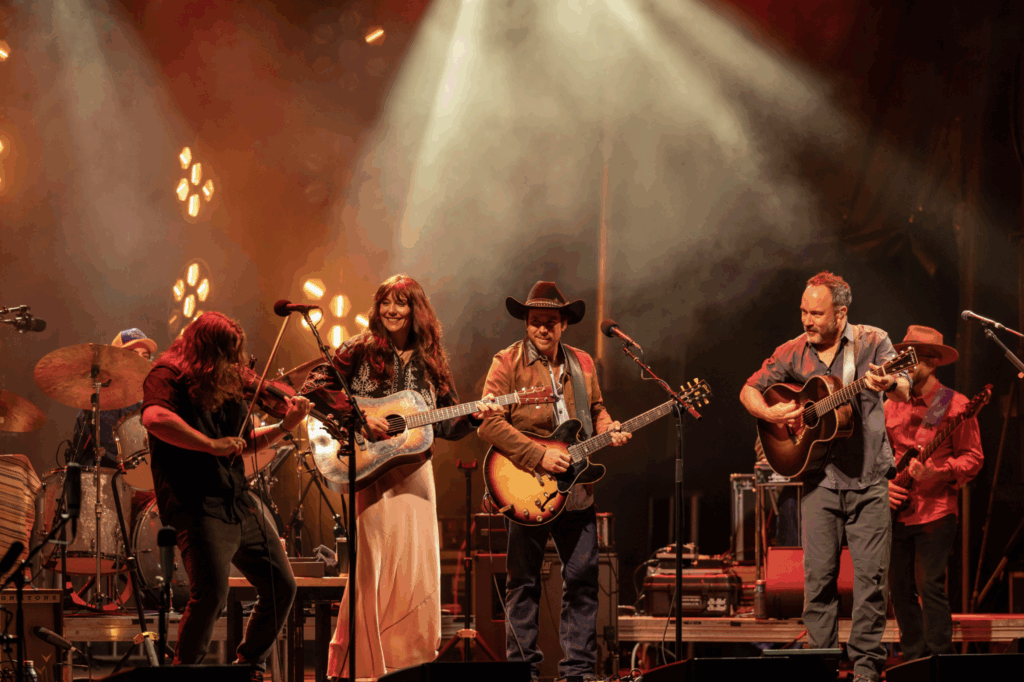
This summer during Wildlands, an Outlaw Partners-produced weekend of live music at the Big Sky Events Arena in Big Sky, PERC will serve as the primary beneficiary to the conservation-focused event. A portion of ticket sales, auction items and individual donations will go toward the nonprofit’s efforts in the GYE. The weekend takes place July 31 and Aug. 1 and Wildlands and Outlaw Partners will announce the full artist lineup Jan. 15 at wildlandsmusic.com.
Yablonski and the PERC team hope this summer’s event will shed light on the work they do, and gather lovers of both live music and conservation on a similar theme of common ground.
“We live in the greatest country in the world, and conservation really represents the heart and soul of America itself,” Yablonski said. “I always tell people, we invented conservation. This is our thing. … We’ve been blessed to be stewards of this.”