

Tracking smoke via a state database, filtering your air and wearing a mask can substantially reduce the long-term health risks of wildfire smoke.
By Zeke Lloyd MONTANA FREE PRESS
Fire season, during which millions of acres burn across the country each summer, is an annual obstacle for anyone aspiring to enjoy a long and healthy life immersed in the outdoors.
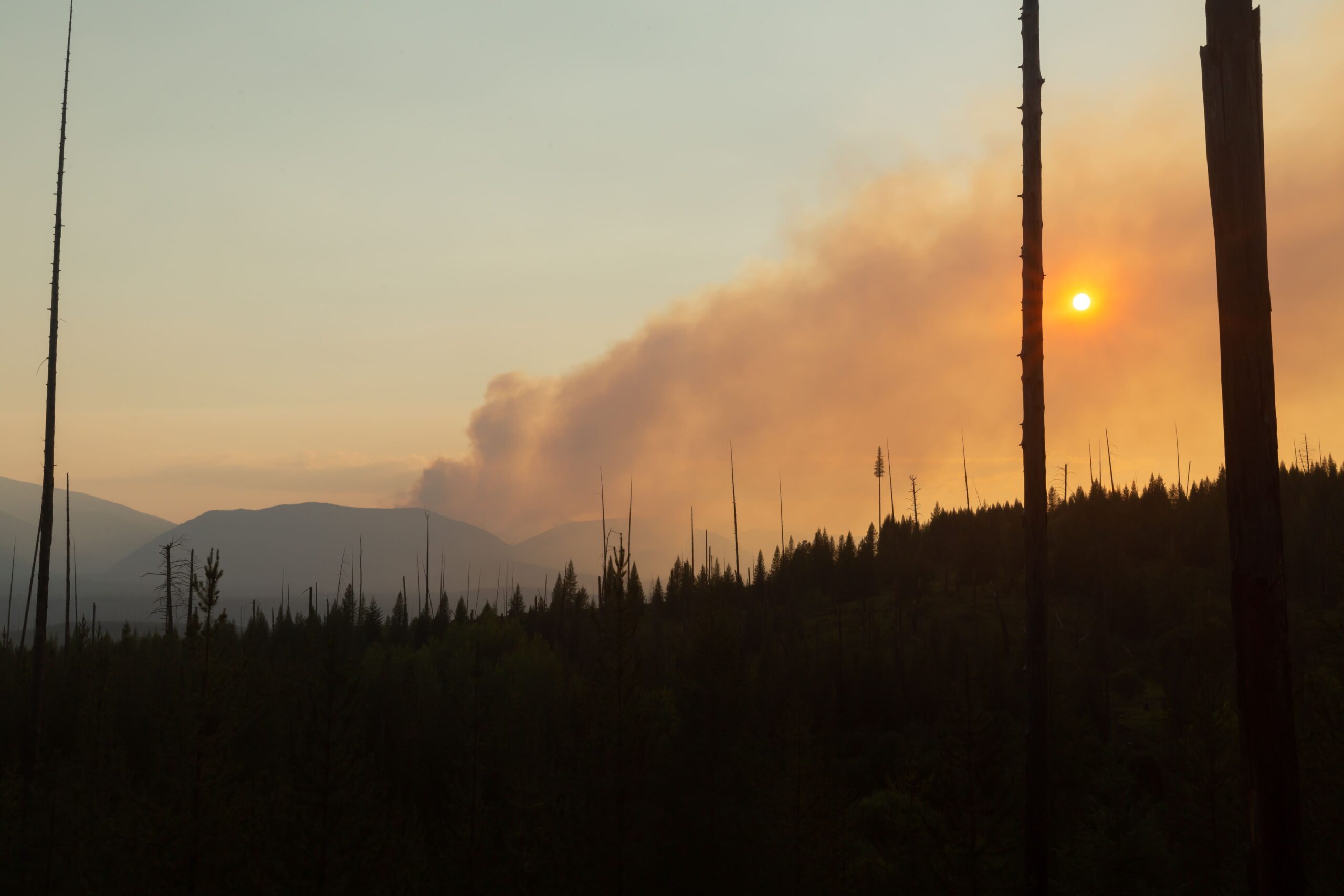
As of early July, wildfire season hasn’t picked up in Montana yet. But as summer progresses and forests and grasslands burn, the state’s air quality will deteriorate.

Carrie Nyssen, an air quality expert with the American Lung Association, told Montana Free Press that wildfire smoke contains toxic compounds including carbon monoxide and carcinogens including benzene and formaldehyde.
Breathing wildfire smoke has long-lasting impacts on lung function, according to a study from the University of Montana. Researchers examined residents around Seeley Lake after the community was exposed to “unprecedented levels of wildfire smoke” in 2017. The study found that residents’ lungs remained damaged two years after the fires, when the study concluded.
Nyssen said smoke has even worse impacts on children, a susceptible demographic that breathes faster than adults. Smoke can inhibit healthy lung development. It can also exacerbate the impacts of chronic lung and heart disease among older populations.
Experts offer a range of strategies to keep what Nyssen described as the “toxic cloud” of wildfire smoke out of your lungs. Here are a few simple and affordable ways to keep the worst of this summer’s smoke at bay.
#1 TRACK THE SMOKE
The Montana Department of Environmental Quality tracks air quality statewide and regularly updates a map of the state’s skies. Different colors, ranging in increasing severity from green to yellow to red to purple, indicate the level of air pollution.
“I think it’s kind of fun to check your air quality to see what color we are on the scale,” Nyssen said.
Nyssen said the map can help Montanans “make a better-informed decision” about where to recreate.
“If you get the day off and you want to go fishing, now are you going to let a little wildfire smoke bother you? Well, at least check and see what the air quality is and what level it’s at,” Nyssen said.
You can also sign up for smoke forecasts from DEQ, which will email or text air quality updates several times a week during fire season.
Smoke is dangerous not just for the children and the elderly, but for young, healthy adults as well, so Nyssen says it’s important to avoid it.
“When you’ve got a red day, or even worse, a maroon or a purple day, there is not a pair of lungs in the world that isn’t adversely affected by breathing in that bad air,” Nyssen said.
#2 FILTER, FILTER, FILTER
If you’re staying inside during an intense smoke event, you can make a DIY air filter to keep most of the smoke out of a single designated room. And installing one doesn’t have to break the bank, according to Robert Byron, with Montana Health and Climate, an environmental advocacy group.
“What it involves is just an inexpensive box fan with a filter for an air conditioning unit,” Byron told MTFP.
Byron recommends following this DIY guide from Climate Smart Missoula. On the smokiest days, it’s best to place the filter in a small room, ideally one that has no exterior door and as few windows as possible. Set the fan up where airflow is unobstructed, run it whenever you’re home, and use the room as a haven when the air quality outside keeps you indoors.
DPHHS also maintains a website with more information and wildfire smoke response toolkits for individuals, schools and childcare facilities.
#3 WEAR A MASK
Many residential air filters, and especially homemade ones, can’t entirely remove one of the most dangerous ingredients in wildfire smoke: tiny suspended molecules called particulate matter. The most dangerous kind, called PM2.5, is composed of solid particles and liquid droplets that are two and a half micrometers in diameter or less. Their size allows them to bypass the body’s regular defenses and reach deep into the lungs. That means irritation and coughing, in addition to more serious health risks like chronic obstructive pulmonary disease, asthma flares, heart attacks and strokes.
“And we’ve also seen associations with dementia, among many other things,” Byron said.
To keep those molecular threats out of your airways, Byron recommends a well-fitted N95 respirator.
Some wildland firefighters have even started wearing N95 masks after a recent U.S. Forest Service announcement authorizing their use.
But while they offer top-tier protection, N95s can make recreating outside difficult. As with all wildfire smoke precautions, Byron said, it’s important to exercise common sense.
“It doesn’t help if you pass out from heat stroke because you can’t breathe through the mask,” Byron said.
Like Byron, Carrie Nyssen, with the American Lung Association, emphasized that protecting yourself from wildfire smoke needn’t be an excessive imposition on your day-to-day life.
“If we can just get ourselves to think ahead and plan a little bit, that can go a long way,” Nyssen said.