


Celebrating the life of one of its founders, Jack Creek Preserve honors its past and looks toward the future.
By Leslie Kilgore EBS CONTRIBUTOR
For more than two decades, Jack Creek Preserve has protected land, introduced young people to the outdoors and created opportunities for people to learn about conservation. This summer, those efforts took on a broader meaning as the organization’s Night at the Preserve reflected on the past, present and future to celebrate the nation’s 250th anniversary.
Held Aug. 11 at the preserve’s Outdoor Education Center, the evening brought together supporters of the 4,500-acre preserve to consider how far Jack Creek has come, the conservation work happening today and what it will take to protect the land for generations to come.

The evening also offered an opportunity to remember Jon Fossel, who, alongside Dottie Fossel, was instrumental in creating the preserve and establishing its mission. With Jon’s recent passing, the gathering became an especially meaningful reflection on the work he helped begin and the vision that continues through his family, the preserve’s board and staff, and the community it serves.
The past
Jack Creek Preserve began with a family looking for a place to spend time outdoors.
The Fossels came to Montana from the East Coast and initially wanted a Western property where their family could recreate. They looked at land in Colorado, Wyoming and Montana before finding the property that would eventually become Jack Creek Preserve.

But the more time they spent there, the more they realized the land was too important to keep only for themselves.
“We had come from the east, and at that time we hadn’t really been out west very much,” Fossel said. “We wanted a family place to recreate. But the more we hiked on the property, the more we found that the wildlife and the waterways and the woodlands, the meadows, the herds of elk, it was too special to just keep for ourselves, and we wanted to be able to share it for conservation and education.”
The Fossels ultimately established the preserve as a nonprofit and placed the property under conservation protection. Today, its 4,500 acres sit between two sections of the Lee Metcalf Wilderness, creating an important connection for wildlife habitat in a landscape that has changed considerably since the family first arrived.
Fossel said hunting and fishing were part of what attracted the family to the area, but they wanted those activities to happen responsibly.
“We both liked to hunt, but we didn’t want to be surrounded by hundreds of cars as we had seen,” she said. “Hunting and fishing were a priority too, but in a managed way.”
That balance became central to Jack Creek’s identity: protect the land while allowing people to experience it, learn from it and develop a deeper understanding of conservation. The preserve’s first programming focused on children, eventually expanding into school visits, lectures and adult programming. More than 20 years later, camps remain an important part of the organization’s work.
For Fossel, that history is inseparable from the reason her family protected the land.
“Conservation education is very important to keep the land for future generations,” she said.
The present
Today, Jack Creek Preserve operates as both a protected landscape and an outdoor classroom.
Abi King, executive director of the Jack Creek Preserve Foundation, said Jon’s vision centered on protecting the property for wildlife and future generations while using it to teach people about conservation.
“I think protecting the land for wildlife and future generations, having this land for conservation education and as a classroom to teach the role that hunting plays, those would continue to be Jon’s main priorities, and that will always be our goal,” King said.
That mission is reflected in the preserve’s programming, which gives children hands-on opportunities to learn about the outdoors rather than simply hearing about conservation in a classroom.
The preserve also continues to actively manage and restore the land, which includes aspen and sagebrush restoration as well as ongoing riparian work along Jack Creek.
A 2023 riparian restoration project was particularly meaningful to Jon. The project included beaver dam analogs and habitat structures and was largely funded by him. King said Jon’s wishes were for his ashes to be spread at Jack Creek in the area where that restoration project took place.
“Jack Creek was just a special place on the preserve for him,” King said. “The whole 4,500 acres was special for him, but I think that particular place, and then the whole restoration project that we did, and that we hope to do more of, that was his dream.”
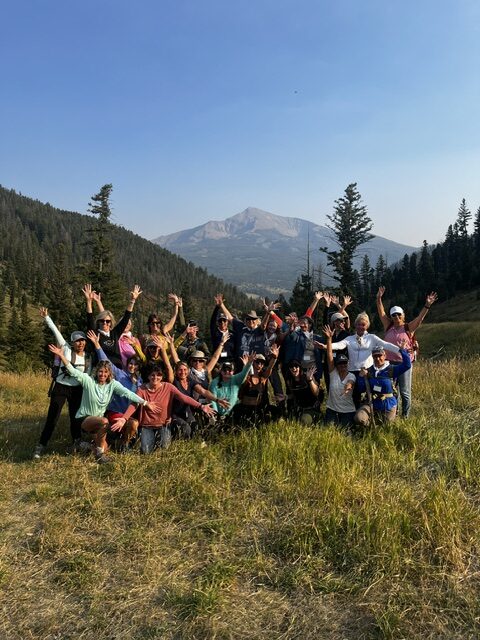
Fossel said Jon also left a “significant amount of money” to continue restoration work on the stream. That work reflects a broader reality of conservation: protecting land is not a one-time accomplishment. It requires ongoing stewardship.
The preserve’s current priorities also include keeping programming affordable, maintaining and improving its facilities, building a durable financial foundation and continuing active restoration and land management.
“It was inspiring to see so many people come together in support of Jack Creek Preserve and this remarkable place,” said Chad Klinkenborg, Conservation Director for the Montana Land Reliance and also presented at the preserve’s annual event. “Southwest Montana is facing intense development pressure, making the protection of sensitive places like the Jack Creek watershed more important now than ever.”
“We are blessed with an abundance of public lands here in Montana, but private lands provide the connective tissue between them,” Klinkenberg explained. “Maintining wildlife corridors, supporting working landscapes and preserving the open spaces that define Montana. The turnout at Jack Creek was a great reminder of just how many people care deeply about keeping these landscapes intact for future generations.”
Klinkenborg’s presentation connected the organization’s current work to the evening’s larger theme, emphasizing the role that privately protected land can play in creating wildlife corridors and connecting larger areas of public land.
Jack Creek’s location between two sections of the Lee Metcalf Wilderness makes that connection especially significant.
King said the Fossels’ foresight in protecting the property is even more apparent as development has increased around it.
“For both Jon and Dottie to have had the foresight to set that particular land aside that linked the two sections of the Lee Metcalf Wilderness, it’s just huge. Especially after not knowing how much development would happen around us, however many years later,” King said.
The preserve’s present work also includes carrying forward Jon’s interest in making Jack Creek accessible to young people from urban areas, in Montana and beyond, who might never otherwise have the opportunity to experience the Rocky Mountain outdoors.
Looking ahead
The third part of the evening’s theme, the future, both King and Fossel said, may be the most important to Jack Creek.
The preserve was created to last beyond the people who established it, and the current work focuses on ensuring that the land and its educational mission continue well into the future.
That includes continuing Jon’s interest in reaching children from different backgrounds and demographics. King said one of Jon’s particular goals was to bring children from outside the region, potentially from major urban areas, to Jack Creek for summer programming.
“He really wanted to reach out-of-state children for some of our programming, and bring in kids that would never normally have the opportunity to come to our summer camps,” King said.
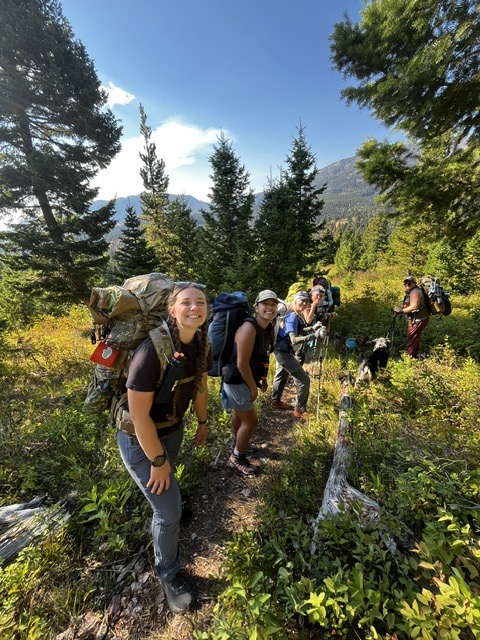
The preserve has previously hosted groups from outside Montana, including a group from Ohio. Fossel recalled the impact the experience had on those students.
“Some of the young people there shared that the experience changed their lives,” she said. “They had no idea what was out here and what was available.”
The preserve hopes to create more of those experiences, but doing so requires funding for travel, scholarships and programming.
“Our vision goes beyond what we’re doing now, because we would like to have more urban kids come out for camp,” Fossel said. “So if we can raise more funds, then we have more opportunity to help more people.”
For King, that goal is one of the most important pieces of Jon’s legacy.
She said the preserve’s bylaws were established by Jon, Dottie and the original board. Several members of the family remain on the board, creating a direct connection between the preserve’s beginnings and its future.
Jon’s influence also continues through the land itself. His commitment to stream restoration, conservation education and hands-on outdoor experiences remains part of the work the preserve plans to carry forward.
For Dottie, the vision has always extended beyond simply protecting land. She said both she and Jon believed everyone should contribute something to the communities where they live.
“One of our philosophies has always been, everybody should do something more for the community they live in than just their job or school or families,” she said. “I don’t care what. Just something else.”
That philosophy was reflected in the Fossels’ approach to Jack Creek—not only protecting the land, but volunteering, raising money, building relationships and personally engaging with the children and adults who come to experience it.
Now, with Jon’s passing, King said the most meaningful way to honor him is to keep that work moving forward.
“I appreciate the privilege of serving as the executive director for Jack Creek Preserve Foundation and to be tasked with implementing Jon and Dottie’s vision,” King said. “I feel very lucky to be in this role.”
As Jack Creek looks toward the next 250 years, Jon’s legacy is not simply the land he helped protect. It is the generations of people who will experience it, learn from it and become its future stewards.
The work Jon and Dottie Fossel began continues on the 4,500 acres of Jack Creek Preserve, in the classrooms and camps, along the restored waterways and in the young people who leave the preserve with a deeper connection to the outdoors.
For Jon, the future of conservation was always about making sure there was something left to care about. At Jack Creek, that future is already underway.