


Board tentatively funds all projects; Funding for Grow Wild’s forestry project will require $50K match from community
By Jack Reaney SENIOR EDITOR
On Tuesday, Oct. 21, the annual convention of the Big Sky Resort Area District board to discuss nonprofit grant allocations proceeded smoothly, as all eligible applicants received awards and most projects were funded in full, tentatively.
However, questions of how Resort Tax should fund child care sparked an in-depth discussion between the board and Mariel Butan, executive director of Morningstar Learning Center.
Ultimately, the board voted unanimously in favor of funding $850,000 to MLC, more than 94% of the provider’s $900,000 request to fund 16 months of early childhood education and tuition assistance. BSRAD moved its annual grant allocations from the typical June date to October to improve efficiency, requiring certain nonprofits to request funding for the four-month gap.
“I am grateful that we received the $850,000. And would I have preferred $900,000? Yes,” Butan told EBS after the full-day meeting. “I think sometimes, in certain sales tactics, it’s like, ‘ask for 900 so if you get 850, it’s OK.’ … We still asked for what we needed.”
Butan noted that MLC’s reserve fund should allow the provider to carry on without reducing tuition assistance or programming, although the shortfall equates to roughly $3,000 per month.
Sarah Blechta, BSRAD board chair, voiced her strong support for “integral” local child care efforts, recalling how it once enabled her to continue working as a mother. A former Morningstar board member, Blechta also recalled the change over time in how Resort Tax funds MLC, and challenged applicants to quantify funding needs on a per-child basis.
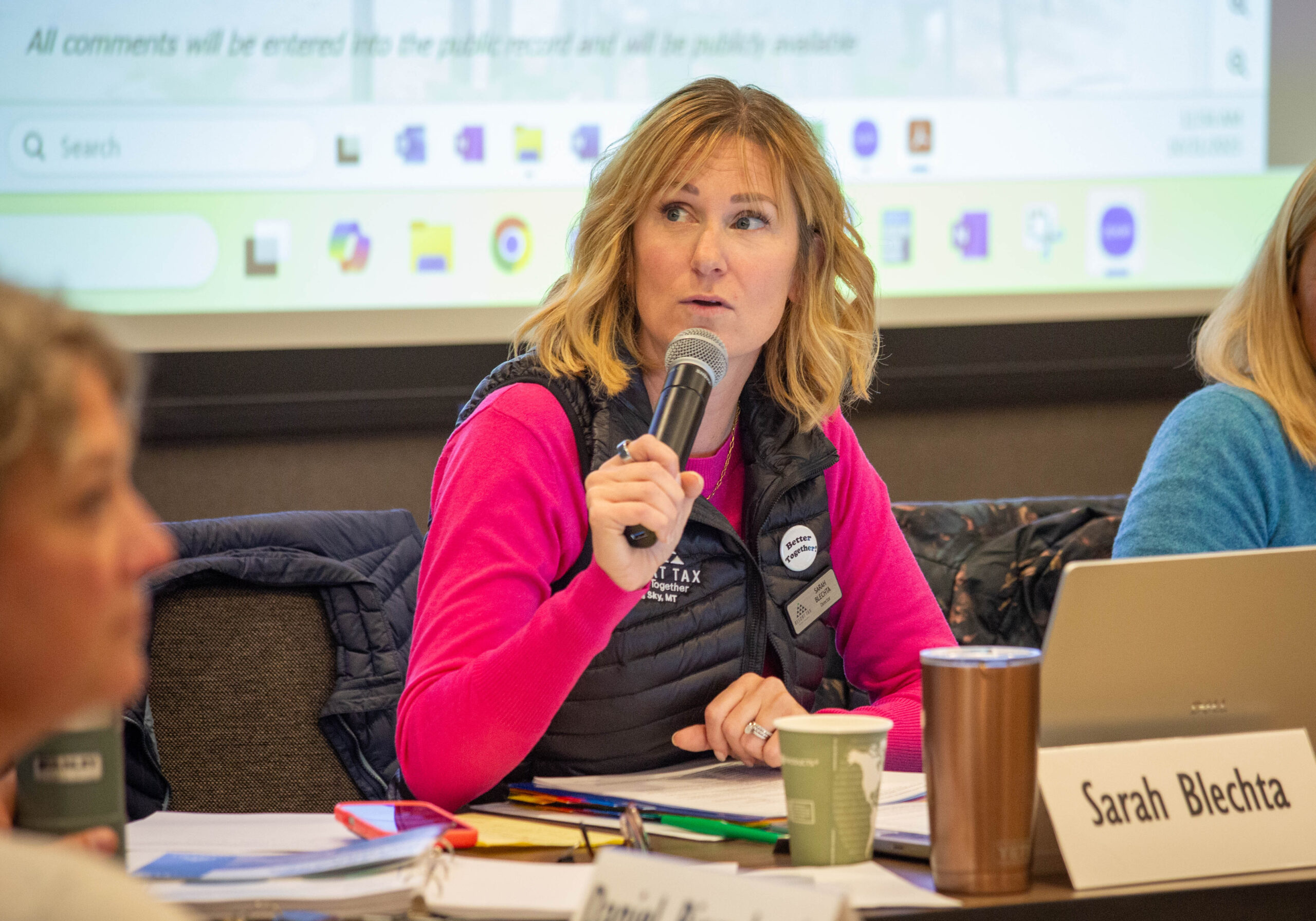
“I look forward to continuing the conversation with Morningstar,” Blechta said in an interview with EBS. “I just want to find out how much it really costs to educate a kid at all of our [providers], whether that’s Gallatin River Child Care, whether it’s Ophir school… they are all going to be different. Maybe they do need to be funded differently.”
Blechta and Butan both said the cost of child care varies dramatically based on age, and that Morningstar’s youngest students should not be cost-compared directly to older children under at Discovery Academy, for example.
“Providing any child care to a three-month old—whether it’s good or bad—is going to be more expensive than providing that same level of quality of child care to even a two-year-old, or three- or four- or five- or 10- or 18-year old,” Butan said. While she is not against the pursuit of a per-student cost, she said those numbers must be discussed and compared in proper context.
After a 35-minute discussion, the board voted 4-1 against funding the full $900,000.
Board member Kevin Germain was surprised to learn that even families who pay full tuition at MLC—only five families currently do—are still not covering the provider’s average per-child cost of care.
“I’ve been very consistent as a board member saying, ‘I want Resort Tax dollars to help those in financial need, and not just help everybody,’” he said.
After Germain’s comment, board member Grace Young motioned to fund the reduced amount, based on MLC’s three-year average enrollment of 50 kids, multiplied by the per-day, per-child cost of $57 over the 298 days of operation in the 16-month period. The board voiced support and voted unanimously in favor, although John Zirkle noted he would still have liked to fund the full amount and extend MLC “the benefit of the doubt.”
Five members of the public voiced general support for funding child care in Big Sky.
“It’s a big role in our community, it’s just getting tougher and tougher and tougher, and we need a lot of help. A lot of communities do,” said local parent Wes Hoecker.

David O’Connor, executive director of the Big Sky Community Housing Trust, compared child care and affordable housing: both are essential services that usually don’t pencil without subsidy, affecting communities across the country. Investments into housing and child care, O’Connor said, “are some high costs with very, very high payoffs that cross throughout the entire community.”
Morningstar’s grant award is not final. All decisions made Tuesday were tentative, and are subject to final review on Thursday when the board reconvenes at 4 p.m.
Summary of projects funded
Twenty-six nonprofit projects received tentative awards on Tuesday, across seven categories: arts and culture, conservation, economic development, education and child care, health and safety, housing, and recreation. Most were funded in full with brief discussion and words of support.
Arts and culture
In arts and culture, the Arts Council of Big Sky received $1 million as capital to continue developing the Big Sky Center for the Arts, a renovation project for a former restaurant acquired by the arts council in November 2024. The arts council also received the full $250,000 for next summer’s Music in the Mountains, and both projects were met with excitement and gratitude from the BSRAD board.

The Warren Miller Performing Arts Center received $290,000 for its “tried and true” annual programming, as described by Kevin Germain.
Economic development
In economic development, the board fully funded Visit Big Sky’s $277,333 ask for destination research and stewardship, and $300,000 request for operations.
The Big Sky Chamber of Commerce received full funding for operations at $206,667, and business skill development programs—including Leadership Big Sky—at $116,000.
Education and child care
In addition to Morningstar Learning Center, the board funded Discovery Academy’s 12-month request for early childhood student tuition assistance at the full amount of $200,000. Blechta also discussed per-child cost for Discovery’s program serving kids aged two to five, citing roughly $13,000 per child in operation costs.
“I think it is going to be part of a broader discussion in this education and child care space, over this year into the future,” she said.
The Friends of the Big Sky Community Library received its full request of $106,108 for operations, and Zirkle encouraged the community to continue exploring the creation of a library district as a funding stream.
World Language Initiative received its full $60,000 request for its community language learning program, after the board motioned to move it from the “arts and culture” category into “education and child care.”
Health and safety
Health and safety was the only category in which requests outpaced available funds.
The board awarded the full request of $100,000 to the Big Sky Community Food Bank for workforce and community food security, as well as the full $115,000 for Wellness In Action’s affordable mental health counseling program.
To balance the category budget, the board did not award the full $150,000 request from Riley’s Urgent Fund for Friends to support Big Sky’s new animal shelter. That project received a tentative award of $105,757.
“It’s a great cause, and just want to stay fiscally responsible for what we budgeted,” Germain said.
Housing
The lone housing request—multimillion dollar commitment to Cold Smoke notwithstanding—was the Big Sky Community Housing Trust’s operations and administration, funded fully at $475,000.
Recreation
In recreation, a $75,000 project to secure public access to the Beehive Basin road and trailhead was deemed ineligible, as the board affirmed road maintenance funding does not fit within BSRAD’s scope.
The local “Trail Dogs” chapter of the Southwest Montana Mountain Bike Association requested $50,000 for construction of a three-mile, intermediate flow trail from the top of the Elkhorn Spur Trail to the Madison Loop Trail, entirely located on Big Sky Resort’s property but accessible to the public without a lift ticket. The “Elkhorn Downhill Trail” project received full funding, and representative Wes Hoecker noted that the Trail Dogs “crushed it” this year with more than 600 volunteer hours, even more than Bozeman’s SWMMBA chapter.
The Gallatin Valley Snowmobile Association received its full $30,000 request for Buck Ridge winter trail grooming, and Germain noted GVSA is a fiscally responsible organization whose efforts bring visitors to local businesses such as The Corral, generating resort tax collections.
Conservation
In conservation, the Gallatin River Task Force received full funding for all five of its projects: $210,064 for Gallatin River Access Restoration; $258,820 for West Fork Restoration; $101,703 for its Big Sky Water Conservation program; $88,169 for water monitoring; and $134,988 for water planning, coordination and outreach. Board member John Zirkle commended GRTF for accurate and conservative forecasting ahead of the nonprofit’s numerous grant requests.
Big Sky SNO’s climate action plan implementation received its full request of $300,000, although Zirkle noted that SNO will need to keep working on securing matching funds. Germain added he looks forward to seeing an update on progress to help BSRAD justify its “significant dollars” committed in recent years.
The board fully funded Grow Wild’s $94,605 request for wildlife habitat conservation and $100,075 for land stewardship, but questioned the details of a $56,246 forest stewardship pilot project.
Board challenges Grow Wild to find $50K for forestry expert
Grow Wild’s forestry initiative aims to improve forest health, reduce wildfire risk, and engage the Big Sky community in long-term forest conservation strategies. Executive Director Jen Mohler explained that the nonprofit recently lost a two-year partnership with the Big Sky Fire Department worth $50,000 per year—BSFD recently became ensnared in an unexpected budget crisis—prompting Grow Wild to adjust its plan to hire a forestry expert.
Originally a $76,669 request, Mohler reduced the project’s ask to $56,246 with aims of using $25,000 for Alpenscapes, and the remaining $31,246 for administrative and operational costs divided between Grow Wild’s other projects.
Board chair Sarah Blechta emphasized the negative impact of wildfire danger on home insurance, underscoring the importance of Grow Wild’s original plan to employ a forestry expert.
“This is a big thing for our community… So this is a project that I was super excited to get behind, and it was super unfortunate that we’ve lost some of the funding from the fire department,” she said, pivoting to ask if Grow Wild has explored partnerships with the Big Sky Owners Association and other small HOAs. “Ultimately it’s their homeowners who are losing out [on insurance].”
Mohler said Grow Wild has not yet looked into HOAs, and explained that the Big Sky community has been in need of a forestry expert for a long time. “It’s all connected. How we manage our forests impacts water quality and quantity, directly. It affects invasive species. It affects wildlife habitats,” she said.
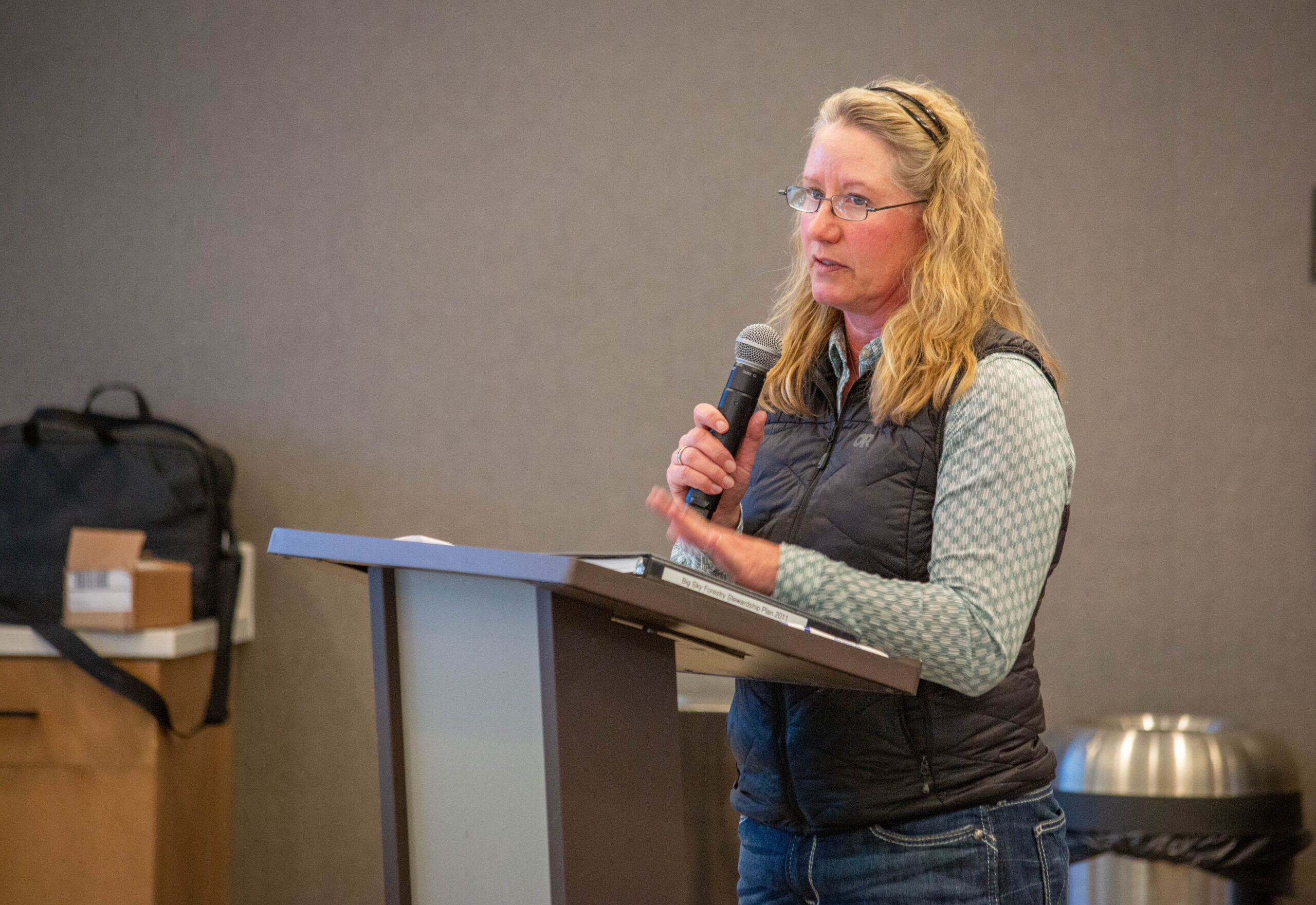
As board members began discussing an award contingent on Grow Wild securing additional matching funds from sources such as Madison and Gallatin counties, Mohler asked for a smaller award, but no contingency. She cited the difficulty of high-stakes fundraising, especially considering that both counties already contributed $15,000 each to Grow Wild’s other programs.
Zirkle cautioned, “I am concerned about the message of us giving a large amount with no expectation of [matching funds], and then basically becoming the full funder of this moving forward.”
Germain added, “We have to have partnerships with our counties as well as some of these other public entities, and I think the BSOA is a great idea. So if we were to fully fund this, nobody is going to step up. They’re just going to let Resort Tax carry this, and this will become another annuity that we will be burdened with.”
The board agreed to fund the project at $56,246, plus an additional $20,426 contingent upon Grow Wild presenting an updated plan for its forest stewardship project, and securing $50,000 in matching funds by first quarter of fiscal year 2026 from interested parties such as BSFD, U.S. Forest Service, BSOA and other HOAs, Gallatin and Madison counties, insurance brokers, local realtors and other concerned community members.
“This is an open call for realtors, insurance agents, anybody to help fund this,” Blechta said. “… Let’s get a forester for our community. This cannot be harder than getting some stoplights.”
In addition to the nonprofit grants discussed Oct. 21, BSRAD will fund $7.8 million in government services in fiscal year 2026 as an offset to local property taxes, as follows: $3.3 million in debt payments on Big Sky’s new wastewater treatment facility; $1.18 million to the Big Sky Fire Department; $50,000 to the Big Sky School District; $743,086 to the Big Sky Trails, Recreation and Parks District; $1.52 million to the Big Sky Transportation District; $729,760 to the Gallatin County Sheriff’s Office; $100,000 to Firelight Meadows County Water and Sewer District; and $200,000 to the Gallatin Canyon County Water and Sewer District.
BSRAD staff emphasized that while annual nonprofit grants are impactful, they are just one part of BSRAD’s work in the community.