

By Todd Wilkinson WRITERS ON THE RANGE
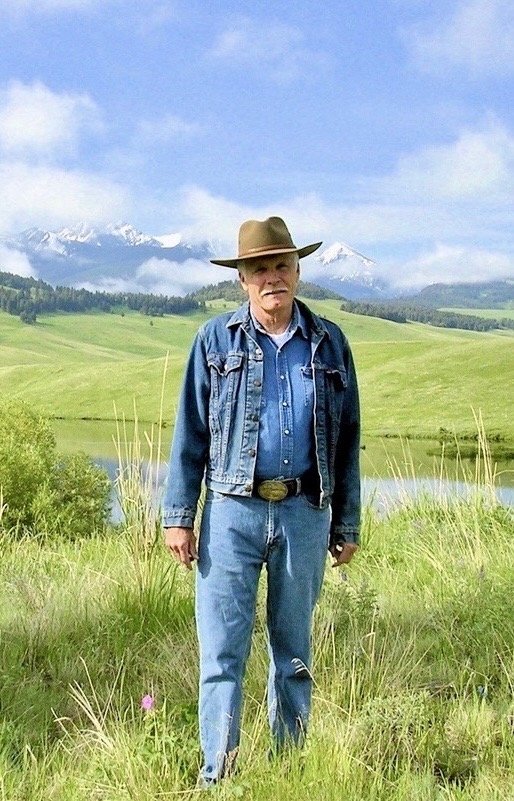
Before he died at age 87 in early May, Ted Turner knew that stewardship of land would be his real legacy. Of course, he might also be long known for starting CNN and 24-hour news, as well as building a major league baseball team, his hometown Atlanta Braves.
He also started a UN Foundation to help bring peace to the world, thanks to his starter $1 billion contribution, and he tapped former U.S. Sen. Tim Wirth of Colorado to lead it. Wirth recalls how Turner, once dubbed “Captain Outrageous,” liked to shoot from the hip and could never be bothered by whatever passed as political correctness.

A plaque on his desk in Atlanta said it all: “Lead, Follow or Get Out of the Way.”
Most of all, Turner left a significant swath of private lands in better condition than he found them. In Montana and other parts of the Rockies, Turner bought huge ranches and made sure the land was healthy enough to grow a bison herd to over 55,000 animals at its peak.
Turner never subscribed to the notion that property rights trumped the common good. He also challenged the conviction that landowners ought to be able to do whatever they want on their land—even if it resulted in environmental harm.
As an entrepreneur with green intentions, Turner believed he could operate his ranches better and cheaper by recovering wildlife and rivers on lands degraded by overgrazing. He was able to show that smart management could offer safe harbor to wildlife without sacrificing profit.
Some locals around Bozeman, Montana in the 1980s thought Turner was out of his mind when he placed a conservation easement on his 113,000-acre Flying D Ranch, one of the largest easements in America at the time. The easement limited development in perpetuity. Had Turner exploited the Flying D as a real estate play, he could easily have made hundreds of millions in profit.
Turner could make a big impact on people. One was the billionaire businessman Thomas Kaplan, who likens Turner to a combination of John Muir and Teddy Roosevelt. Kaplan says Turner inspired him to co-found Panthera, now the leading global wildcat conservation organization, as well as The Orianne Society, named after his daughter and dedicated to saving imperiled reptiles and amphibians.
Kaplan likes to recount how, during a visit to Turner’s Flying D, he saw a wolf pack and howled back and forth with them. The ranch is home to one of the largest free-ranging wolf packs in North America. It co-exists with Turner’s bison, as well as elk, deer, moose and other wild animals that move on and off the property. Turner decreed that wolves on his land were never to be hunted or lethally controlled.
Emulating the Turner model, Kaplan acquired thousands of acres in a vast wetland area of southwest Brazil called the Pantanal, where he advanced a model of co-existence between cattle ranchers and jaguars. The Pantanal is considered the best place in the world for watching jaguars, and even cattle ranchers who used to shoot the cats now have eco-lodges on their estancias.
Turner was aware of his foibles, for which he hoped he would be forgiven. Biologist Mike Phillips, who oversaw several rewilding projects for Turner, told me, “In these recent years, as he was in decline, Ted once asked me, ‘Mike, we did okay, didn’t we?’ And I replied, “’Ted, we accomplished exactly what we set out to do so long ago.’ I reminded him that he had done more as a private citizen to benefit native species than any other individual in the history of the world.”
Phillips said that Turner choked up with emotion.
Jane Fonda, Turner’s “third and favorite wife,” according to those who knew the couple, told me that Turner found solace in nature after a brutal childhood with a hard-driving father who took his own life, along with a sister who died young from lupus.
“What did he want most of all?” said Fonda. “To be recognized as a good guy. There was a part of Ted who believed that by trying to save nature and bring more peace to the world, he could save himself. But he saved much more than that.”
Todd Wilkinson is a contributor to Writers on the Range, writersontherange.org, an independent nonprofit dedicated to spurring conversation about the West. He is a longtime journalist, the founder of Yellowstonian.org, and wrote the award-winning biography, Last Stand: Ted Turner’s Quest to Save a Troubled Planet.