
By Abby Butler EBS COLUMNIST

Having a dog in Big Sky is practically ubiquitous to owning a pair of hiking boots. Our furry friends are our hiking buddies, our mountain biking companions and ultimately part of our families. However, an off-leash romp on your favorite hiking trail can be more harmful to wildlife and their habitat than you might think. This is why recreating with intention is the key to a positive experience for you, your pup and the wildlife whose habitat you’re sharing.
The presence of dogs in natural recreation areas is known to displace wildlife. Human presence by itself disrupts wildlife activity, but add a furry, wolf-like counterpart, and your impacts can be exacerbated. This displacement looks like wildlife changing their routine activities of feeding, breeding and resting, or changing where they habitually do them. What’s a natural reaction to a perceived threat? Moving away to a safer space.
Over time, this results in wildlife losing quality habitat and having to compete for space away from stressors. Research shows that in the presence of dogs, wildlife activity is lower up to 100 meters off-trail. So, Fido heading off-trail just 20 meters impacts wildlife much farther.
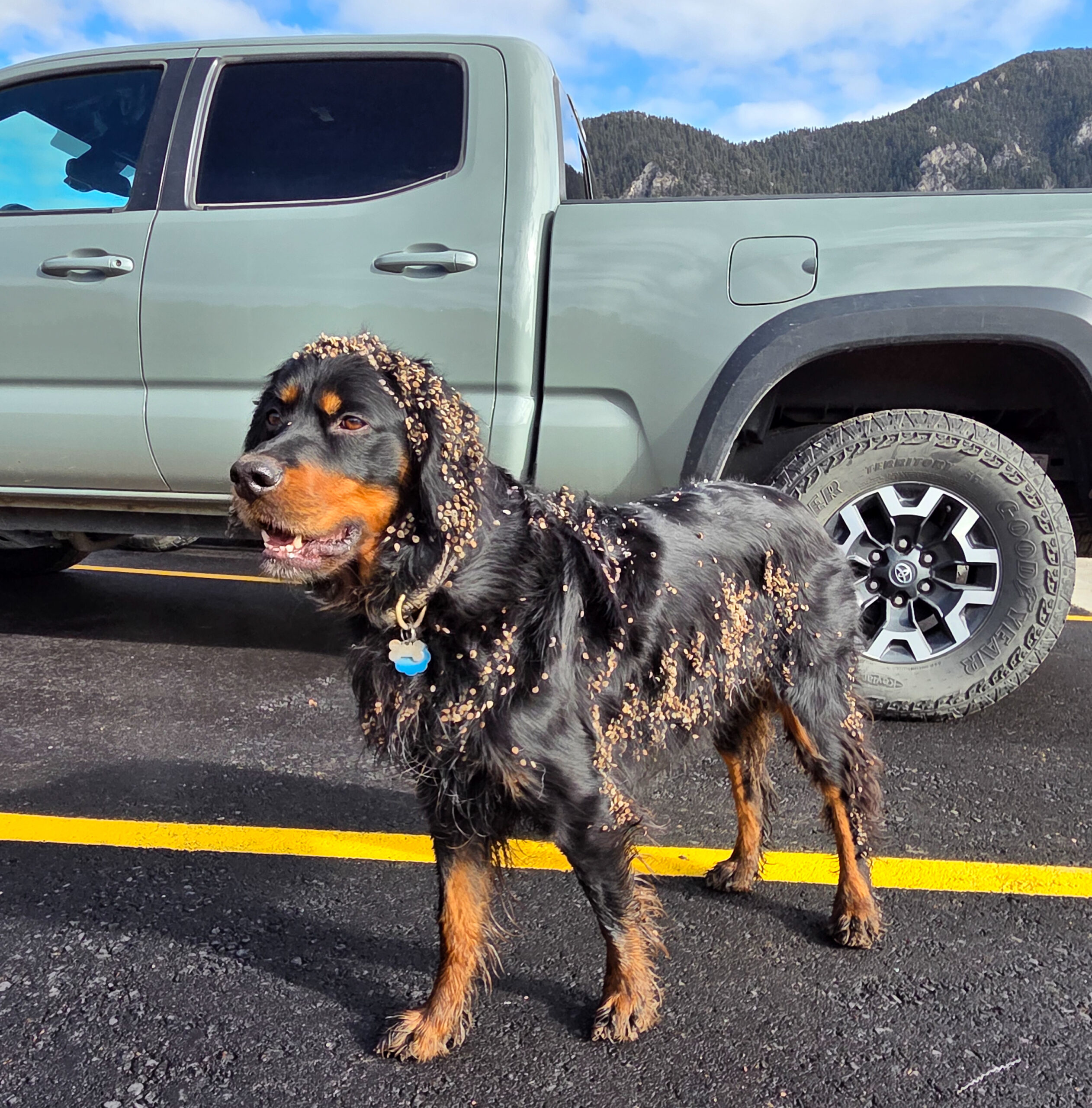
Beyond wildlife, our cherished native plants face their own challenges from dogs roaming off-trail. Not only can dogs trample plants and affect soil health, but they’re also one of the best vectors for spreading invasive plant seeds. Invasive species like houndstongue have specialized hooks on their burs that stick just like velcro to furry surfaces—like your dog’s coat. Even worse, some of these seeds, like cheatgrass, can burrow under skin and cause permanent damage and, at times, even death.
The best way to prevent invasive seeds from spreading through your dog’s fur is to collect the seeds at the end of your hike and throw them directly in the trash. Even better, wait till you get home and give them a good brush, inspect the especially thin parts of their skin, like ears and paws, for any sharp seeds, and dispose of everything in your trash.
We like to call this “don’t pick and flick”, because we know how easy it is to pick off a rogue seed and flick it back onto the trail.
The last impact might surprise you. Dog waste is the fifth highest contributor to nitrogen pollution in the Gallatin River. When your dog poops and you don’t pick it up, your dog isn’t just affecting one insignificant spot in the woods, they’re affecting the entire watershed.
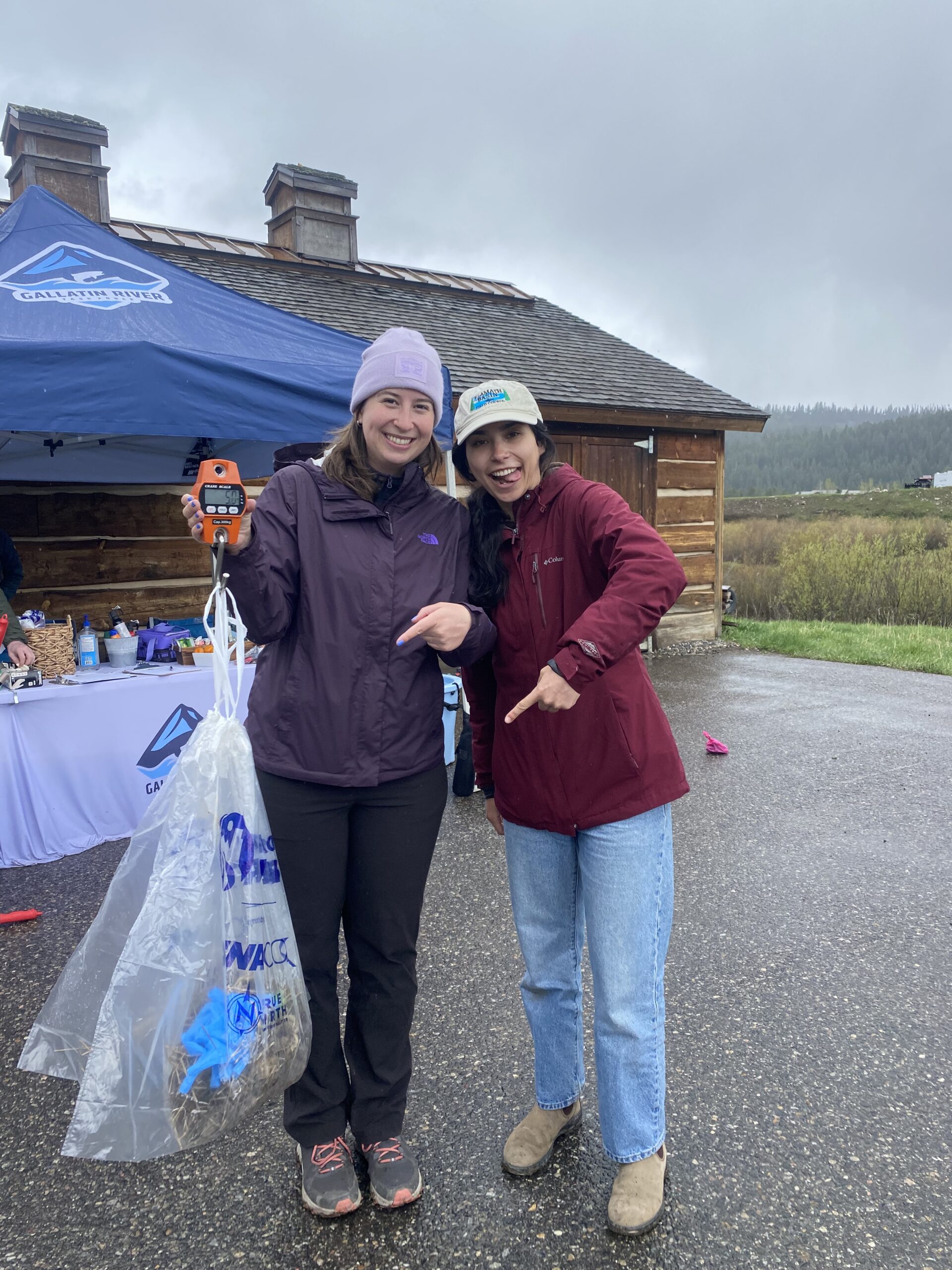
Unlike moose and bears whose waste returns materials back to the environment it came from, dogs’ waste returns materials that came from the grocery store. Because of their food source, dog feces is high in nitrogen, phosphorus and e.coli, which when it inevitably enters water systems through erosion and runoff, ends up disrupting a healthy nutrient balance that species like cutthroat trout rely on. The solution? Pick up your dog’s poop! If you’re feeling especially motivated, you can volunteer with the Gallatin River Task Force during their annual Runoff Cleanoff in the spring. It’s not a pretty job but I can personally attest to how satisfied you’ll feel after.
Our dogs are a part of our lives and a part of our ecosystem. Sharing an outdoor experience with your dog is one of the greatest joys in life, and by no means are we saying to keep your pup at home. However, it’s undeniable that their presence can harm the landscape. Whether they’re spooking an elk, giving invasive weed seeds a free ride, or taking a visit to nature’s latrine, they’re leaving their mark on the trail. The best thing you can do for your favorite trails is to treat each outing with your dog intentionally.
Be mindful of your dog—especially when off-leash. Besides outsized impacts on our environment from where they roam, where they relieve themselves, and what they may unintentionally carry back with them, we’ve heard more than one story of an off-leash dog returning with a charging bear or moose in tow. So, keep your pup nearby, keep their fur weed seed-free and bring a doggy bag, or two!
Abby Butler is the conservation program coordinator for Grow Wild, a 501c3 nonprofit organization that works to conserve native species in the Upper Gallatin Watershed through education, habitat restoration, and collaborative land stewardship. For more information, visit growwildmt.org.