

Two bridges need ‘major’ repairs; Big Sky’s largest HOA is creating rural improvement districts for long-term funding
By Jack Reaney SENIOR EDITOR
The Big Sky Owners Association believes local transportation infrastructure is deteriorating, lagging behind Big Sky’s population growth and real estate development. For that reason, the organization is stepping up to improve the network of rural improvement districts which collect funds for neighborhoods’ eventual road maintenance needs.
BSOA Executive Director Holly Coltea said it’s going to require a collective effort, and an understanding that no neighborhood is being targeted unfairly. The RID project is a 2026 initiative of the BSOA board.

The question of who should fund necessary bridge repairs in the Little Coyote Road area has captured many residents’ attention, with some property owners hesitant to absorb a new property tax line item. The 835 properties being asked to help fund bridge repairs already contribute to an RID for Little Coyote Road, but that RID does not support bridges, hence the pursuit of a new, bridge-focused RID.
“Everybody has to do their part, and we all have to share in this together,” Coltea told EBS. She emphasized that the RIDs are already in place for just about every other neighborhood on the Gallatin County side of Big Sky.
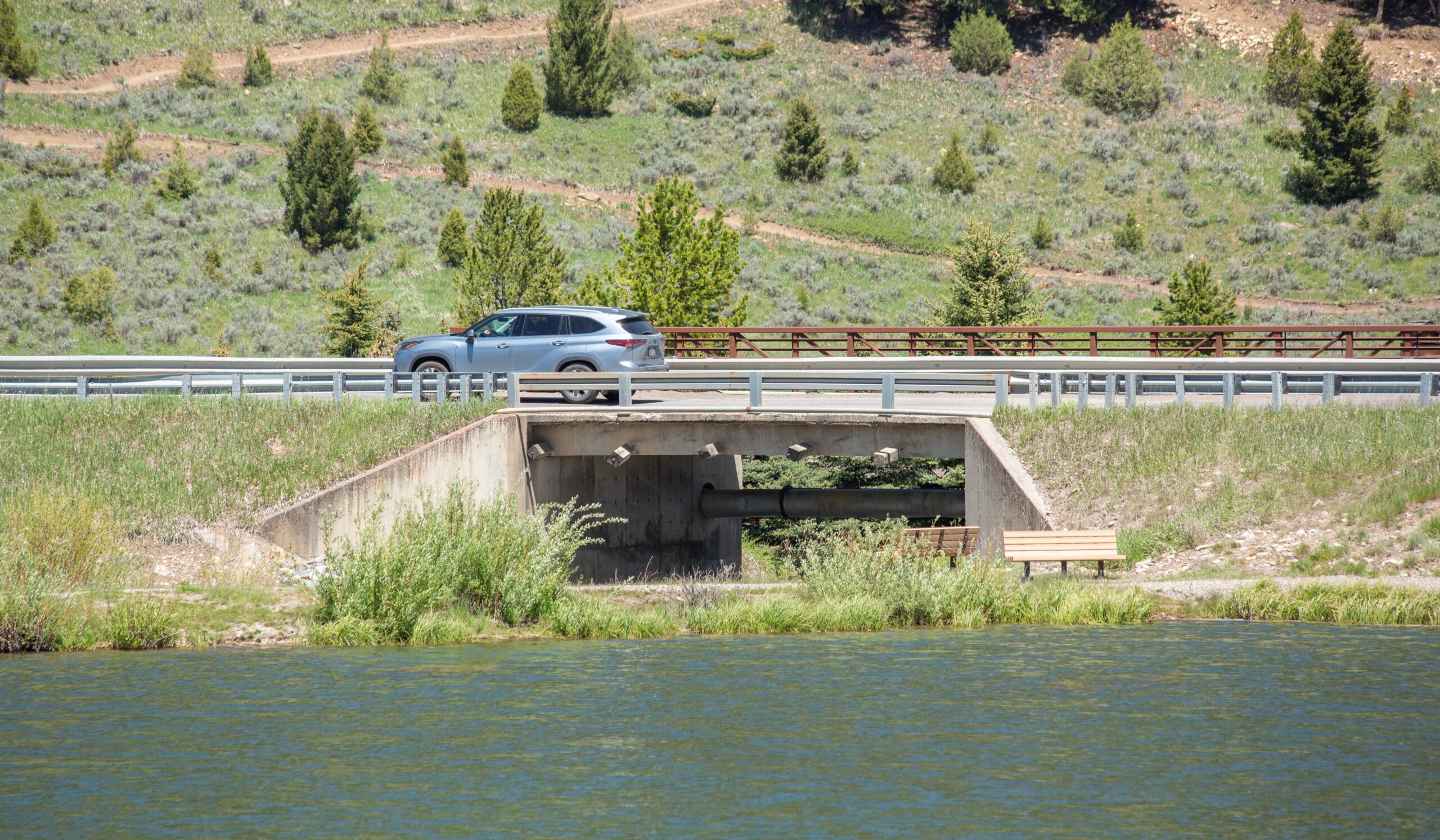
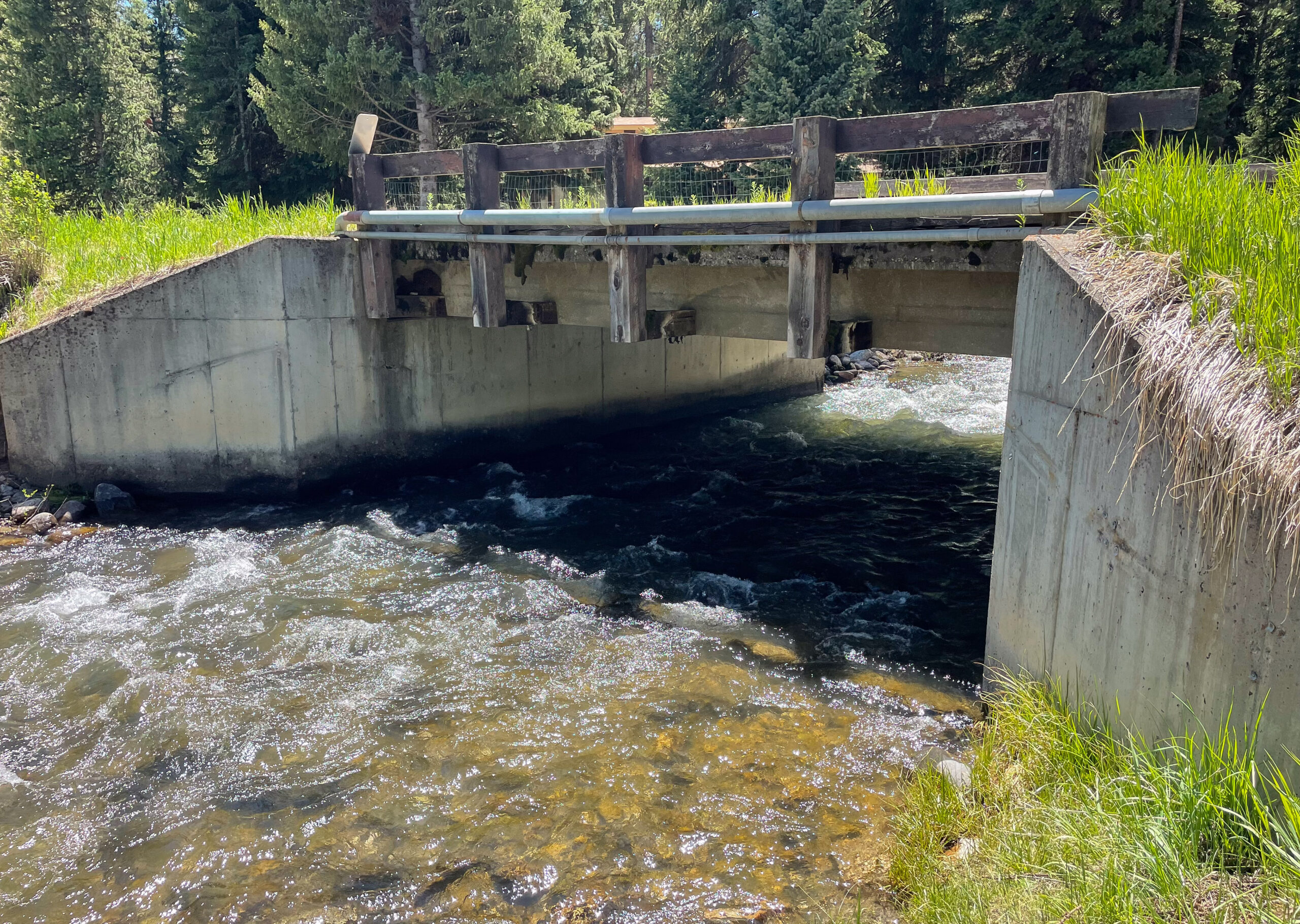
According to a third-party engineering report from December 2024, the bridges—each about 50 years old—need “major rehabilitation work,” Coltea explained, followed by replacement within the next 20 years. Until replacement, BSOA looks to take a “conservative repair approach” to keep costs down.
The Little Coyote Road bridge near Huntley-Kern Pond is deteriorating, and repairs are estimated to cost $140,000. On the bridge along Two Moons Road, just off Little Coyote, short-term maintenance will cost approximately $60,000.
Some residents are concerned about the fact that roads and bridges are stressed largely by visitors and non-residents—it’s the same reason resort tax exists in Montana, to collect money largely from visitors and distribute the revenue through local infrastructure and community needs.
BSOA plans to ask the Big Sky Resort Area District for at least $100,000 as soon as bridge work is shovel-ready, as a match to the $100,000 BSOA will pull from its own reserves to cover the $200,000 in upcoming repairs.
Beyond repairs, a full replacement of both bridges will be needed in roughly 20 years, with an expected cost of $1.2 million total, motivating BSOA to set a sustainable, long-term pace of fundraising through the RID.
BSOA conducted outreach, polling the 835 total homeowners within the proposed RID boundary. Thirty-eight percent responded to the poll, showing 72% support: 231 voted in support and 89 voted against the creation of an RID.
With this result, the Gallatin County Commission agreed to formally discuss the possibility of an RID. That discussion will take place on June 22. If commissioners agree to issue a resolution of intent, the 835 property owners will receive a mailer with information, and a 30-day period will open in which residents can protest to the Gallatin County Commission.

Coltea emphasized again that this is not an isolated initiative for the Little Coyote Road members, but an initiative across BSOA with the goal of building sustainable funding streams for when problems emerge.
“So that no one is assessed an astronomical fee in one given year,” Coltea said. “… It’s like putting away a savings account for a rainy day.”
After the bridges are replaced—or at any other time—homeowners can petition for the RID to be dissolved. If not, they can use it to raise money for other maintenance needs.
“We’re trying to not put this on the shoulders of BSOA dues,” Coltea said. “… We don’t want to increase dues 4x. We want to take care of each neighborhood, and put each neighborhood into a proper rural improvement district.”
Coltea wishes Big Sky had a public works department to help offload this financial responsibility from BSOA and property owners, but noted that RIDs are the next best thing.
BSOA leading Madison County ‘global RID’
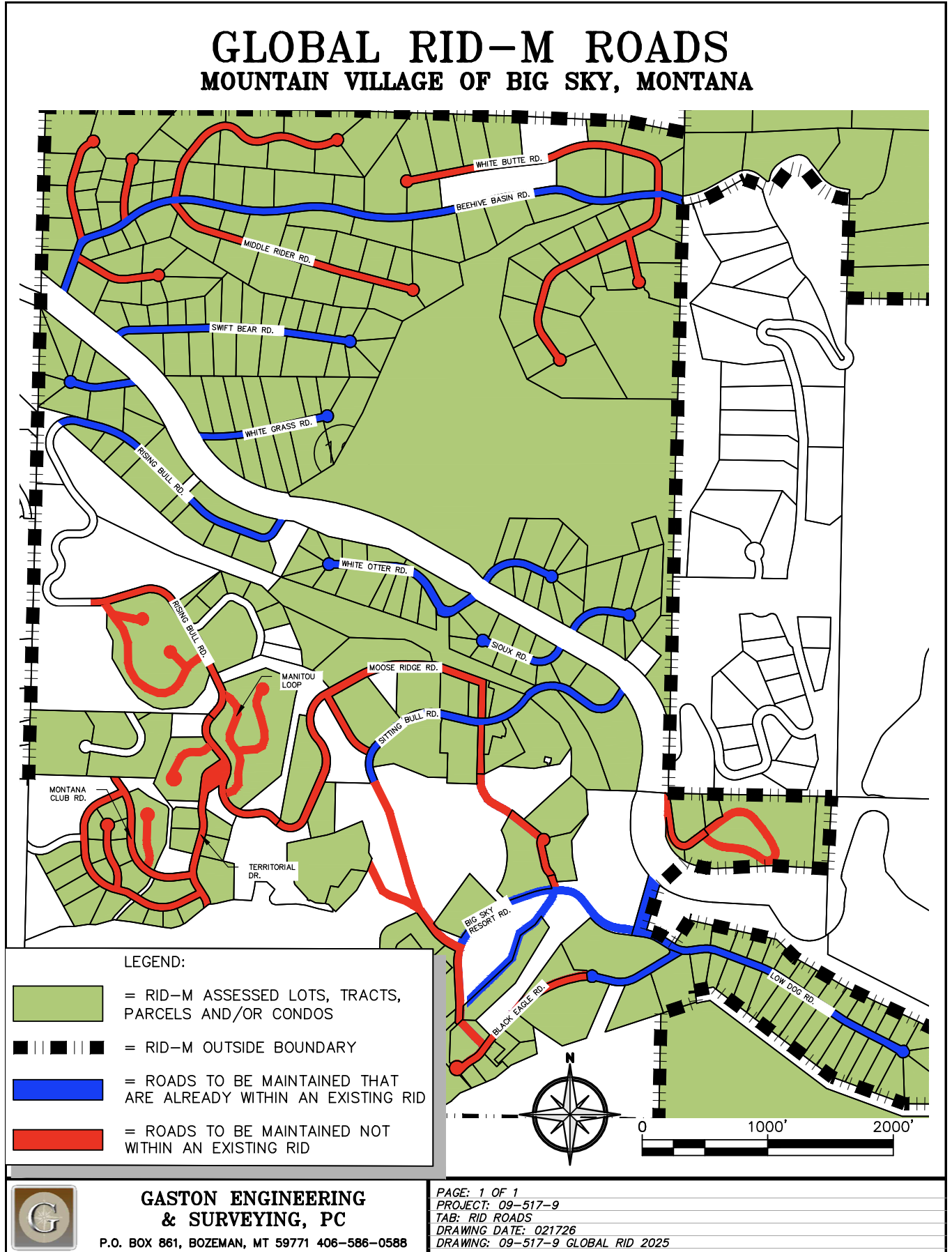
Entirely separate from the creation of an RID along Little Coyote Road, BSOA is also leading an effort to consolidate and improve RIDs on the Madison County side of Big Sky.
Currently, with four overlapping RIDs in Big Sky’s pocket of Madison County, many property owners are paying into multiple, which BSOA believes to be an inefficiency.
Coltea is calling it a “global RID,” and its boundary would include almost all properties except Moonlight Basin and gated neighborhoods such as Summit View. Under the new global RID, funds would be redistributed evenly across the new RID boundary.
“[It] would create a greater sense of fairness, much more predictability, and a much more sustainable infrastructure funding model, and stewardship, over the long haul,” Coltea said during the May 13 Madison-Gallatin Joint County Commission meeting. “… It’s just a broader, more fair, more equitable distribution. This is not about creating unnecessary infrastructure.”
In mid-May, the Madison County Commission approved a resolution of intent to create the global RID. As with the Little Coyote bridges RID, residents will have 30 days, between June 3 and July 5, to protest to the Madison County Commission.
BSOA is initiating the global RID, but if implemented, it would be managed by Madison County, not BSOA—the mechanism primarily exists to collect tax dollars, and when repairs are needed, the county uses funds to hire contractors.
Building on recent efforts to improve Beehive Basin Road and its steep “beaver slide” section, a group of homeowners is now working to deed the road to Madison County. If successful, improvements could be funded by the RID.
Coltea said the lack of clear authority on who should manage road funding underscores the need for the new coordinator position proposed by the Big Sky Transportation District on May 13.
“The objective here is not just funding,” Coltea told both county commissions on May 13. “It’s about stewardship, it’s about predictability, it’s about transparency, it’s about long-term planning.”