
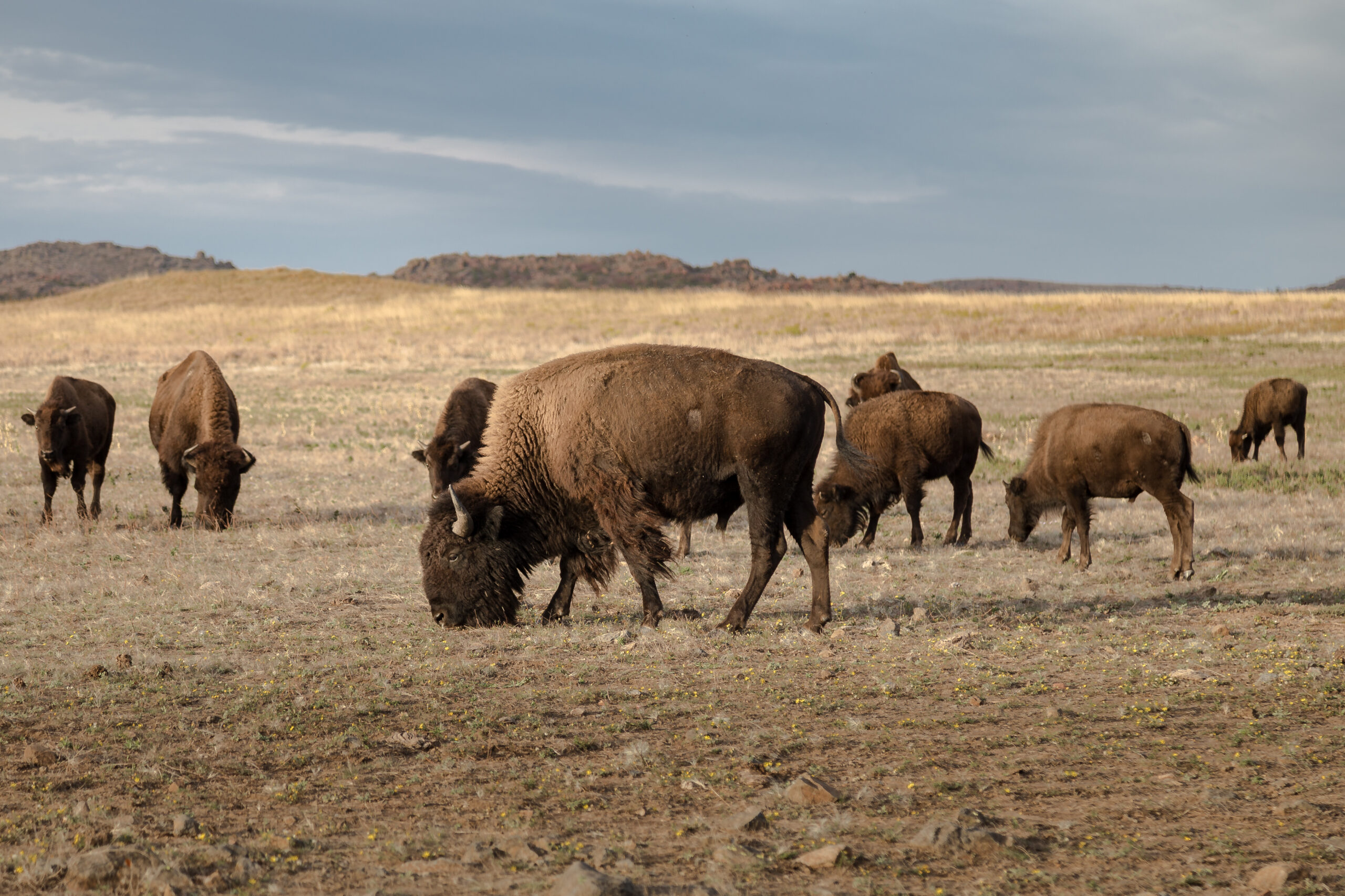

How federal micromanagement is undermining Montana’s prairie revival
By Benjamin Alva Polley EBS COLUMNIST
The Trump administration’s reversal on bison grazing in Montana’s BLM high plains is a textbook case of federal micromanagement getting in the way of conservation, local choice and common sense. A visionary effort to restore a vast, functioning prairie ecosystem is being tripped up not by science or law, but by semantic hair-splitting and political pressure.
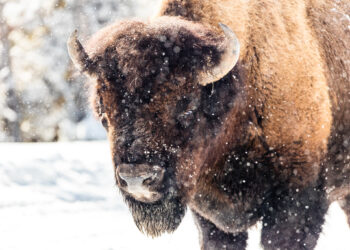
For two decades, American Prairie, a nonprofit, has quietly pursued a bold goal: re-creating a 5,000-square-mile prairie reserve in eastern Montana, one-and-a-half times the size of Yellowstone. The idea is not a fenced-off park for tourists, but a living landscape where a free-ranging herd of 5,000 bison can coexist with elk, pronghorn, sage grouse, prairie dogs, and eventually even large predators. The group has pieced together this reserve the hard way—by buying land from willing sellers and partnering with ranchers who agree, for a price, to adopt wildlife-friendly practices.
Because the federal government owns much of the West, any landscape-scale conservation project inevitably intersects with public lands. In Montana, the Bureau of Land Management controls more than eight million acres and leases much of it to ranchers. Grazing is governed by a complex system of permits measured in animal unit months. Montana has more BLM grazing permits than any other state, enough to support about 90,000 cows and calves year-round. When American Prairie buys a ranch, it assumes the associated BLM grazing leases like any other operator.
By now, the organization has assembled more than 600,000 acres—167,070 in private ownership and 436,587 in leased public land. Ecologically, there is no serious dispute against the idea that bison and cattle are comparable grazing animals: both are ruminants with similar impacts on grasslands when properly managed. The BLM itself acknowledged this in 2022, approving American Prairie’s plan to switch its BLM allotments from cattle to bison and explicitly stating it found no scientific or resource-based reason to exclude bison.
That should have settled the question. Instead, the Montana Stockgrowers Association, backed by Gov. Greg Gianforte and Attorney General Austin Knudsen, pressed a narrow claim: bison are not “livestock” under federal rules. The MSGA believes that bison have negative impacts on rangeland health, riparian areas, and economic impacts to the livestock industry, most of which are unsubstantiated. In December 2025, new Interior Secretary Doug Burgum, appointed by the Trump administration, instructed the BLM to revisit its 2022 decision. The agency has now reversed course, asserting that because bison are not cows, sheep, horses, burros or goats, they are outside the definition of domestic livestock and can graze federal land only if used for narrowly defined “production-oriented purposes” like meat, milk or fiber.
This cramped reading contradicts both precedent and practice. The Congressional Research Service has pointed to a 1976 Interior Department decision making clear that bison can be treated as livestock under the Taylor Grazing Act. American Prairie, which actively manages its herd and authorizes annual bison harvests, plainly meets any reasonable standard for livestock production.
Far from defending rural communities from “elitists,” as Knudsen claims, the new ruling punishes voluntary, market-based conservation and injects uncertainty into all public-land grazing. The real issue is not bison; it is Washington’s insistence on picking winners and losers on land that could often be better managed by those closest to it. If the federal government will not sell land outright to willing conservation buyers, it should at least honor the rules and grazing rights it has already recognized.
It’s time to let the buffalo roam—and stop letting bureaucracy stand in the way.
Benjamin Alva Polley is a place-based storyteller. His words have been published in Rolling Stone, Esquire, Field & Stream, The Guardian, Men’s Journal, Outside, Popular Science, Sierra, and WWF, among other notable outlets, and are available on his website.