

By Benjamin Alva Polley EBS COLUMNIST
Years ago, I hiked with two friends in a remote area of Glacier National Park during early November. Western larch trees blazed with the color of butterscotch, their needles gently carpeting the trails like a yellow brick road beneath luminous conifers. The sunlight slanted low, making the woods glow with an almost magical light. Fires had routinely swept through, so the understory was clear and the trunks were blackened.
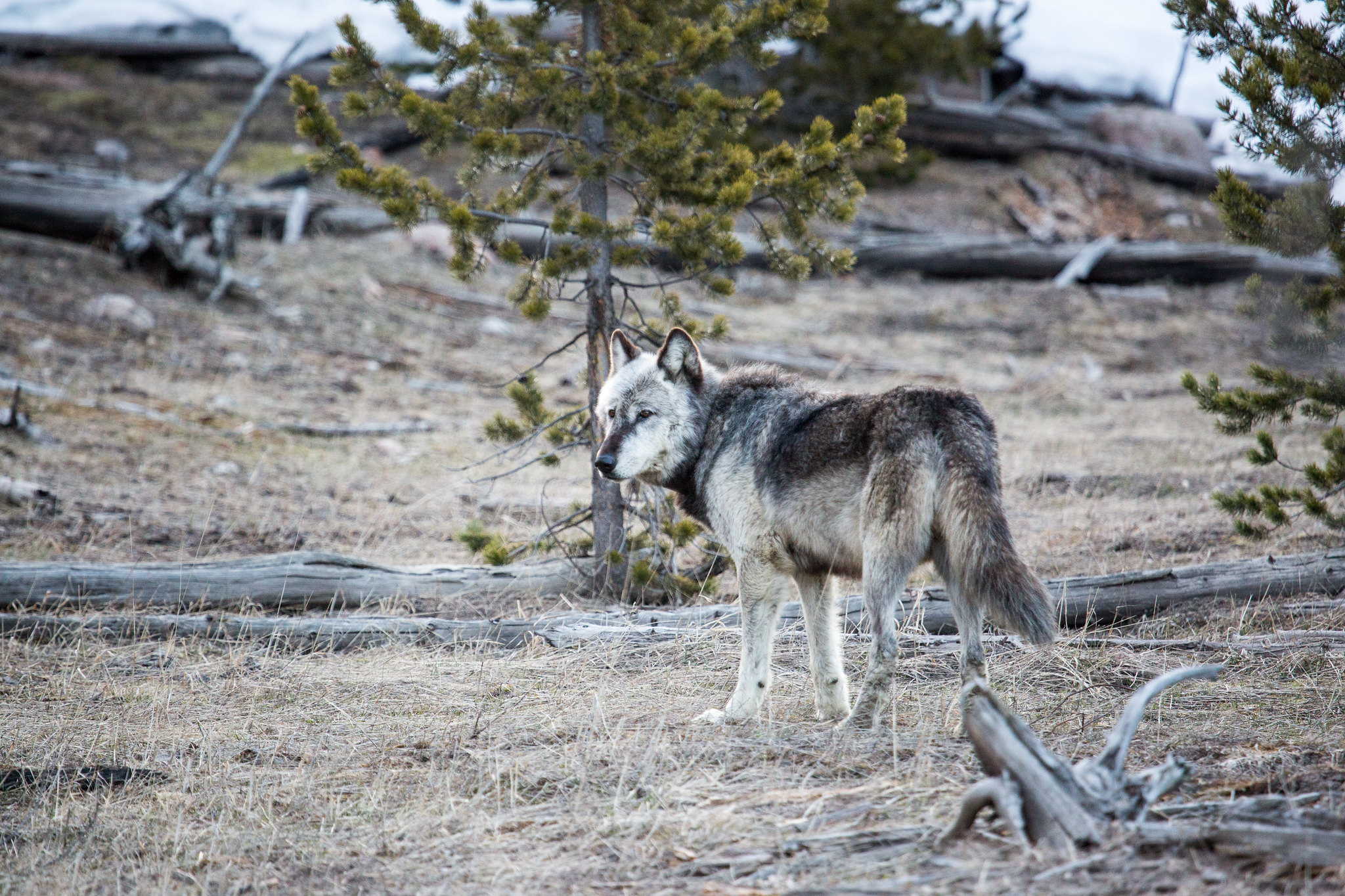
Lost in a philosophical conversation about animal sentience and animal language, we turned to see a beautiful black wolf with inquisitive green eyes that weren’t fierce, trotting behind us. She approached within twenty feet, watching us intently but more out of curiosity. For a moment, we shared a deep, silent connection; we were awestruck by the encounter. After leaning on her rear haunches, marking a patch of tawny grass, she went around us and slipped away over the ridge. Distant howls greeted her; she responded, signaling that we posed no threat. Then she—and the moment—were gone.

There are a few things that rival being in the presence of wild animals, especially when they choose to allow us an encounter, especially deep in the backcountry away from roads and cars. This was one of those rare and exciting moments. I want others to share these magical moments with wolves and other large megafauna. But these encounters with wolves are fleeting.
On Aug. 21, Montana’s Fish & Wildlife Commission set a record-high wolf hunting and trapping quota for the 2025-26 season, approving the taking of 458 wolves. This is the highest quota since wolves in the Northern Rockies lost protection under the Endangered Species Act in 2011. Wildlife Management Units 313 and 316—located in southwest Montana, near the northern border of Yellowstone National Park in Park County—have a quota of three wolves each. The rest of the state has 452, but Region 3, headquartered in Bozeman, encompasses 18,089 square miles, which is more than 12% of Montana’s total land area. About 60% of the region is made up of public lands, which is limited to 60 wolves (carved out of the 452). Formerly, there were seven regions, but they are now obsolete, except for region 3, which remains in place. Last year, more wolves were taken than allowed in WMU 313, which borders Yellowstone National Park. This area is also the easiest to trap or shoot wolves.
Data from Montana Fish, Wildlife and Parks (page 44) suggests that a quota of 450 could reduce the overall population below sustainable levels within a year. The agency defines sustainability as maintaining a population of more than 450 wolves, or enough to support 15 breeding pairs.
Montana is already under legal scrutiny in court for its handling of wolf management, and this new quota is likely to intensify the controversy. In addition, the state has adjusted the total number of kills for each hunter and trapper. Notably, each hunter and trapper can individually harvest 15 wolves, allowing one person to kill up to 30 wolves per season.
As Henry Beston observed in “The Outermost House” in 1928, “Wildlife are beings that live in a world far older and more complete than ours, they move finished and complete, gifted with the extension of the senses. We have lost or never attained, living by voices we shall never hear. They are not brethren, they are not underlings, they are other nations, caught with ourselves in the net of life and time, fellow prisoners of the splendour and travail of the Earth.”
The threat to wolves from humans has rarely been greater. Now more than ever, we must broaden our empathy and compassion, ensuring that our choices reflect care for not just ourselves, but also for the wildlife and other beings who share this planet. The future we create should honor their place in the world, recognizing that our fate is entwined with theirs.
Benjamin Alva Polley is a place-based storyteller. His words have been published in Rolling Stone, Esquire, Field & Stream, The Guardian, Men’s Journal, Outside, Popular Science, Sierra, and other publications, and can be seen on his website.