

By Benjamin Alva Polley EBS COLUMNIST
Project 2025 was never merely a campaign document. It was a blueprint for dismantling the laws, agencies and scientific safeguards that protect America’s air, water, public lands and wildlife. Less than two years into the Trump administration, much of that blueprint has become federal policy. The damage is already spreading across landscapes and ecosystems, while some of its most dangerous proposals remain unfinished.
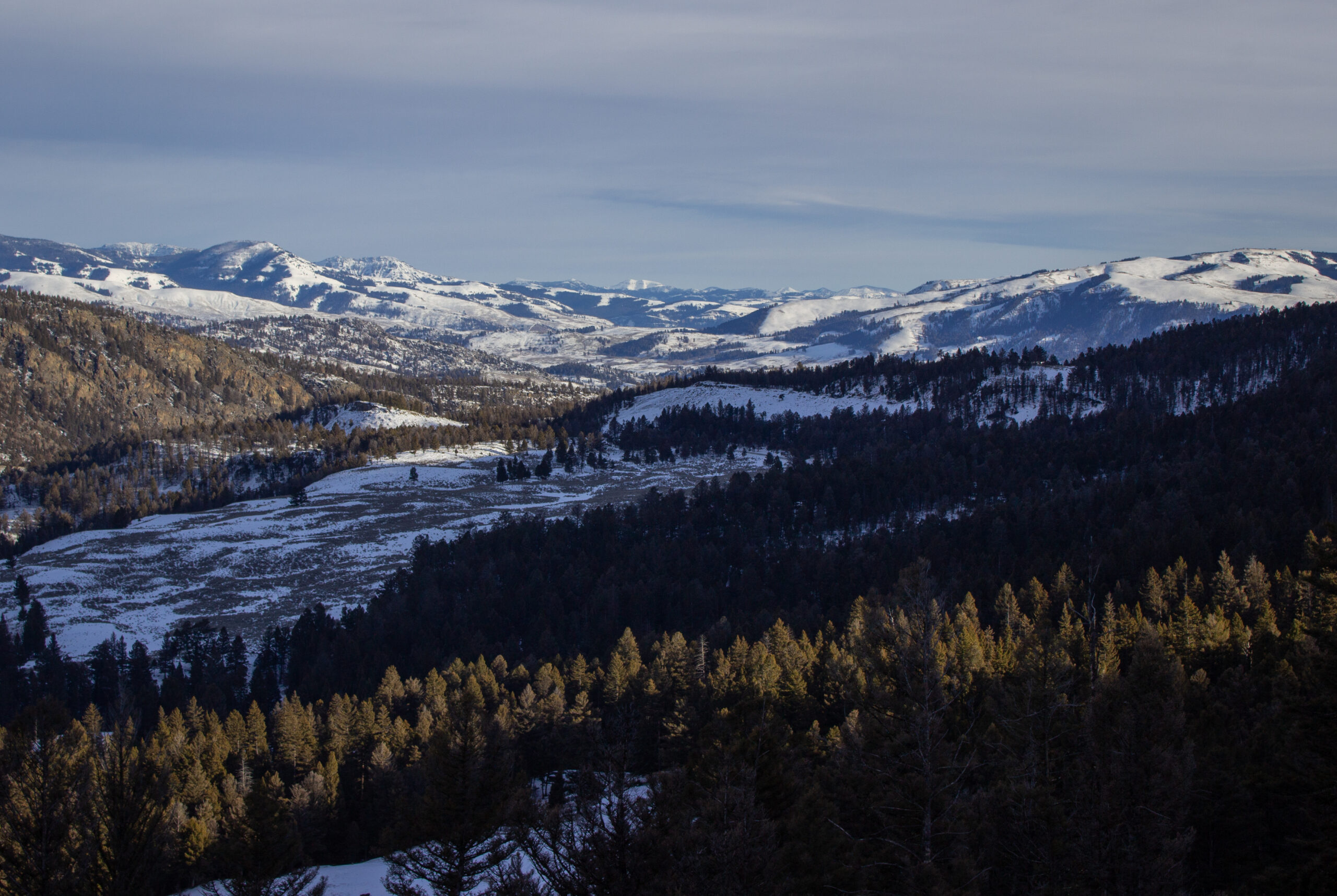
In February 2026, the Department of the Interior weakened environmental by accelerating approvals for mining, drilling, grazing and infrastructure on lands in the public domain. Faster permitting may sound like a recipe for government efficiency, but roads fragment habitat and wildlife migration corridors, mines contaminate waterways, oil fields bring traffic, noise and industrial development into roadless habitat that took millennia to form.

In February 2026, the Environmental Protection Agency rescinded the 2009 rule finding that greenhouse gases put public health in the crosshairs. A chaotic climate means less snow in the high country, warmer rivers, fiercer wildfires, prolonged drought and disrupted food supplies.
Across Alaska, the administration has supported reopening part of the Arctic National Wildlife Refuge’s coastal plain to oil and gas leasing, pursued additional leasing in the National Petroleum Reserve and reissued permits for the Ambler Road, which would cut through currently undeveloped country to provide mining access. These places are often described as empty, as though land without subdivisions has no inhabitants. In reality, they contain caribou migration routes, fish-bearing rivers, nesting grounds and communities whose cultures and livelihoods depend upon intact ecosystems.
Project 2025’s authors have been remarkably direct about what should come next. Their Interior Department agenda calls for reviewing or reducing national monuments, seeking repeal of the Antiquities Act, transferring greater sage-grouse authority to Western states and removing federal protections from gray wolves and grizzly bears. An independent implementation tracker lists restarting coal leasing and delisting wolves and grizzlies as still in progress. It identifies shrinking national monuments, abandoning protections around places such as Chaco Canyon and the Boundary Waters, and repealing the Antiquities Act as objectives not yet completed.
Repealing the Antiquities Act would threaten one of the country’s most effective conservation tools. Since 1906, presidents of both parties have used it to protect lands of scientific, cultural and historic importance. Weakening it would slow preservation and make it more vulnerable to the political power of industries seeking short-term access to publicly owned resources.
In September 2026, the administration finalized regulatory changes that weaken how the Endangered Species Act, this landmark conservation law, is implemented, including removing the regulatory definition of “harm” to distinguish between accidental and intentional killing, and revising protections for threatened plant and animal species. States and conservation organizations have challenged the changes in court. By narrowing what it means to harm wildlife, the government can discount habitat destruction—the slow, cumulative loss that pushes many species toward extinction long before the last animal disappears.
This breaks my heart. Twenty-four years ago, I left the Midwest and moved to Montana to work in Glacier National Park. I came because of the wildness of this place and its rare and endangered species: lynx, grizzlies, wolves and wolverines. I have been fortunate enough to encounter many of them. But will future generations have the same chance if this assault on the environment continues? When is enough truly enough? This administration seems to want only more profit, more extraction and more greed. At what cost?
The potential tragedy of Project 2025 is not only what could be lost, but how casually loss is treated. The public won’t even notice until things are gone. A road becomes a line on a map. A drilling lease becomes an economic statistic. A weakened regulation becomes a press release celebrating deregulation. Missing from that accounting are the calving grounds, clean tributaries, ancient forests and animals forced into ever-smaller islands of habitat.
Americans must stop treating Project 2025 as a warning about some distant future or something that happened yester year. Its environmental program is already underway. Courts, states, tribal nations, scientists and citizens must challenge unlawful rollbacks, defend the Endangered Species Act and demand that public lands be managed for the public—not handed over to whichever industry and billionaires can extract the fastest profit.
Extinction is permanent. A poisoned aquifer cannot be restored by executive order. Once a wild landscape is carved into roads, well pads and mines, no slogan can make it whole again. The unfinished portions of Project 2025 can still be stopped—but only if we recognize how much damage has already been done.
Benjamin Alva Polley is a place-based storyteller. His words have been published in Rolling Stone, Esquire, Field & Stream, The Guardian, Men’s Journal, Outside, Popular Science, Sierra, and WWF, among other notable outlets, and are available on his website.