
The myth of a perfect trophic cascade
By Benjamin Alva Polley EBS COLUMNIST
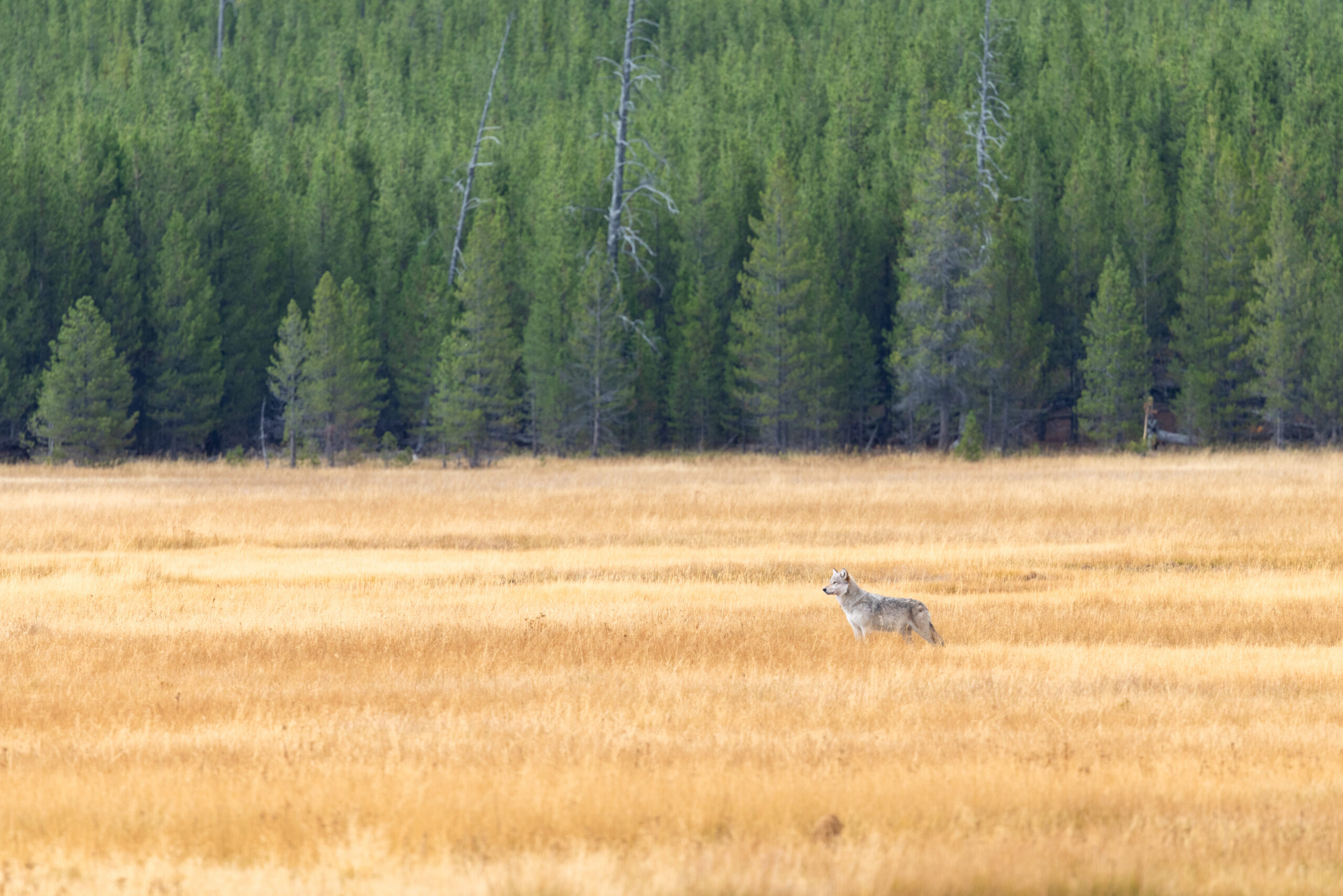
For years, Yellowstone’s wolves have been held up as the poster animals for ecological redemption. Some people say they are saints. The story is irresistible: apex predators return, elk change their behavior, and the entire landscape springs back to life. Willows soar, rivers heal, and a single management decision triggers one of the “strongest trophic cascades on Earth.”
But a new peer-reviewed critique in Science Daily suggests that reality is far less dramatic—yet more interesting still—than the viral narrative.

In a formal comment in Global Ecology and Conservation, scientists from Utah State University and Colorado State University re-examined a 2025 study led by Dr. William J. Ripple that reported a staggering 1,500% increase in willow crown volume following wolf recovery. That number had previously been widely cited as proof of a powerful, park-wide ecological transformation fueled by predators.
According to lead author Dr. Daniel MacNulty, that central claim doesn’t withstand scrutiny.
The problem starts with how that 1,500% figure was calculated. The original study used plant height to both compute and predict willow crown volume in a regression model. In plain language, the variable used to build the relationship was also used to prove it.
“Because height was used both to compute and to predict volume, the relationship is circular—mathematically guaranteed to look strong even if no biological change occurred,” MacNulty notes in the Science Daily article.
That’s not just a technical quibble. If the statistical design embeds a strong relationship, then the apparent boom in willow growth may, at least in part, be an artifact of the method rather than a genuine ecological surge.
MacNulty and his co-authors raise several additional red flags, including that the height-to-volume model was applied to heavily browsed, oddly shaped willows that violate its assumptions, potentially inflating estimated growth. Second, the willow plots from 2001 and 2020 were often located in different places, blurring the distinction between genuine ecological change and simple sampling differences. Third, that global comparisons of trophic cascades assumed ecosystems were in equilibrium, even though Yellowstone is still recovering and far from a stable, balanced state. Fourth, the selective photographs and the omission of other influences—such as human hunting and hydrology—make it harder to tease out cause and effect.
Once these issues are accounted for, the dramatic story of a park-wide willow renaissance driven by wolves largely disappears. “There is no evidence that predator recovery caused a large or system-wide increase in willow growth,” argues co-author Dr. David Cooper in the Science Daily article.
Instead, the data point to a more modest and patchy response shaped by local water conditions, browsing pressure and site-specific factors.
Importantly, the authors aren’t arguing that wolves don’t matter. They argue that wolves are not magical levers that can single-handedly reset complex ecosystems. Predators do shape food webs—but their effects are context-dependent, variable across space and time, and intertwined with climate, vegetation, human activity and chance.
This debate also helps explain why scientists analyzing the same underlying dataset have reached starkly different conclusions. Ripple et al. portrayed wolf recovery as unleashing a powerful trophic cascade. Hobbs et al. (2024)—who spent two decades running field experiments in Yellowstone—found only weak cascade effects.
That tension should give us pause. When one of ecology’s most celebrated “success stories” turns out to rest on shakier ground than advertised, it’s a reminder that science is not a collection of myths but a process of constant testing and revision.
The Yellowstone wolf story is not a fairy tale of instant ecological redemption. It’s a messy, evolving case study in how large carnivores interact with complex, changing landscapes. That may be less cinematic than the before-and-after photos, but it is closer to the truth—and ultimately far more useful for conservation.
If we want sound policy, we should welcome this kind of rigorous re-analysis, even when it complicates the stories we love to tell.
Benjamin Alva Polley is a place-based storyteller. His words have been published in Rolling Stone, Esquire, Field & Stream, The Guardian, Men’s Journal, Outside, Popular Science, Sierra, and WWF, among other notable outlets, and are available on his website.