

By Mark Staples EBS COLUMNIST
Deciding when to enter avalanche terrain requires a complicated decision-making process involving the avalanche danger rating, evaluations of recent weather and an individual slope assessment. However, before we even start that process, we need to be able to identify where avalanches happen.
Identifying avalanche terrain is like identifying the door to a casino; once you enter that door you can have a lot of fun but you might lose all your money. Entering the casino is just like entering avalanche terrain, except that the door is invisible, and the stakes are much higher. We’re gambling with our life. The good news is that we can learn to see the door. The other good news is that we don’t have to go through the door to still have lots of fun—we can ride low angle slopes staying out of avalanche terrain and never worry about avalanches.
There are many ways to recognize this door. If it looks fun to ride, then it is probably avalanche terrain. If trees are flagged or show damage from frequent avalanches, then it’s avalanche terrain. The other surefire way to identify the door to avalanche terrain is with slope angles. The challenge is that there are many different slope angles used to define avalanche terrain. A quick Google search gives a lot of varying results: 25-50 degrees, 30-45 degrees, 37-38 degrees, 35-38 degrees. While all are correct, it’s confusing.
Instead, we focus on a single number: 30.
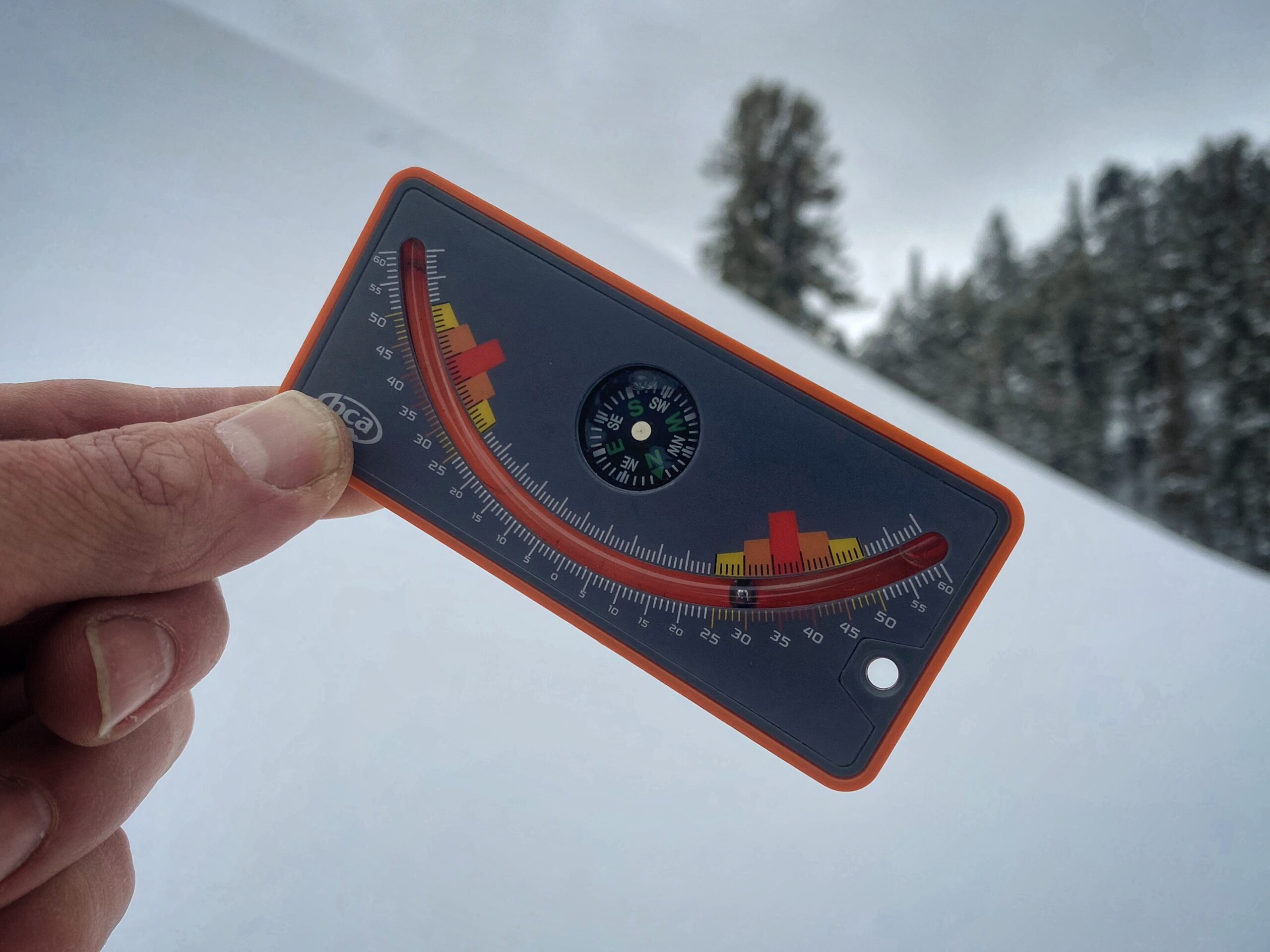
Going on or under slopes steeper than 30 degrees is entering the door. If we avoid walking through the door, we can avoid avalanches altogether. By learning to see this door, we can safely ski and ride every day regardless of the avalanche danger.
Can we accurately measure slope angles? We can, but it requires education and practice. There are many essential skills needed to safely travel in the mountains, and they all require education and practice with no shortcuts. It’s even more important to practice measuring slope angles because it’s easy to misjudge, for example, 30-degree slopes feel totally different in different situations. Slope angles look different on a cloudy day compared to a sunny day. They feel different on a hard icy slope compared to a slope with soft powder. Mapping apps can help, but they can’t tell you exactly where that door is and ultimately, there’s no substitute for taking measurements in the field and practicing a lot. All my field partners and coworkers practice measuring this slope angle more than we practice avalanche rescue.
One important point: you don’t have to be on a slope steeper than 30 degrees to be in avalanche terrain. If you’re under a slope steeper than 30 degrees, you’re in avalanche terrain because that’s where avalanches run. Many people have died thinking they were “playing it safe” on the slope, but were actually under a steep slope, thus in avalanche terrain. A good example of this happened near Cooke City on Dec. 11 of this year. Two riders were crossing under Crown Butte in relatively flat terrain, but they triggered an avalanche that crashed down on them. One was buried for 12 minutes, but luckily found and dug out alive. Entering the door to avalanche terrain means crossing onto a slope steeper than 30 degrees OR going underneath a slope steeper than 30 degrees.
Buy a simple inclinometer or use an app on your phone to start measuring the slope angles of small slopes. Ask your partners to do the same and compare measurements. Getting it right is a matter of life or death—practice and you’ll get better. Focus on 30 and ask yourself and your group: “Is that slope steeper than 30 degrees or not?”
While there are other ways to identify avalanche terrain, knowing if a slope is steeper than 30 or not is the most basic and most important.

Mark Staples is the director of the Gallatin National Forest Avalanche Center.