
EBS STAFF
Editor’s note: Outlaw Partners is mentioned in this story, and is the publisher of Explore Big Sky.
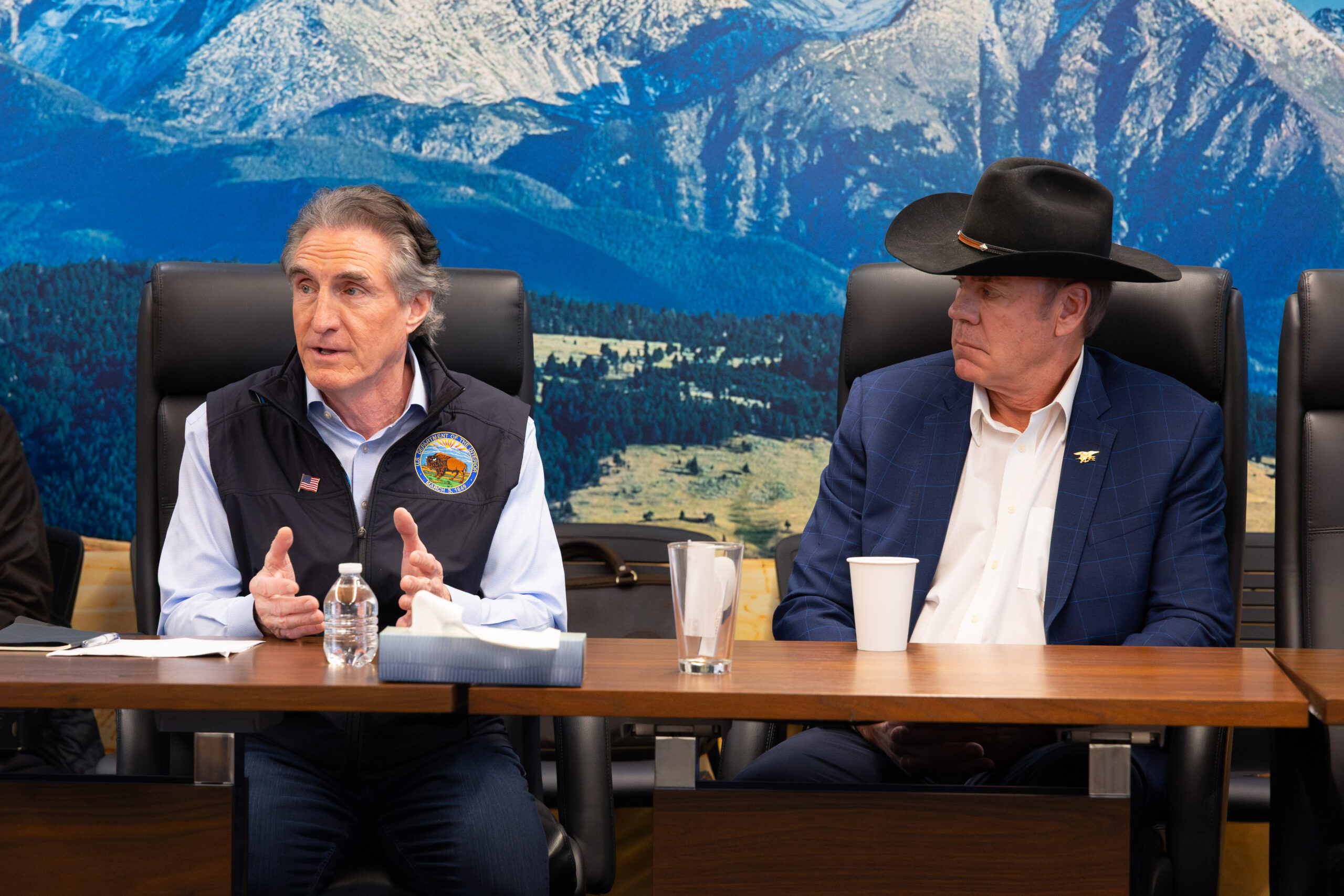
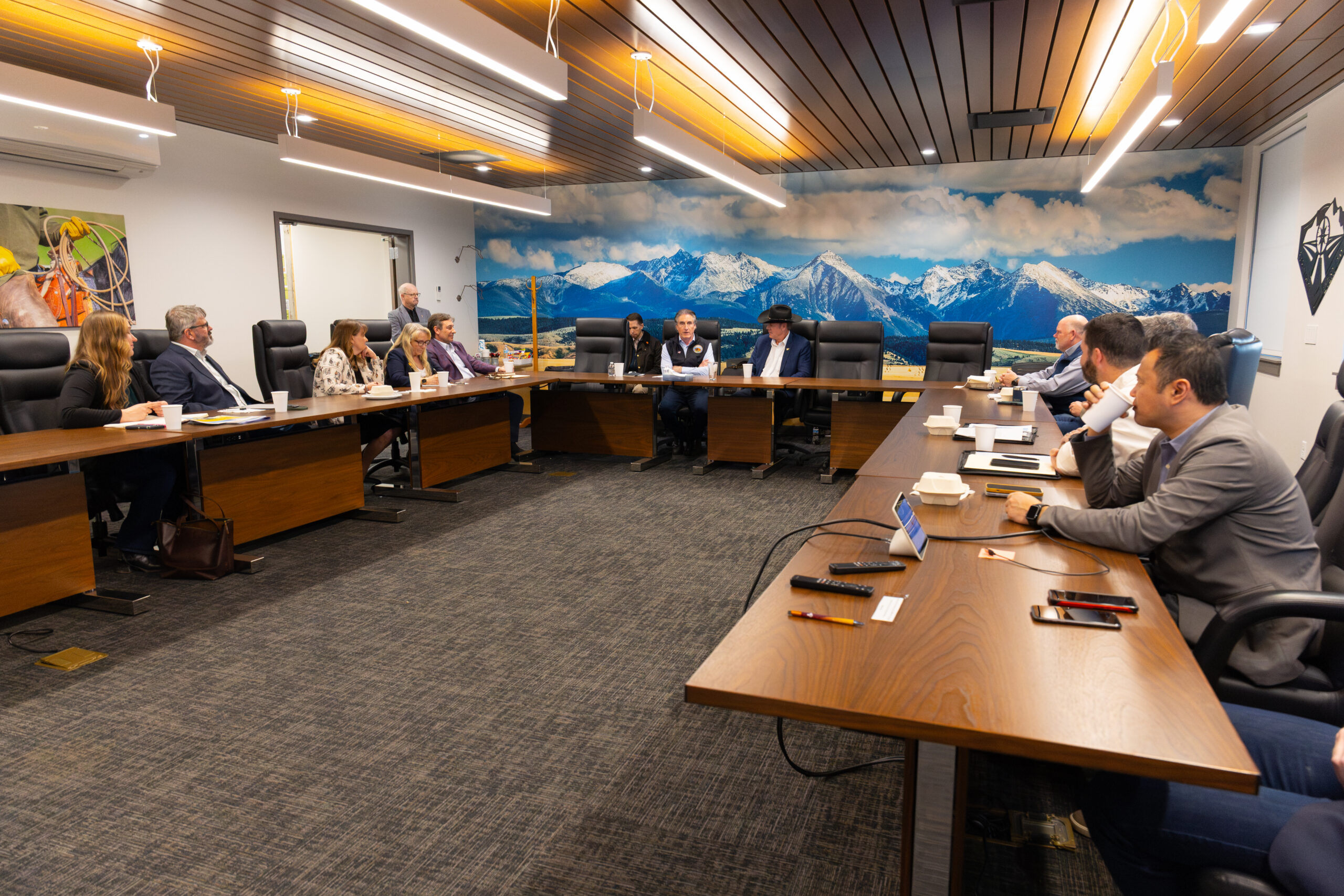
At sunrise on Friday, Feb. 27, U.S. Secretary of the Interior Doug Burgum and U.S. Rep. Ryan Zinke sat down with leaders from Montana’s conservation and agricultural communities at the Montana Farm Bureau Federation office in Bozeman. The meeting was one stop among a series of stakeholder gatherings held across the state with Burgum, Zinke and U.S. Sen. Steve Daines.
Together, the discussion covered some of the politicians’ plans for the future, and conservation groups shared their input on how the government could better assist their missions in the region.
Secretary Burgum invited specific input, asking participants what they cared about and what his department could tangibly help move forward. He encouraged organizations to stay engaged with the Department of the Interior and to bring forward real, solution-oriented ideas that could be implemented.
Burgum noted that the recreation industry is valued at $1.2 trillion dollars, and 3% of the nation’s employees are tied to the outdoors. He explained that as the leader of public lands management in the U.S., he’s surprised by how the hundreds of millions of acres were managed before his tenure.
“We somehow manage to have the world’s largest balance sheet and then simultaneously the world’s worst returns,” Burgum said. “If we had even slightly better returns, we would have all the dollars we need for conservation, for habitat, for deferred maintenance in our parks.”
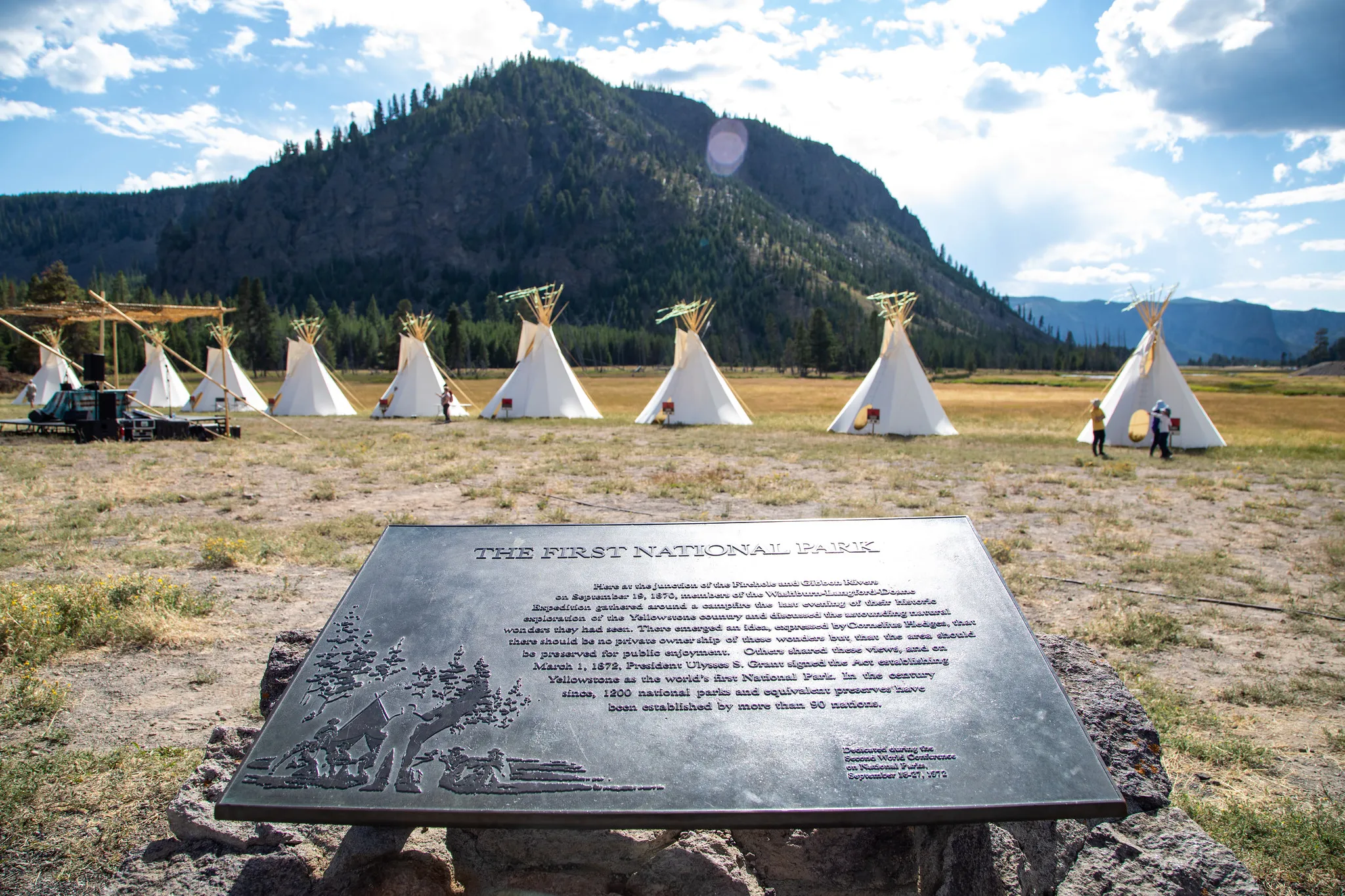
Burgum pointed to ideas such as adjusting entrance fees for international visitors at Yellowstone National Park as an example of rethinking revenue structures. The concept was advanced in part by the Property and Environment Research Center and supported by Rep. Ryan Zinke in discussions with the Department of the Interior over the past year.
Other topics ranged from managing open grazing areas and addressing growing conflicts with grizzly bears to wildfire management, forest health and mitigation strategies across the West, including prescribed fire and fuels reduction, as well as federal legislation in need of renewal or support, including the Land and Water Conservation Fund.
Rocky Mountain Elk Foundation Chief Conservation Officer Blake Henning emphasized the organization’s longstanding collaboration with federal agencies.
“One thing I’d just let you know, from our standpoint, the [Bureau of Land Management] has been a very large partner of ours over our history. And so those things that we do with them, particularly around habitat management, prescribed burning forest management, weed control, is important to us,” Henning said. “So we appreciate the emphasis on mining and efficiency in those agencies. We also just … want to make the point that we need those people on the ground to help with that work.”

Henning noted that RMEF has completed roughly 40 projects with BLM over the past decade.
Eric Ladd, CEO and founder of Outlaw Partners and board member of American Rivers, spoke about river protection and the importance of advancing Wild and Scenic designations, including efforts tied to the proposed Greater Yellowstone Recreation Enhancement and Tourism Act, which seeks to strengthen river protections while supporting recreation-based economies. He also emphasized the need for broader river-first legislation and encouraged more collaboration between water advocates and energy developers.
“If we can get more opportunities to get water groups sitting with energy groups, I think that would be a really big win,” Ladd said. “We could earn that trust, and then we create better funding and better outcomes at the end.”
The Center for Large Landscape Conservation highlighted ongoing efforts to improve wildlife safety along U.S. Highway 191 in Gallatin Gateway. Becca Boslough King, CLLC’s U.S. programs policy specialist, thanked Zinke for his leadership in advancing bipartisan legislation to permanently authorize the Wildlife Crossings Program.
“It is critical for Montana and the country, and especially in Montana, where we have the second-highest wildlife vehicle collision crash rate,” Boslough King said. “Stretches of road near here see half of accidents caused by wildlife, 10 times the national average.”
Burgum tied much of the discussion back to permitting reform and project efficiency, arguing that billions in already approved capital are stalled nationwide.
“There’s $1.5 trillion of capital expenditures being held up in America,” Burgum said. “Freeing that up helps every American. It’s not partisan. It helps blue states and red states.”
In similar limbo is the EXPLORE Act, passed in January 2025. Will Israel, executive director of Montana Outfitters and Guides Association shared information about the delay in the EXPLORE Act’s enforcement. The law aims to simplify permitting for special recreation across public land agencies and support recreation access on federal lands and public recreation. Israel explained that groups that operate with permitting, like special recreation permits, haven’t yet experienced the benefits of the EXPLORE Act’s policies.
“It is stuck in D.C. It has got to move forward … Those folks are not able to take advantage of that act on any level whatsoever,” Israel said. “I would term it almost as egregious at this point.”
Burgum responded, expressing curiosity about Israel’s concern and wanting to learn more about the problem.
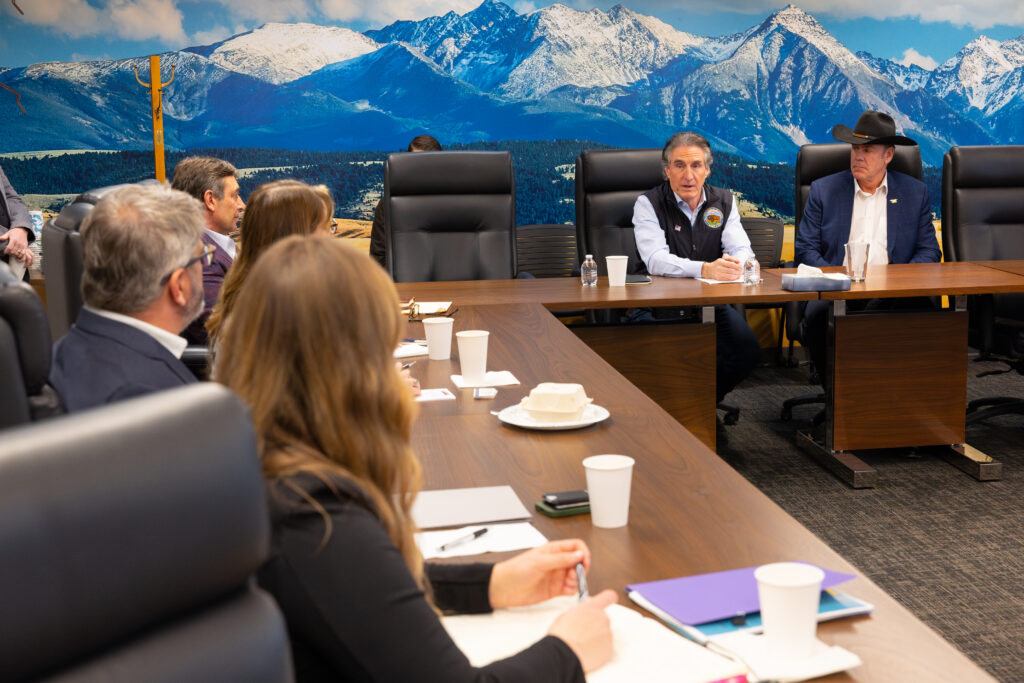
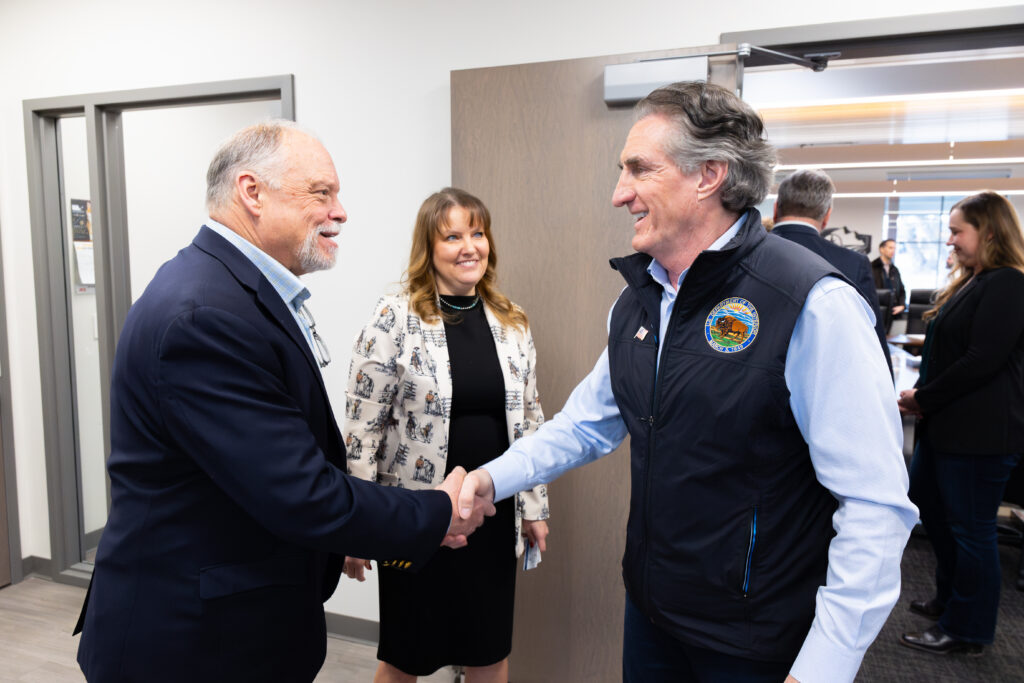
“ We’re all about breaking log jams, so we’ll make sure,” Burgum said, near the meeting’s conclusion.
Secretary Burgum also invited attendees to the opening of the Theodore Roosevelt Presidential Library, set to open in July 2026, reinforcing his emphasis on conservation legacy and national stewardship.
Ryan Chapin, Montana Field Manager for the Theodore Roosevelt Conservation Partnership, thanked Burgum and Rep. Zinke for their leadership in advancing federal support for wildlife‑crossing funding.
“Montana’s migration work is gaining momentum, including new efforts at Montana Fish, Wildlife and Parks, and the Montana Department of Transportation,” Chapin said, underscoring the need for the Department of the Interior to continue allocating essential funds to the USGS Corridors Mapping Team for state‑based migration mapping.
Following the Bozeman meeting, Burgum and Zinke traveled to Montana Tech University in Butte to tour mineral laboratories and host a separate roundtable on mining and critical minerals, continuing a statewide tour focused on land, water, energy and economic priorities.