
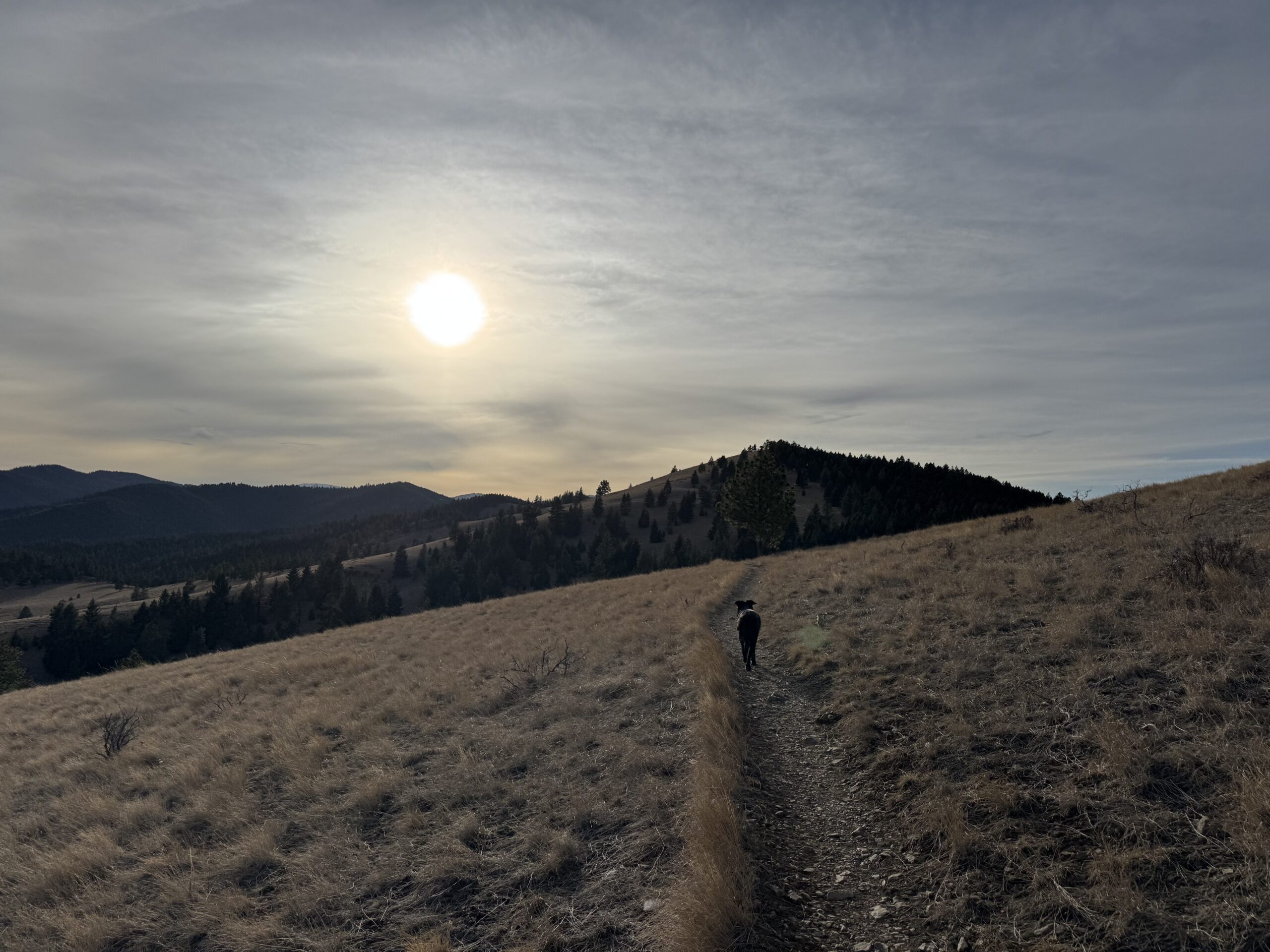

Weather records show the winter of 2025-2026 clustered near historic extremes across much of the state.
By Jacob Olness MONTANA FREE PRESS
Think it’s been a warm winter? You’re not imagining it. An analysis of National Weather Service data by Montana Free Press shows five of Montana’s seven largest cities have recorded daily highs this fall and early winter more than 8 degrees above normal on average, with records for specific days continuing to be set into early February.
In Billings, Bozeman, Great Falls, Helena and Missoula, the average daily high temperatures from November through January were warmer than any previous winter in weather data dating back to the mid-20th century. Two additional cities where weather logs have been kept for more than a century, Butte and Kalispell, also came close to breaking their records.

Trent Smith, meteorologist with the Missoula office of the National Weather Service, said in an interview on Thursday that “so far the [western side of Montana] is on par with one of its warmest winters on record” and other than the state’s northeast corner, he said, it’s been a “top-five warmest” winter in most communities.
Northern Montana’s Glasgow, for example, remained closer to long-term norms, representative of other communities in that corner of the state. Smith attributed that to the region being “more exposed” to arctic air due to its latitude and the lack of terrain to break up the jet stream.

The unusually warm winter has already had tangible effects across the state. In northwestern Montana, unseasonably high December temperatures melted snowpack and contributed to flooding in communities such as Libby. Elsewhere, ski areas across the state have reported snowpacks well below average and many, if not nearly all, of the runs closed.
Across much of the state, the warmth was widespread and persistent. In Billings, where National Weather Service records date back to 1948, the average daily high from late fall to early winter was 47 degrees. That’s 1.4 degrees warmer than the city’s previous high-water mark, set in 1999 — and 9 degrees higher than typical.
Bozeman experienced the most dramatic departure from previous winter records. The average daily high for the November-January period there, 45 degrees, exceeded the historic average by 10 degrees and the next-warmest winter on record since 1941 by 3.5 degrees. Temperature data indicate that three of Bozeman’s warmest winters have happened in the last five years.
In Great Falls and Helena, where records extend back to the late 1930s, winter temperatures were more than 10 degrees above historic norms. Missoula also saw record-high temperatures, with its November-to-January average high 8 degrees above its historic average of 34 degrees and several degrees warmer than the previous record.
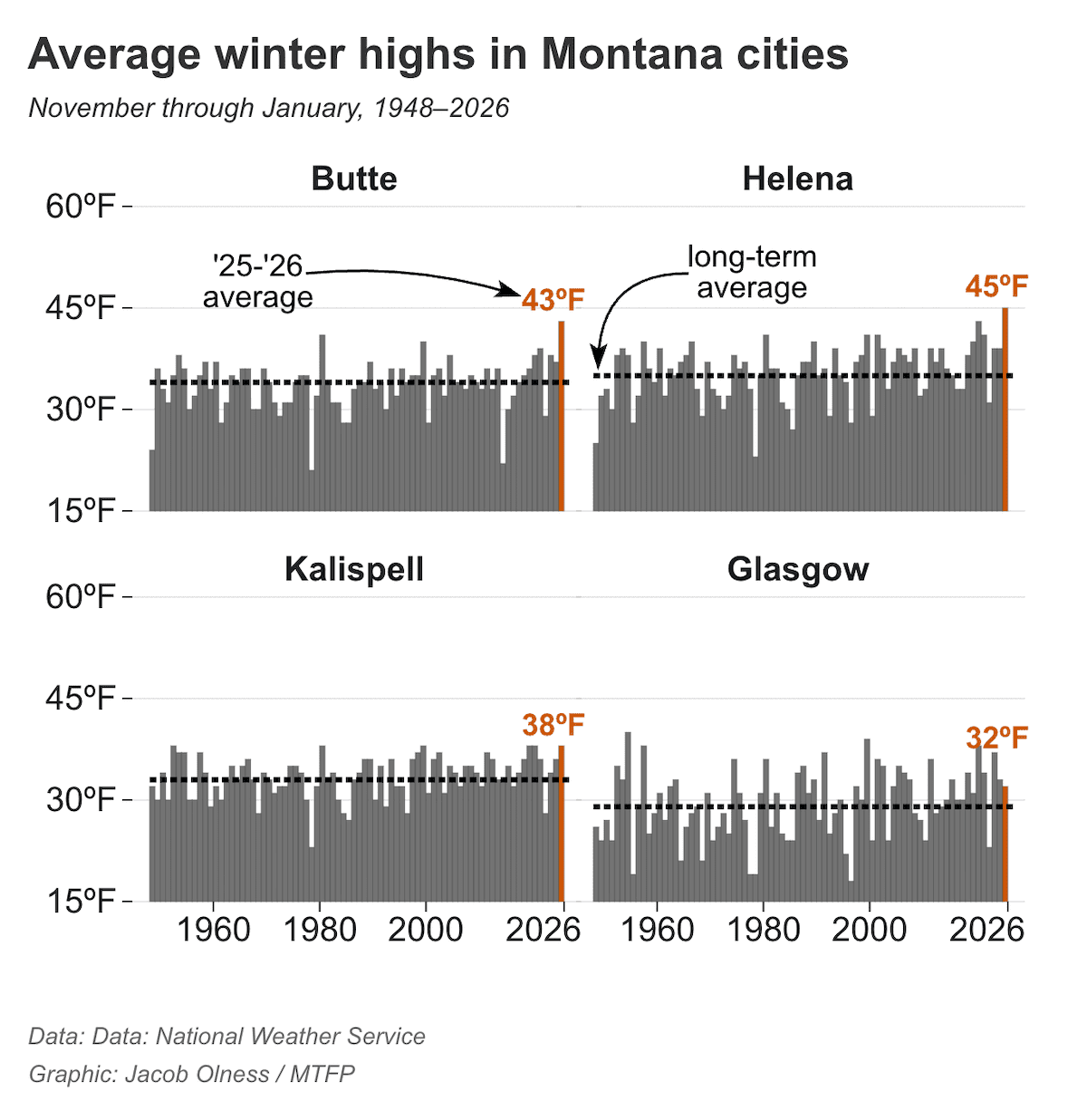
It’s harder to beat records in Butte and Kalispell, which have been keeping data since 1894 and 1896, respectively. Butte’s weather through mid-winter was, with an average high of 42.7, about 9 degrees warmer than the historic average and second to only 1917, when average temperatures were just two-tenths of a degree warmer. The average high in Kalispell this year, 38 degrees, was 5 degrees above normal and among only three comparably warm winters since the late 1800s.
Glasgow, in comparison, was still warmer than average this year, with a typical high of 32, but posted winter temperatures much closer to historical norms, ranking near the middle of its post-1948 range.