


By Mel Crichton EBS COLUMNIST
As you know, we live in a forested landscape that is prone to wildfires. For the past few months, we’ve been reminding you of this. We’ve given you tips on how to prepare your home to survive a wildfire, we’ve talked about evacuation and staying alive and healthy.
We’ve received some recent rains that have temporarily lowered the fire danger. However, as I write this in early September, there’s thick smoke in the air and wildfires are still raging across the West. We aren’t out of the woods yet.

This month, I sat down with Big Sky Fire Department Wildlands Fire Chief Jon Trapp. Jon came to Big Sky from the Red Lodge Fire Rescue back in February, and his years of wildfire experience will be valuable here. In his past, Jon served in the Air Force, and then as a wolf biologist before taking on wildfires about 20 years ago. As a fire behavior analyst, Jon deploys to fires across the western US and Alaska.
This conversation has been edited for brevity.
Wildfire Wire: Why did you join the Big Sky Fire Department?
Jon Trapp: I’ve been coming to Big Sky for years because my daughters were on the Ski Team in Red Lodge. I was impressed by the mountainous and forested landscape in the area. As a wildland firefighter, I noted some of the significant challenges this area presents. I have known Chief [Dustin] Tetrault for years, and when he mentioned creating the new position in Wildfire Response and Mitigation, my ears perked up. The Big Sky Fire Department has great members, and I’m excited to be a part of the team.
WW: What about fires in Big Sky?
JT: Wildfire behavior depends upon three things: fuels, weather and topography.
In Big Sky, [fuels] is primarily conifers—pine, spruce, fir—but there are also areas with grass and shrubs. Fuels consist of live and dead components. Every spring, our live fuels take on moisture as they grow, and dead fuels start drying out. Fire activity starts picking up in late July when fuel moisture starts to drop.
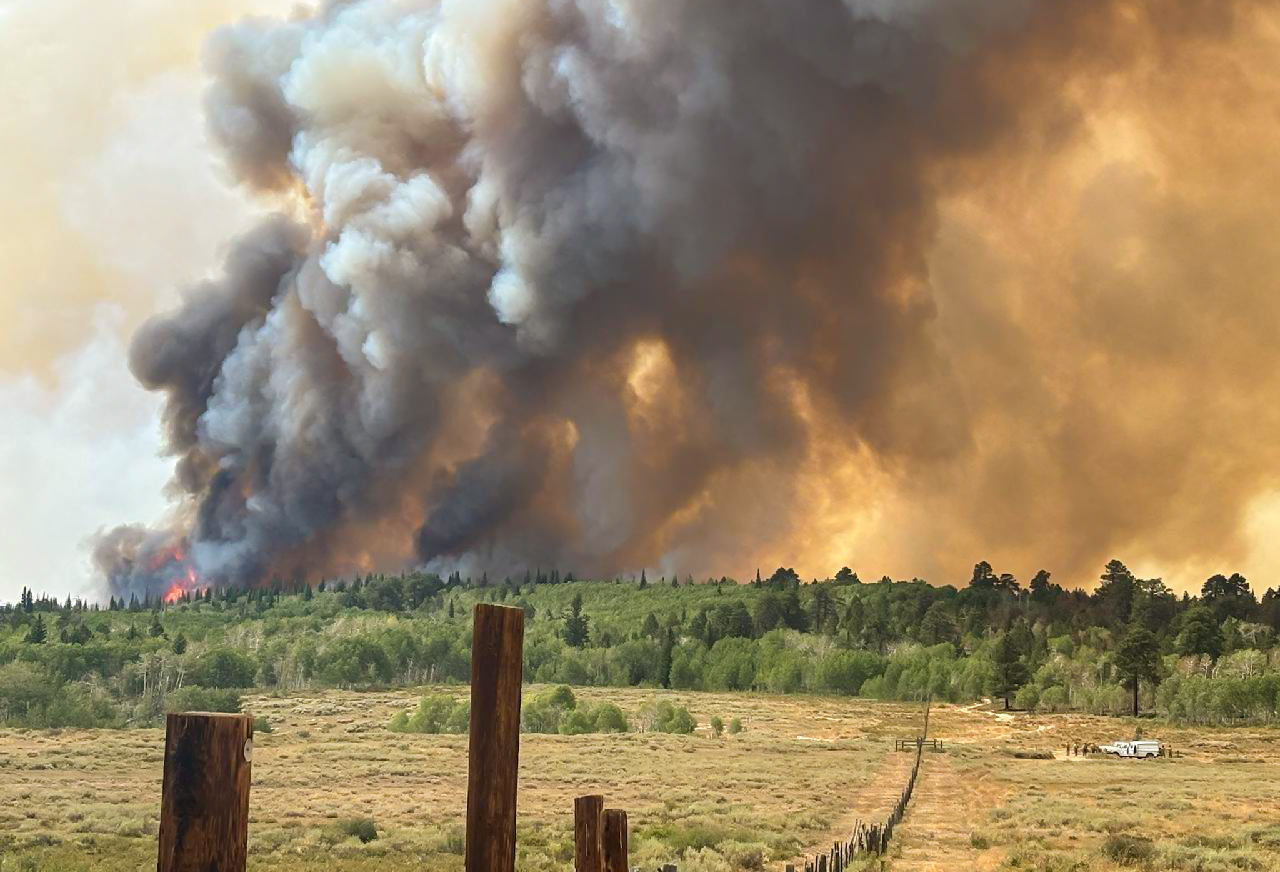
Warming temperatures, lower relative humidity and lack of precipitation contribute to drying of fuels. Strong winds can contribute to rapid fire growth.
[Topography] is the mountains, canyons, rivers. The topography also produces south facing slopes with more sparse, dryer fuels. North facing slopes tend to be cooler, denser and thicker. Topography also channels winds.
Many times, early-season fires are knocked down and contained quickly. In late August and September, when fires start, they can move quickly and be more intense. If a fire outpaces initial attack resources and we have to step up a level and request additional resources like aircraft. As a fire increases in size, the complexity of the system that manages it grows. In the initial fire, there may be one incident commander and one or two engines. However, if it expands, the incident command system goes into effect, and then we need things like logistics, finance, planning, safety and operations. This machine grows, with the objective of working together to contain the fire. And when that happens, my team—the Northern Rockies team—gets called out.

WW: Who responds to the wildfires?
JT: Typically, when a fire starts, the closest resources respond. If a fire starts in the Big Sky area, the Big Sky Fire and Yellowstone Mountain Club Fire departments will respond immediately. Because Big Sky is surrounded by National Forest, the U.S. Forest Service also responds. Neighboring fire districts and Montana DNRC may also respond. This is why it is important that we are all trained to the same national standards. This enables us to work together on fires like the West Fork Fire.
WW: One resident told his neighbor ambassador, “I’m not going to worry about fire in Big Sky, because Yellowstone Club’s fire department won’t let it get to us.” So he’s assuming the fire’s coming from the Yellowstone club direction. But is it realistic to think that?
JT: It really depends on where the fire starts and how quickly it grows. If it’s on a day where we have a red flag warning and fuels are dry, it can grow rapidly and exceed the local resources. The firefighters at the Yellowstone Club are good firefighters, and we train to those same standards. We try to work together.
WW: What equipment does Big Sky have?
JT: We have tenders that carry water. We have a type-three engine—a hybrid between a structure engine and a wildfire engine. We also have three brush rigs specialized for wildland fire. We’ll get another one as we open station three in Spanish Peaks.
WW: So station three fills a gap?
JT: Fire stations are located from the standpoints of structure protection, ambulance service, wildlands and rescue. The closest station responds to minimize response time. We hope homes within five road miles of a fire station will benefit from a lower insurance rating. The ISO rating is the insurance standard for risk. Near a fire station, the ISO rating within five miles lowers to four. Some insurers will not cover you if ISO is a nine or above, as you are too far away from water and fire support.
WW: Insurance. That word has been in a lot of local conversations recently. It’s a complex subject, and it raises some hackles among property owners here. But we’ll have to cover that in a future issue. For now, thanks for your time, and we’ll talk more.
Mel Crichton acts as neighborhood ambassador coordinator for Fire Adapted Big Sky. He may be reached at kj9c@comcast.net.