
Foundation pushes for passing of Montana bill that could save lives in classrooms
By Mira Brody VP MEDIA
Editor’s note: Explore Big Sky is published by Outlaw Partners, the producer of Big Sky PBR.
When Erica Salter’s teenage daughter Alexis was diagnosed with epilepsy in 2021, the family was in the process of moving from California to Bozeman, and were faced with the same reality that many needing specialized care face: the lack of healthcare support in Montana. Navigating a new community, location and healthcare system was frustrating, Salter said.

Alexis experiences tonic-clonic seizures, the convulsive episodes many people picture when they think of epilepsy, which at times has stopped her breathing. This past school year, Alexis no longer felt safe at school and has since been completing her junior year online.
“She just didn’t feel safe because… she found out that the teachers here aren’t trained and then she is just kind of living in a little bit of fear,” Salter said. “She’s made the choice not to go to school. She feels like if people can’t take care of her, then she is not safe to be in the classroom.”
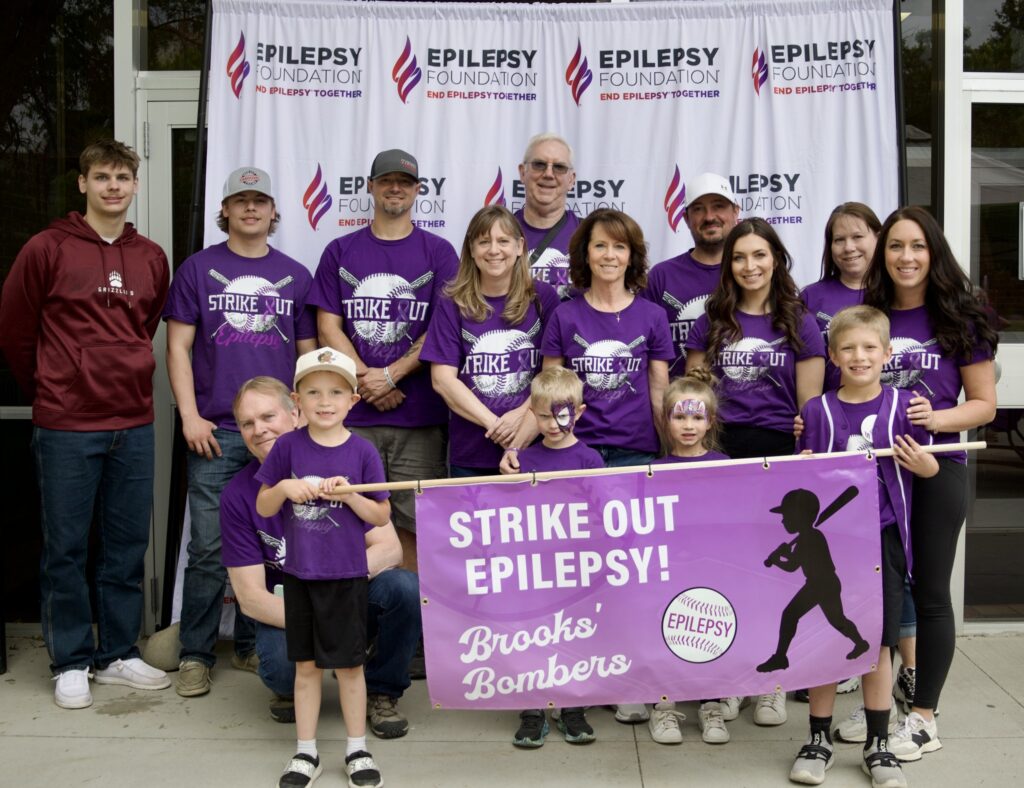
The Salter’s fear does have a solution. According to the Epilepsy Foundation of America, 26 states and Washington, D.C. requires school personnel to complete seizure first aid training. . Montana has not yet adopted this law, something that the Foundation, alongside advocates like Salter, are trying to change.
The Epilepsy Foundation of America was established in 1968 and today operates approximately 59 chapters across the country. Its Montana chapter launched in 2023. The organization’s mission centers on ensuring that people do not face epilepsy alone, offering services across four core pillars: advocacy, research, support and awareness.
An estimated 3.4 million Americans live with epilepsy, according to the Epilepsy Foundation, and about 456,000 of those are children under the age of 17, according to the Centers for Disease Control and Prevention. The Epilepsy Foundation puts the odds at one in 26 Americans developing the condition over a lifetime, meaning on average, every classroom in America likely contains a student with epilepsy.
Treatment is not straightforward for many patients and studies suggest that epilepsy is difficult to control with medication alone in about one-third of adults and approximately 20-25% of children, according to the Epilepsy Foundation. For those patients, surgery and devices become the next options, the kinds of interventions that often require out-of-state travel for Montana families.
“Many of these families are traveling out of state for advanced surgical procedures and specialized care,” said Jessica Veach, regional executive director of the foundation, who has lived with epilepsy since her diagnosis at 19.
In addition to supporting families facing these treatments, diagnoses and medical travel, another of the foundation’s central advocacy goals in Montana is passing legislation that would require all school personnel to complete seizure first aid training. The one-hour course, available in person or online, covers what epilepsy is, what different seizure types look like and how to respond. Certification is valid for two years.
While the bill is written, Montana has not yet found a bill sponsor to carry the legislation forward.
“Right now we need someone to sponsor the bill,” Veach said. “We have the bill written so they just need to carry it forward. And then next spring when they meet, have maybe some of us testify.”
If someone near you is experiencing a seizure, Veach explained, it is recommended to turn the seizing person onto their side to prevent choking, place something soft under their head and never put anything in the person’s mouth; a persistent and dangerous myth. If it is a person’s first known seizure, if the seizure lasts longer than five minutes, or if the cause is unknown, it is recommended to call 911.
Part of what makes the training so necessary, Veach explained, is that most people do not recognize what epilepsy actually looks like.
“Not all seizures look like the convulsive seizures you see in the movies,” she said. “There’s so many different types and it took me several years to be diagnosed just because my seizures were so slight and I could talk during it, I could do anything.”
Salter echoed the isolation that can come with a diagnosis, especially in a state with limited specialists. Montana currently has one pediatric epileptologist in Kalispell and one adult epileptologist in Billings.
“It’s a very lonely diagnosis,” Salter said. “You’re not alone. There’s a lot more people who are affected than people think.”
That loneliness drove Salter to start a Bozeman support group, which she calls the Bozeman Brain Buddies. The group gives local families a space to compare medications, swap doctor referrals and simply feel heard. Her advocacy, and the foundation’s support, has also enacted a change in Alexis, her mother said.
Last spring, Alexis was selected to represent Montana through the Epilepsy Foundation’s Teen Speak Up program, which sends one teen per state to D.C. to advocate at the Capitol. The experience changed her.
“She was like, ‘Look at all these kids all over the country. They’re just like me. I am not different. I am normal,'” Salter said. “And she made friends and she has learned that it’s okay that she has epilepsy.”
Moments like that are exactly what the Epilepsy Foundation hopes to create on a larger scale Thursday night at Big Sky PBR, a three-day bull riding event produced by EBS’s publisher, Outlaw Partners. The night will raise awareness and funding for the Foundation, and encourage attendees to wear purple, the color associated with epilepsy awareness.
“It’s so huge for us,” Veach said. “I think it’s a little of everything, a little of outreach … and then just the awareness that this is a very common condition, so it needs to be talked about just as much as other things.”